
Electricity in All Will Fall has a reputation for feeling pointless early on, and that reputation is earned. Your city runs fine without it at first, so most players push it to the back of the queue. The problem is that the game does not ease you into dependency gradually. Multiple systems start drawing on power at roughly the same time, and if your grid is not ready, everything slows down at once.
How does electricity work in All Will Fall?
At its core, electricity is a balance between what your city produces and what it consumes. Every city generates and spends power independently, so there is no grid-sharing between locations. That means every new city you expand into requires you to build a working power setup from scratch.
When supply matches demand, your city runs at full efficiency. When supply falls short, the buildings drawing on electricity start underperforming. The frustrating part is that the feedback is indirect. You notice slower movement, inconsistent water output, and buildings that seem fine on paper but are not keeping up. There is no single alarm going off, just a general sense that things are slightly worse everywhere.
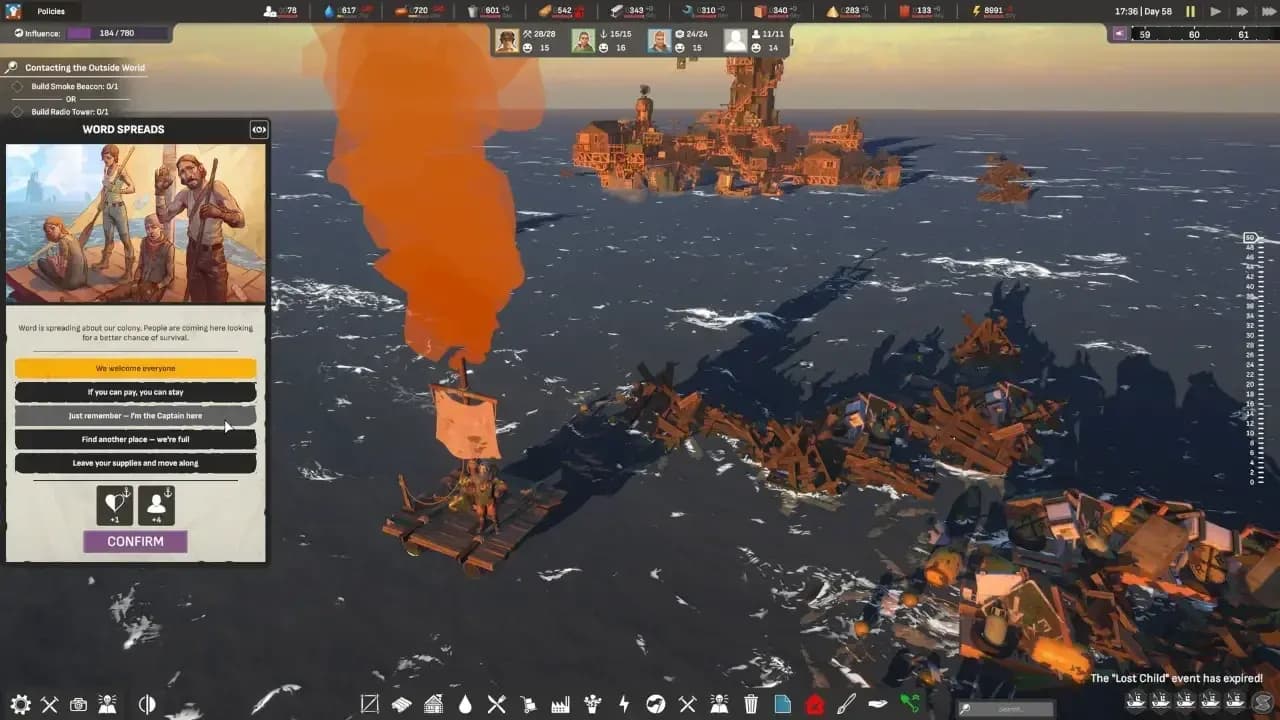
Power balance across your city

What actually drains your power supply?
The drain builds gradually, which is exactly why it catches players off guard. No single building wrecks your grid on its own. The problem is the stack.
Lighting spreads as your city expands. A handful of lights barely registers, but as your population grows and your city fills out, the cumulative draw becomes a constant background cost that did not exist in your early game.
Elevators follow the same pattern. Early on they are a convenience. Once your city grows vertically and workers are spending meaningful time traveling between floors, elevators shift from optional to necessary. That movement time compounds across your workforce, and every extra second in transit is a second not spent producing.
Leisure buildings run quietly in the background, pulling power without the obvious payoff of a production building.
Utility systems, especially anything tied to water, are where electricity stops being a background concern and becomes something your city depends on to function.
None of these feel like a problem individually. The moment they stack together is when power transitions from a nice-to-have into a hard requirement.
| Power Consumer | When It Becomes a Problem |
|---|---|
| Lighting | As city footprint expands |
| Elevators | Once vertical growth increases travel time |
| Leisure buildings | Mid-game, running as background drain |
| Water/utility systems | When population demand outpaces early setups |
What is the best way to generate electricity?
Wind generation is the most dependable option for most runs. It is simple to place, produces consistently, and scales in a way that is easy to plan around. That predictability matters more than raw output once your city is mid-size, because you need power you can count on without constantly revisiting your setup.
Water-based generation exists as an alternative, but it depends heavily on your city layout and positioning. It can work, but it is less flexible than wind, which makes it harder to rely on as your primary source unless your city naturally supports the placement.
Batteries are the piece most players skip too long. Your electricity usage is not perfectly steady. Even when total production looks fine on paper, demand spikes happen, and without storage, your powered buildings dip every time one hits. Batteries absorb excess production during quiet periods and release it during spikes, keeping your grid stable instead of constantly fluctuating.
Why does electricity feel useless early?
Because it is, mostly. Your food works, your water works, and your basic survival systems are covered without any power infrastructure. Assigning workers to electricity production at low population means pulling them away from systems that are actively keeping your city alive.
The math does not favor early power investment. You are spending a resource (workers) to generate something (electricity) that nothing important is consuming yet. That is not a mistake you need to fix. Delaying electricity is a legitimate strategy because the game only punishes you for the absence of power once your city actually needs it.
The key is recognizing when that shift is approaching, not reacting after it has already hit.
How does electricity connect to your water supply?
Water is usually the moment electricity stops being theoretical and starts being urgent. Early water systems can carry a small population, but they do not scale cleanly as demand grows. Electric water systems provide the consistency that basic setups cannot, and the difference is immediate once you make the switch.
Because water is tied directly to survival, stabilizing it has a positive ripple across everything else your city is trying to do. Fixing water through electric systems is one of the clearest returns on power investment in the game.
How to scale your power grid without wasting workers
The most common mistake is overbuilding electricity before your city needs it. A massive power grid sounds like good planning, but if nothing is consuming that power yet, you have just assigned workers to a system that is not helping anyone.
The approach that actually works is incremental. Build enough power to support what you are currently running, then expand the grid when a new system comes online that requires it. This keeps your worker allocation aligned with actual city needs instead of getting ahead of demand.
Here is a practical order of operations:
- Power survival-critical systems first, starting with water utilities once early systems stop scaling
- Add generation capacity when new buildings start drawing on electricity, not before
- Install batteries once your grid grows large enough that demand spikes are causing dips
- Avoid stacking powered leisure or convenience buildings until your core grid is stable
The underlying logic here is that electricity in All Will Fall rewards patience. The game gives you room to delay it, and that room exists for a reason. Use it, but keep an eye on the signals that your city is starting to outgrow its early setup.
For more strategy content across a wide range of games, browse more guides on GAMES.GG.