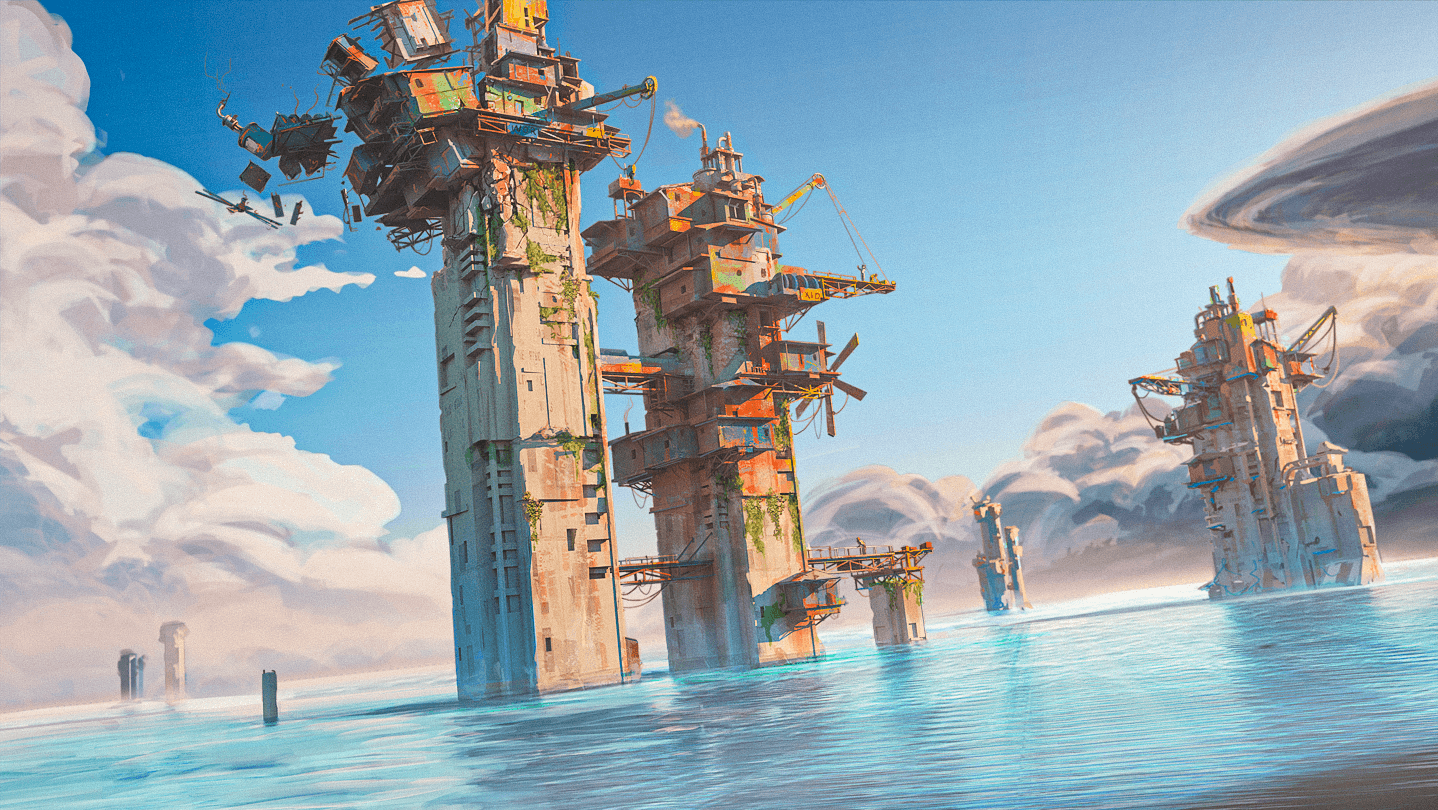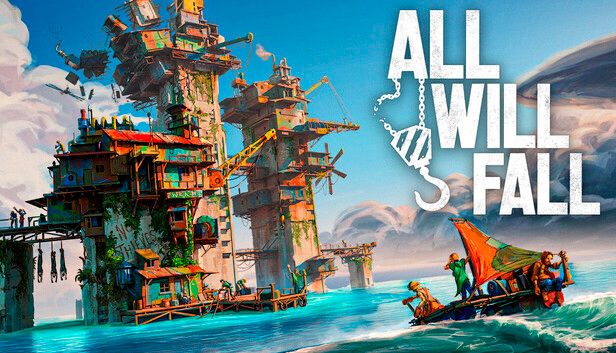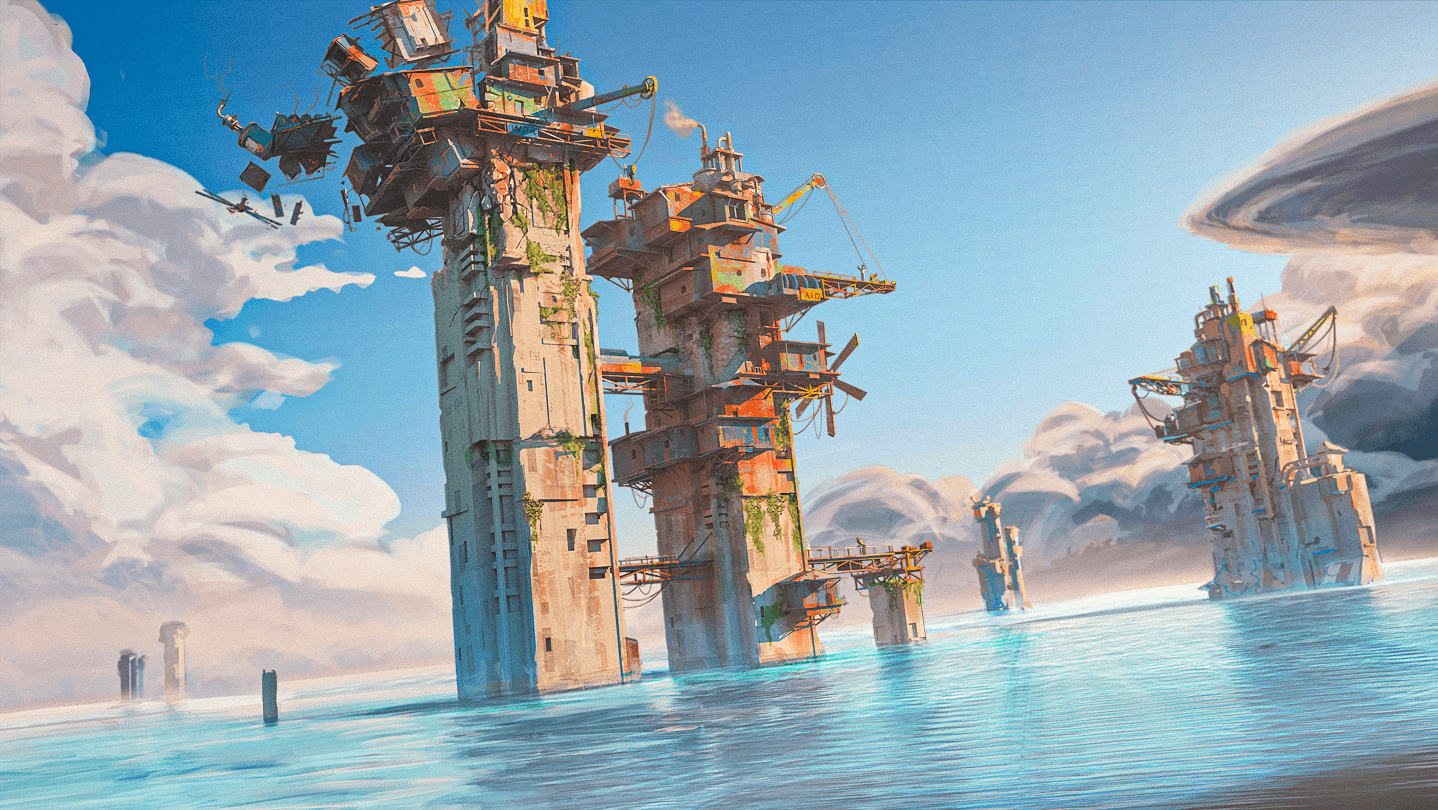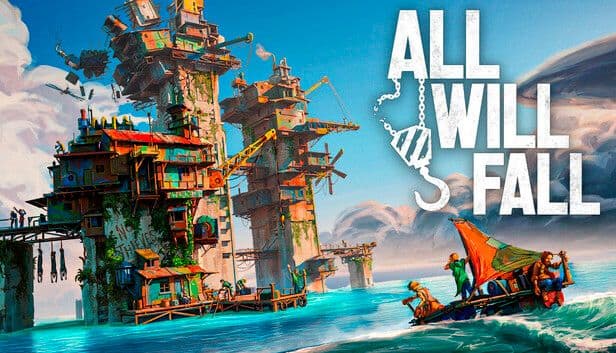

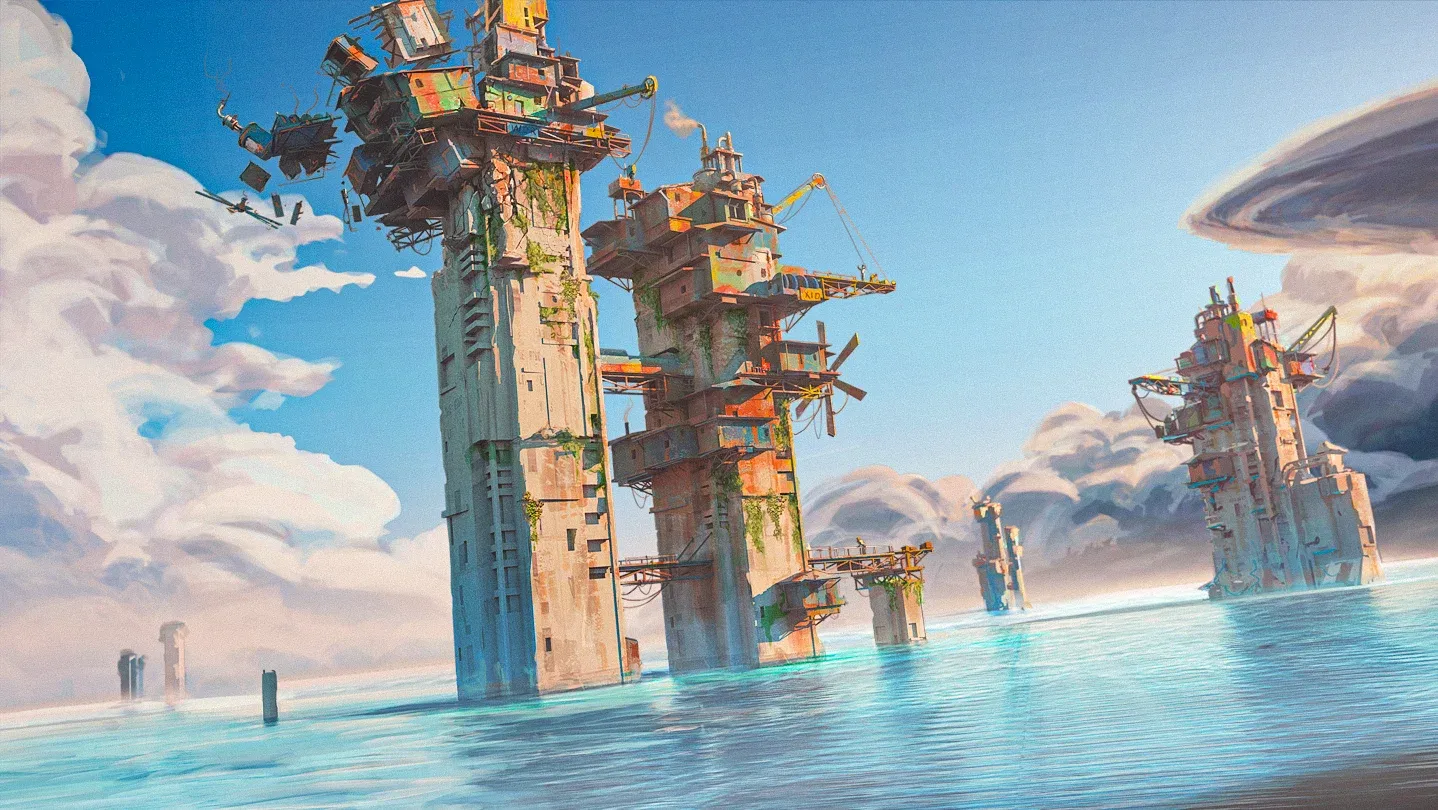
All Will Fall launched on April 3, 2026, and it has already earned scores of 8/10 from The Wand Report and 8.5/10 from Analog Stick Gaming. The premise is simple: the ocean swallowed everything, your survivors are standing on a rusty boat, and you need to build a city that defies gravity. What makes it genuinely difficult is that every beam, platform, and bridge you place is subject to real physics simulation. Build wrong and your colony falls into the sea.
This guide covers everything you need to survive your first runs, understand the three factions, manage resources without spiraling, and approach each of the 8 handcrafted scenarios with a clear plan.
What is All Will Fall and how does it work?
Developed by All Parts Connected and published by tinyBuild, All Will Fall is a post-apocalyptic physics-based survival city builder. Every structure can collapse if load paths fail, which means you are never just placing buildings. You are solving a structural engineering problem with human lives on the line.
The game launched with 8 handcrafted story scenarios, a full sandbox mode, and Steam Workshop support for community-created content. Expect over 100 hours of content across all scenarios depending on playstyle. A free demo is available on Steam, and your demo save files and progress carry over to the full game.
Beyond the scenarios, the Custom Scenario mode lets you combine mechanics in unusual ways, and the level editor lets you adjust map layouts, weather conditions, available resources, and city foundations. The community content library will expand through Steam Workshop over time.

How does the physics construction system work?
This is the mechanic that separates All Will Fall from every other city builder available right now. Every structure is subject to real-world physics simulation, meaning every beam, platform, stairway, ladder, and bridge needs proper load-bearing support or it will collapse.
The good news: the game gives you a warning timer counting down hours of in-game time before a failing structure actually collapses. You get time to fix mistakes before disaster. On lower difficulty settings, the game also lets you revert a structure's state after a collapse so you can correct the error.
Land is severely limited by design, which forces vertical building. You will be stacking housing on top of production buildings, building bridges to reach resource nodes, and constantly reassessing whether your foundation supports your plans. Later in the tech tree, metal and concrete construction pieces open up more ambitious builds, but you have to survive long enough to unlock them.
Understanding the three factions
Your citizens are divided into three distinct groups. Managing their happiness is one of the game's most persistent challenges because each faction has separate food and water ration allowances, and happiness and loyalty are tracked per group.
| Faction | Primary Role | Key Perk Rewards |
|---|---|---|
| Workers | Deconstruct map pieces for materials | Increased carrying capacity, faster walking speed |
| Sailors | Ocean resource gathering and exploration | Increased movement speed |
| Engineers | Research new technologies, operate cranes | Greater job productivity |
You can prioritize one faction over another, giving Workers extra food rations for the carrying capacity boost, for example, but doing so will make your other factions unhappy. Managing these political tensions is one of the game's most interesting ongoing puzzles.
Engineers are the only citizens who can research new technologies or operate cranes. Sailors are the only ones who can gather resources by boat and handle ocean exploration. Workers handle deconstruction. All three are necessary at different stages of each run.
How does resource management work?
Food and water are your constant problems, and the game deliberately prevents simple solutions. Fishing boats work well for food production until a multi-day storm scares the fish away and your colony starts starving. Greenhouses are the backup option, but they require large amounts of water and need sunlight to function.
The weather system directly affects production buildings, rendering some temporarily useless and forcing constant adaptation. Build space is extremely limited, so you cannot sprawl outward to solve a resource crisis. You have to build smarter.
The research lab unlocks new structures, improved water collection methods, additional storage, and different boat types. The tech tree opens increasingly powerful options over time, but surviving long enough to reach them is the challenge.
The ocean itself is an active resource system. Ocean levels fluctuate over time, occasionally revealing new land areas and fresh material deposits. The game signals newly accessible zones through mossy areas on lower terrain. Over time, the ocean can lower permanently, expanding your available build footprint.
All 8 scenarios: which one should you start with?
All Will Fall launches with 8 handcrafted scenarios. You unlock later scenarios by completing goals in earlier ones, similar in structure to Against the Storm's settlement chain progression. Scenarios include a space-constrained Cyber Tower build, a ship-based scenario where your entire city is in motion, and a crumbling city scenario that introduces earthquakes.
Here is how to approach the three most important scenarios for learning the game:
Oil Rig
Oil Rig is the clearest practical starting point in the game. It teaches early build order, first platform raise timing, Rain Catcher optimization, metal-into-fuel logic, and surviving a compact vertical start. If you want to understand how the game's core systems interact before attempting harder scenarios, Oil Rig is where to begin.
Tanker Truck
Tanker Truck is built around movement and continuity rather than a fixed base. This scenario is best for players struggling with early production math, fuel continuity between zones, when to leave a zone, and timing the simple boats, junk, and powered economy. If Oil Rig teaches you how to build vertically in a fixed location, Tanker Truck teaches you how to manage a colony that has to keep moving.
Tornado Race
Tornado Race introduces a hard deadline. A Day 60 platform deadline is the central challenge, alongside Thruster Engine timing and Power Grid timing. This scenario demands phase-based planning and forces you to recognize when to stop improving your colony and commit to evacuation. Tornado Race is the strongest scenario for learning deadline-based planning and recognizing late-run failure before it becomes unrecoverable.
Why buildings collapse and how to prevent it
Structural failure travels across multiple scenarios. The same mistakes that kill an Oil Rig run will kill a Tornado Race run. Understanding collapse mechanics is the most important cross-scenario skill you can develop.
The questions to ask when a structure fails:
- Why is this structure unstable?
- Why did this collapse after removing one piece?
- Why does the path look valid but still fail?
- What should be reinforced first?
The stress overlay is your primary diagnostic tool. Check it before any deconstruction. The game's warning timer gives you in-game hours to respond before a collapse actually happens, so use that window to identify the load path problem rather than panicking and removing the wrong piece.
How does All Will Fall compare to Against the Storm?
Both games involve managing a survival colony under pressure with limited resources and faction-based decision-making. The difference is directional. Against the Storm keeps tension horizontal: you spread outward, manage biomes, and race a timer. All Will Fall makes the pressure vertical and structural. Every new floor is a risk assessment. Every bridge to a resource node is a calculated gamble.
Against the Storm's roguelike structure gives every run a defined ending. All Will Fall's scenario-based progression is similar in spirit but feels more open-ended within each scenario. The tone is also different: The Wand Report described All Will Fall as "a much friendlier and more accessible experience" than Frostpunk-style games, helped by cheerfully sarcastic Australian voice acting and a brighter color palette.
If Against the Storm is in your library and you enjoyed it, All Will Fall is worth your time. The physics construction layer adds something that genre does not otherwise offer.
Politics, influence, and random events
All Will Fall layers a political management system on top of its construction challenges. You accumulate influence from completing certain tasks and events, then spend it to set policies or shape specific situations. Your decisions have to balance order and efficiency against citizen happiness and freedom.
Random events occur throughout each run. Some bring trouble, some bring new recruits, and some offer branching choices that require certain levels of happiness, loyalty, or influence to unlock better outcomes. Faction-driven events can trigger when specific groups get unhappy enough, giving you a chance to de-escalate. The system keeps you from ever being on autopilot, even when your resource chains are running smoothly.
For more strategy guides covering games like this, browse the latest guides at GAMES.GG to find walkthroughs, tips, and deep dives across every genre.