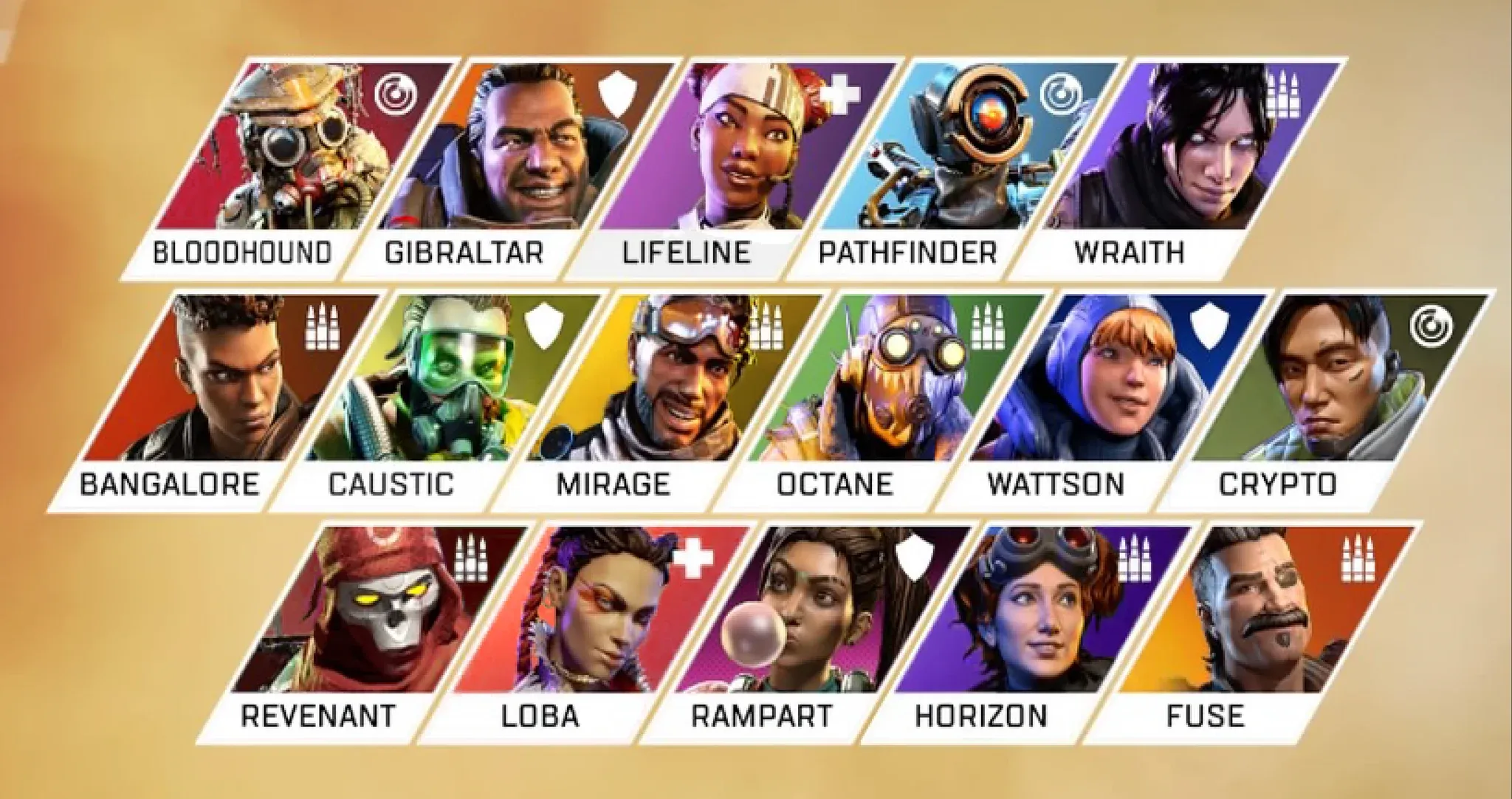


Apex Legends does something most battle royales don't: it makes your character choice as important as your aim. Every Legend brings a distinct passive, tactical, and ultimate ability that reshapes how fights start, how rotations happen, and whether your squad survives the final circle. With 25 Legends on the current roster spanning five classes, picking the right one for your playstyle is the fastest way to start winning more games.
The roster breaks down into five classes: Assault, Skirmisher, Recon, Controller, and Support. Each class fills a specific role, and the strongest squads almost always pull from at least three different ones. Before you commit to a main, understanding what each class actually does in practice will save you dozens of frustrating matches.
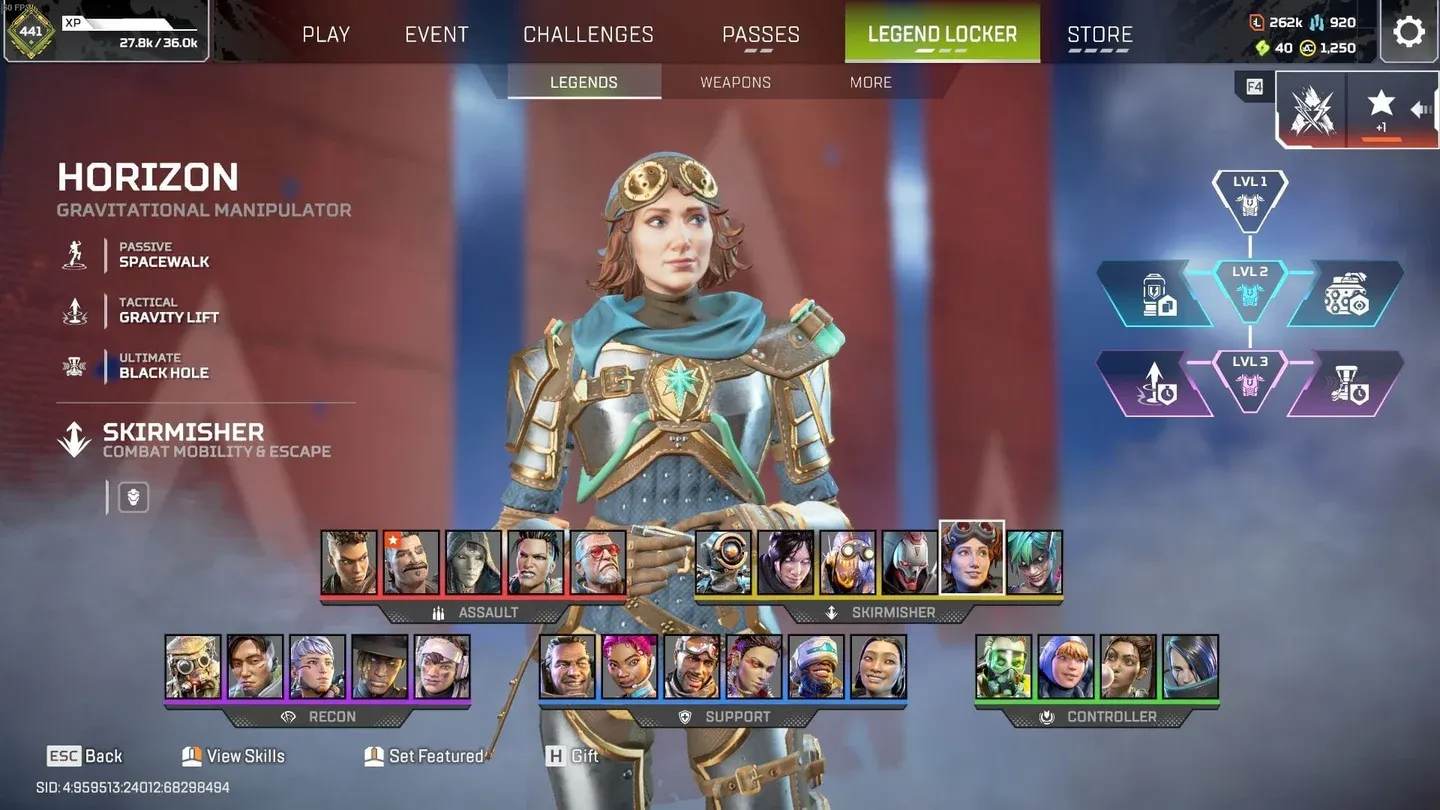
Legend class selection screen
What makes Apex Legends characters different from other battle royales?
Most hero shooters give you abilities as a bonus on top of gunplay. In Apex, abilities are the game. Wraith's portal can save a pinned squad or reposition an entire team mid-fight. Horizon's gravity lift can win a close-range gunfight by throwing enemies off their aim. Bloodhound's ultimate turns a 50/50 into a clean read on every enemy position in the area.
Each Legend has three ability layers:
- Passive (always active, no resource cost)
- Tactical (cooldown-based, used frequently)
- Ultimate (charges over time, high impact)
The passive alone often defines a Legend's value. Bloodhound's passive lets them track recent footprints. Pathfinder's passive reveals the next ring location after scanning beacons. These aren't minor perks; they're information advantages that compound across an entire match.
Assault class: who are the best aggressive legends?
Assault Legends are built for pressure. They don't just win fights; they force fights to happen on their terms.
Wraith sits at the top of competitive play for good reason. Her phase tactical makes her nearly impossible to kill when used correctly, and her portal ultimate gives squads a rotation tool that few other Legends can match. The skill ceiling is high, but the payoff in ranked is substantial.
Bangalore offers a more forgiving aggressive option. Her smoke grenades reset bad fights, and her passive speed boost activates the moment she takes damage, giving her a survival window that newer players can actually use. She pairs well with teammates running digital threat scopes.
Fuse handles the zoning side of Assault. His cluster grenade ultimate locks down areas in the final circle, and his grenade passive lets him stack more throwables and throw them farther. He's strongest when the ring forces enemies into predictable positions.
Revenant and Ash round out the Assault class with dive-and-pressure playstyles that reward mechanical confidence. If you want to learn more about playing Revenant at a high level, the Apex Legends Revenant guide covers his ability kit and best strategies in detail.
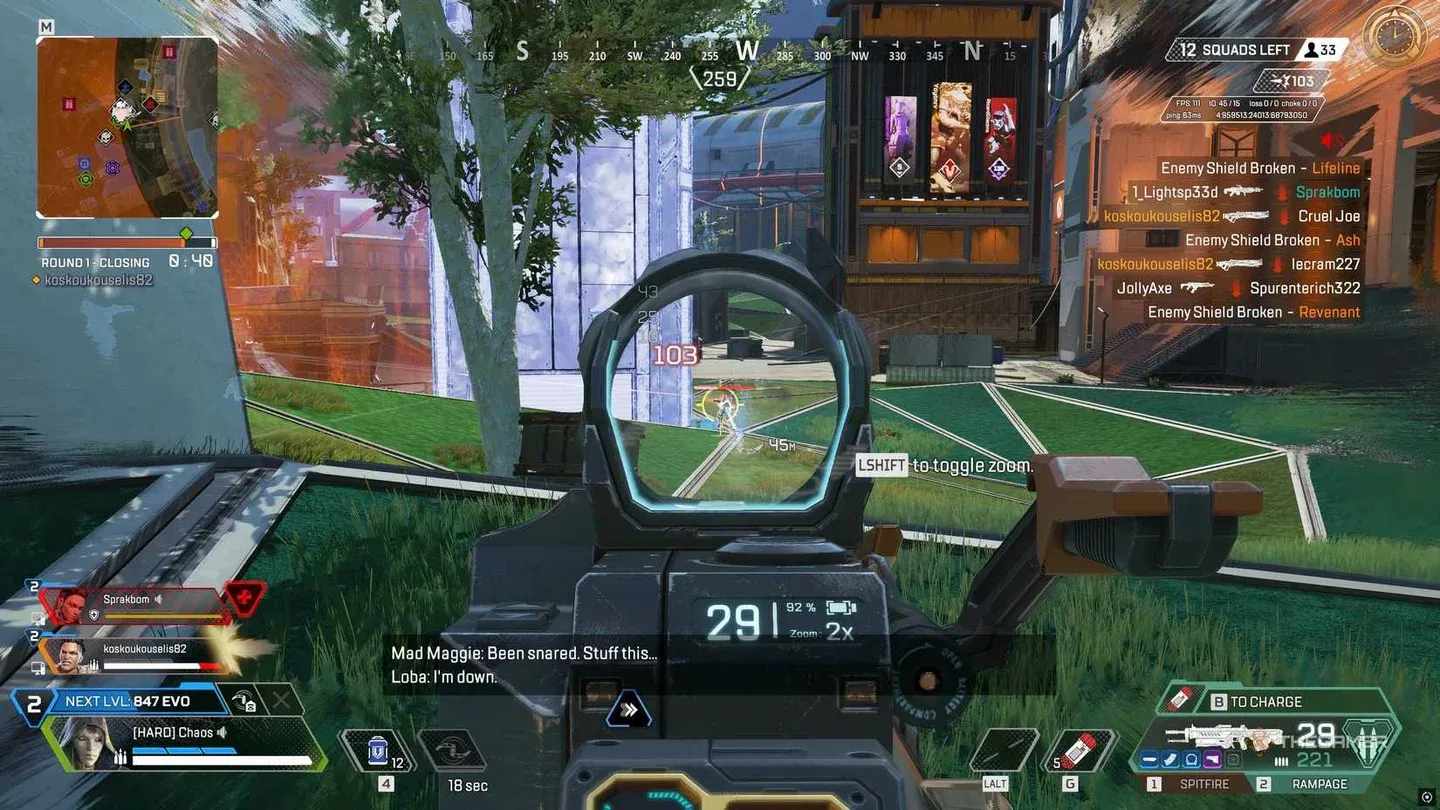
Assault legend tactical abilities
Skirmisher class: which legends have the best movement?
Skirmishers win games through positioning. They get to the high ground first, disengage from bad fights faster, and rotate between zones when other squads are still running.
Octane is the entry point for movement players. His stim tactical costs health but removes any cooldown concern, and his launch pad ultimate benefits the entire squad. He's one of the lowest-difficulty Legends on the roster, which makes him a solid starting point for players who want to play aggressively without a steep learning curve. The Apex Legends Octane guide breaks down his loadouts and advanced movement techniques if you want to take him further.
Horizon sits in a tier above most Skirmishers for competitive play. Her gravity lift creates vertical angles that most enemies can't deal with quickly, and her air-strafe passive means she maintains full accuracy while airborne. Her black hole ultimate pulls enemies into a single point, which makes it one of the most reliable fight-opener tools in the game. She consistently appears in high-ranked and pro play.
Pathfinder rewards mechanical investment more than almost any other Legend. His grapple has a long cooldown but covers enormous distance, and his zipline ultimate moves the whole squad. In skilled hands, Pathfinder controls vertical space in ways that feel completely different from other mobility Legends. For a deep breakdown on grapple mechanics and zipline tricks, the Pathfinder guide covers everything you need.
Valkyrie handles macro rotations. Her jetpack passive provides sustained vertical movement, and her ultimate lets the entire squad reposition across the map. She's the Skirmisher to reach for when your squad needs to win the rotation game rather than the gunfight game.
Recon class: how do information legends change fights?
Recon Legends don't just win fights; they prevent the fights you'd lose.
Bloodhound is the most beginner-accessible Recon pick. Their scan shows enemy positions in real time, and the Beast of the Hunt ultimate layers on a speed boost with enhanced vision. The information payoff is immediate and obvious, which is why Bloodhound consistently ranks as one of the most-played Legends at every skill level.
Seer operates differently. His micro-scan interrupts heals and revives, which is devastating in late-game circles where every second of healing matters. His ultimate dome creates a detection zone that reveals enemies who move inside it. He's harder to play correctly than Bloodhound but more oppressive in coordinated teams.
Vantage fills the long-range niche. Her sniper rifle ultimate marks enemies and gives armor-level information to her squad, and her companion jump lets her relocate without burning an ultimate. She's the Recon pick for players who like to control sightlines from distance.
Crypto has the highest skill ceiling in the class. His drone provides surveillance that no other Legend can match, but it requires you to stand still while flying it. At the right skill level, Crypto's EMP ultimate is one of the strongest fight-openers in the game.
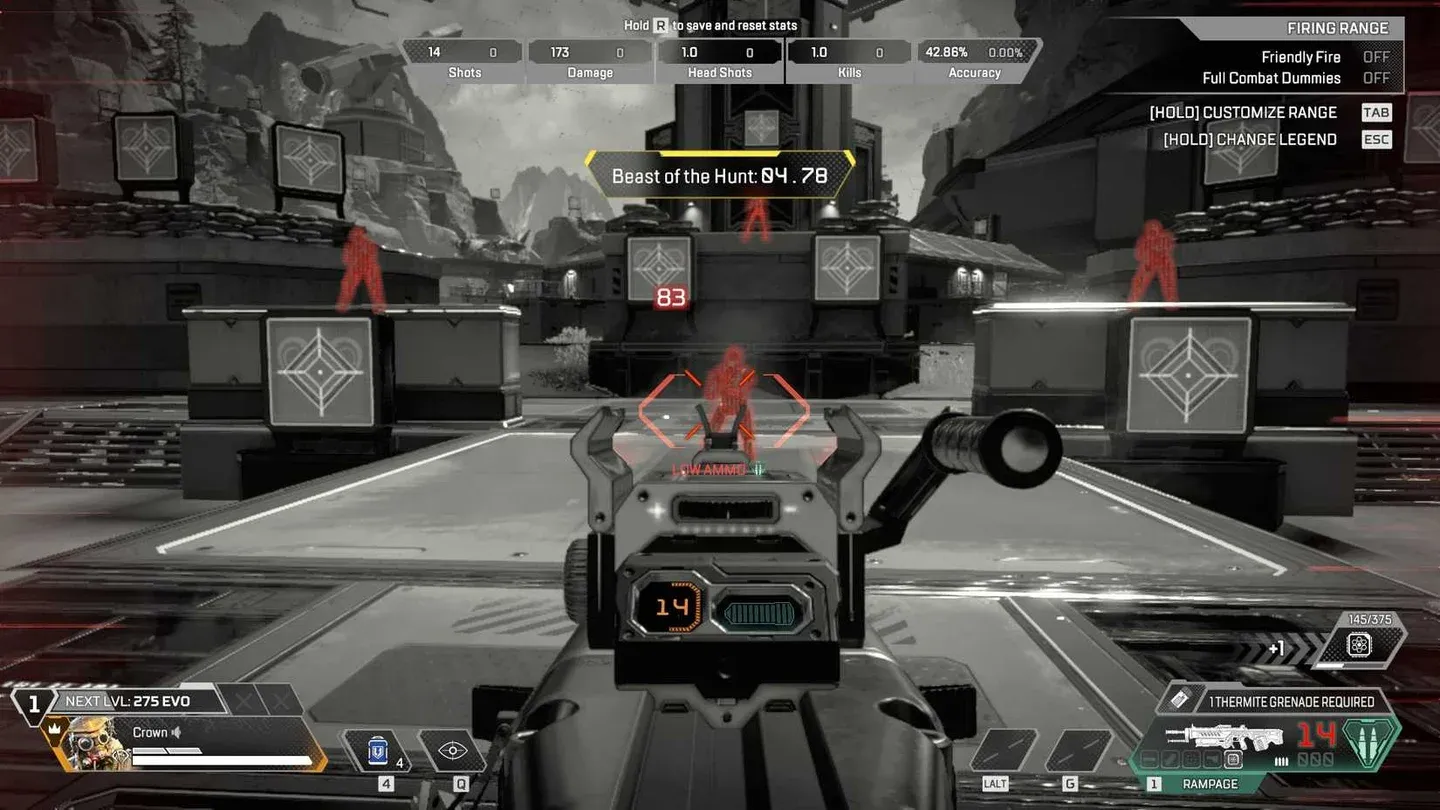
Bloodhound scan in active fight
Controller class: which legends dominate the final circle?
Controllers earn their value in endgame. When the ring shrinks and positioning becomes everything, Controller Legends turn good real estate into fortresses.
Catalyst reshaped zone control when she joined the roster. Her reinforced doors deny entry points, and her dark veil ultimate blocks sightlines with a wall that enemies can't see through but she can. She's consistently one of the highest-ranked Legends in competitive play.
Caustic thrives in any enclosed space. His gas traps deny entry, his gas grenades flush enemies from cover, and his ultimate fills a building with vision-denying damage. He's been a competitive staple since launch for good reason.
Wattson plays the longest game of any Controller. Her perimeter fences slow and damage enemies crossing them, her ultimate intercepts grenades and recharges shields, and her passive accelerates shield regeneration. She's the choice for teams that want to hold a position and outlast everyone else.
Gibraltar is the defensive anchor for squads that take fights in open space. His dome shield buys time for revives, and his gun shield passive gives him more effective health in any direct gunfight.
Support class: how do you keep your squad alive?
Support Legends are the difference between a squad that wins prolonged fights and one that gets cleaned up after the first engagement.
Lifeline remains the most straightforward support pick. Her passive revive lets her pick up teammates while staying in cover, her tactical deploys a healing drone, and her care package ultimate drops high-tier loot. She's low difficulty and high value, which makes her the best starting point for players who want to focus on team sustain.
Loba controls resources. Her bracelet tactical repositions her quickly, and her Black Market ultimate lets the whole squad pull ammo and items from nearby loot without physically looting. In the mid-game, Loba keeps teams topped up without wasting time.
Newcastle blends support with aggression. His revive ability lets him drag downed teammates behind a moving shield, and his castle wall ultimate creates deployable cover mid-fight. He rewards players who can make fast decisions under pressure.
Conduit is the newest addition to the support class and handles shield regeneration. Her low difficulty makes her accessible, and her ranked value is high enough that she fits into most serious squad compositions.
What's the best squad composition for ranked play?
The strongest ranked compositions combine information, mobility, and endgame control. A three-class squad that covers all three phases of a match will outperform a team of three aggressive Legends more often than not.
A reliable ranked template:
- Horizon (Skirmisher) handles entry and vertical positioning
- Bloodhound (Recon) provides enemy tracking and ultimate synergy with aggressive pushes
- Catalyst (Controller) locks down the final circle
This combination covers early fights with Bloodhound's scans, mid-game rotations with Horizon's gravity lift, and late-game circles with Catalyst's zone denial. The three Legends don't overlap in role, which means the squad has an answer for every phase of a match.
Alternate compositions worth considering:
- Wraith + Bloodhound + Wattson (aggressive entry into a defensive hold)
- Octane + Seer + Newcastle (fast rotation with fight-interruption and clutch revives)
- Horizon + Loba + Caustic (sustained fights with resource control and gas denial)
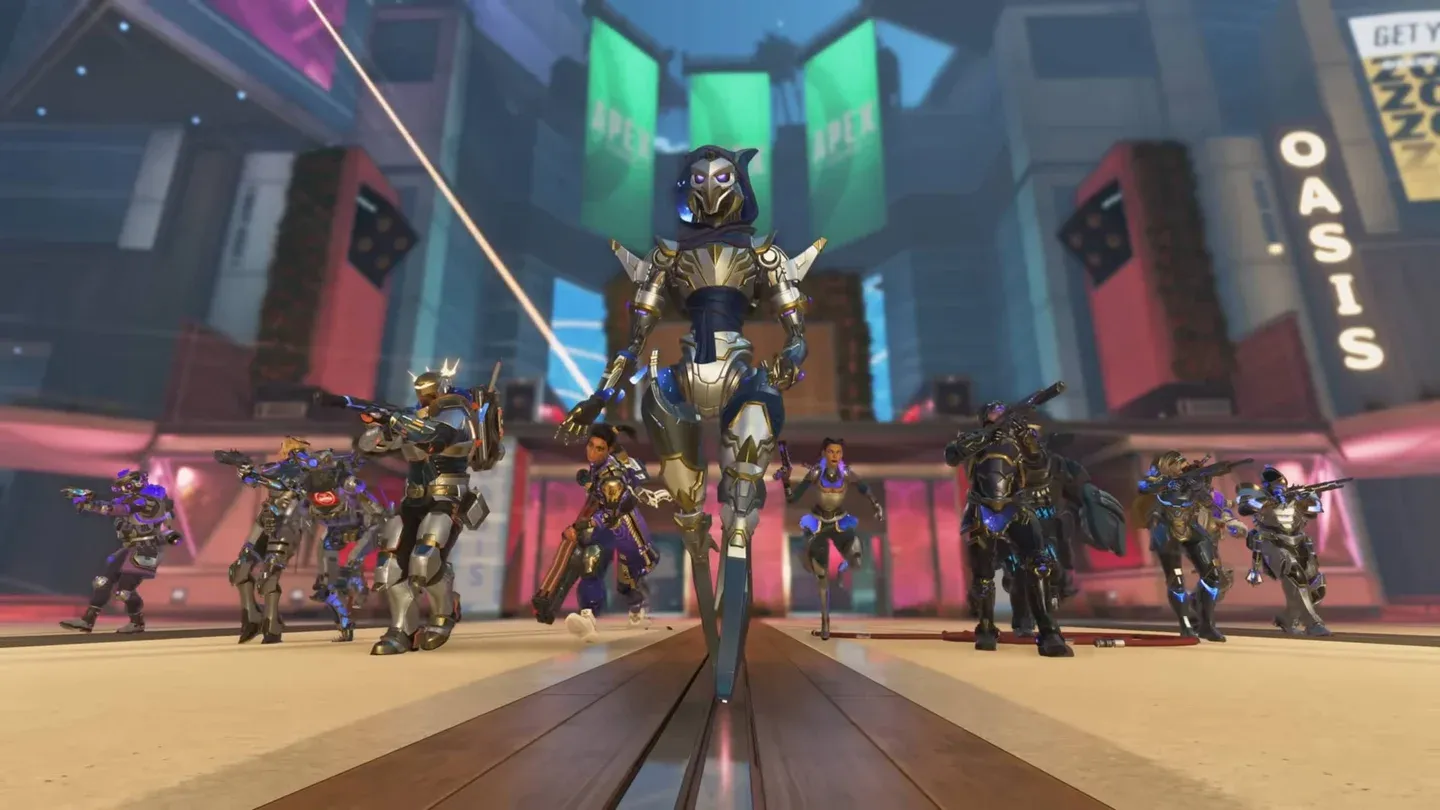
Ranked squad composition example
Which legends scale the most with skill?
Some Legends feel weak until you put serious time into them. The gap between a beginner Pathfinder and an expert Pathfinder is wider than almost any other Legend.
High skill-ceiling picks:
- Pathfinder (grapple timing and angle selection)
- Crypto (drone positioning and EMP timing)
- Wattson (fence placement and grenade interception)
- Seer (scan timing to interrupt heals and revives)
These Legends don't reward button-mashing. They reward game sense, map knowledge, and communication. If you're willing to put in the practice, they can completely control matches at the right level.
For players still figuring out which role fits them best, the Apex Legends character guide breaks down playstyle matching and Season 27 meta picks in more detail.
How to pick your first main legend
The fastest path to improvement is committing to one Legend and learning that Legend deeply before branching out.
A practical starting path:
- Pick one main from a class that matches how you naturally play
- Add one backup Legend from a different class for flexibility
- Learn the cooldowns and weaknesses of the Legends you face most
- Adjust your pick based on squad composition, not just personal preference
For aggressive players who want to start winning faster, Octane and Bloodhound are the two lowest-difficulty Legends that still hold real ranked value. For players who prefer a support role, Lifeline and Conduit offer immediate team impact without a steep learning curve.
The meta shifts with every balance patch. Cooldown tweaks, new Legends, and map rotations all move the tier list. Players who understand the system rather than just memorizing the current top picks adapt faster and climb more consistently. The full Apex Legends guides collection covers ranked climbing, individual Legend deep-dives, and meta breakdowns to keep you ahead of those shifts.