

What Is Balatro and Why Does It Click?
Balatro is a roguelike deck-builder built on poker foundations, and it has a way of pulling you in for "just one more run" before you realize hours have passed. Each run sends you through 8 antes, each split into three blinds of escalating score requirements. You play poker hands to generate Chips multiplied by Mult to beat those targets, spending earned money in shops between blinds to buy Jokers, consumables, and upgrades. The catch: randomness is real, but it never excuses poor decision-making. Knowing what to prioritize separates players who rage-quit on White Stake from those who eventually crack Gold Stake.
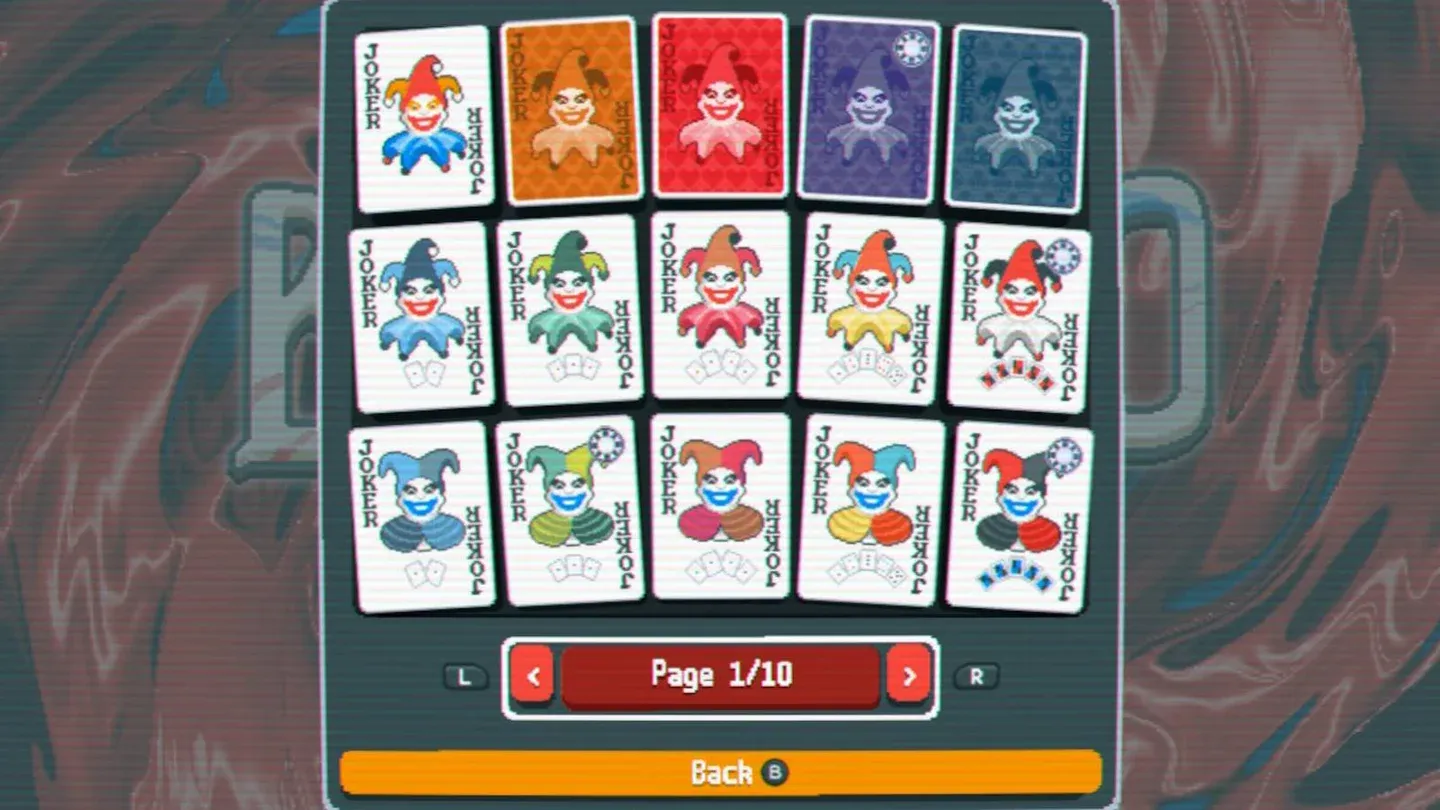
Picking Jokers in the shop
How Does Scoring Actually Work?
Every hand you play produces a score using one formula: Chips × Mult = Score. That sounds simple until you realize Mult has two distinct layers.
- +Mult adds directly to the red multiplier number (e.g., two jokers giving +4 and +2 produce a total of +6 Mult).
- XMult multiplies the entire Mult value. If your current Mult is +6 and you trigger an X2 Mult source, the result is 12, not 8.
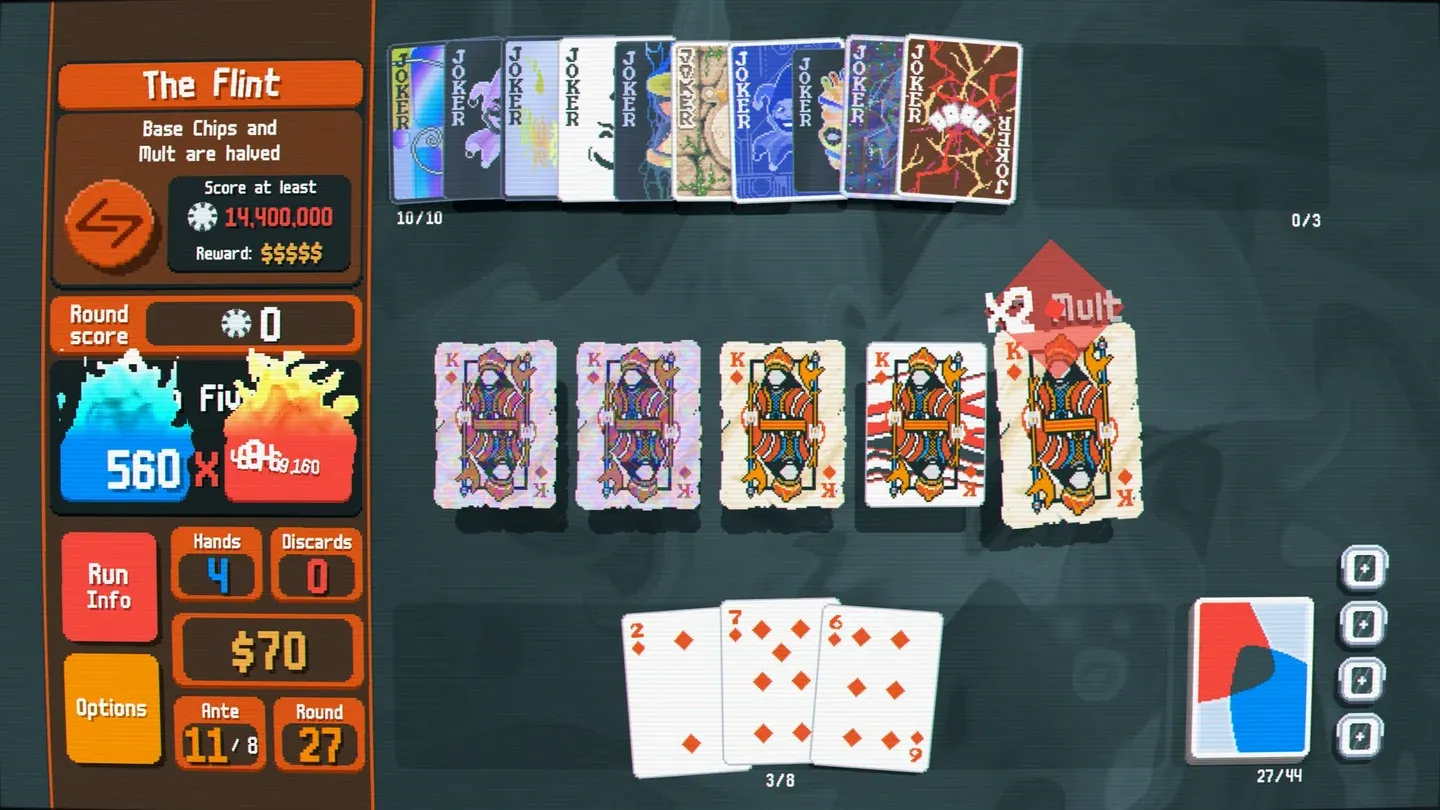
The order cards and Jokers resolve left to right on screen, so placing +Mult sources before XMult sources in your Joker lineup is critical. A practical example from testing: 100 Chips × +14 Mult × X2 Mult produces 2,800 score, while reversing the XMult trigger order can cost you hundreds of points.
Chip sources are less flashy but genuinely powerful. A Foil Joker adds +50 Chips, which can outperform a +4 Mult Joker depending on your hand's base chip value. Don't underestimate the blue number.
What Poker Hands Should Beginners Target?
You start with 4 hands and 3 discards per blind (numbers that shift with certain deck choices and Stakes). Here is how the main hand types compare for new players:
Full House is the recommended starting hand for most beginners. It teaches you deck-fixing, hand flexibility, and when to pivot — skills you carry into every future run. Flushes are the path of least resistance early on, but they plateau badly in later antes. Straights scale impressively but demand more mental tracking than new players usually have bandwidth for.
The first blind always requires 300 score on the base Red Deck. A Full House like AAAQQ, or a Flush starting with high cards, clears that comfortably in one or two hands.
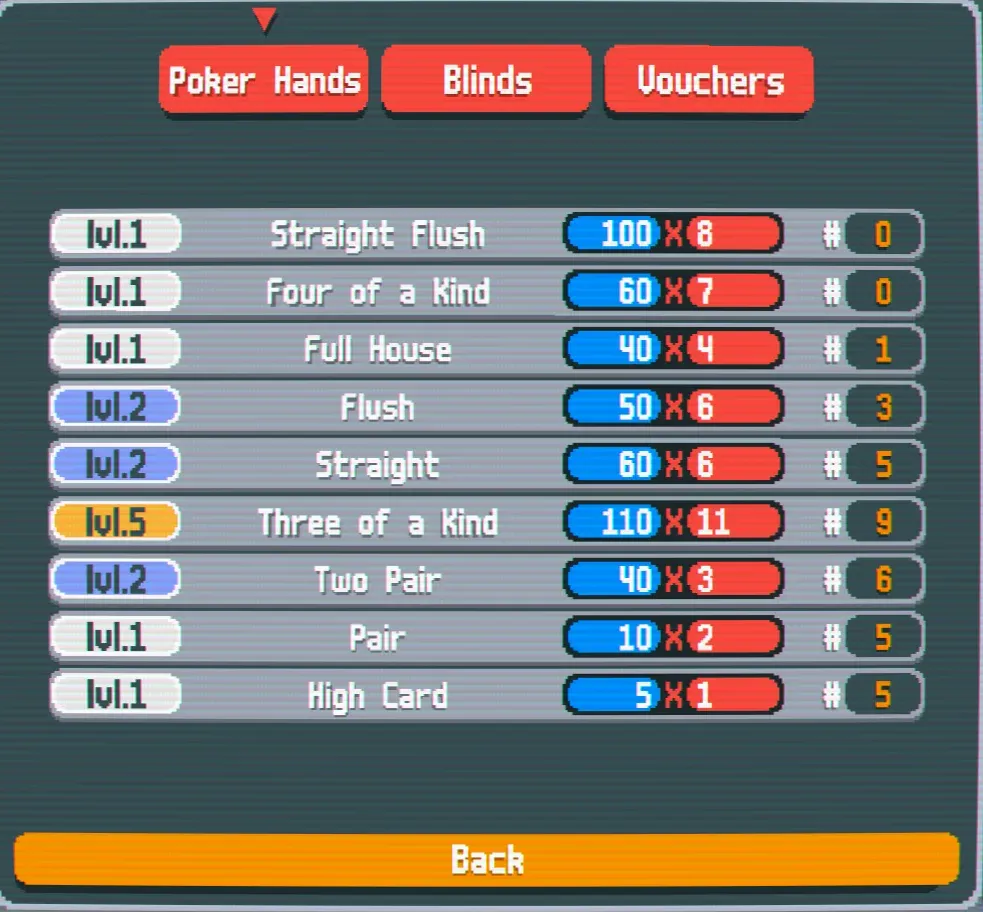
Chips times Mult equals score
Understanding Jokers: The Heart of Every Run
Jokers are where Balatro transforms from a poker simulator into something genuinely creative. You can hold up to 5 at a time, and each one modifies the rules in a different way. Thinking about them in categories helps you build coherently rather than grabbing whatever looks shiny.
What Types of Jokers Should You Know?
- Scoring Jokers (e.g., Sly Joker, Green Joker): Directly add Chips or +Mult per hand played.
- XMult Jokers (e.g., Constellation, Cavendish, The Duo): Multiply your Mult, making them exponentially more valuable late-game.
- Scaling Jokers (e.g., Hologram, Erosion): Grow stronger over time by meeting repeated conditions. These are the backbone of late-game power.
- Economy Jokers (e.g., Mail-In Rebate, Rocket, Golden Joker): Generate money passively. Critical at higher Stakes where income is restricted.
- Utility Jokers (e.g., Chaos the Clown, Juggler, Drunkard): Provide no score or money but offer valuable mechanical perks like extra hand slots.
When shopping, check whether a new Joker complements what you already have. A +Mult Joker sitting to the left of an XMult Joker is far more effective than the reverse. The Steam Community's detailed beginner guide to Balatro breaks down many of these interactions if you want a deeper reference.
Negative Jokers Are Almost Always Worth Taking
Negative is an edition that can appear on Jokers. Instead of consuming a slot, a Negative Joker actually adds a slot, effectively letting you hold 6 Jokers simultaneously. On lower Stakes especially, a Negative Joker is almost universally worth purchasing unless you have a very specific reason to refuse it.
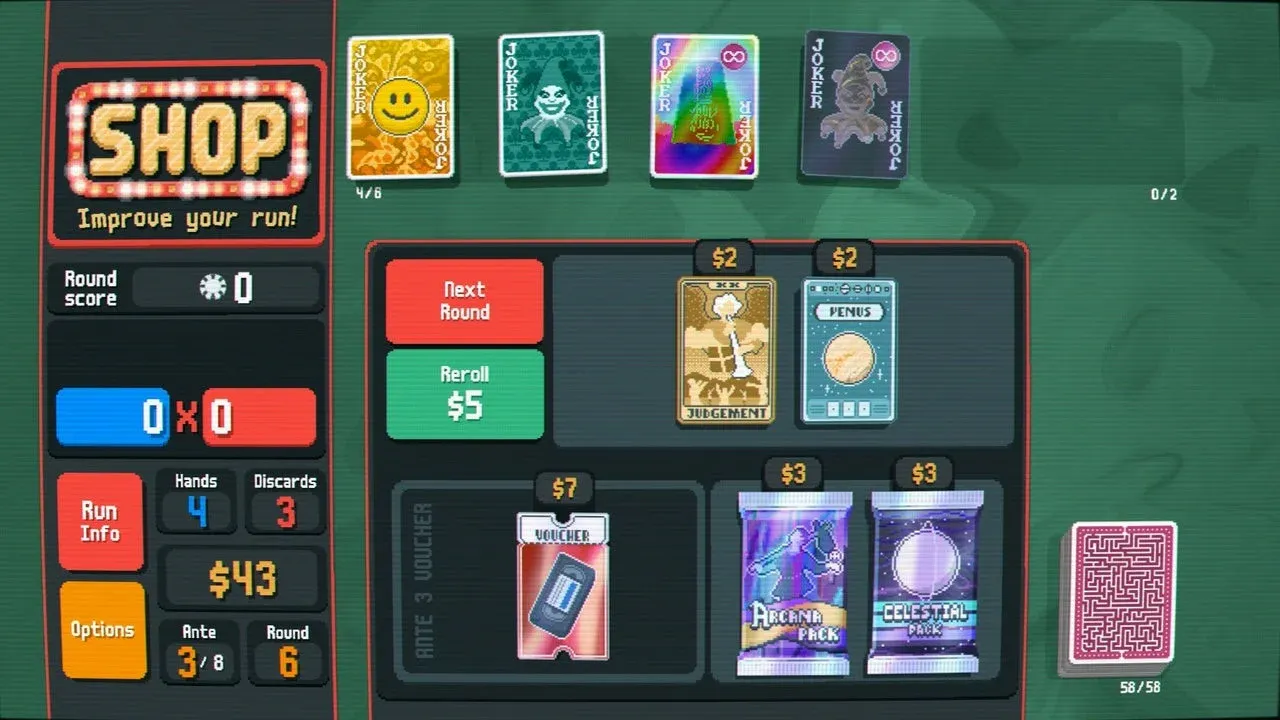
Joker slot arrangement matters
Tarots, Planets, and Spectrals: What Do They Do?
Consumables round out your toolkit. You hold up to 2 at a time, and they are discarded on use.
- Tarot cards (from Arcana packs) modify your deck directly. The Empress and Chariot add +Mult to cards, Hierophant and Tower add Chips, and Magician makes cards Wild. Using Tarots to remove low-value cards or convert suits is called deck fixing, and it becomes increasingly important at higher Stakes.
- Planet cards (from Celestial packs) permanently level up a specific poker hand, adding Chips and Mult to that hand type every time you play it. Earth levels Full House, for instance. Stacking Planet levels is one of the most reliable ways to scale score.
- Spectral cards are powerful but come with downsides. Incinerate destroys 5 cards from your hand but pays $20 — experienced players take this almost every time early in a run because a leaner deck is easier to control.
Card Seals, Editions, and Enhancements at a Glance
Every card in your deck can carry one enhancement, one seal, and one edition simultaneously. Here is a quick reference:
Seals:Gold earns $3 when the card scores. Red retriggers all of the card's effects whenever it triggers. Blue creates a Planet card if the card is held at round end. Purple creates a Tarot card if discarded.
Editions:Foil adds +50 Chips. Holographic adds +10 Mult. Polychrome gives ×1.5 Mult. Negative (on Jokers only) adds a Joker slot.
Red Seals paired with strong enhancements are particularly potent because every retrigger fires the full effect again.
How Do the Eight Stakes Work?
Stakes are Balatro's difficulty ladder. Each new Stake adds a modifier on top of all previous ones, so by Gold Stake you are dealing with every restriction simultaneously. Here is what each layer adds and how to handle it:
Blue Stake is where many players stall. Losing a discard hurts hand-building more than it first appears. The fix is proactive deck fixing through Tarots so you rely less on discarding to find your target hand. Pairs and smaller hands become more viable here than they were on White Stake.
Purple Stake is the second major wall. Because it stacks with Green Stake's score scaling, you are now facing four times the base score requirement at each blind. XMult Jokers stop being a luxury and become a necessity. Planet cards for your primary hand type should be purchased whenever possible.
Gold Stake requires beating the Ante 8 boss, which demands a score of 400,000. Early economy is the foundation: aim to carry $25 between blinds to earn maximum interest ($5 per round cap), and treat every dollar as a resource toward rolling for the right Jokers. Rental Jokers are almost never worth taking early, but once your Ante 8 strategy is locked in, their ongoing cost becomes irrelevant.
Eight Stakes, eight challenges
What Are the Best Early Strategies for New Players?
Here is a practical framework for your first several runs:
- Play the first blind without overthinking it. Scan your opening hand for the best available combination: Full House, Flush, Straight, or at minimum a pair of face cards or Aces. High-ranking cards score more Chips, so favor those over low pairs.
- Win with fewer hands played. You earn $1 per remaining hand after clearing a blind, so finishing in one or two hands instead of four directly funds your next shop visit.
- Prioritize one economy Joker and one scoring Joker early. Something like Golden Joker ($4 per round) paired with a Blue Joker (+2 Chips per card in deck) gives you a stable base to build from without committing to a specific hand type too early.
- Level your chosen hand with Planet cards. Every level added to Full House or Flush compounds across the entire run. Earth for Full House and Neptune for Flush are shops purchases worth prioritizing over most Joker rerolls.
- Commit to one or two hand types and stick with them. Trying to score with Flushes one round and Straights the next means neither hand gets properly powered up. Pick a lane and fix your deck around it.
For players who want to go deeper on specific card interactions and run structures, the Steam Community primer on Balatro covers hand efficiency and economy in useful detail.
Economy, Interest, and the Shop Loop
Money management is what separates players who plateau on Green Stake from those who reach Gold. The interest system rewards holding cash: you earn up to $5 per round when you enter a blind with $25 or more. That passive income funds rerolls, Vouchers, and booster packs without depleting your reserves.
Vouchers are permanent upgrades that appear whenever you defeat a boss blind. The +1 Hand Voucher is one of the strongest quality-of-life purchases available because it both increases your scoring capacity per blind and adds $1 to your post-blind payout for each extra hand remaining.
Rerolling the shop costs $5 per roll. Do not reroll in the early antes unless you have strong economy already established. In the mid-to-late game, rerolling to find a specific XMult Joker that completes your strategy is often the correct play.
Deck Tips: Which Starting Deck Should You Use?
The Red Deck (default) gives +1 Discard, making it the most forgiving starting point for beginners. The Blue Deck, Yellow Deck, and Green Deck all support early economy in different ways and are reliable choices at higher Stakes. The Plasma Deck balances Chips and Mult automatically, which lets +Chips Jokers contribute to Mult as well, making it unusually strong once you understand the mechanic.
Avoid the Black Deck and Nebula Deck until you have several wins under your belt. Both decks have powerful late-game payoffs but weak early games that punish inexperienced players heavily.
For more guides covering other games and strategies, you can always browse more guides on GAMES.GG to keep building your knowledge base across titles.