Search games, articles, guides...CtrlK
Sign InGet Started

New to BG3? Learn the essential mechanics, party tips, and combat tricks to survive your first playthrough with confidence.

Written by Hub
Head of Business Dev
See more GAMES.GG guides on Google
Add us as a preferred source and our guides show up first in your results.

Baldur's Gate 3 Romance Guide: Every Companion You Can Date
Every romanceable companion in BG3, how approval works, and tips for starting each relationship without missing key moments.

How to Get the Owlbear Cub in Baldur's Gate 3: Full Recruitment Guide
Find the owlbear cub, survive the Goblin Camp, and get this fearsome companion to join your BG3 camp permanently.

Best Baldur's Gate 3 Builds: Every Class Ranked and Explained
From S-tier Lockadin to beginner-friendly Battle Master, discover the strongest BG3 builds for every playstyle and difficulty.
Baldur's Gate 3 throws you into a world of dice rolls, spell slots, and branching dialogue with almost no hand-holding. That's part of the appeal, but it also means a lot of first-time players spend their opening hours confused, frustrated, or accidentally locked out of content they didn't know existed. This guide cuts through the noise and gives you the foundation you need to actually enjoy the game from hour one.
Baldur's Gate 3 is a turn-based RPG built on the Dungeons & Dragons 5th Edition ruleset. Every action, every attack, every persuasion attempt runs through a dice roll modified by your character's stats. Understanding that one fact changes how you approach everything. You're not playing an action game where skill carries you through. You're playing a probability game where good preparation tilts the odds in your favor.
The game is split into three acts, each with dozens of hours of content. Act 1 alone can take 30 to 50 hours if you explore thoroughly. Don't rush.
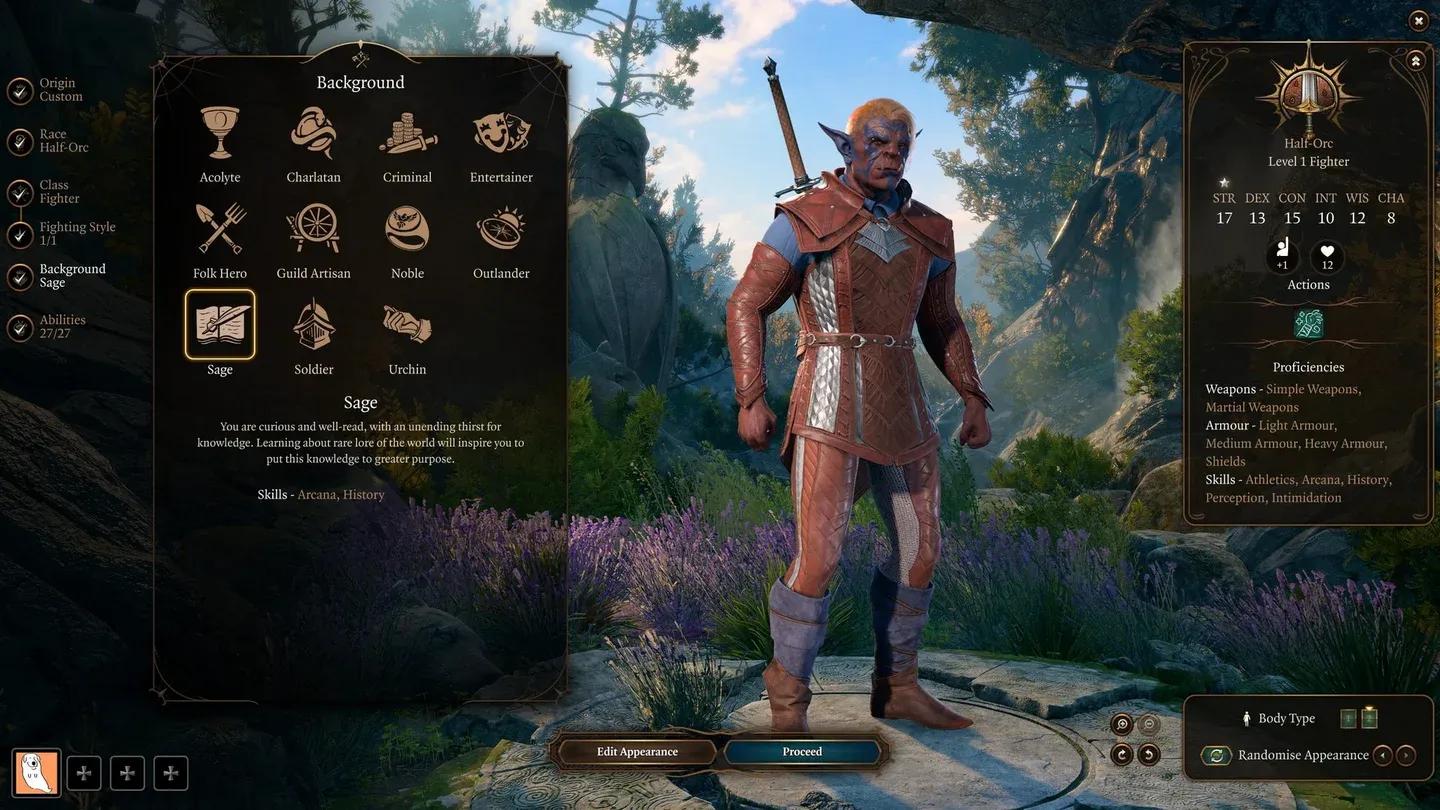
Choose your class carefully
Class selection is the single most consequential decision you make at the start. Here's a quick breakdown of which classes suit new players and which ones punish inexperience:
| Class | Difficulty | Playstyle | Beginner Friendly? |
|---|---|---|---|
| Fighter | Low | Melee/Ranged combat | Yes |
| Cleric | Low | Support/Healing | Yes |
| Paladin | Low | Melee + Spells | Yes |
| Ranger | Medium | Ranged + Nature | Mostly |
| Rogue | Medium | Stealth + Burst damage | Mostly |
| Wizard | High | Spell management | No |
| Sorcerer | High | Spell slots + Metamagic | No |
| Warlock | Medium | Short rest recovery | Somewhat |
Fighter is the most forgiving starting class. You get heavy armor proficiency, strong weapon options, and the Action Surge ability that gives you an extra action in combat. You spend less time managing resources and more time learning how the game actually works.
Cleric is the second-best beginner pick. Healing yourself and your party removes a lot of early pressure, and Clerics have enough offensive options to stay useful in every fight.
You don't need to be a tabletop player to enjoy BG3, but knowing a few core concepts saves a lot of confusion.
Ability scores (Strength, Dexterity, Constitution, Intelligence, Wisdom, Charisma) determine your modifiers. A score of 10 gives you a +0 modifier. Every 2 points above 10 adds +1. So a Strength of 16 gives you +3 to attack rolls and damage with Strength-based weapons.
Proficiency bonus starts at +2 and increases as you level. It applies to attack rolls, saving throws, and skill checks where you're proficient.
Advantage and Disadvantage are the most important situational rules. Advantage means you roll two dice and take the higher result. Disadvantage means you take the lower. Setting up advantage consistently (through high ground, spells, or flanking) is the difference between winning and losing difficult fights.
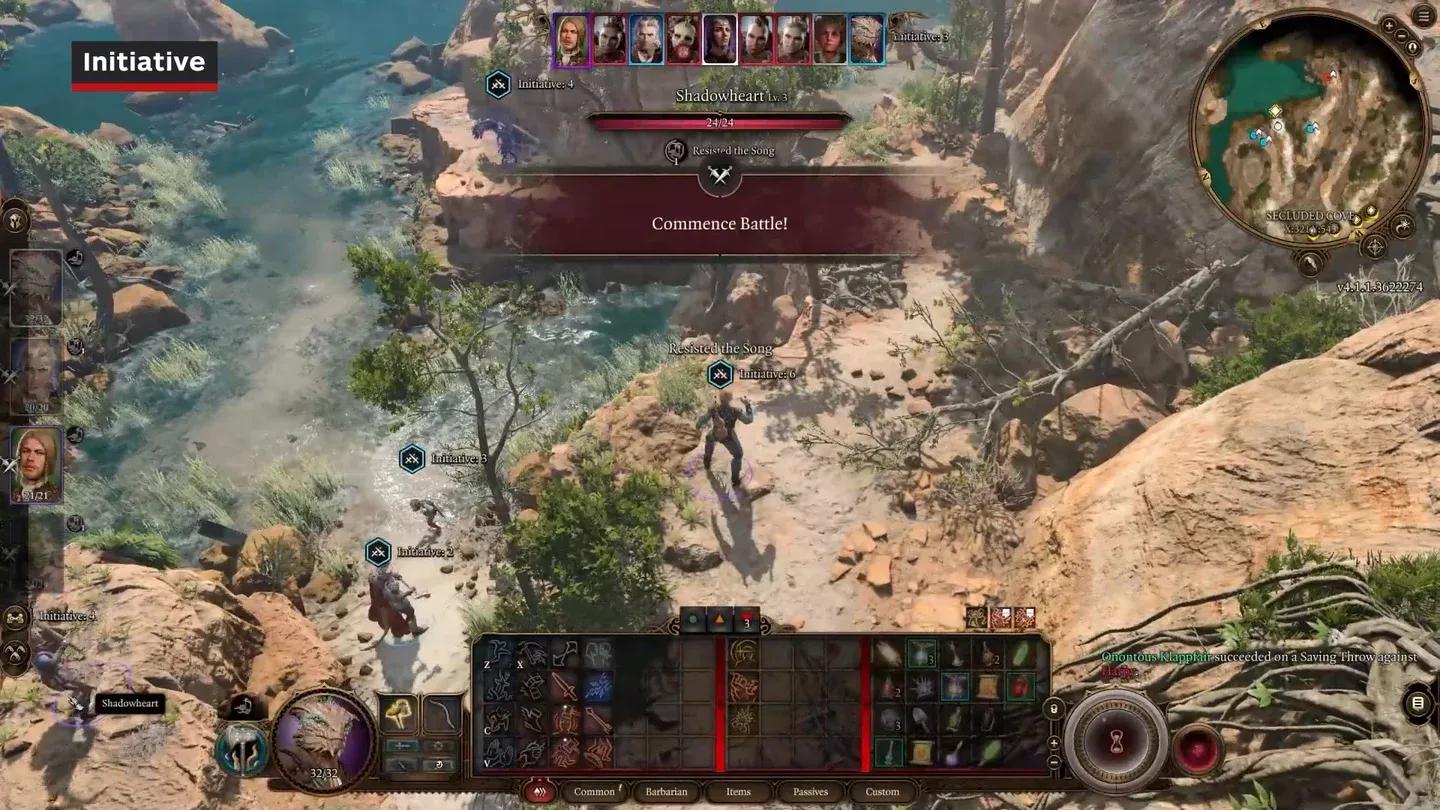
Turn order controls everything
Save constantly. BG3 has a quicksave function (F5 on PC) and it doesn't autosave nearly as often as you'd expect. Conversations can lock you into outcomes, combat can go sideways in one bad turn, and some decisions have consequences that don't become obvious for hours. Saving frequently is one of the most important habits new players can build, precisely because the autosave system won't protect you from a bad roll at a critical moment.
Beyond saving, read every tooltip. The game surfaces a huge amount of information through tooltips that appear when you hover over abilities, items, and status effects. Most of what you need to know is already on screen.
Combat in BG3 is turn-based and uses an Action, Bonus Action, Movement structure each turn. Most attacks cost your Action. Many spells and abilities cost a Bonus Action. You can move up to your speed value in feet per turn.
The biggest mistake beginners make is treating every fight like a straightforward brawl. BG3 rewards creative thinking:
Resting matters too. Long rests restore all spell slots, hit points, and most abilities, but they consume camp supplies. Short rests (available twice per long rest) restore hit dice for healing and recharge certain abilities like the Warlock's spell slots.
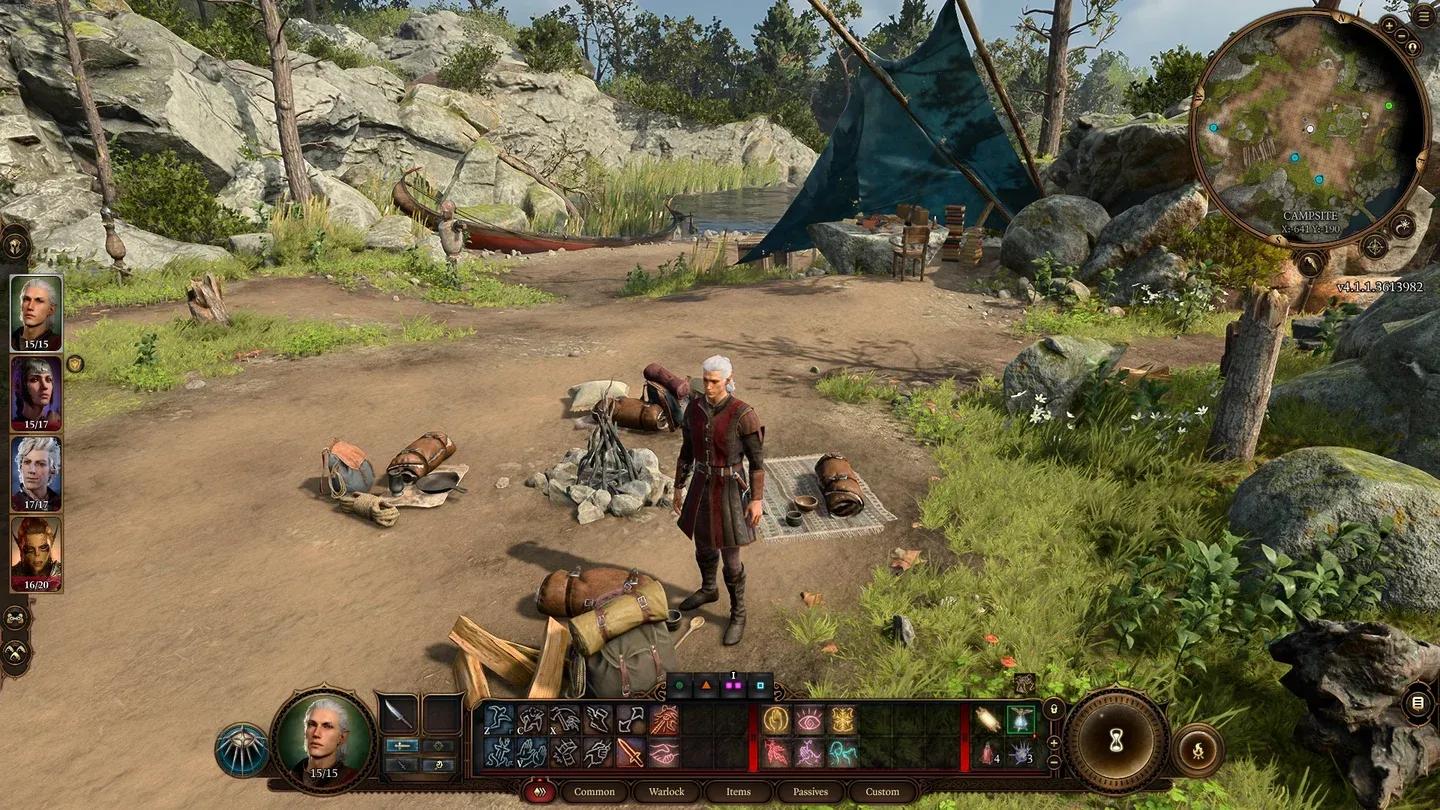
Manage camp supplies wisely
You can recruit up to three companions to fill out your four-character party. The companions you meet early in Act 1 are Shadowheart (Cleric), Astarion (Rogue), Gale (Wizard), Lae'zel (Fighter), Wyll (Warlock), and Karlach (Barbarian).
A balanced party typically wants:
That said, BG3 doesn't force you into any composition. Plenty of players clear the game with unconventional parties. The key is understanding what each companion brings and not leaving yourself without any healing options.
Act 1 is the game's tutorial in disguise. The Druid Grove area near the starting beach introduces most core mechanics, gives you access to several companions, and sets up the main story stakes. Explore it fully before moving on.
Prioritize these early:
For more guides on navigating BG3 and other RPGs, browse the latest guides on GAMES.GG to keep building your knowledge.
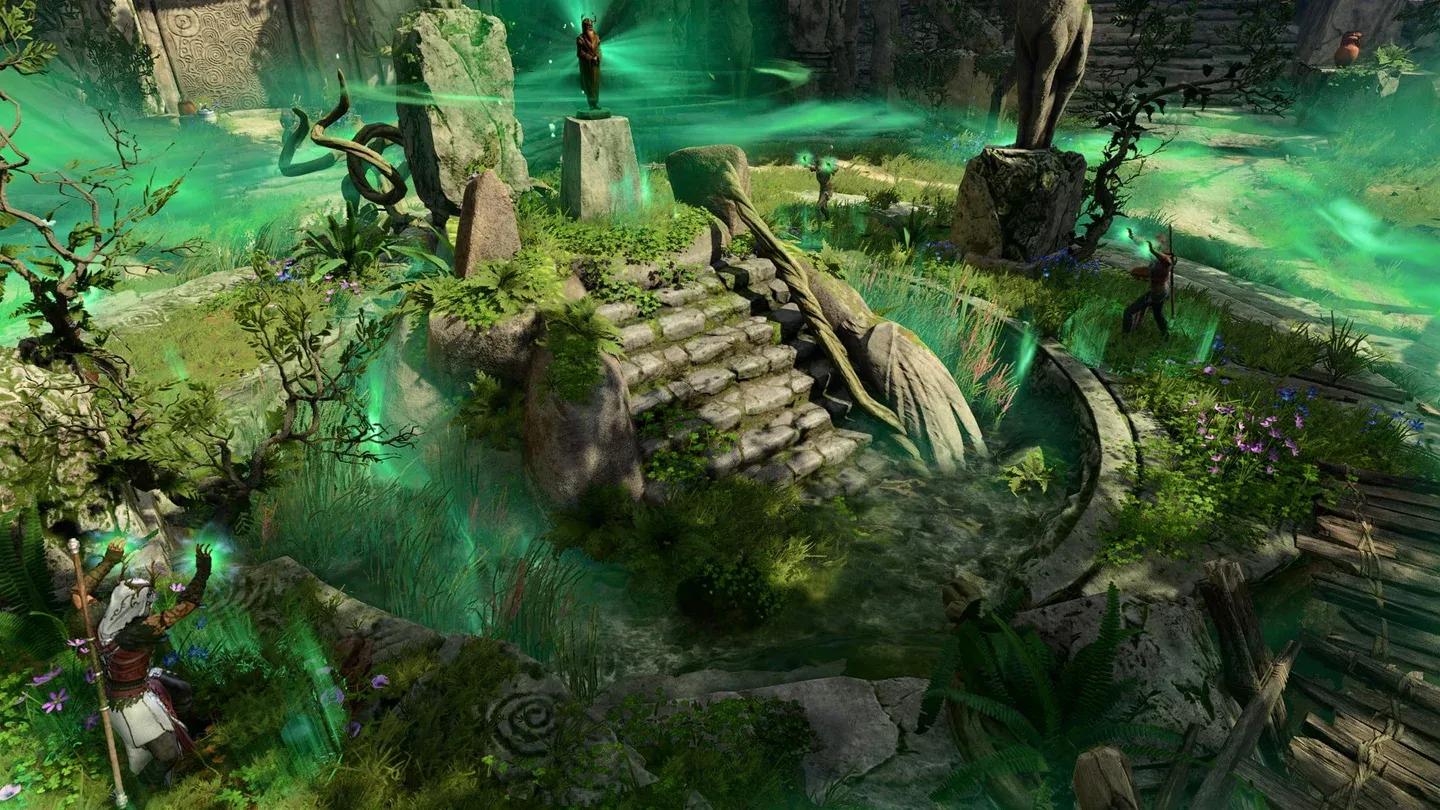
Druid Grove is your first hub
Inventory management is one of the less glamorous parts of BG3, but ignoring it causes problems fast. Each character has a weight limit based on their Strength score. Overencumbered characters move slowly and can't jump.
A few habits that help:
Outside of combat, BG3 uses skill checks for exploration, conversation, and problem-solving. When you attempt to pick a lock, persuade an NPC, or investigate a strange object, the game rolls a d20 and adds your relevant skill modifier.
Your Passive Perception runs automatically in the background, revealing hidden objects and traps as you move through the world. Characters with high Wisdom scores make better scouts.
In dialogue, you'll often see multiple response options with associated skill checks. The DC (Difficulty Class) shown tells you the minimum roll needed to succeed. A DC 15 Persuasion check means you need a total of 15 or higher on your d20 roll plus your Charisma modifier plus your Proficiency bonus (if proficient in Persuasion).
You can also use Inspiration points earned through roleplay to reroll failed checks once. Don't hoard them.