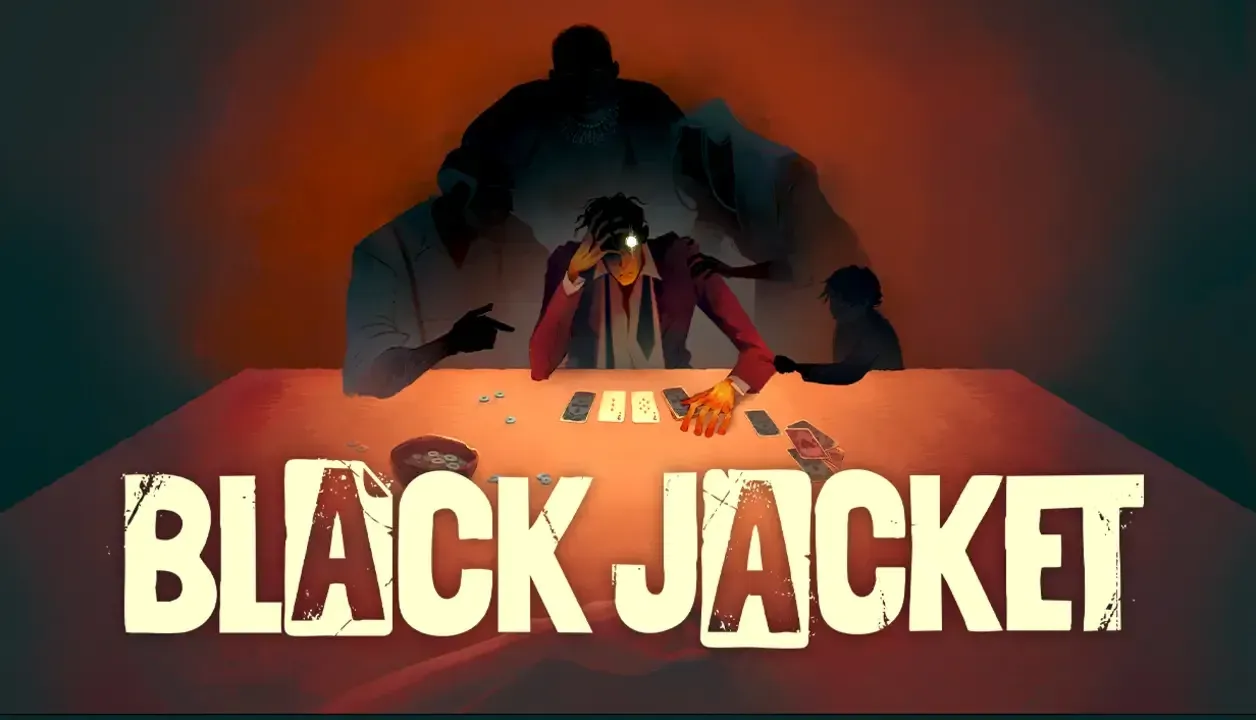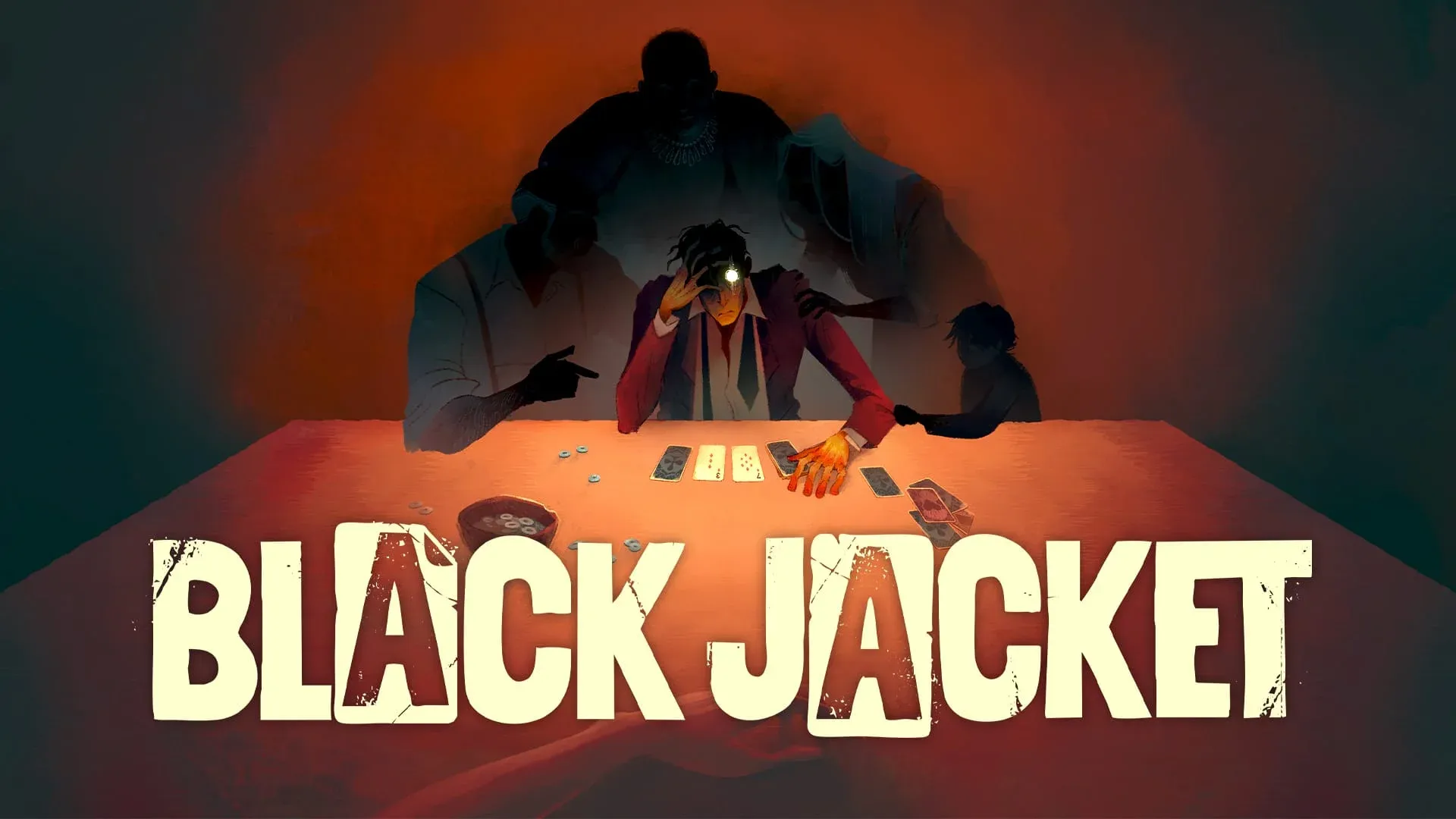

Boss fights in Black Jacket are not just harder versions of normal blackjack hands. Each boss adds a curse that specifically punishes whatever your deck was doing well. If you walk into Morgan with a sleeve-heavy plan, she dismantles it. If you face Ivel without flexible values, his negative cards will leave you miscounting totals until you run out of coins. The good news: once you understand what each boss is actually testing, the fights stop feeling unfair and start feeling like puzzles with clear solutions.
What makes boss fights different from normal encounters?
The blackjack foundation stays the same: get close to 21, avoid busting, blackjack beats a normal 21, and tied totals resolve by highest card. What changes is the boss curse, a special rule layered on top that can exhaust sleeved cards, add negative cards to your side of the table, manipulate values, or force you into bad coin decisions.
Three questions worth asking before you play your first card in any boss fight:
- What does this curse punish?
- Does my deck rely on the thing being punished?
- If my main plan fails, can I still win normal blackjack rounds?
If the answer to the third question is no, a shop stop, a burn, or an awaken upgrade before the boss node is almost always the right call.
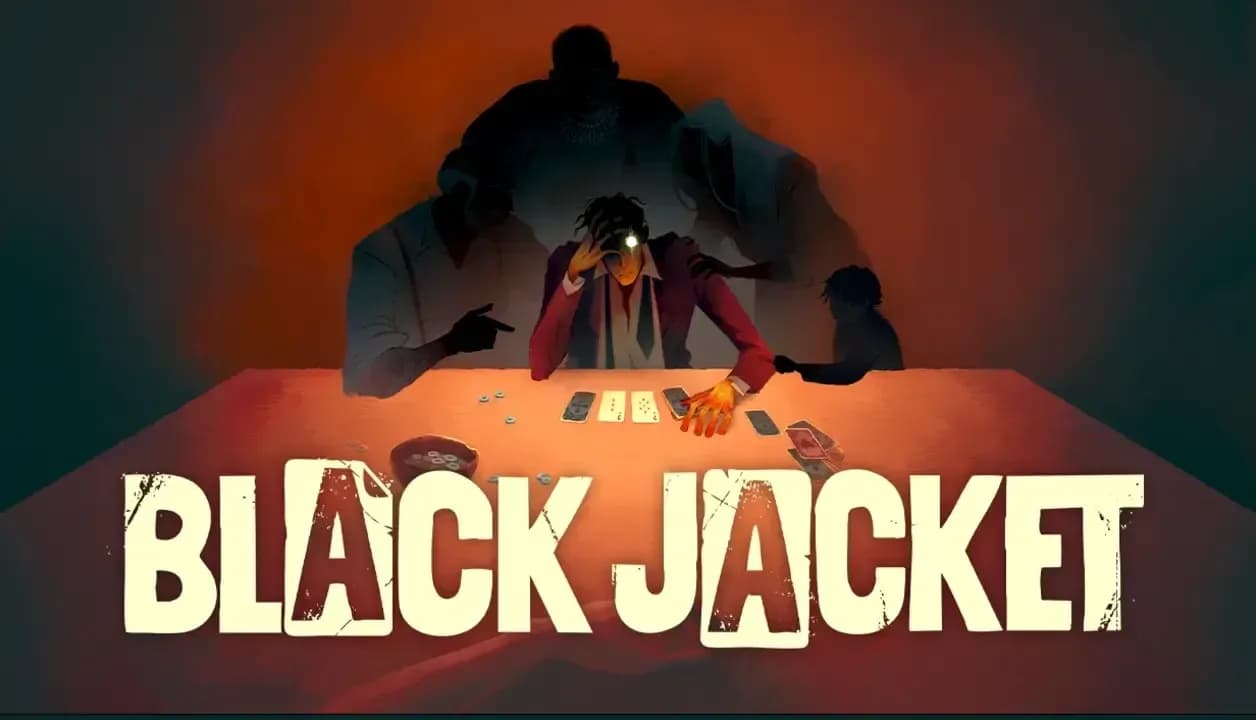
Read the curse before card one

Boss order in Black Jacket
Routes can vary by journey, but the progression most players encounter follows this structure:
| Stage | Boss | What they test |
|---|---|---|
| Tutorial / rules foundation | Reed | Coins, sleeve, exploit, blackjack, tie breakers, winner's pot |
| Early boss pool | Morgan | Whether you can win without leaning on sleeve |
| Early boss pool | Ivel | Whether you can handle negative cards and shifting totals |
| Mid-run soul encounter | Niv | Whether your deck survives disruption and extra cards |
| Later story routes | Family / later bosses | Long-term relationship and story progression |
| Endgame | Final / Reed-related escape | Full mastery of the ruleset and progression loop |
For first-time players, Morgan, Ivel, and Niv are the three fights to study first. They teach the three biggest boss lessons in sequence: sleeve is not always safe, winning a round can create future problems, and deck disruption makes blind draws dangerous.
How to beat Morgan
Morgan's curse, Cheater's Folly, exhausts each sleeved card at the start of every round. That one rule turns a standard beginner tactic, saving an Ace or face card in your sleeve, into a liability.
Players who struggle against Morgan are usually making one of these mistakes: sleeving cards without a clear plan, entering the fight with low coins, or waiting too long for a perfect stored-card hand that never arrives.
Counter approach:
| Problem | Fix |
|---|---|
| Sleeved cards get exhausted | Play strong cards immediately instead of saving them |
| Cannot rely on stored Aces | Build for stable 18-20 hands rather than chasing blackjack |
| Coin pressure builds up | Avoid raising unless your hand is clearly favored |
| Value from combo delays disappears | Prefer direct-play value and Insight effects |
The practical plan against Morgan is to enter with a coin cushion, use Insight before uncertain draws, and accept a clean 19 or 20 rather than fishing for a stored-card setup that the curse will dismantle anyway.
How to beat Ivel
Ivel (sometimes transcribed as Ivo in early footage) adds negative heart cards to your side of the table after he loses a round. That mechanic makes winning feel strange, because beating him in one round creates new math problems for the next.
The core danger is misreading your total. A hand that looks strong at first glance may actually be weaker once the negative cards are factored in. Conversely, a card that looks bad might be exactly what keeps you from busting.
Counter approach:
| Problem | Fix |
|---|---|
| Negative cards shift your total | Recheck the actual number before drawing |
| You win a round but set up a bad next round | Plan two rounds ahead, not just the current one |
| You overvalue 21 as the only target | A stable 19 or 20 can be enough if Ivel's side is unstable |
| Pot pressure forces awkward plays | Pass earlier when your hand is already strong enough |
Ivel is not testing whether you can win blackjack. He is testing whether you can keep doing the math after the table gets messy. Slow down, recount after every round, and use Insight before drawing into uncertain totals.
How to beat Niv
Niv's curse, Child's Play, shuffles train cards into the deck flow. Those extra cards make your draw odds harder to trust and are especially punishing if your deck is already bloated or if you have no way to check upcoming cards.
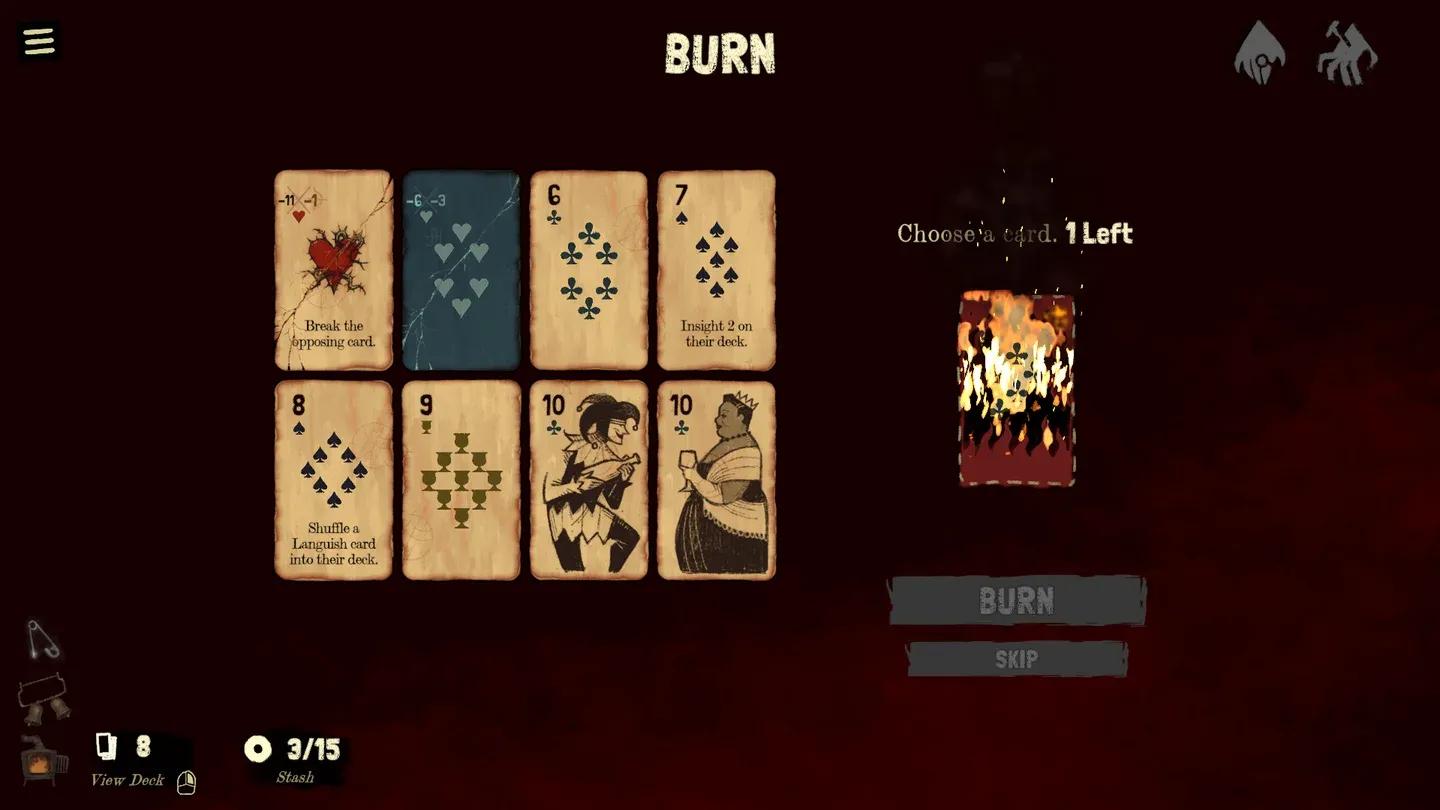
Niv's train cards disrupt your draws
The fight rewards patience over greed. You do not need perfect blackjack every round against Niv. You need to avoid letting disruption push you into broke, busted, or unreadable hands.
Counter approach:
| Problem | Fix |
|---|---|
| Train cards disrupt draw odds | Use Insight to check upcoming cards before committing |
| Extra cards make draws unpredictable | Burn weak cards before the fight if possible |
| You cannot predict safe draws | Pass more often instead of chasing 21 |
| The fight runs long | Protect coin economy early, not just at the final pressure round |
How to beat Reed
Reed starts as your guide, which is exactly what makes him a different kind of threat. His fight is a fundamentals check: coins, sleeve timing, exploit, blackjack versus normal 21, tie breakers, and the winner's pot. There is no single gimmick to exploit. The game is asking whether you actually learned everything Reed taught you at the start.
Systems that matter against Reed:
| System | Why it matters |
|---|---|
| Winner's pot | You need to know when a bigger pot helps you, not just Reed |
| Sleeve timing | Bad timing drains coins or delays a card you needed immediately |
| Exploit timing | Raising the wrong round hands Reed the encounter |
| Blackjack vs normal 21 | A standard 21 may not be enough |
| Tie breakers | Equal totals can still lose on highest card |
| Deck consistency | One perfect combo appearing is not a plan |
Build for fundamentals, not tricks. Keep a reliable coin cushion, bring Insight, make sure your deck has enough 10-value support for blackjack and 20 hands, and avoid using Exploit unless the pot clearly favors you. Treat every tie as dangerous unless you already know the highest-card situation.
If Morgan taught you not to overuse sleeve, Ivel taught you to recalculate values, and Niv taught you to survive disruption, Reed is the boss who asks whether all three lessons stuck.
What mechanics matter most in boss fights?
These tools matter in normal encounters too, but boss curses punish autopilot play hard enough that they become non-negotiable.
| Mechanic | Boss-specific value |
|---|---|
| Insight | Avoids drawing into a bust after a curse changes the table |
| Flexible values | Recovers when negative cards or altered values make totals unstable |
| Burn | Reduces the chance that boss disruption buries your best cards |
| Exploit | Finishes a boss round when the boss is low on coins, but only when you are favored |
| Drain | Corrects a bad total or weakens a dangerous opposing card under pressure |
| Break / negative values | Prevents busts or disrupts the boss, but requires careful recalculation |
| Artifacts | Best when they support the specific boss problem, not just your normal encounter plan |
If you are still learning the systems, prioritize Insight and flexible values over flashy combos. Bosses reward players who can still make safe decisions after the table changes.
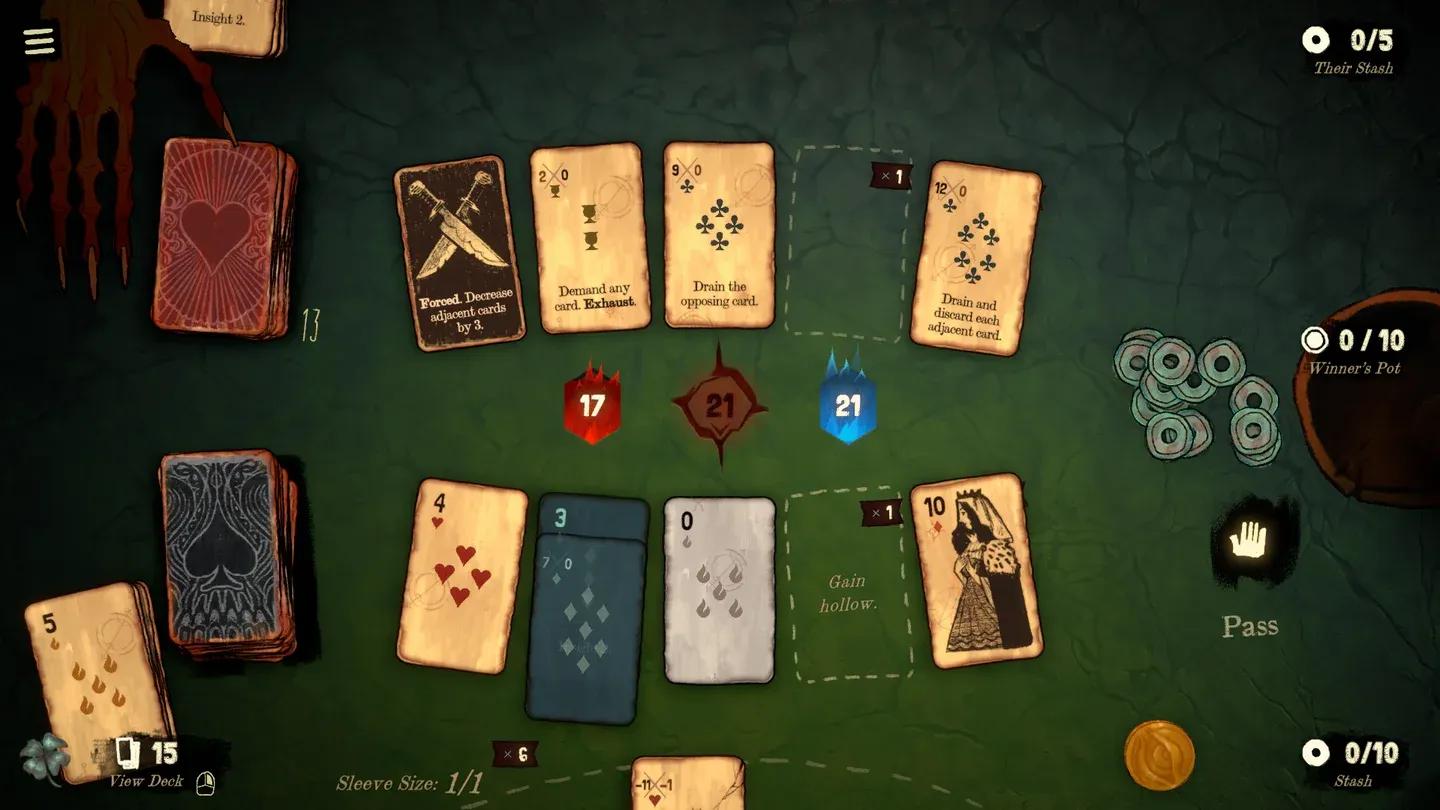
Insight turns guesses into decisions
Common mistakes that lose boss fights
| Mistake | Why it loses | Fix |
|---|---|---|
| Entering with too few coins | One bad round ends the fight | Save coins before boss nodes |
| Ignoring the curse | Your normal strategy gets punished immediately | Read the boss rule before playing card one |
| Using sleeve against sleeve punishment | Your saved card disappears or loses value | Play more directly |
| Raising while behind | You increase the reward for the boss | Exploit only when favored |
| Chasing 21 every round | You bust or overpay | Accept strong-enough hands when coin pressure favors you |
| Building around one combo | Boss disruption breaks your only plan | Keep a backup win condition |
| Keeping a bloated deck | You cannot find key cards reliably | Burn weak cards before the fight |
| Forgetting negative values | You miscalculate the hand | Recheck totals before drawing |
Soul Coins and boss progression
Beating a boss rewards you with a Soul Coin or golden coin tied to that soul's progression. These are not the same as the coins you use to survive a single encounter. Think of them as boss trophies that push story, rewards, and difficulty scaling forward.
Boss progression works in three layers
| Layer | What it means |
|---|---|
| Journey boss | The boss blocking your current route |
| Soul progression | Repeated wins reveal more of that character's story |
| Difficulty progression | Higher difficulties and repeat clears unlock long-term goals |
One win does not finish a boss's storyline. You will likely need to defeat key bosses multiple times to see their full route, which means understanding the matchup deeply pays off across many runs.
Quick pre-boss checklist
Before entering any boss node, run through this list:
- Burn at least one weak card if your deck feels bloated
- Awaken a reliable card rather than buying a random new one
- Add Insight or flexible values if the shop offers them
- Check whether your artifact actually supports your current deck plan
- Keep enough coins to survive a bad first round
- Stop building around sleeve if the boss punishes sleeve
- Read the curse before playing your first card
For more strategies across all of Black Jacket's systems, the Black Jacket Guides collection covers mechanics, deck building, and advanced run strategies in detail.
Black Jacket sits in a small group of strategy games that reward players who think about decisions before making them rather than reacting after the fact. The boss fights are where that discipline gets tested most directly. Master the four core bosses here and the later routes become significantly more readable.