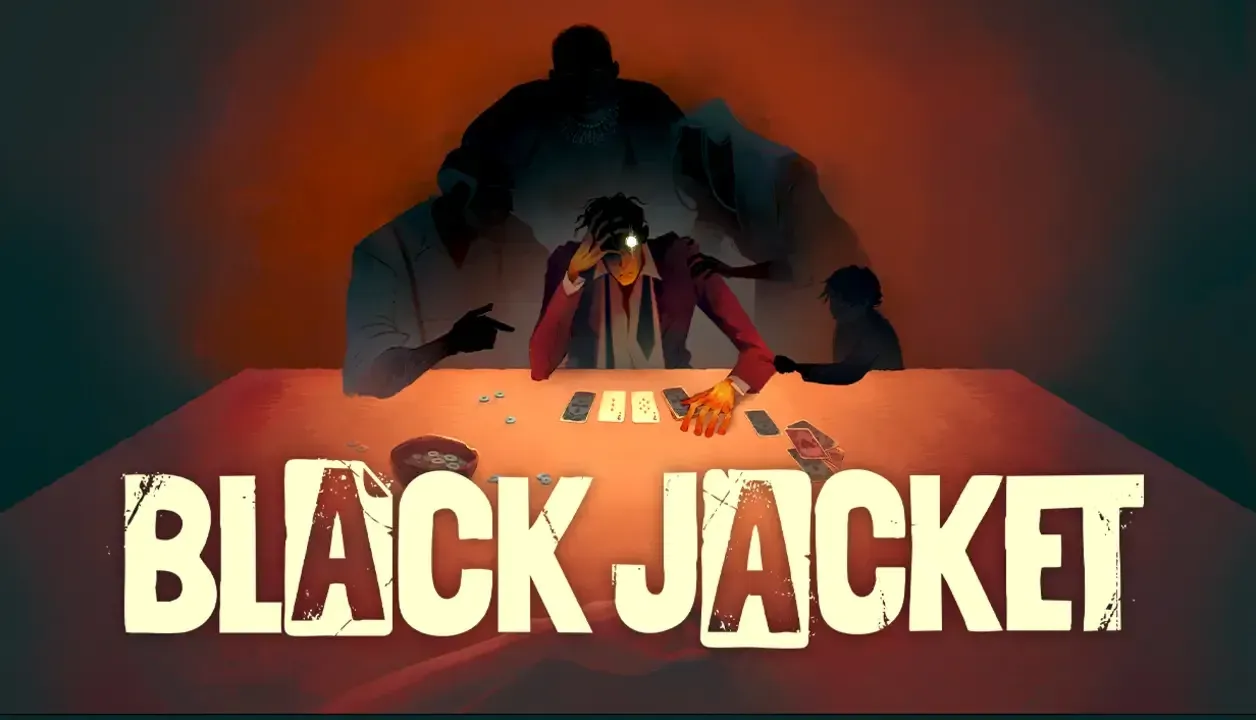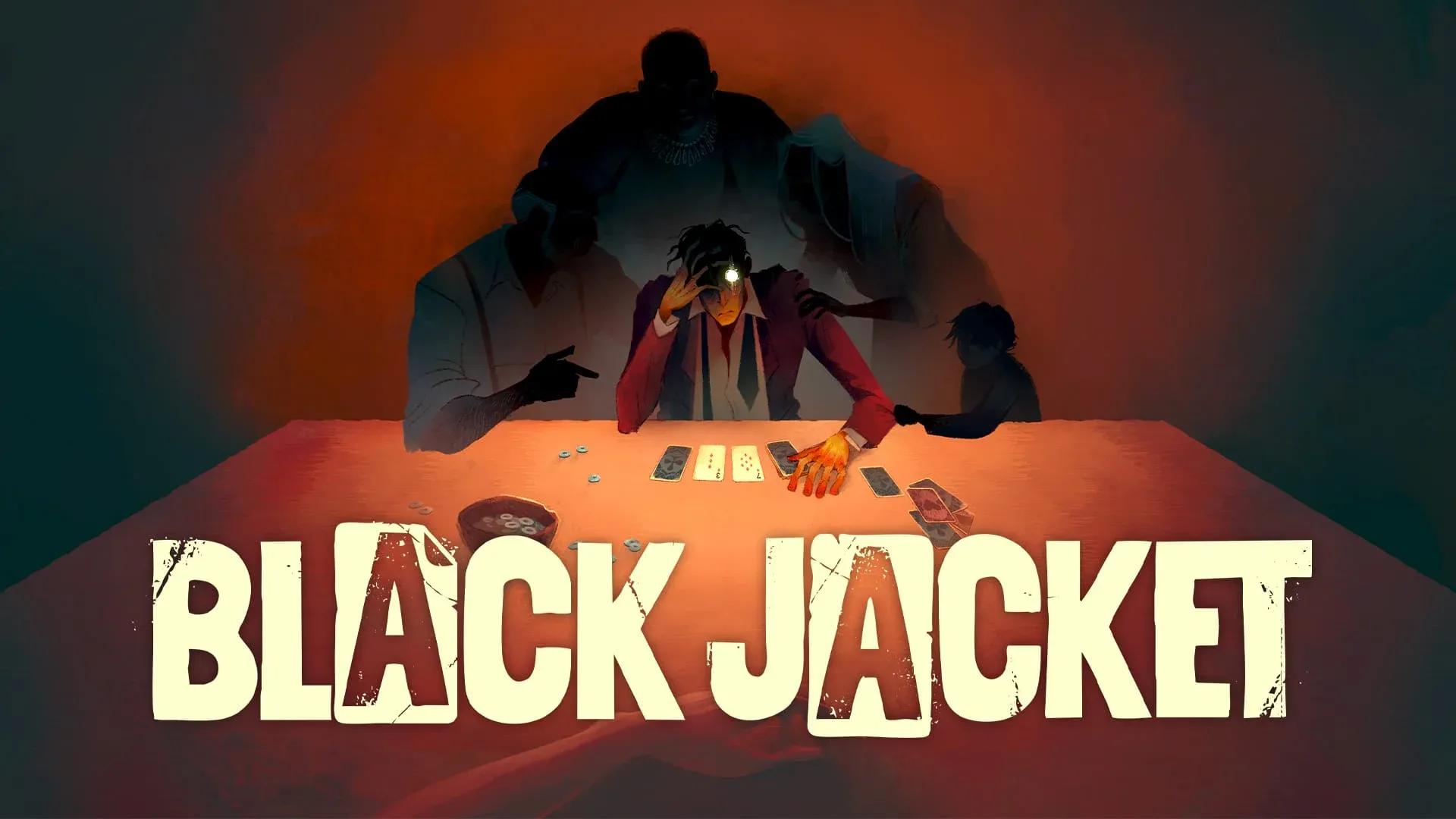

Black Jacket is not a casino simulator. It takes blackjack rules and wraps them inside a roguelite deckbuilder where your coin count, your Realm route, and your suit choices matter just as much as whether you hit or stand. You play as Kris, a lost soul working through the underworld, guided by a figure named Reed who hands you your first coins and explains the table. The first few runs will feel punishing until you stop thinking like a blackjack player and start thinking like a resource manager.
What makes Black Jacket different from regular blackjack?
The core rules are familiar: get close to 21, do not bust, compare totals when both sides stop drawing. The difference is that you and your opponent each play from your own separate deck, and those decks can be upgraded, thinned, disrupted, and shaped by the suits you choose at the start of each journey.
That one change breaks most casino instincts. Your opponent is not a passive dealer running on house rules. Opponents like Morgan, Ivel, and Niv each apply pressure in different ways through card effects, curses, and deck manipulation.
| Regular blackjack habit | Why it fails in Black Jacket |
|---|---|
| Always push toward 21 | Busting wastes coins and hands the pot to your opponent |
| Treat the opponent like a dealer | Opponents have their own decks, effects, and behavior |
| Assume 21 always wins | A true blackjack (Ace plus a 10-value card) beats a normal 21 |
| Ignore deck composition | Your deck quality decides what hands you see in future rounds |
| Focus only on the current hand | Coins, shops, suits, routes, and boss curses span the whole journey |
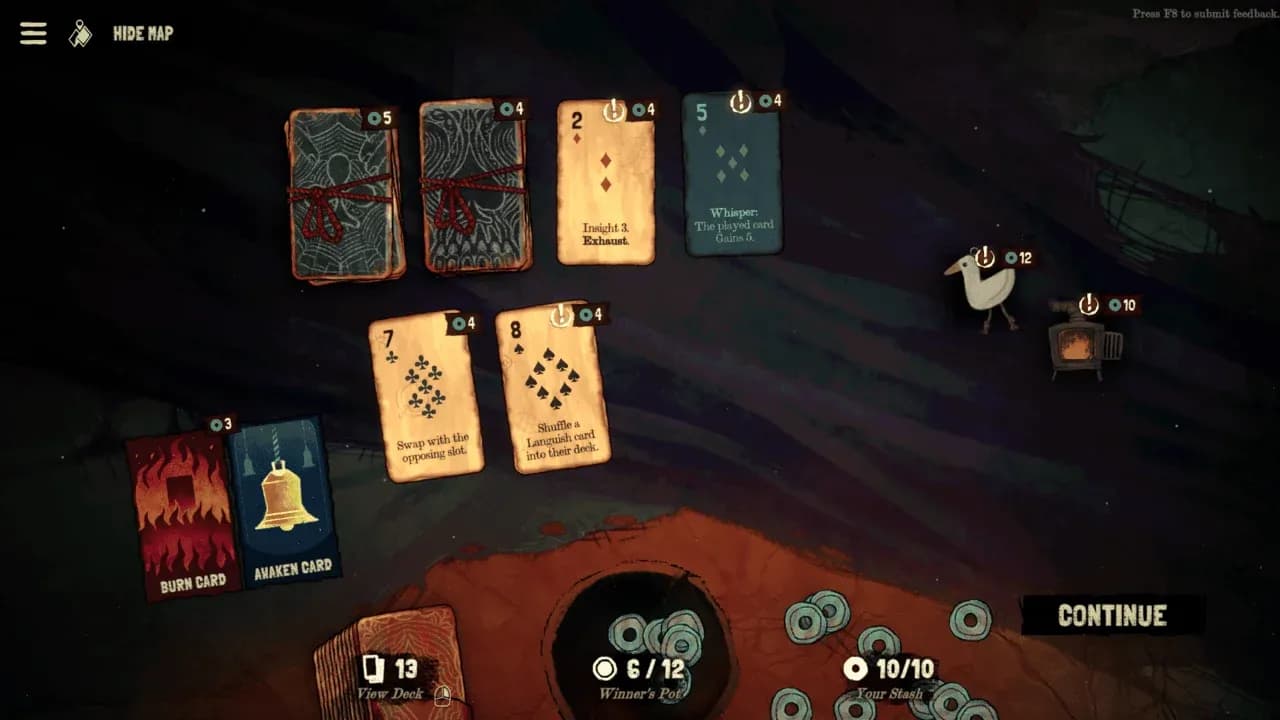
Player vs opponent hand totals

Understanding coins, the winner's pot, and Soul Coins
New players consistently mix up Black Jacket's three coin-like resources, and that confusion leads to bad decisions at the shop.
| Resource | What it does |
|---|---|
| Normal coins | Used for blinds, sleeve costs, betting pressure, and shops |
| Winner's pot | Accumulates coins lost during rounds; the round winner claims the pot |
| Soul Coins (golden boss coins) | Special progression rewards tied to defeated bosses and story memories |
Normal coins keep you alive right now. Soul Coins push the larger journey forward and should not be confused with spending money. When you defeat a boss and receive a golden coin, that reward is tied to that soul's story arc, not your current wallet.
The practical rule: spend normal coins to survive encounters and improve your deck. Treat Soul Coins as boss progression markers.
How do Realm routes work?
Each journey plays out across a Realm path tree, a branching map of nodes you move through from start to boss. Choosing routes is not about grabbing every reward. It is about arriving at the boss with the right tools.
Common node types you will encounter:
- Normal encounter: Play a soul for coins and card rewards
- Shop: Buy cards, open packs, awaken cards, or remove cards from your deck
- Burn or upgrade node: Remove or improve specific cards
- Boss node: Face a boss with a curse that changes the table rules
- Soul or story node: Advance character dialogue and Soul Coin progress
If your deck is bloated with low-value cards, a burn node matters more than another encounter reward. If a boss is one node away, your priority is preparing for that specific curse, not adding more cards.
Why does suit selection matter so much?
At the start of each journey, you pick three suits. Those three suits define which cards can appear in that run's shops. Suits you do not pick will not support your deck during that journey.
This is a real deck-building decision. Spades-style cards, for example, can interfere with opponents by swapping cards into their slots, using Insight on their deck, or adding unwanted cards to their draw pile. Choosing three suits that work toward the same broad strategy gives your shop visits a consistent direction.
| Suit choice factor | Why it matters |
|---|---|
| Three selected suits | These define your entire shop card pool for the run |
| Unselected suits | Do not expect them to appear or support your plan |
| Thematic alignment | Suits that share a strategic direction produce more consistent decks |
| Boss preparation | Your suit mix should give you tools against specific curses |
For new players, the goal is not finding the perfect suit combination immediately. Learn what each suit tends to offer before committing to synergies.
Card effect keywords you need to know
Black Jacket uses short keywords on cards, and misreading even one can end a run. Here is what each one actually does:
| Keyword | What it does | Beginner advice |
|---|---|---|
| Sleeve | Stores a card for later instead of playing it now | Costs coins; save it for Aces, 10s, or key combo pieces |
| Exploit | Forces extra coin pressure, making the opponent commit coins | Use only when you are already favored to win the round |
| Insight | Lets you see and sometimes reorder upcoming cards | One of the safest early effects; reduces blind draws |
| Whisper | Lets you play another card on top of this one | Avoid when already near bust; useful when the extra card helps your total |
| Demand | Asks for the card type named in its text | Read the full card text; not every Demand card asks for the same thing |
| Drain | Reduces a target card's value and transfers it to another card | Recalculate your hand total before confirming |
| Burn | Removes a card from your deck permanently | Use it to thin weak or off-plan cards, not just low-value ones |
| Awaken | Upgrades a card with an extra effect | Pick effects you understand before chasing complex combos |
| Break | Alters a card, often turning positive values negative | Always recheck your hand total after applying |
What should you buy first at the shop?
The fastest way to wreck a deck is buying every card that sounds interesting. A deck that draws badly will lose to opponents a clean 12-card deck beats easily.
Early shop priorities:
- Insight cards: Stop drawing blind into busts
- Flexible-value cards: Reduce bust risk across multiple hands
- 10-value cards: Support blackjack hands and safe 20s
- Burn or removal options: Make your best cards appear more often by cutting the weak ones
- Simple Awaken effects: Reliable upgrades beat confusing combos every time
Skip cards that only pay off if you find another specific piece later. A card that solves today's problem beats a card that might become powerful three shops from now.
How do boss fights and curses work?
Bosses are where Black Jacket stops being forgiving. Each boss adds a curse that changes the table rules, punishes specific strategies, or forces you to rethink sleeve, coin pressure, and value totals.
Before entering any boss node, ask yourself:
- Do you have enough coins to survive a bad round?
- Does the curse punish sleeved cards?
- Can you control your draws with Insight?
- Is your deck too bloated to handle disruption?
- Can you win without relying on one specific combo?
For example, Niv uses extra cards and train cards to make blind draws much riskier. Ivel can create problems even after you win a round by adding negative cards afterward. Knowing what each boss does before you arrive is the difference between a prepared run and a wasted one.
Do failed runs actually help you?
Yes. Black Jacket is a roguelite, and losing a run is not a full reset. Failed and partial runs can:
- Reveal enemy behavior and dialogue
- Expose boss curse patterns before you face them again
- Unlock improved starting resources for future runs
- Expand sleeve or stash options
- Advance Soul Coin and story progression
The game includes permanent meta-progression. Defeating bosses and completing story beats unlocks advantages that carry into future journeys, making each run more informed than the last.
Common mistakes that end runs early
| Mistake | What goes wrong | Better approach |
|---|---|---|
| Chasing 21 every hand | Bust risk increases and you overspend coins | Accept safe 18-20 hands when coin pressure favors you |
| Using Exploit while behind | You increase the pot for the opponent to take | Only Exploit when you are favored to win the round |
| Ignoring Realm routes | You reach the boss without the tools you need | Choose routes based on what your deck needs next |
| Picking suits without a plan | Your shop pool becomes unfocused | Choose three suits that support the same broad strategy |
| Adding every interesting card | Your deck becomes inconsistent | Buy cards with a clear role in your current plan |
| Confusing Soul Coins with normal coins | You misread your progression and spending power | Normal coins are for survival; Soul Coins mark boss progress |
| Skipping keyword text | You misplay Demand, Drain, Break, or Whisper | Read every card text before confirming |
Building a consistent early deck
A good beginner deck is not about the most powerful cards. It is about drawing well under pressure.
Follow these rules when building:
- Add a card only when it solves a specific problem in your current deck
- Keep enough high-value cards to reach 18-21 consistently
- Use Insight to avoid bad draws rather than hoping for good ones
- Burn cards that draw badly, not just cards with low face values
- Awaken reliable cards before experimenting with risky combos
- Do not depend entirely on sleeve as a backup plan
- Prepare for the next boss, not just the next normal encounter
For players who want to go deeper on builds and suit strategies, the Black Jacket guides collection covers deck construction, boss patterns, and advanced mechanics in detail.
Ready to go further?
The systems in Black Jacket reward players who think two or three nodes ahead rather than hand to hand. Coin management, suit selection, and route planning will carry you further than any single powerful card. Once those habits click, the boss curses stop feeling random and start feeling like puzzles with known solutions.
For players exploring strategy games with deep decision-making layers, Black Jacket sits comfortably among the best examples of the genre. Every run teaches something new, and the meta-progression means no journey is ever completely wasted. Check out the full Black Jacket guide hub for deeper dives into mechanics, boss strategies, and deck-building theory.