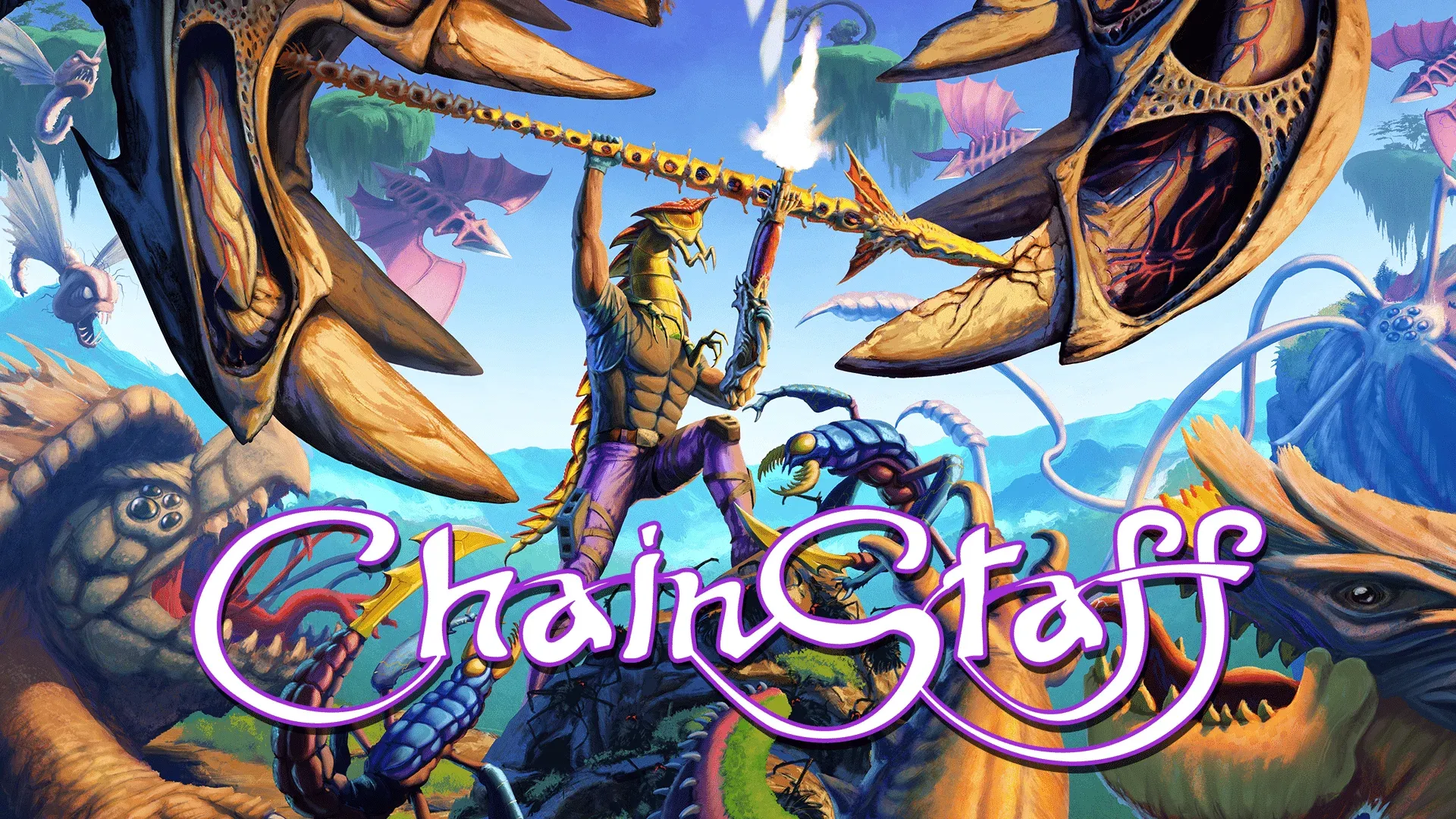


ChainStaff drops you into a brutal 80s sci-fi nightmare as a mutant with an alien fused to your skull, armed with one of the most flexible weapons in recent action-platformer memory. The entire experience runs through a single transforming tool called the ChainStaff, which can grapple, spear, shield, and slice depending on how you think. Director Nathan Fouts built it around a single button, so there are no menus to navigate mid-combat. The weapon is your brain, and the aliens are the test.
What exactly is the ChainStaff?
The ChainStaff is a multi-form weapon that covers every combat situation you'll face across ChainStaff's 10 levels. It functions as a grappling hook for traversal, a throwable spear for ranged attacks, a slicing tool for close-quarters kills, and a shield when planted in the ground to block incoming fire. All of this is controlled through a single button, meaning the context comes from your positioning and timing rather than a selection menu.
Fouts described it directly: "There are no context-menus to select, there is no 'build the bridge' button, it's always just the ChainStaff and your own mind and ingenuity." That design philosophy means your skill ceiling is tied entirely to how creatively you read each encounter.
The four core forms
Here's a breakdown of what the ChainStaff does in each configuration:
How do the upgrade trees work?
ChainStaff has a morally charged upgrade system that splits into two distinct tech trees. When a fellow mutant falls in battle, you face a choice: rescue them and take the human path, or eat their organs and lean further into your alien mutation. Each decision pushes you down one of the two trees.
The game doesn't spell out which tree is "better" because the answer depends on your playstyle. What matters is committing to a direction early so your upgrades compound across the 4 to 6 hour runtime.
Which upgrade path fits your playstyle?
The two trees represent different approaches to combat rather than straightforward power differences. The alien mutation path rewards aggressive, high-risk play given its thematic source, while the rescue path rewards a more methodical approach. Since detailed stat breakdowns for each node aren't publicly available, treat your first run as a scouting mission and use New Game+ to explore the other tree with full knowledge of what's ahead.
How do you beat the bosses?
Each of ChainStaff's bosses is designed around a specific interaction with the ChainStaff's forms. Every massive boss presents a new way to think about how to use the weapon, with specific examples including breaking apart a boss's teeth or prying open its giant jaws.
This means brute-forcing bosses with a single form won't work. Going into each fight, ask yourself which part of the enemy looks vulnerable and which ChainStaff form targets that weakness most directly.
General boss approach
- Study the boss's attack pattern for one full cycle before committing to offense
- Use the ground shield form to neutralize projectile phases without burning your position
- The grapple form lets you reposition across the arena quickly if a boss corners you
- Look for physical weak points like teeth or open mouths, which serve as primary interaction targets
- Don't waste your slicing form on armored sections; save it for exposed flesh
What's the world like across the 10 levels?
Star Spores invaded and mutated every creature in the game's world, and each of the 10 levels is designed to look like a classic rock album cover come to life. That's a specific visual tone, somewhere between airbrushed excess and genuine menace, backed by a metal soundtrack composed by Deon van Heerden. Van Heerden is known for the Broforce soundtrack and Warhammer 40k: Shootas Blood & Teef, so the music carries real pedigree.
Every enemy type has a special method for taking it down, meaning you'll constantly need to adapt your ChainStaff approach rather than settling into a comfortable rhythm.
Quick-reference tips from the developer
Nathan Fouts released a tips and tricks video ahead of launch to give players a head start. The core advice distills down to these points:
- The ChainStaff is single-button controlled, so mastery comes from reading situations, not memorizing button combinations
- Grapple points exist on most surfaces and objects in the environment, not just obvious hooks
- Boss encounters each have a unique ChainStaff solution tied to the boss's anatomy
- Upgrade tree choices are permanent per run, so think before you eat
- New Game+ preserves all upgrades, making a second run significantly more powerful
For more action-platformer breakdowns and Nintendo Switch guides, browse more guides at GAMES.GG to find strategies for whatever you're playing next.