


What is Clash of Critters and how does it work?
Clash of Critters is a free-to-play strategy game from FARLIGHT, the publishing brand under Lilith Games, where you collect and train creatures called Tataris to fight off endless hordes of Zobos (zombies). The core loop connects three systems: catching and evolving Tataris, building a squad formation, and defending your base. What sets it apart from standard tower defense games is the Pinball Draw system, a physics-based mechanic that lets you level up your entire team collectively rather than grinding each unit separately. The game sits comfortably in the casual games space but has genuine strategic depth once the elemental matchup system kicks in.

Squad formation vs Zobo waves
How does the pinball combat system work?
The biggest mechanical surprise in Clash of Critters is that combat is not a passive auto-battle. You launch Tataris at enemies using trajectory-based aiming, and the physics of each launch matter. A well-angled shot can bounce through multiple Zobos, trigger chain damage, and build ultimate energy faster than a direct hit ever would.
Different Tataris handle differently after launch. Heavy units maintain momentum and punch straight through enemy clusters. Light Tataris bounce unpredictably, which can be a liability on tight boards but a huge advantage when you need to clear spread formations. Spend time in earlier, easier stages practicing bank shots and multi-hit angles before pushing into harder content. Players who skip this practice phase hit a wall around mid-game where raw stats stop compensating for poor aim.
Understanding elemental matchups
Tataris are divided into 5 elemental classes: Fire, Lightning, Water, Rock, and Grass. The matchup system has real teeth. Attacking a weaker element deals 200% increased damage, while attacking a stronger element drops your output by 50%. That swing is large enough to flip the result of a stage entirely.
The full hierarchy is:
- Lightning beats Water
- Water beats Fire
- Fire beats Grass
- Grass beats Rock
- Rock beats Lightning
Before entering a stage, check which Zobo types you are facing and swap your lineup accordingly. Bringing the wrong element into a boss fight is one of the most common reasons new players stall out.
What is the best starter squad setup?
The answer here is boring but true: one tank, one damage dealer, one support or crowd-control unit. Every source of information on this game points to the same conclusion, and after testing various compositions against mid-game Zobo waves, the balanced trio holds up far better than any damage-heavy lineup.
Melee tanks and support Tataris belong in the front row where they absorb contact damage and let your DPS units work safely from behind. Putting your damage dealers up front is the single most common formation mistake beginners make.
Also worth noting: rarity is not a reliable indicator of power in the early game. A common Tataris with consistent investment will outperform a rare unit that you have not had the resources to develop. Pick 3 to 4 Tataris you actually like using and commit to them.
How do you level up Tataris quickly?
The Pinball Draw system is your main progression engine. Pinballs are the currency used to spin the draw machine, which rewards Level-Up Candies and new Tataris. You earn Pinballs for free through boss fights, achievements, various game modes, and the Pinball Tree. Treat every source of Pinballs as a priority, not an afterthought.
The second lever is Star-Up. Collect duplicate copies of a Tataris and you can Star it up, which boosts its stats significantly and sometimes triggers an evolution into a stronger form. This system becomes especially important in the Badge Dojo campaign, where stage difficulty spikes require well-starred units to clear.
Which game modes should you prioritize?
Game modes are not optional side content. They are one of the best sources of Pinballs, duplicate Tataris, and Level-Up Candies in the game. The Badge Dojo stands out specifically because it restricts you to a single Tataris class per run, forcing you to understand elemental strengths rather than just bringing your best team every time. The rewards reflect that challenge.
Complete daily missions and weekly quests consistently. Players who do short daily sessions and clear event objectives regularly progress faster than those who grind story stages for hours without touching the mode menu.
How should you manage your base?
Base building is easy to ignore early on, and that neglect catches up to you. Your structures need to patch the holes in your squad. If your team has no crowd control, invest in slowing traps. If single-target damage is the problem, upgrade your archer towers. If survivability is the issue, defensive walls buy your Tataris the time they need to clear waves.
The home base also lets you place decorations and buildings that your Tataris will interact with, which adds some life to the hub between battles. It is a small touch, but it makes the base feel worth developing rather than just a menu screen.
What mistakes should new players avoid?
The most expensive mistake is spending premium currency on cosmetics or speed-ups in the first few days. Save that currency for limited-time banners and events, where the rewards are significantly better. Patience during the early game pays off when strong event Critters become available.
The second common error is evolving Tataris before understanding their final forms. Some evolution paths lock you into specific roles. If that role does not fit your squad, you have wasted materials that are hard to recover early on. Research a unit's evolution branch before committing.
Finally, do not skip the guild system. Cooperative modes and friend assists provide resources that accelerate early progression in ways that solo grinding simply cannot match.
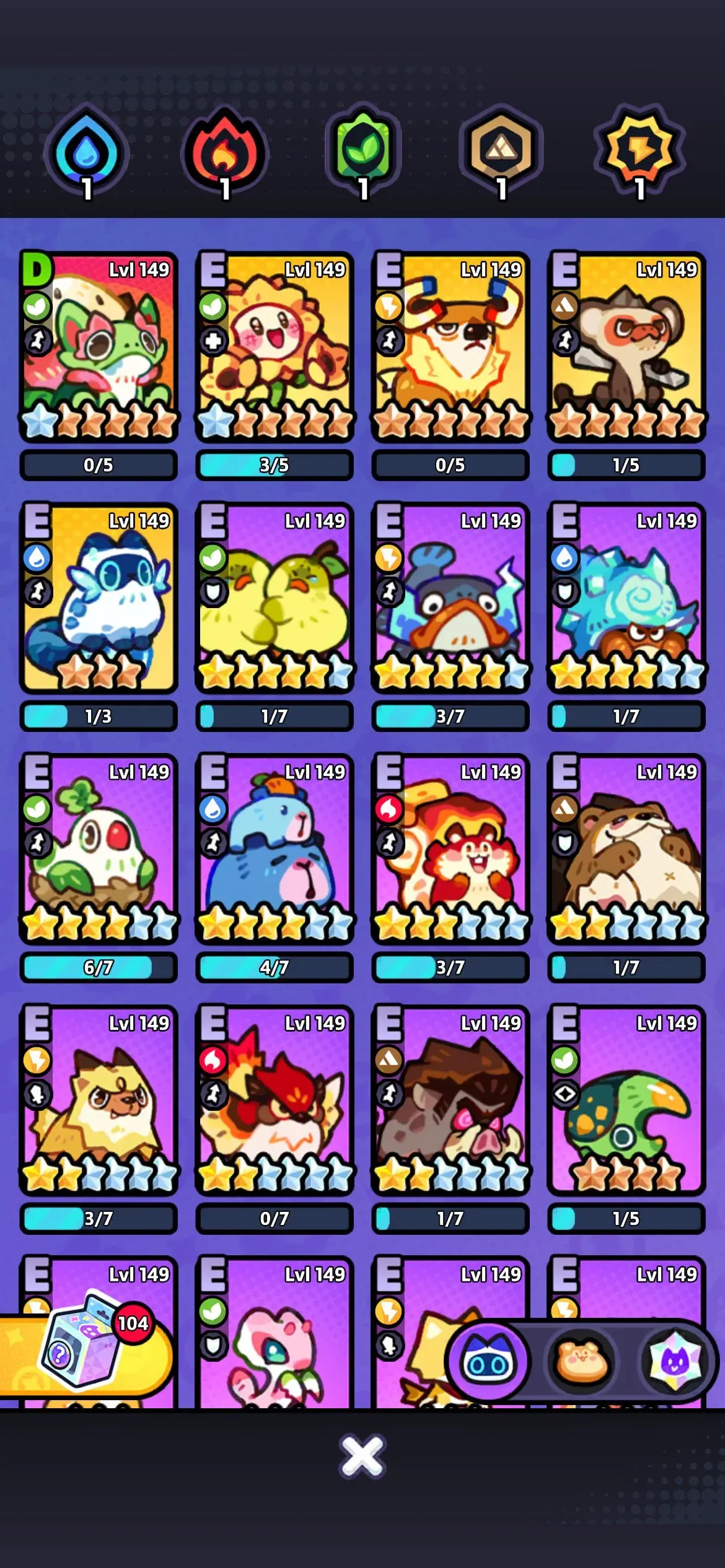
Badge Dojo mode rewards
Elemental and squad tips at a glance
For more tips, strategies, and guides covering every system in the game, the Clash of Critters strategy guides collection has you covered as you push deeper into the content.