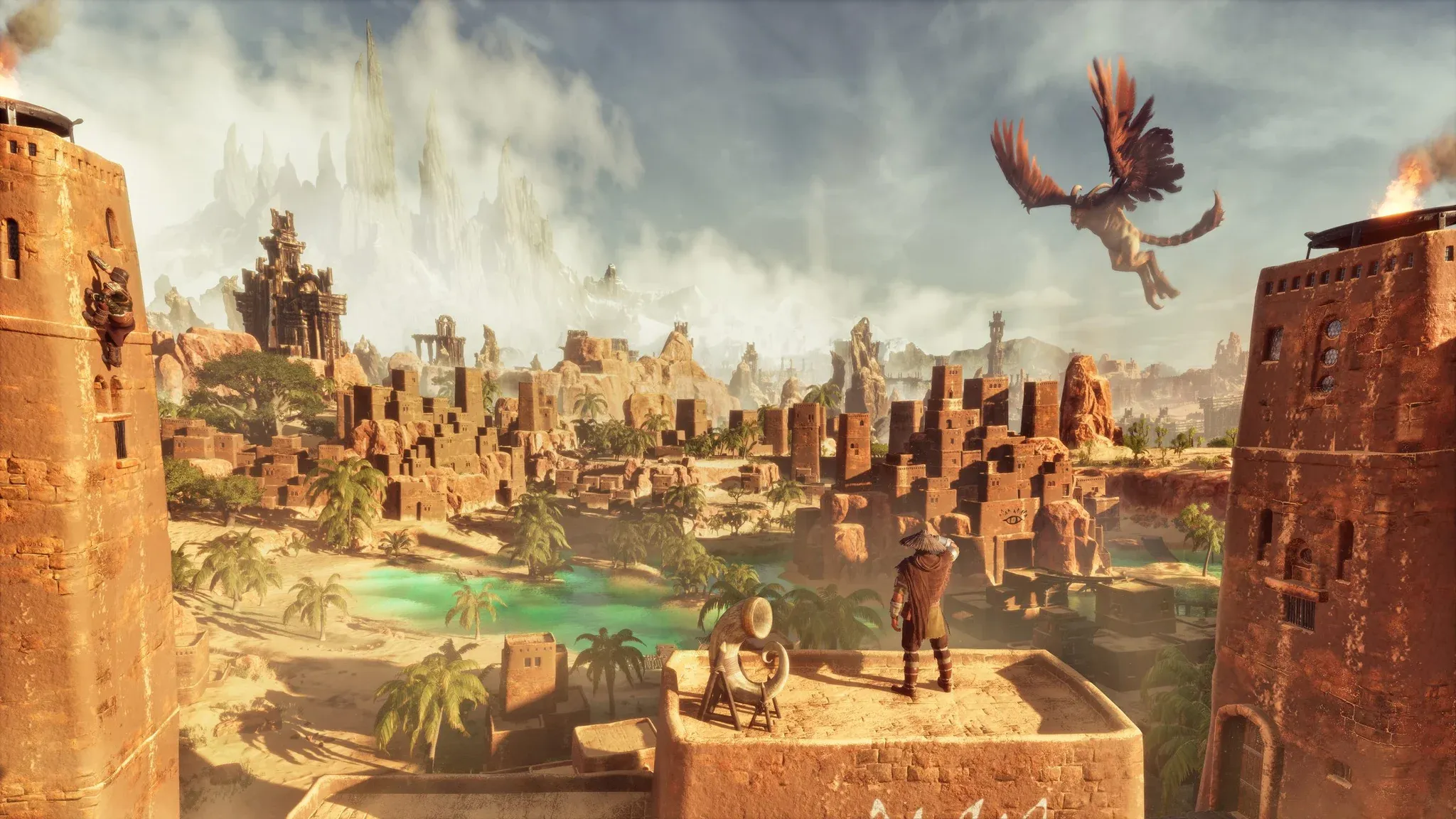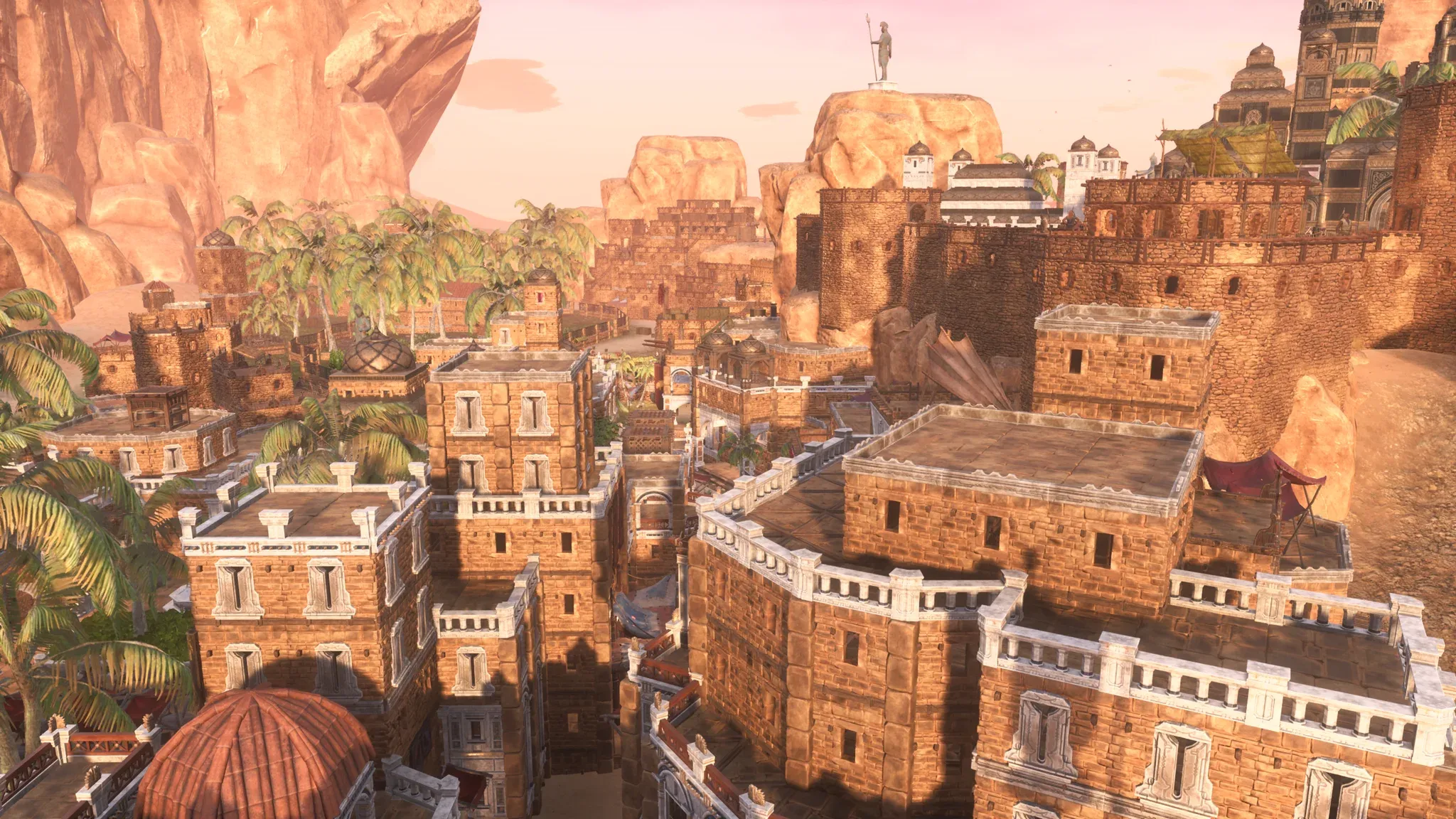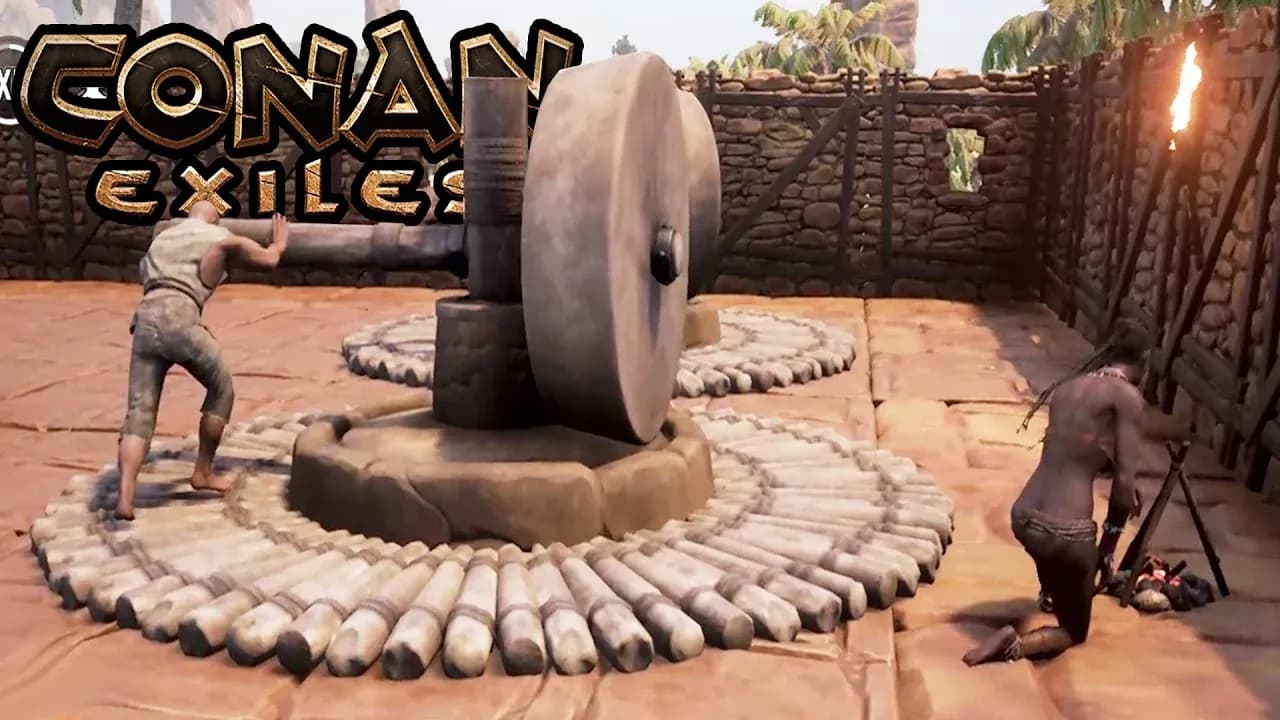

Thralls are the backbone of any serious Conan Exiles playthrough. You can survive the early hours by brute-forcing everything yourself, but once you start pushing into tougher regions or building a real settlement, captured NPCs become the difference between a thriving base and a smoking ruin. They fight, they craft, they haul resources, and they guard your walls while you sleep. Getting them right from the start saves you hours of backtracking.
What are thralls in Conan Exiles?
Thralls are NPCs you capture from enemy camps and convert into loyal followers through a process called breaking. Once broken, they stop being hostile and start working for you, either as combat companions, base defenders, crafting specialists, or support carriers. They fill multiple roles and become essential to your progression once your base expands beyond the starter-shack phase.
The key distinction from regular followers in other survival games is that thralls require active effort to recruit. You don't tame them with food or complete a quest. You knock them out, drag them home, and grind them down on a Wheel of Pain. It's blunt, it's effective, and it scales well into the late game.
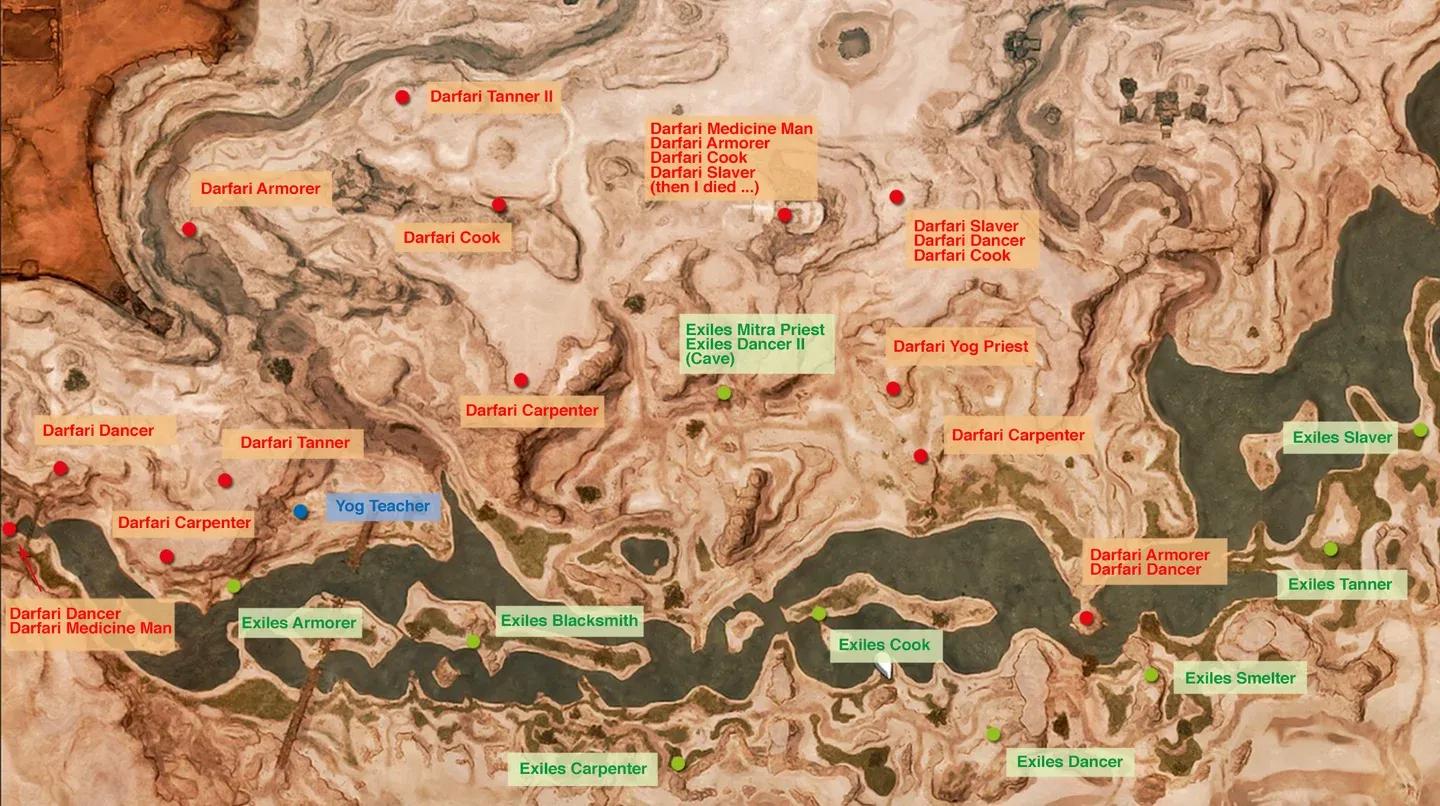
Thrall placement at base entrance

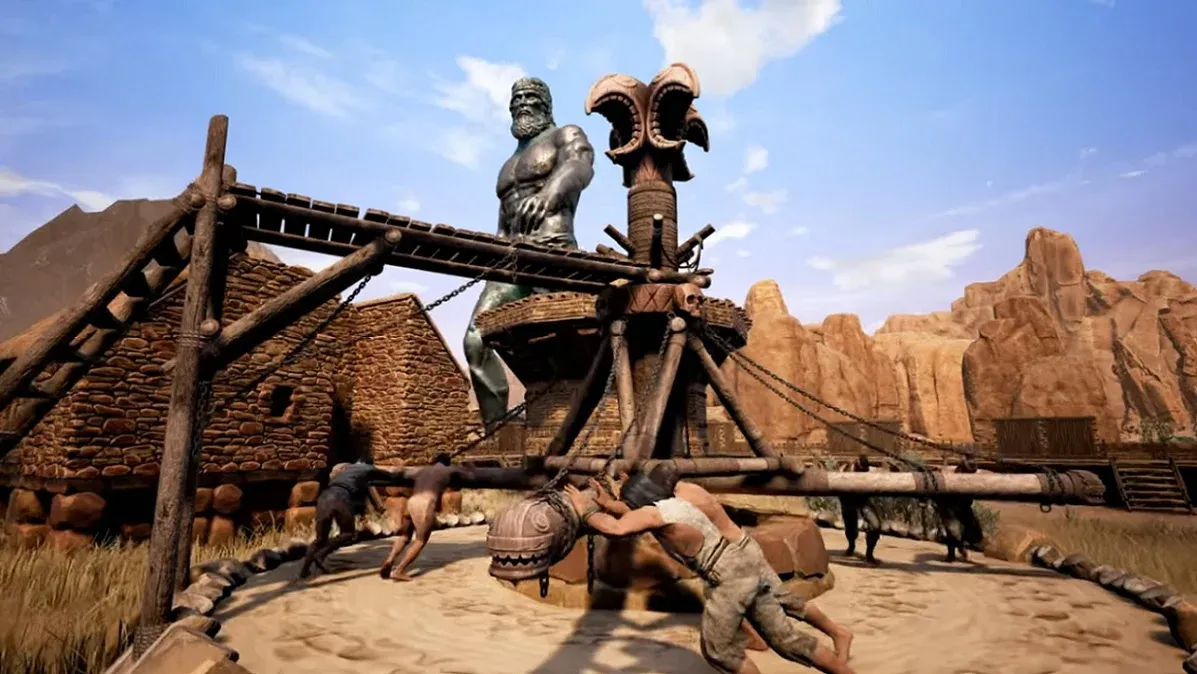
Thrall types explained: which one do you actually need?
Before you start swinging a truncheon at random NPCs, understand what each thrall type does. Capturing the wrong one for your current needs wastes time.
Fighters
Fighter thralls are your primary combat companions. They follow you into battle or hold position at your base, wielding whatever armor and weapons you give them. Their health pools and melee damage make them the go-to choice for boss fights and camp clears.
Archers
Archer thralls handle ranged combat. Position them on walls or elevated towers and they'll pelt raiders with arrows without you having to babysit them. They're the most passive defensive option available.
Bearers
Bearer thralls carry heavy loads, which makes long farming runs significantly less painful. They can fight if needed, but their real value is logistical. Think of them as a mobile storage unit that occasionally punches something.
Crafter thralls
Crafter thralls are assigned directly to workstations rather than following you around. Each type slots into a specific bench:
- Blacksmiths improve weapon and tool crafting
- Armorers unlock better armor recipes and improve output quality
- Carpenters speed up construction-related crafting
- Cooks improve food production
- Priests handle religious crafting stations
Placing the right crafter at the right bench speeds up production and can unlock recipes that are otherwise unavailable. A high-tier armorer, for example, can produce stronger armor with improved stats.
Performers
Performer thralls remove corruption and restore health when placed at your base. If you're spending time in areas that inflict heavy corruption, having a performer back home means you don't need to burn through consumables to cleanse yourself.
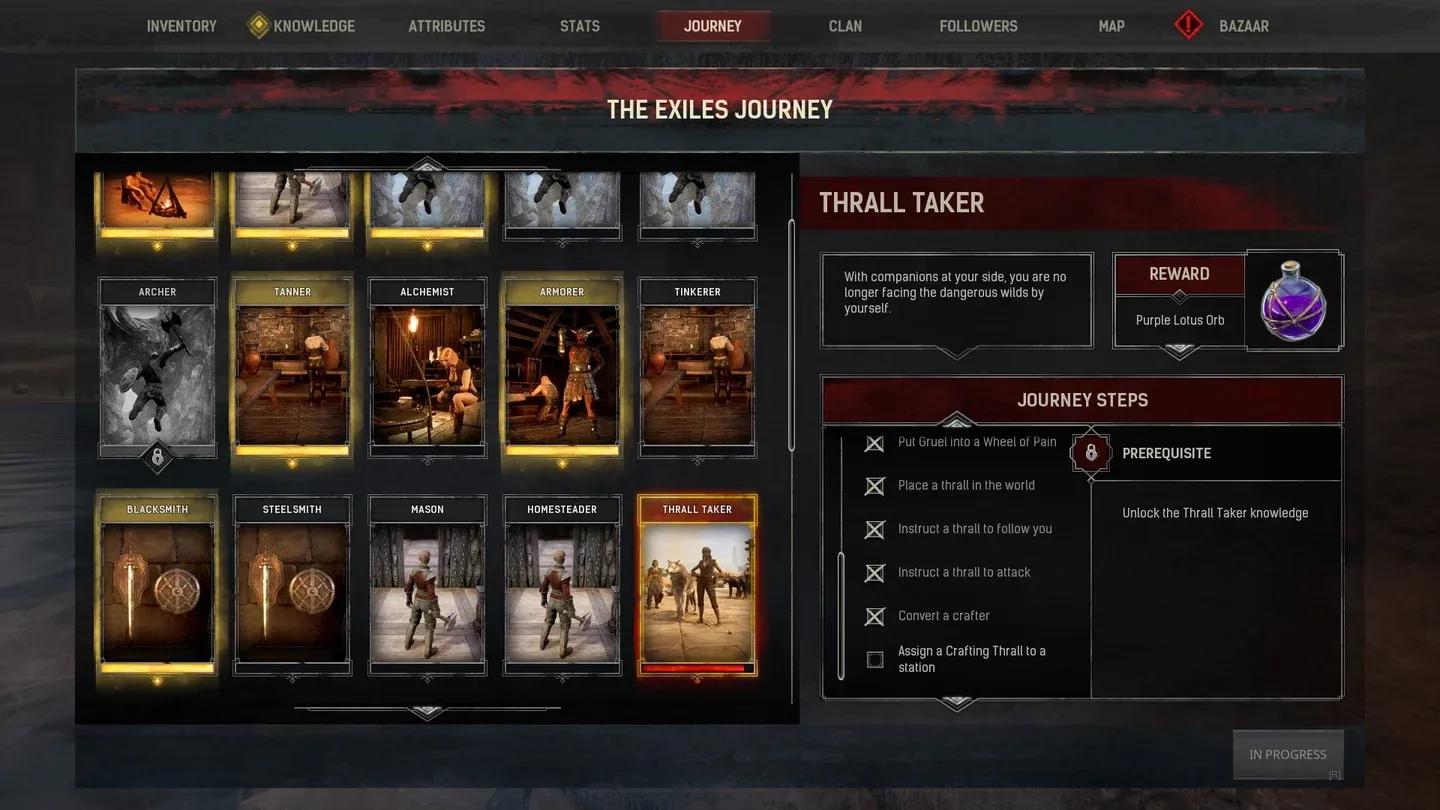
Armorer assigned to crafting bench
Thrall tiers: why does tier matter?
Every thrall falls into one of four tiers, and the gap between them is substantial.
| Tier | Label | Key Benefit |
|---|---|---|
| T1 | Basic | Minimal bonuses, easy to find |
| T2 | Moderate | Slightly better stats and crafting output |
| T3 | Strong | Noticeably better stats and efficiency |
| T4 | Named | Best stats, unique recipes, maximum potential |
Tier 4 named thralls represent the endgame target for most players. They bring significantly higher health and damage compared to lower tiers, and crafting T4s unlock exclusive recipes that lower-tier versions simply cannot produce. Finding a strong named thrall often becomes a primary objective in itself, since they spawn randomly at camps and dungeons, which means repeated grinding until the right NPC appears.
How to capture thralls: step by step
Capturing requires a specific approach. Going in with your normal weapons kills the NPC instead of knocking them out, which is the most common beginner mistake.
Step 1: Get a concussive weapon
You need a weapon that deals concussion damage rather than lethal damage. The standard options are:
- Truncheons (crafted early, reliable for close range)
- Blunted arrows (for capturing from a distance)
- Blunted javelins (thrown option)
Switch to one of these before engaging any NPC you want to capture.
Step 2: Drain the consciousness bar
NPCs have a white consciousness bar separate from their health bar. Hit them with your concussive weapon until that bar reaches zero. They'll collapse rather than die.
Step 3: Apply bindings
Once the NPC is unconscious, apply rope or fiber bindings to drag them. They'll trail behind you as you move.
Step 4: Transport them to a Wheel of Pain
Get them back to your base and place them inside the Wheel of Pain. That's where the actual conversion happens.
How does the Wheel of Pain work?
The Wheel of Pain is the crafting station that converts captured NPCs into usable thralls. Place a bound NPC inside, add food as fuel (Gruel is the standard choice), and a timer starts. Once it completes, the NPC becomes a recruitable thrall.
Higher-tier NPCs take longer to break, so a T4 named thrall requires more patience and more fuel than a basic T1.
Taskmasters: the most underrated early capture
A Taskmaster thrall placed at the Wheel of Pain reduces breaking time. Higher-tier Taskmasters provide stronger reductions, and a T4 Taskmaster cuts thrall crafting time by a significant margin. Given how much time you'll spend running the Wheel of Pain throughout a full playthrough, grabbing a Taskmaster early pays off consistently. The time savings compound with every single thrall you process.
You can check the official Conan Exiles patch notes to see if any updates have adjusted breaking times or Wheel of Pain mechanics, since Funcom has reworked several core systems over the game's lifespan.
How do thralls level up?
Combat thralls gain experience through fighting. Set a thrall as your active follower, take them into combat, and both your kills and their kills contribute to their experience total. Thralls cap out at level 20.
As they level, their base attributes increase. The core stats are:
- Strength (melee damage output)
- Agility (affects certain combat behaviors)
- Vitality (health pool)
- Accuracy (ranged damage)
Growth rates vary by thrall, so some NPCs naturally favor Vitality while others skew toward Strength. This makes specific named thralls more desirable for specific roles.
Perks at level 10 and level 20
Thralls unlock perks at level 10 and again at level 20. These can boost damage, increase health, or expand carry capacity. Some perks come with tradeoffs, which is why leveling multiple thralls rather than relying on a single one is the smarter long-term play.
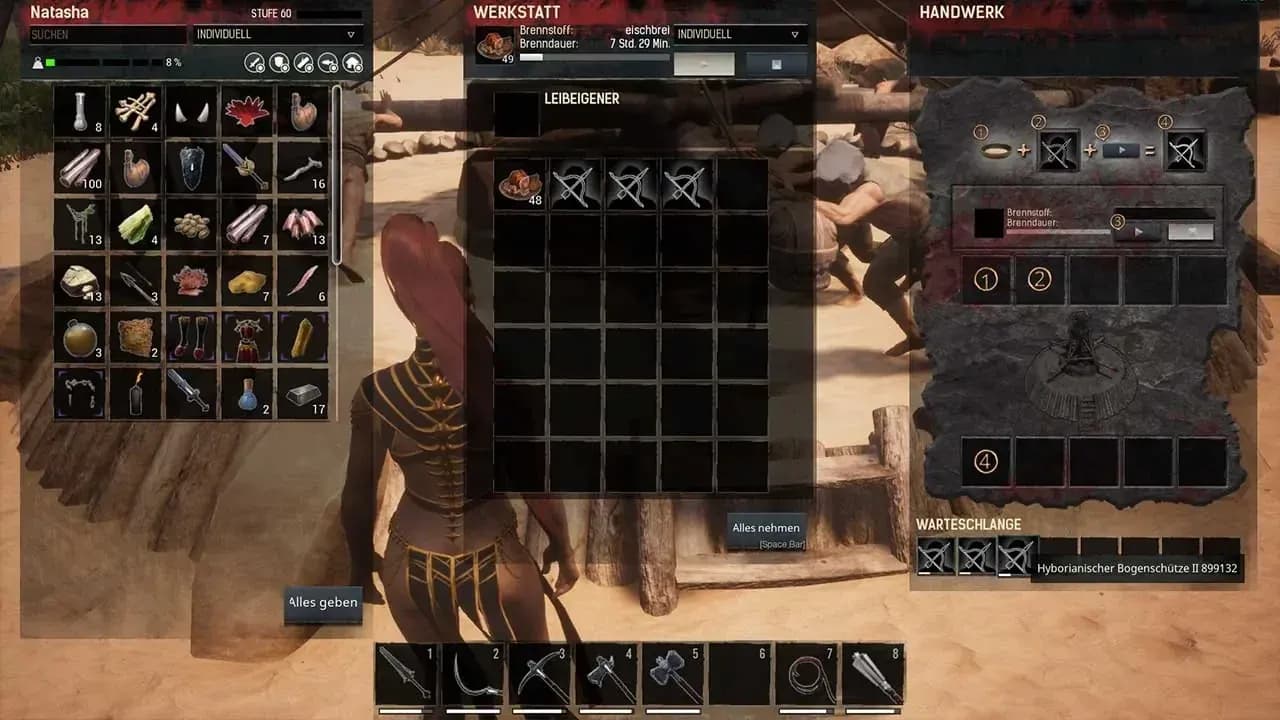
Thrall equipment inventory screen
How to equip and control your thralls
Open a thrall's inventory and drag armor and weapons directly into their equipment slots. Better gear translates directly into better combat performance. A T2 fighter in high-quality armor will outperform a T3 fighter wearing nothing.
Thrall AI behavior is adjustable through three settings:
- Passive: the thrall avoids combat entirely
- Defensive: attacks enemies that target you
- Aggressive: attacks enemies on sight
You can also set movement behavior to control whether they hold position or chase enemies. Aggressive mode sounds appealing, but thralls set to chase can wander into dangerous territory and die to enemies you never intended to fight. Defensive mode is the safer default for most situations.
Using thralls strategically: base defense and beyond
A well-placed thrall setup turns your base into something that defends itself. Fighter thralls at chokepoints and archer thralls on elevated positions create overlapping fields of fire that handle most raid scenarios without your direct involvement.
For exploration, a strong fighter thrall acts as a damage sponge against bosses and elite enemies. Let them tank while you deal damage from range or focus on mechanics. The building system in Conan Exiles rewards players who plan their base layout around thrall positioning, and the official Conan Exiles wiki's building guide covers how load and foundation range affect where you can place thralls and structures.
On the crafting side, assigning the right thrall to each bench creates a production chain that accelerates your gear progression. Don't leave benches empty when a crafter could be sitting there improving output.
Common mistakes that cost you time
- Using lethal weapons to capture: always switch to a truncheon or blunted ammunition before engaging a target thrall
- Leaving the Wheel of Pain unfueled: stock Gruel before starting, not halfway through
- Skipping Taskmasters: the time savings compound across every thrall you'll ever break
- Under-gearing thralls: an unequipped thrall dies fast; give them real armor and a weapon before sending them into danger
- Running a single thrall: perk RNG at levels 10 and 20 means some thralls roll poorly; having backups prevents you from being stuck with a bad outcome
For more survival and base-building guides across all major games, browse the full guides section at GAMES.GG to find strategies that apply beyond the Exiled Lands.