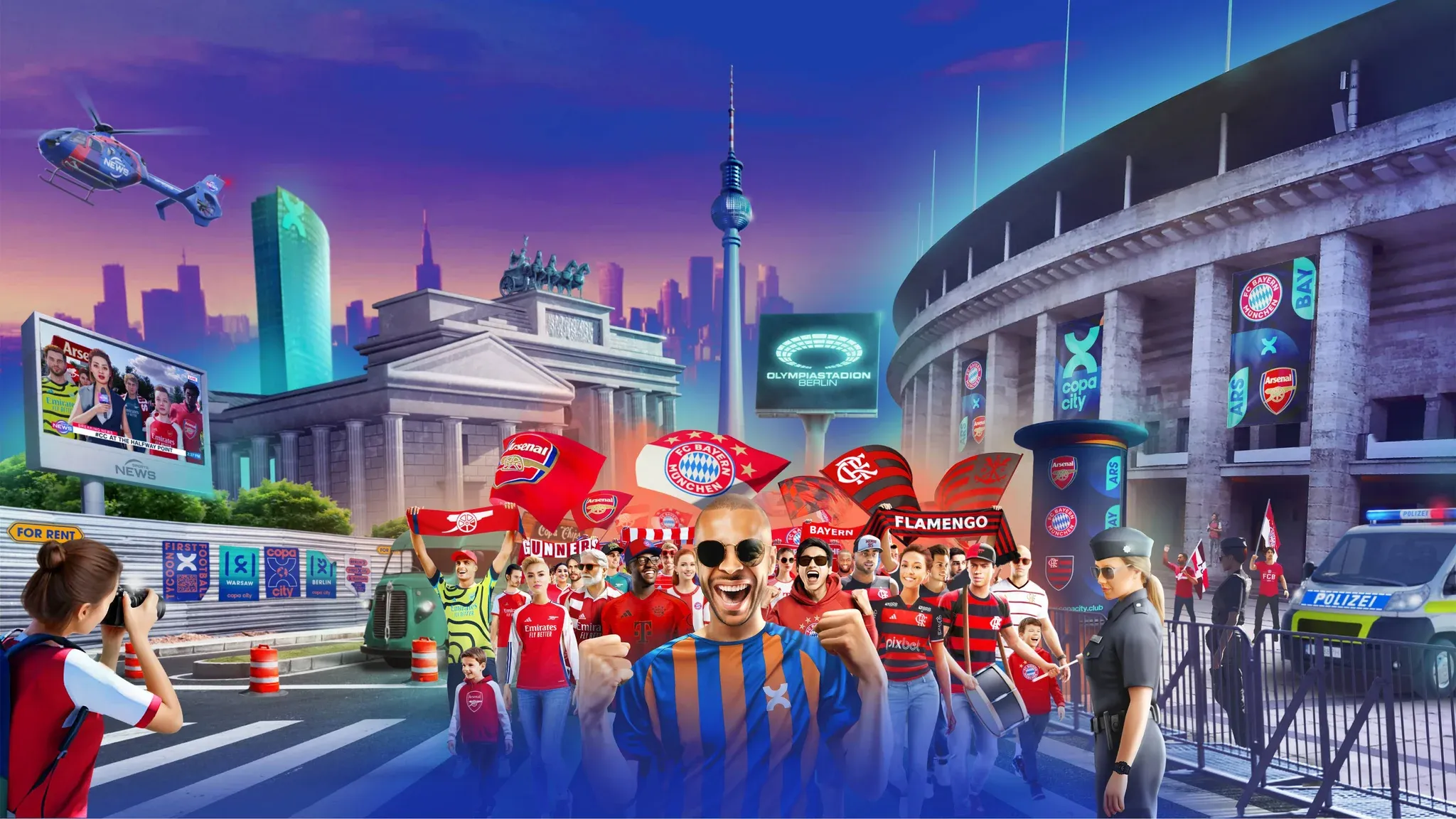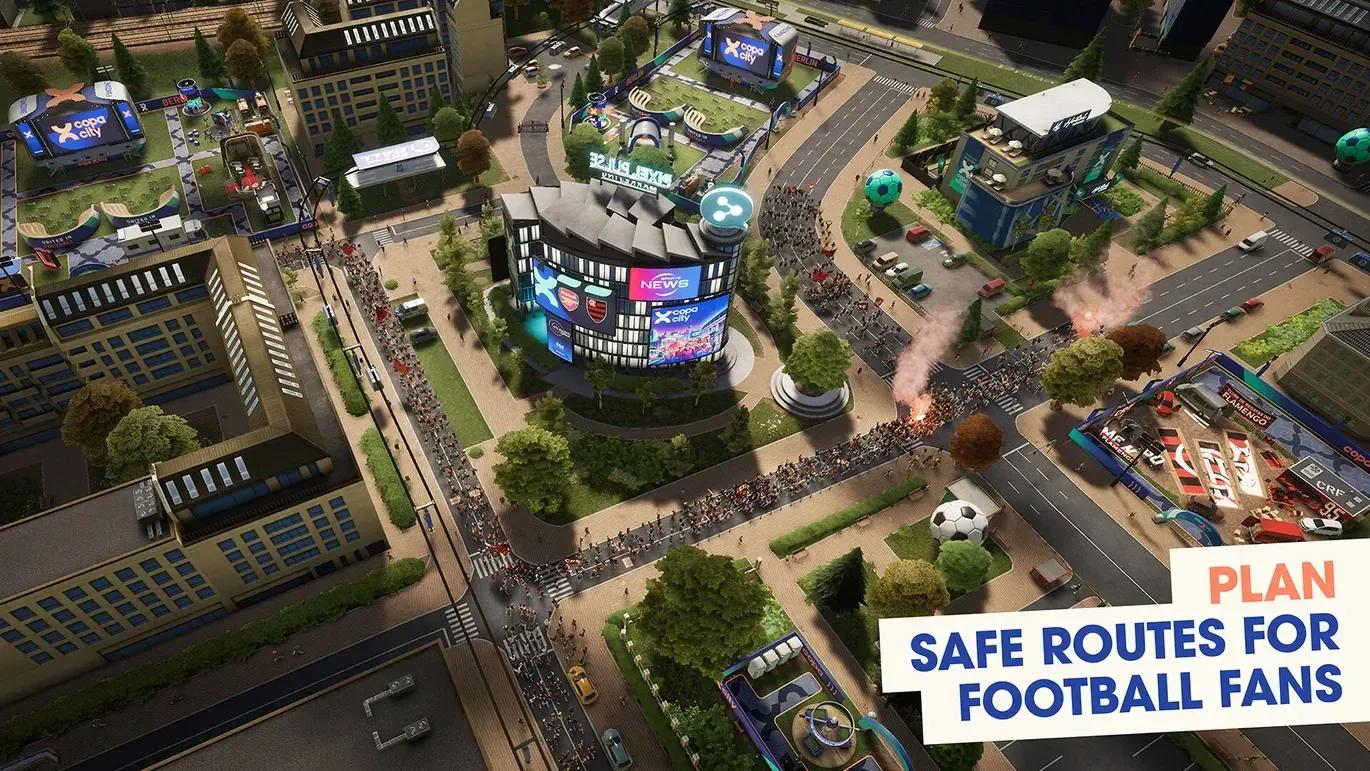

What is Copa City and how does it actually play?
Copa City is not a football game in the traditional sense. You never touch the pitch, pick a formation, or control a single player. Your job is everything that happens before kickoff: building fan zones, managing catering, handling security, running marketing campaigns, preparing the stadium, and keeping thousands of supporters satisfied across an entire city. Think city builder crossed with an event management sim, with a football match as the hard deadline. After multiple playthroughs testing different headquarters choices and fan-type strategies, here is everything you need to get through your first match without a planning disaster.
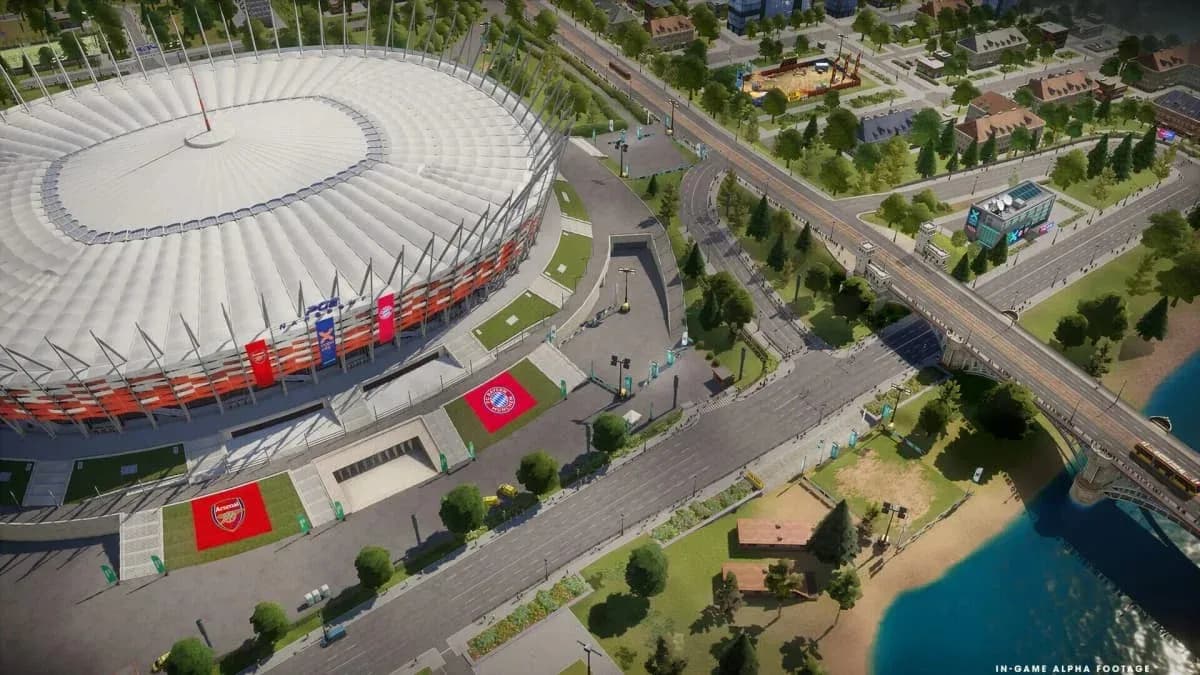
Match Readiness pacing tool
How does Match Readiness work?
Match Readiness is the central progression system in Copa City. Raising it unlocks new buildings, better generators, additional stadium facilities, card rewards, and advanced marketing campaigns. Every completed objective feeds into it.
The five readiness levels each gate a meaningful tier of content:
| Readiness Level | What it unlocks |
|---|---|
| 1 | Basic revenue buildings and cards |
| 2 | Tier 2 generators and advanced facilities |
| 3 | Stadium training and larger infrastructure |
| 4 | VIP facilities |
| 5 | Final inspection phase |
The trap most new players fall into is treating each readiness jump as permission to expand everywhere at once. A smarter loop is: complete objective, hit new readiness level, identify the new bottleneck, solve it, then build. Skipping the bottleneck check means your city can look busy while the actual event is quietly failing.
What are the three fan types and why do they matter?
Supporter segmentation shapes almost every building decision. There are three fan categories, each with a distinct primary need:
| Fan Type | Primary Need | Key Buildings |
|---|---|---|
| Family Fans | Fun | Mini football pitches, stages, mascots, foosball tables |
| Core Fans | Catering | Food kiosks, food trucks, restaurants |
| Ultras | Safety | First aid stations, security facilities, crowd control systems |
Overcommitting to one type is one of the most common beginner mistakes. Family fans in particular demand enormous amounts of fun infrastructure, and if you have built your entire city around entertainment zones, a sudden influx of Ultras will tank your safety ratings fast.
Marketing campaigns let you target specific fan types and regions, so you can actually see who is arriving and when. The flight timeline shows arrival time, team affiliation, supporter count, and origin region. If 500 family fans land tomorrow, build fun attractions today. If 1,000 Ultras are incoming, prioritize safety infrastructure before they arrive.
How do workforce resources actually limit your progress?
Money is visible. Workforce resources are the hidden constraint that catches most players off guard. There are three types:
Volunteers are generated through volunteer centers and power general fan services and attractions. Specialists are the most valuable resource in the game. They unlock marketing campaigns, stadium expansion, regional access, and advanced facilities. Running out of specialists is far more common than running out of cash, and it stops expansion cold. Stewards handle ticket sales, stadium support, and additional sales points.
Before any major spending push, check whether the new area will actually be staffable. A fan zone with no volunteers assigned to it does nothing. Build a small workforce buffer before opening a new district.
Choosing your headquarters and city
Copa City launches with three real-world cities, each with different layouts, expansion routes, district bonuses, and stadium capacities:
| City | Stadium |
|---|---|
| Berlin | Olympiastadion |
| Warsaw | PGE Narodowy |
| Rio de Janeiro | Maracanã |
Before construction starts, you pick a headquarters district. In Berlin, the three starting options illustrate how much this choice matters:
| Headquarters | Strengths | Weaknesses |
|---|---|---|
| Charlottenburg | Strong catering potential | Harder expansion paths |
| Westend | Balanced bonuses and expansion | No major specialization |
| Mitte | Excellent fun potential | Very low safety |
Every expansion originates from your HQ, so a bad pick creates expensive fixes later. Choose based on the fan types you expect to attract most, not just the immediate bonuses.
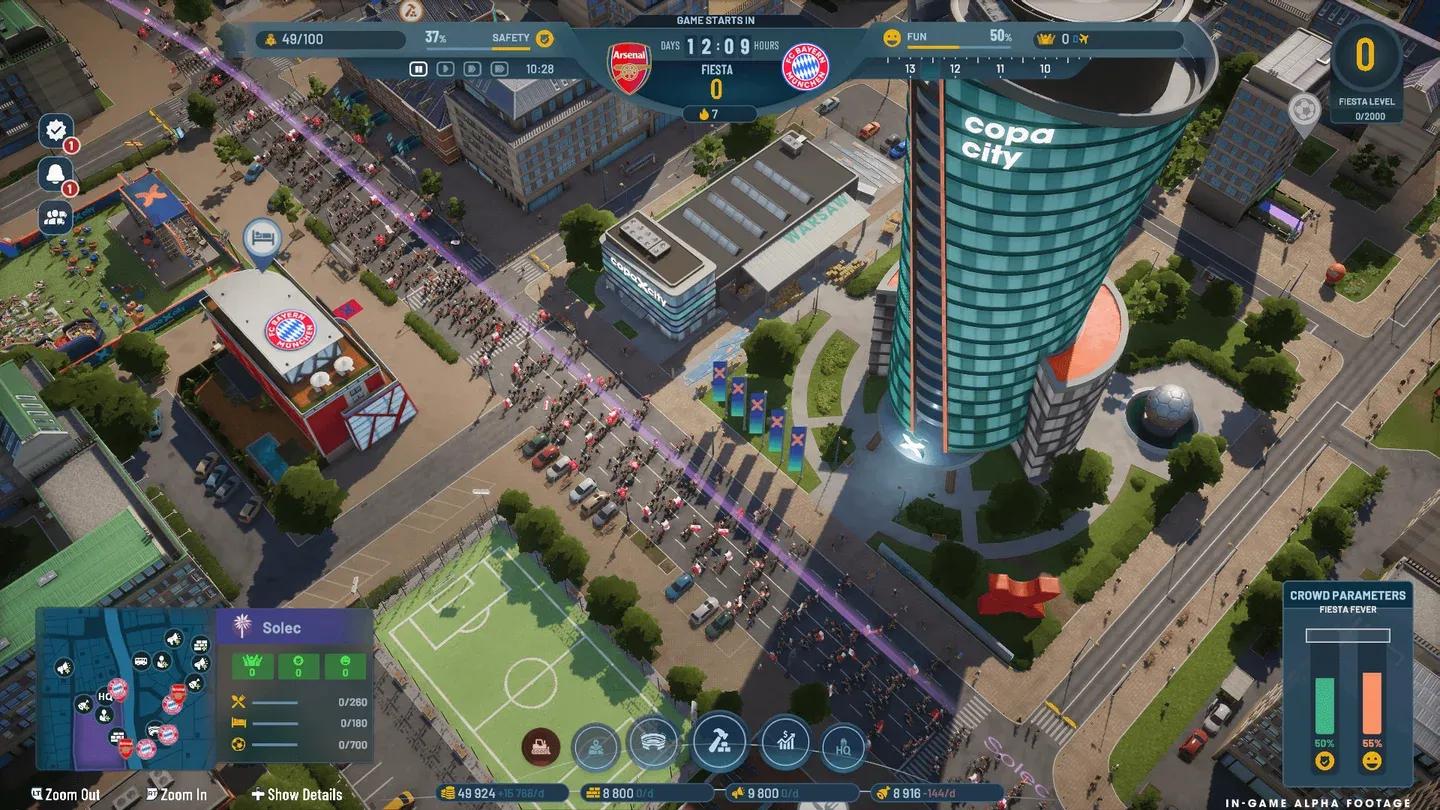
Berlin HQ district selection
How do fan zones and generators fit together?
Every building in Copa City follows two rules: it must connect to a path, and most facilities require a generator. Generator placement is one of the game's most satisfying optimization puzzles. Poor placement reduces fun output across nearby attractions. Good placement lets a single generator power multiple buildings efficiently.
The goal is to create tight clusters where as few generators as possible cover as many attractions as needed. Spread-out fan zones with isolated buildings waste generator capacity and inflate your power costs.
District specialization adds another layer here. Sports bar districts boost nearby fun and suit family supporters. Restaurant districts increase catering output and work well for Core fans. Hotel districts provide multipliers to surrounding modules and are worth targeting in high-efficiency builds.
What are the strongest early money-making buildings?
Early revenue determines how fast you can fund everything else. After testing across multiple runs, these buildings deliver the best returns in the opening phase:
| Building | Daily Revenue |
|---|---|
| Snack Stand | ~720 |
| Food Kiosk | ~900 |
| Ball Game | Revenue + Fun |
| Mini Football Pitch | Revenue + Fun |
The general sequence is: build revenue first, use profits to fund entertainment and safety, then expand before fan demand outpaces your infrastructure. Dual-purpose buildings like the Mini Football Pitch are especially efficient early because they satisfy fan needs while generating income.
How does stadium management work?
The stadium is where many first-time players fall behind. It is easy to spend the entire early game on fan zones and arrive at the final stretch with an underprepared stadium.
Each stand must be assigned to a team and a fan type, and you control ticket pricing directly. Ticket price has a significant effect on demand: at $35 per ticket, daily sales are low; at $11, sales jump considerably. Finding the balance between profit, attendance, and supporter satisfaction becomes a real challenge.
Beyond seating, the stadium needs entrances with ticket offices and security checkpoints, food kiosks with menu boards, locker rooms, training facilities, and entertainment like jumbotrons and team branding. Pitch quality also factors into the final inspection rating. You can adjust lighting, watering, and grass conditions, and neglecting it costs points at the end.
Stadium stand assignment screen
What does the final inspection check?
At readiness level 5, the inspection committee evaluates your entire operation. The categories are:
- Stadium readiness
- Fan satisfaction
- Infrastructure quality
- Ticketing setup
- Pitch quality
Final ratings range from acceptable to excellent. The inspection is the reason you cannot treat the stadium as an afterthought. Every category needs attention, and late ticket configuration in particular can cripple attendance numbers before the committee even arrives.
Campaign vs Single Match: which mode should you start with?
Campaign introduces mechanics gradually through structured objectives and tutorials, making it the right starting point. Single Match gives you full management freedom but assumes you already understand city routing, fan zones, resources, and stadium audits. Use Campaign as your classroom, then move to Single Match once the systems feel familiar.
For your second match in Campaign, pick one system to improve deliberately. Cleaner fan-zone spacing, earlier ticket work, or better steward planning each teach something the first run glosses over. Copa City rewards iteration because every event exposes a planning gap you can close next time.
For more strategy on every system in the game, the Subway Surfers City guides collection covers Match Readiness, fan zone layouts, resources, and stadium preparation in dedicated guides. If you enjoy this style of casual games that blend city management with sports strategy, Copa City sits in a pretty interesting corner of the genre.