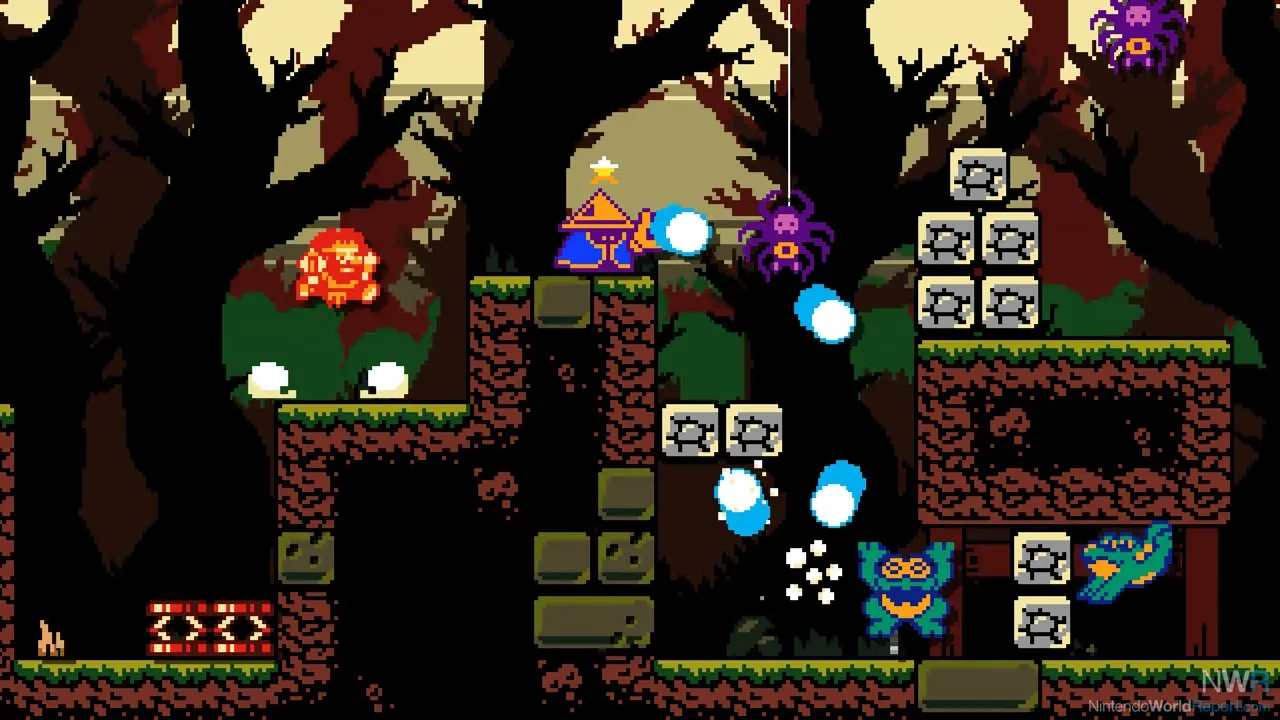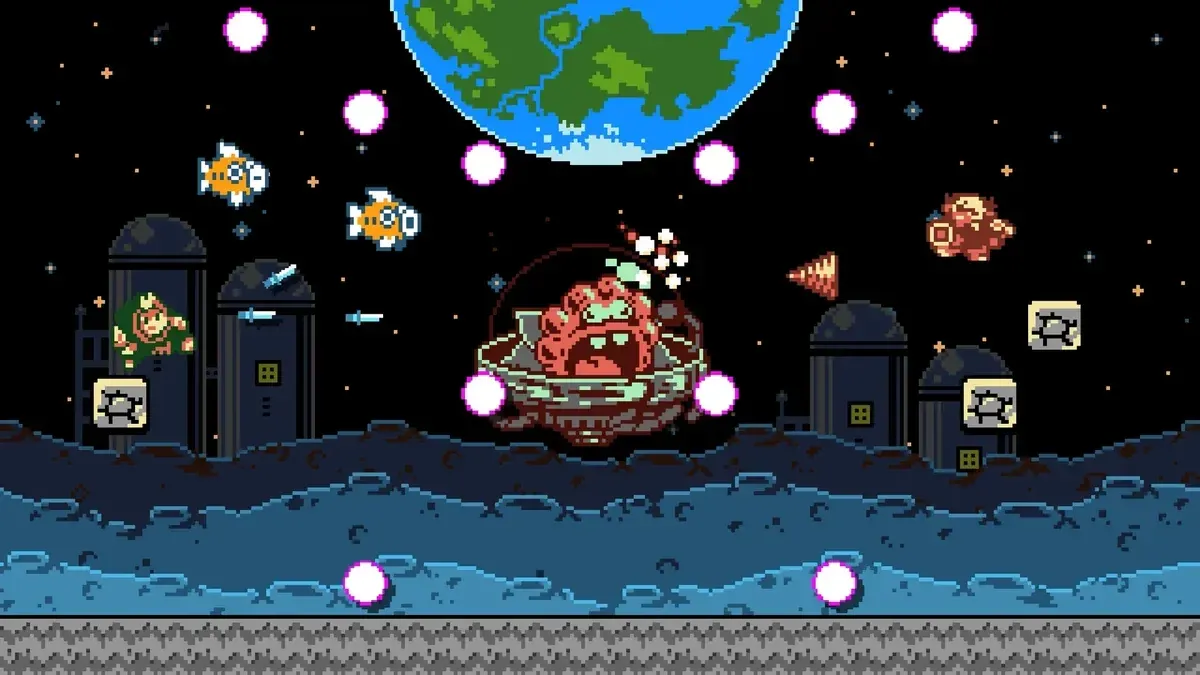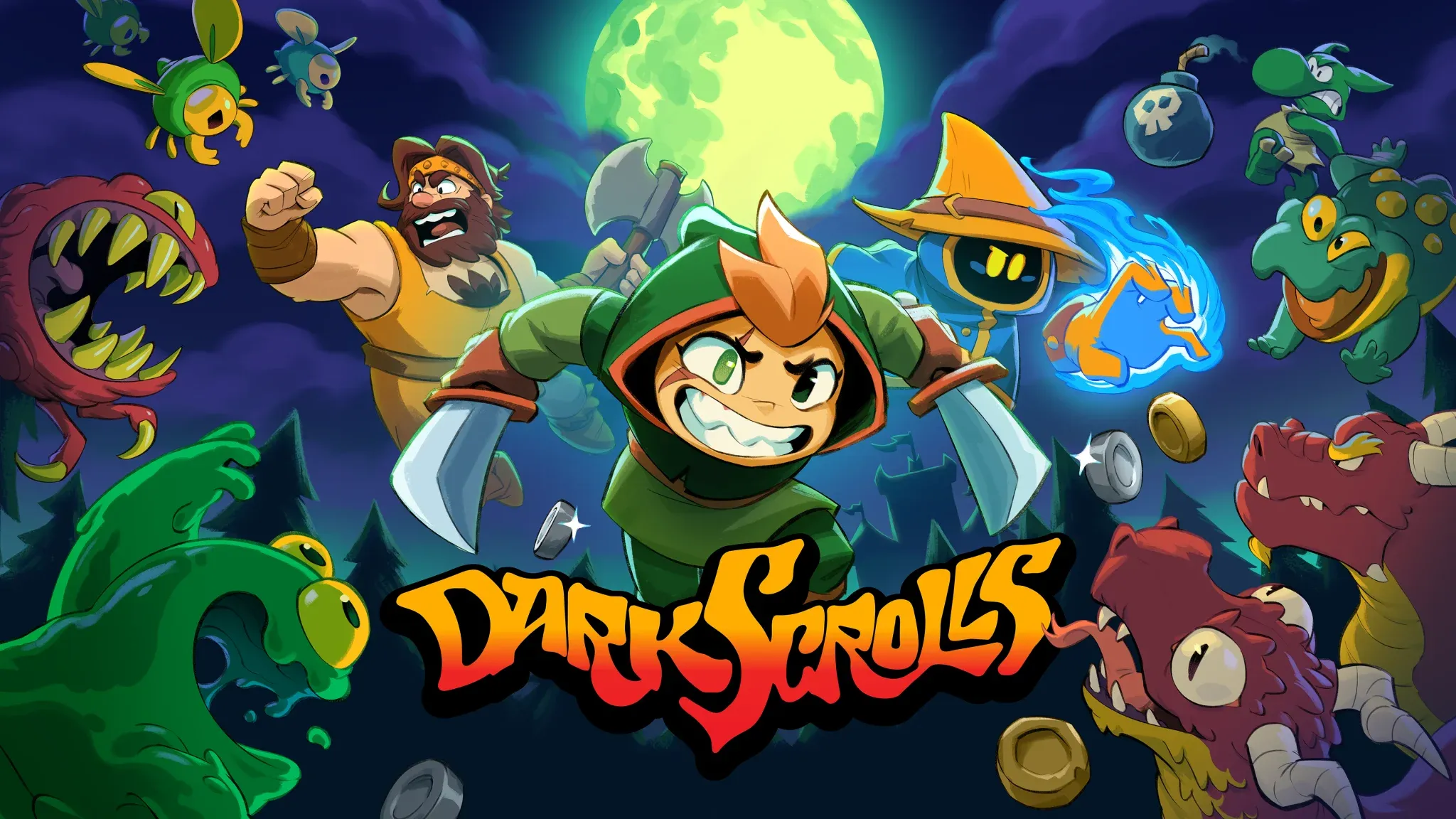

Dark Scrolls, doinksoft's autoscrolling hack-and-slash roguelite published by Devolver Digital, launched on June 22, 2026, and it wastes zero time explaining itself. The screen starts moving. You move with it or you die. That one mechanic sits underneath every other system in the game, from how you build your star meter to which perks you buy at Bruce & Goose's Shoppe. This guide covers what the game skips over so your first few runs actually teach you something.
Why does the autoscroll kill so many players early?
Most early deaths have nothing to do with enemy difficulty. A player stops moving to fight something awkward, the scroll edge catches up, and the run ends. Dark Scrolls is an autoscrolling platformer first and a roguelite second, and that order matters.
The scroll speed isn't constant across the whole game. Early biomes like the Castle Ramparts move at a pace that gives you room to test walls and explore vertical shafts. By the time you reach the Cursed Catacombs, the speed increases and the screen fills with bullet-hell projectiles. What works in the first zone stops working two biomes later.
Three things worth internalizing before your second run:
- Chests visible near the left edge require a risk calculation every time. Dropping back toward the scroll boundary to open one is sometimes worth it, sometimes fatal.
- There are no safe moments at the scroll edge. Dark Scrolls punishes the instinct to stop, observe, and then commit. The correct rhythm is dodging while moving forward, not stopping to dodge.
- Enemies spawn ahead of you by design. When a room layout feels like it's pushing you backward, that's usually a trap around a chest or an alternate path, not a level design mistake.
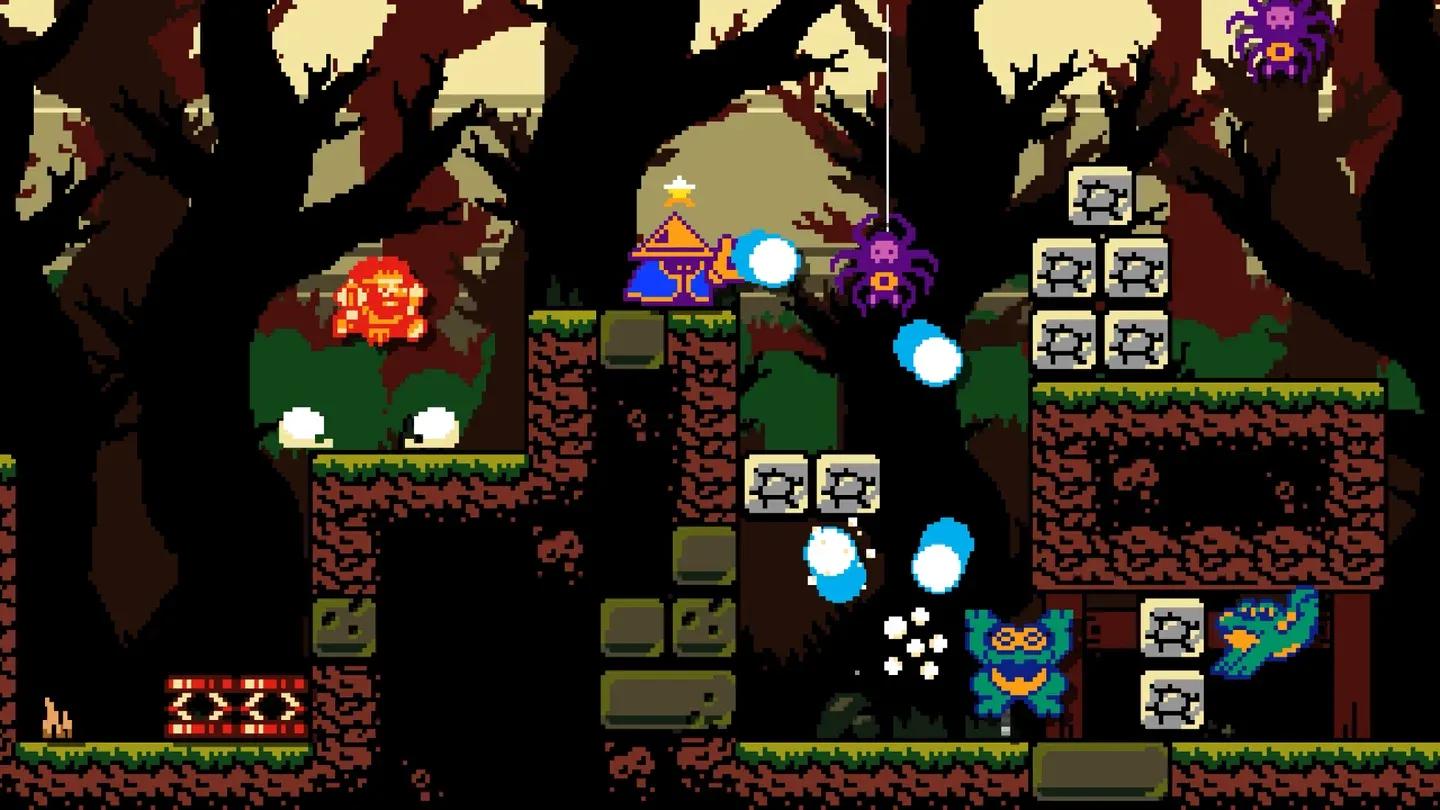
Scroll edge is the real threat
How does the star system actually work?
Hitting enemies builds your star meter toward five stars. Stars aren't just a score display. They gate burst attacks and activate perks that are tied to specific star thresholds.
The detail that catches players off guard: perks only activate at their exact assigned star level. Drop from four stars to three and any perk tied to four stars disappears until you rebuild. The meter is more volatile than a standard roguelite power stack. One extended dodge sequence without attacking can wipe out the buff you just activated.
Aggression is mechanically required here, not just stylistically encouraged. The berserker gets this right automatically because melee range forces constant contact. Ranged heroes like the axe-thrower or arrow-firer build stars slowly if you're launching shots from the back of the screen and missing. Three stars is the first meaningful threshold for most builds. Reaching it before the first major enemy group is the target for early runs.
What should you spend coins on at Bruce & Goose's Shoppe?
The Shoppe appears between stages. You spend coins collected during a run on a rotating selection of perks, attacks, and summoned allies. The inventory changes between visits, so the same list won't appear twice.
Confirmed available perks include Thorns (damage reflect on hit), Shuriken (an extra projectile that fires alongside your main attack), Koi Ploy (a fish-based projectile modifier), Reverse (alters attack direction or trajectory), and Fat Stack (stacks a coin or stat modifier). Some of these are genuinely absurd. That's the design intent.
The beginner mistake is picking the most interesting-sounding perk rather than the most compatible one. Two unrelated perks that both sound strong produce a mediocre run. One perk that directly amplifies your hero's weapon type produces a good one. Shuriken on a knife-thrower stacks cleanly. Shuriken on the saxophone rat does almost nothing.
Summoned allies purchased from the Shoppe follow you through the stage and attack independently. They help in sections where scroll speed picks up, but they aren't infinite. Budget coins across visits rather than emptying your wallet on the first stop. Later visits sometimes offer better synergies for your specific hero.
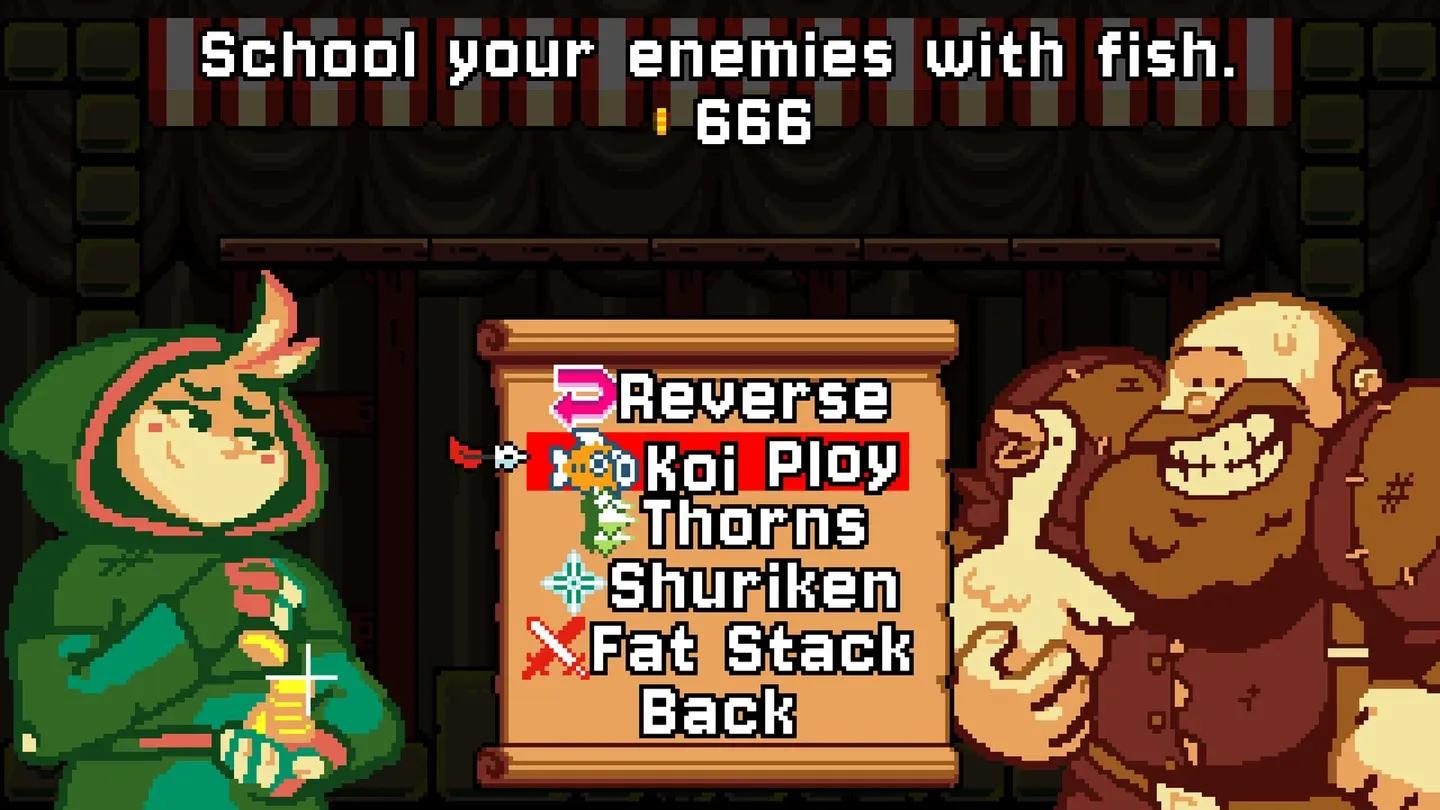
Pick perks that match your hero
All 9 heroes: weapons and what they're actually good for
Every hero in Dark Scrolls has a fixed weapon type. You're not building a playstyle from scratch each run, you're modifying a fixed one with Shoppe perks. Confirmed weapon categories across the roster:
| Hero | Weapon Type | Playstyle Notes |
|---|---|---|
| Berserker | Melee axe swings | Best for beginners; constant contact builds stars fast |
| Axe-Thrower | Thrown axes (return) | Ranged with melee gap risk |
| Thief | Daggers or knives | Close range, rapid fire; dash helps with breakable walls |
| Archer | Arrows (arc trajectory) | Long range; requires accurate aim to build stars |
| Magician | Fireballs (area effect) | Wide AoE cracks walls faster; useful for secret hunting |
| Saxophone-Playing Rat | Soundwave notes | Notes pass through thin walls; unlockable in Toxic Sewers |
| Steak-Flipping Chef | Thrown steaks | Chaos option; unlockable in Castle Kitchens |
| Cute Dog | TBD (unlockable) | Unlocked via Jailer mini-boss in Dungeon Depths |
| The Alien | TBD (unlockable) | Requires double jump or dash to reach in Astral Peak |
The berserker is the most forgiving starting pick. Melee range forces aggression, which is exactly what the star system rewards. The saxophone rat is the weirdest option and one of the most effective once you understand it. Its soundwaves reward constant forward movement rather than planting and firing, and they can trigger distant switches that other characters physically can't reach.
Each hero also has personal side objectives that appear during a run. Completing them unlocks character-specific rewards separate from Shoppe perks. You don't need to chase them immediately, but knowing what they are changes how you route through a level.
How do you unlock the secret heroes?
Four of the nine heroes require specific in-run actions to rescue. None of them are handed to you.
- Saxophone-Playing Rat (Toxic Sewers): Find the hidden switch behind the third waterfall. A trail of floating musical notes appears when you hit it. Survive the trap room that follows without taking damage.
- Cute Dog (Dungeon Depths): Locked in a cage at the end of the biome. The key is carried by an elite Jailer mini-boss that only spawns if you destroy three hidden gargoyle statues in the preceding rooms.
- The Alien (Astral Peak): Requires a sequence of platforming leaps off off-screen asteroids. You need a hero with a double jump or dash to reach the crashed saucer.
- Steak-Flipping Chef (Castle Kitchens): Extinguish all five cooking fires in the kitchen biome using water-based attacks or environmental barrels before the autoscroll consumes them.
Unlocked heroes are permanent. In early runs, prioritize unlocking heroes that appeal to you over squeezing every perk out of a single run. The unlock path sometimes means skipping a Shoppe visit or chest route, and that trade is usually worth it.
How do breakable walls and hidden secrets work?
Breakable walls are the most consistent method for finding extra gems and alternate routes. The challenge is spotting them before the screen pushes you past them.
Visual tells to watch for:
- Cracked stone blocks or patches of moss that don't match surrounding obsidian textures
- A flickering torch that burns blue instead of orange, which signals a breakable wall nearby
- A single weak enemy spawning near a dead end with no other enemies attacking. That lone bat near a wall corner is a signpost. Attack the wall directly behind it.
- In the Royal Armory, an intact banner hanging from the ceiling almost always has a hidden gem cache in the wall directly beneath it
- In the Cursed Catacombs, skeletal statues all facing the same blank obsidian wall mean that wall is an illusion you can dash through to find a secret NPC
Character choice matters for wall-breaking speed. The berserker's heavy swings and the magician's area-of-effect attacks crack walls much faster than the thief's throwing knives. If you're doing a dedicated secret-hunting run, pick a hero with high burst damage.
What's the best approach for your first three runs?
Run 1: pick the berserker and don't spend anything. Observe scroll speed, learn when enemies spawn relative to your position, and find out where the Shoppe appears. Die without spending coins so you have a clean read on the baseline difficulty. Two hours of better play follow from understanding this first.
Run 2: focus entirely on the star meter. Same hero. Attack everything immediately rather than dodging first. Get to five stars at least once and trigger the burst attack so you know what it feels like. Notice how the count drops when you dodge a long sequence without attacking. The rhythm is build-attack-dodge, not dodge-wait-attack.
Run 3: make one Shoppe decision. Pick the perk that most directly matches what your hero already does. Ranged hero gets the projectile modifier. Melee hero gets Thorns or the ally option. One coherent perk beats two unrelated ones, every time.
By run four or five you'll have a feel for chest risk-reward timing, branching paths, and whether a hero unlock is worth cutting a run short.
How does co-op change the game?
Co-op in Dark Scrolls isn't just adding a second health bar. The run structure changes substantially.
The ghost mechanic isn't a punishment. When your partner dies, they become a ghost that stays in the level. That ghost can act as a platform for tricky vertical sections and fire weak projectiles that stagger enemies without dealing significant damage. Your partner is still contributing. This keeps sessions from becoming one person watching the other.
Reviving costs resources. Spend coins at the Shoppe on a revive option or reach a checkpoint with the ghost still in play. Skipping a Shoppe visit because you don't think you need the revive is a mistake in co-op. Budget for it the same way you budget for allies.
Ghost positioning is an active job. A ghost sitting near the scroll edge isn't doing much. Useful ghost positions are ahead of difficult platforming sections, in enemy clusters where stagger helps, or elevated to provide a jump platform over a trap gap.
Scroll speed matters more in co-op. A ghost positioned behind the group is already close to the edge. If you spend time reviving in a bad spot, both players can end up at the scroll boundary. Reviving works best when the active player is ahead of the midpoint.
Certain secrets require two players. Dual pressure plates that open hidden vaults must be triggered simultaneously. Solo players need a specific character ability or a precisely timed bomb. A co-op duo just coordinates positioning. Combining abilities also opens new options: the magician can freeze a hazard to create a temporary platform for the berserker to reach a high breakable wall.
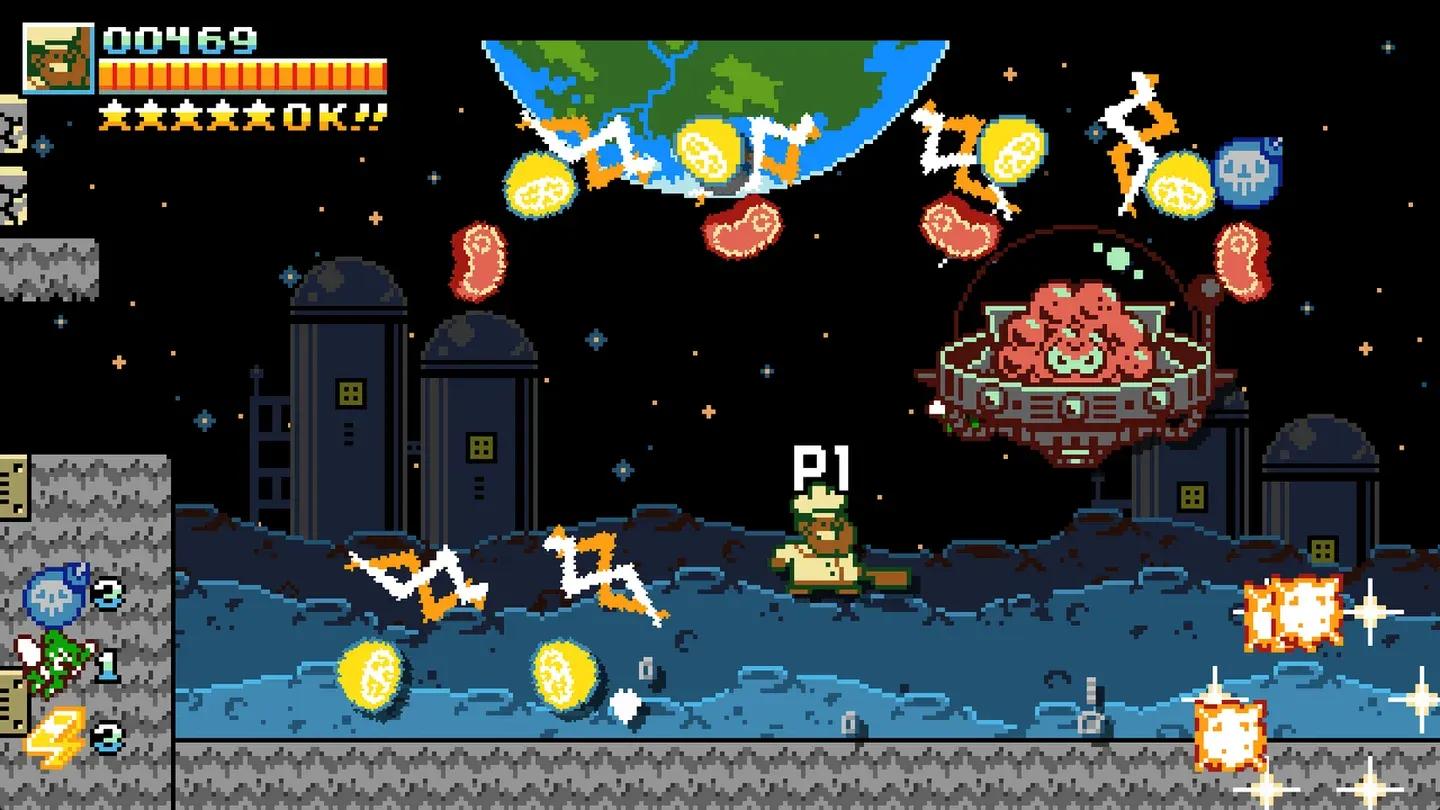
Ghost doubles as a platform
What does Bruce & Goose's Shoppe offer beyond standard perks?
The Shoppe's inventory isn't entirely predictable, but there are two items worth planning around specifically.
The Revealing Eye trinket causes hidden paths to briefly glow cyan when you approach them during a run. For players struggling to spot breakable walls before the scroll takes them, this is the single most useful purchase available.
The Chrono-Charm grants an active ability that slows time for five seconds. There's no setting to permanently reduce scroll speed, so this is the only in-game method for buying extra time on a tricky secret before it disappears.
There's also a hidden economy mechanic: entering the Shoppe with exactly 999 gems triggers a "Special Investment" dialogue from Bruce. Funding this expedition unlocks a permanent shortcut through early zones and grants access to a hidden boss fight that drops top-tier loot. Veteran players typically spend around 60% of their gems on standard upgrades and bank the remaining 40% toward these high-tier unlocks.
Gems carry over regardless of whether you win or lose a run. Dedicated secret hunters sometimes do "suicide runs," equipping mobility-focused trinkets, rushing to a specific biome to farm a hidden chest, then dying intentionally to bank the gems.
Dark Scrolls rewards players who treat each run as a learning opportunity rather than a completion attempt. The autoscroll, the star meter, the Shoppe economy, and the hero unlock conditions all feed into each other once you understand the baseline. For more on building winning runs across all nine heroes, the full Dark Scrolls strategy guides collection is worth bookmarking. If you enjoy the roguelite structure here and want to explore more games in the genre, the RPG games section has plenty of comparable options with deep progression systems. And if you're coming from something like The Elder Scrolls V: Skyrim and adjusting to faster, more punishing run structures, the jump to autoscrolling roguelites is steep but worth it.