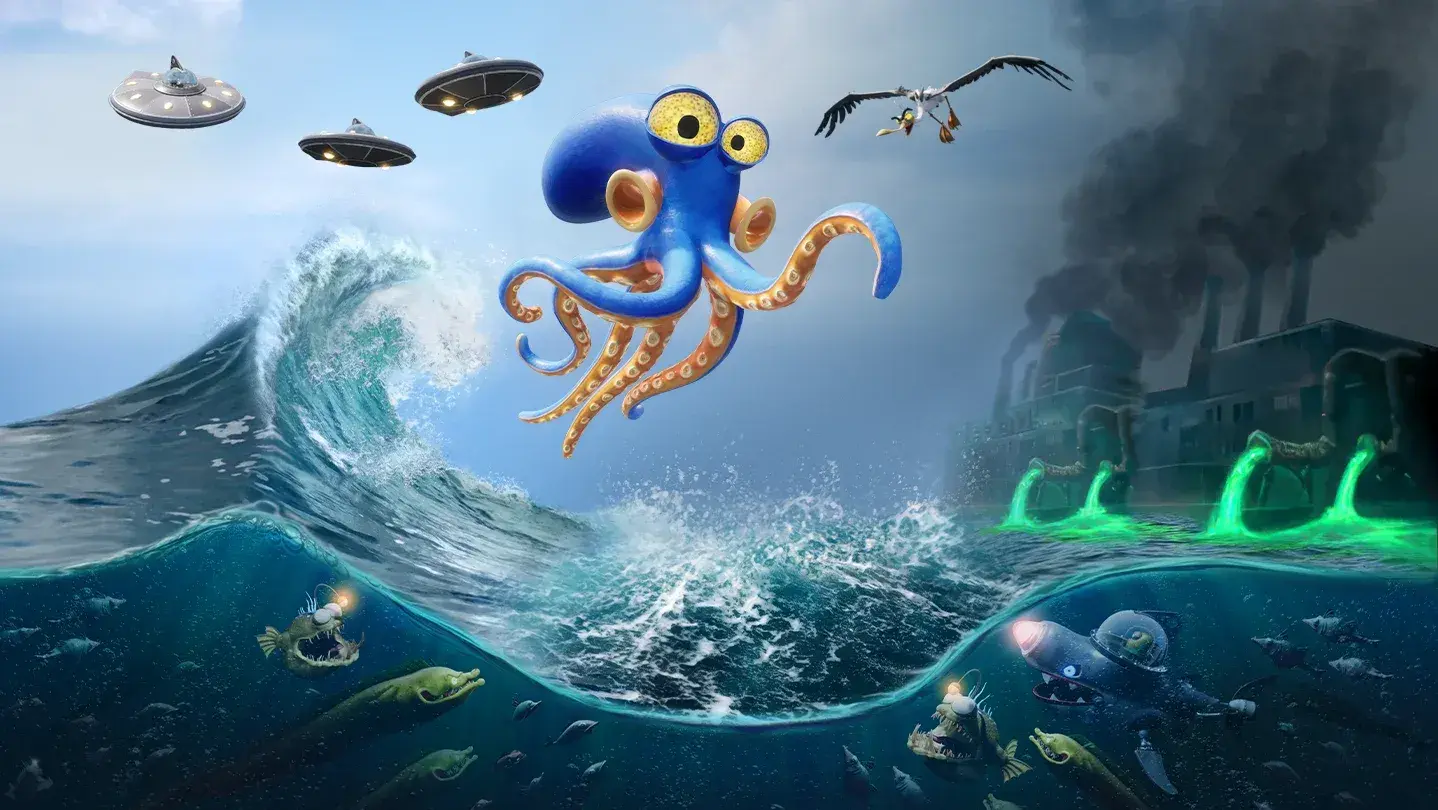

Darwin's Paradox! arrived on April 2, 2026 as one of the more unexpected releases of the year: a Konami-published puzzle-platformer from ZDT Studio that puts you in the tentacles of a cartoon octopus navigating a post-alien-invasion Earth. It earned a 7/10 from IGN's Alessandro Fillari, who praised its Looney Tunes energy while flagging some real frustration points. Here's a full breakdown of what the game does well, where it stumbles, and how to get the most out of it.
What is Darwin's Paradox! actually about?
Darwin's Paradox! opens with Darwin, a blue octopus, getting yanked from their underwater home by a mysterious beam of light and dumped on the surface of an Earth already under alien occupation. Darwin's friend gets separated in the chaos, and the broader story escalates from a simple survival scenario into a full conspiracy thriller involving UFOOD INC., a front organization running an industrial complex with plans for planetary domination.
The game runs roughly five to seven hours depending on how thoroughly you explore, with no dialogue for any of the main characters. Storytelling happens entirely through animation and environmental detail, which works more often than you'd expect. The tone sits somewhere between Finding Nemo and a Saturday morning cartoon, closer to the slapstick energy of Looney Tunes than the dread of Little Nightmares, which is the most direct gameplay comparison both sources point to.
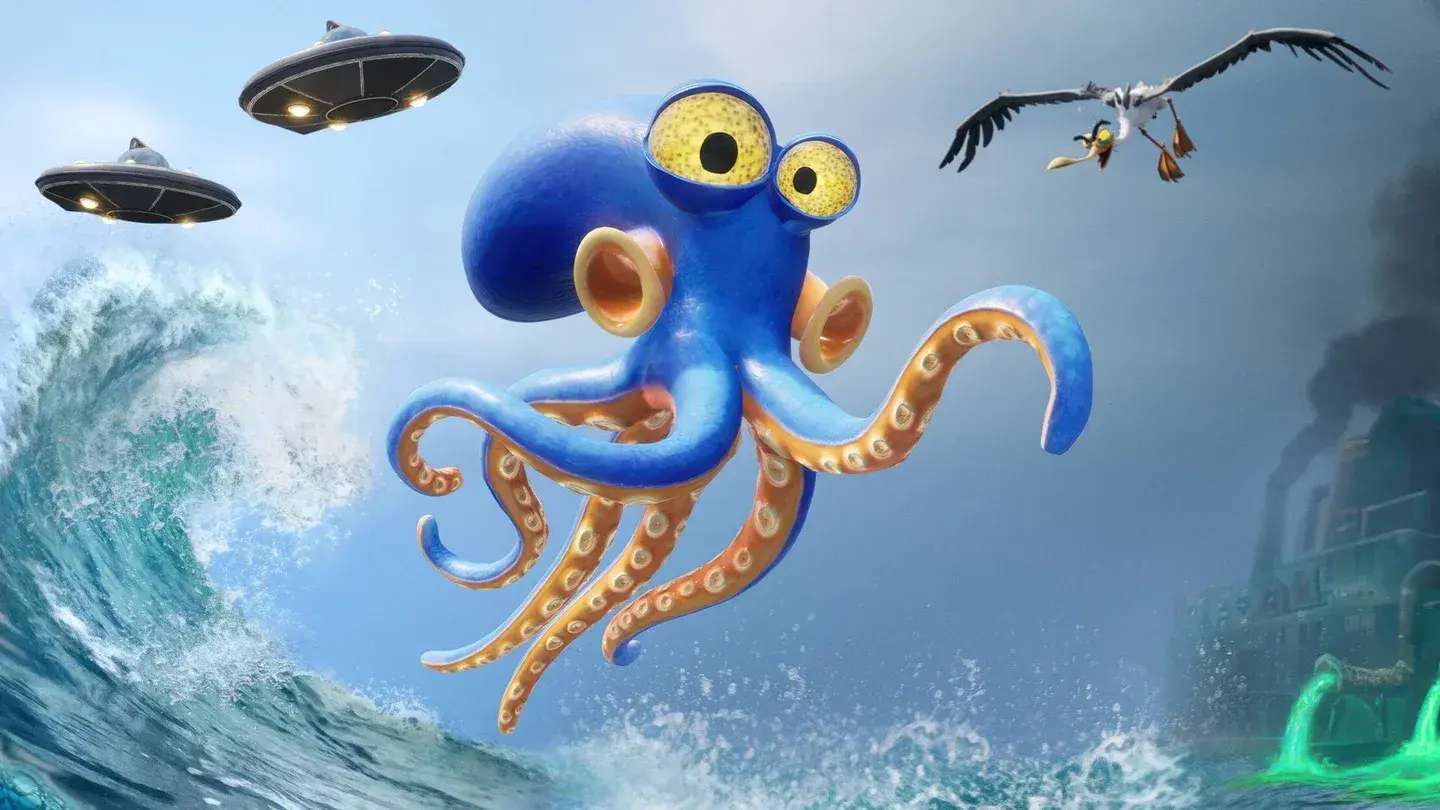
Stealth in the UFOOD complex
How does the gameplay work?
Darwin's Paradox! is a puzzle-platformer built around careful movement, environmental problem-solving, and stealth. The core loop involves navigating stages filled with alien enemies, industrial hazards, and interactive objects like levers and buttons. What separates it from genre peers is the way Darwin's octopus biology gets translated into actual mechanics.
Darwin's core abilities
According to both IGN's review and the Gamerview writeup, Darwin has several distinct abilities that feed into platforming and stealth:
- Wall-climbing: Darwin's tentacles let them scale vertical surfaces and grip moving platforms. This is the most frequently used ability throughout the campaign.
- Camouflage: Darwin can blend into the environment to avoid enemy detection. Useful in stealth sections and during boss fights to dodge attacks.
- Ink spit: Darwin fires ink to hit distant targets, blind enemies, activate electrical panels, or knock objects to create distractions and open shortcuts.
- Balloon inflation: Darwin can inflate to become a floating balloon, reaching high platforms that wall-climbing alone can't access.
The Gamerview review also mentions a tree of passive perks that improves Darwin's abilities as the campaign progresses, alongside a reusable item inventory that gets introduced as stages expand from the opening junkyard into the central factory complex.
info
The camouflage ability isn't just for sneaking past patrols. During boss encounters, it lets you dodge incoming attacks while repositioning. Get comfortable using it offensively, not just defensively.
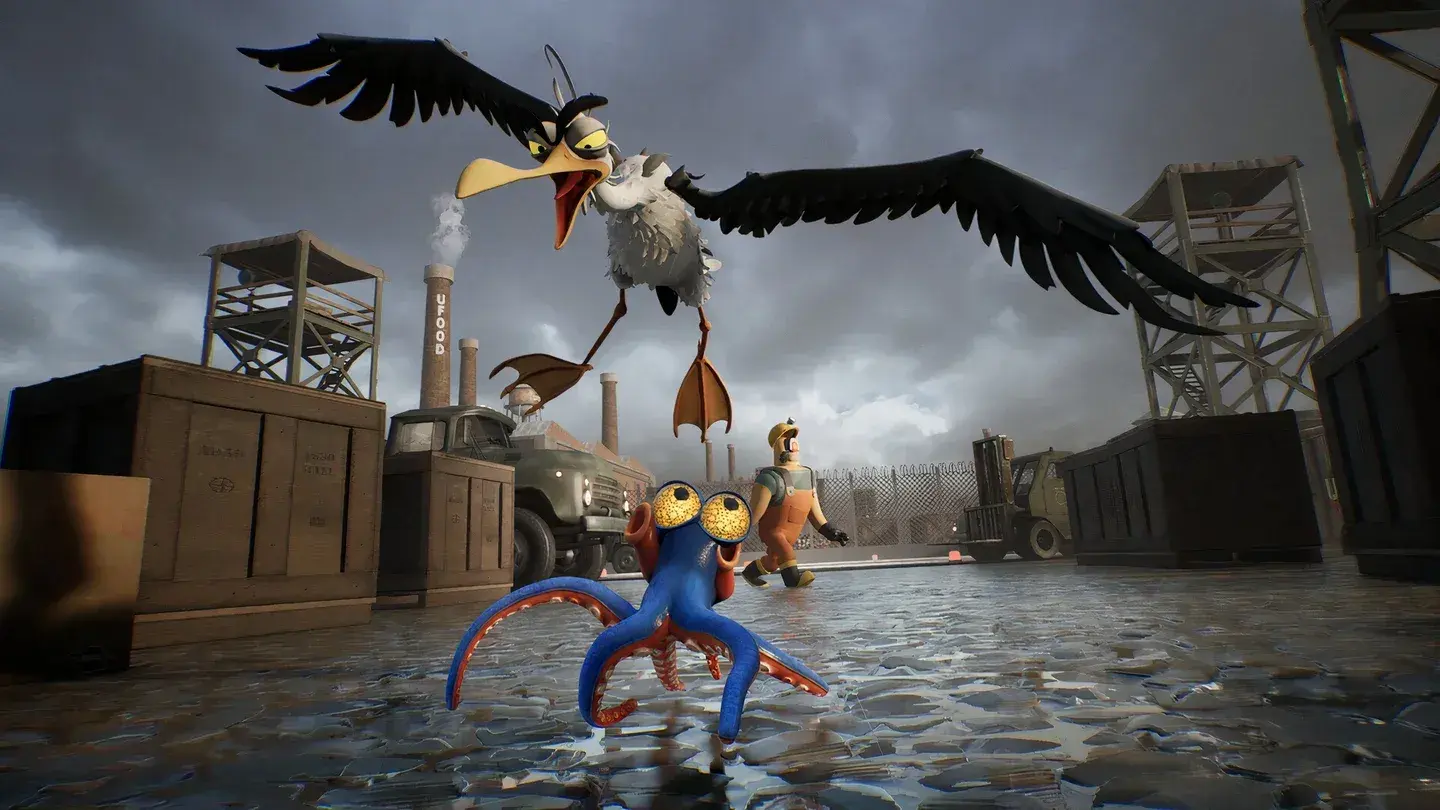
Wall-climbing in action
What are the boss fights like?
Boss encounters in Darwin's Paradox! are multi-phase battles against mutant creatures and machines from UFOOD INC. According to the Gamerview review, each boss fight is designed as a culmination of the mechanics you've been using: camouflage to dodge, ink to disable shields, and climbing to exploit weak points. The fights unfold in stages and reward pattern recognition while feeding more lore about the alien conspiracy.
The Gamerview review does flag little variety in bosses as a notable downside, so don't expect wildly different encounter designs across the campaign.
warning
Some sections introduce sound-detecting machines that punish any movement noise. IGN's review specifically calls out a particularly frustrating area involving underwater brush, spotlights, and these audio sensors. If you hit a wall here, slow down completely and plan each move before executing.
Is the platforming actually fun?
Mostly yes, with a significant caveat. IGN's review describes the platforming as genuinely exciting when it builds toward spectacle-driven chaos sequences where you're essentially improvising your way through disaster. The slower, methodical sections that precede these moments work well as contrast.
The problem is the wall-climbing mechanic being too sticky. IGN specifically noted moments where Darwin attaches to unintended objects mid-movement, leading to sudden deaths. This is a real issue in the more demanding platforming sections, and it compounds with the game's difficulty spikes.
The hint system exists but isn't particularly useful. According to IGN, hints tend toward generic reminders like "use the dash button" rather than anything that actually points you toward a solution.
What collectibles are there and are they worth finding?
Collectibles are a genuine highlight. Both sources agree that hidden paths in each level lead to items that add real value beyond cosmetic padding.
Completing stages also unlocks a gallery of concept art and remixed tracks, which the Gamerview review specifically recommends for players who enjoy completionist runs. The Solid Snake-inspired costume (a direct nod to Konami's Metal Gear Solid) is unlockable, and IGN mentions a movie poster Easter egg featuring an alien Snake Plisken knock-off that's worth hunting down.
info
The Gamerview review notes that luminescent pearls encourage backtracking, and checkpoints are positioned to make that backtracking feel manageable rather than punishing. If you're aiming for 100% completion, don't stress about missing pearls on your first pass through a level.
What platforms is Darwin's Paradox! on?
Darwin's Paradox! launched on PS5, Xbox Series X/S, Nintendo Switch 2, and PC on April 2, 2026. It carries an ESRB rating of Everyone 10+. The Gamerview review was conducted on Switch 2, while IGN reviewed the PC version.
The verdict: should you play Darwin's Paradox!?
If you can tolerate some uneven difficulty and a slightly sticky movement system, Darwin's Paradox! delivers a genuinely charming experience that's hard to find elsewhere right now. The octopus abilities are creative and well-integrated, the cartoon tone is consistent, and the collectible design gives exploration real purpose. The ending leaves things open in a way that feels more like setup for a sequel than a proper conclusion, which is either exciting or frustrating depending on your tolerance for that kind of thing.
For more context on the game's story premise, the Wikipedia entry for Darwin's Paradox! has background on the setup worth reading before you start. For more puzzle-platformer guides and gaming coverage, browse the latest guides on GAMES.GG to find what's worth playing next.