


Dead or Alive 6 Last Round arrives on Nintendo Switch 2 as the most complete version of Team Ninja's 3D fighter ever shipped on a portable device. Every DLC character, every stage, every costume, and years of balance patches are bundled into a single package that runs at a locked 60fps in both docked and handheld modes. If you missed DOA6 on PS4 or PC, or if you want a competitive fighter you can practice on the train and play ranked at home, this is the version to own.
What is Dead or Alive 6 Last Round?
Dead or Alive 6 Last Round is the definitive edition of DOA6, developed by Team Ninja and published by Koei Tecmo. The original game launched in March 2019 across PS4, Xbox One, and PC, then received multiple seasons of DLC and balance updates over several years. Last Round consolidates everything into one package with no separate season passes or character packs to chase.
The game's reputation rests on three foundations: the Triangle System (strikes beat throws, throws beat holds, holds beat strikes), the Critical Burst system that rewards aggressive pressure, and interactive stages that let you slam opponents through walls and off ledges. These systems make DOA6 accessible on the surface and genuinely deep once you commit to learning it.
The Switch 2 release brings full content parity with the PS5, Xbox Series X|S, and PC versions. No content was cut for the port.
Why does the Switch 2 make DOA6 viable now?
The original Switch never had the processing headroom to run a demanding 3D fighter at a stable 60fps. That matters more in fighting games than in almost any other genre, because frame data governs every interaction. A single dropped frame can invalidate a punish or break a combo timing. The original hardware simply could not deliver the consistency competitive play requires.
The Nintendo Switch 2 changes that calculation entirely. Its custom NVIDIA processor, expanded RAM, and internal SSD give the platform genuine next-generation capability. DOA6 Last Round targets and holds 60fps in both docked and handheld modes, using dynamic resolution scaling to maintain that frame rate rather than sacrificing it for visual polish. In docked mode, resolution scales between 1080p and 1440p. In handheld mode, it drops to 720p-900p, which is barely noticeable on the smaller screen.
Loading times are dramatically shorter thanks to the SSD. Training Mode loads almost instantly, which matters more than it sounds when you're grinding 15-minute practice sessions between ranked matches.
What's in the full content package?
The Switch 2 version ships with everything released for DOA6 across its post-launch life:
- Over 30 playable characters, including all DLC fighters and crossover guests
- All DLC stages with dynamic environmental interactions and Danger Zone variants
- Complete costume library with hundreds of outfits, including collaboration costumes from The King of Fighters and Samurai Warriors
- Full story mode with cinematic cutscenes and character-specific episodes
- Training Mode with frame data display, recording and playback, combo challenges, and configurable dummy settings
- Quest Mode with structured single-player objectives and unlockable rewards
- Online multiplayer with ranked and casual matches, lobby support, and replay saving
- Switch 2-specific features including HD Rumble, touchscreen menu navigation, and local wireless multiplayer
Costume packs are included in the base purchase. There are no microtransactions for gameplay-affecting content.
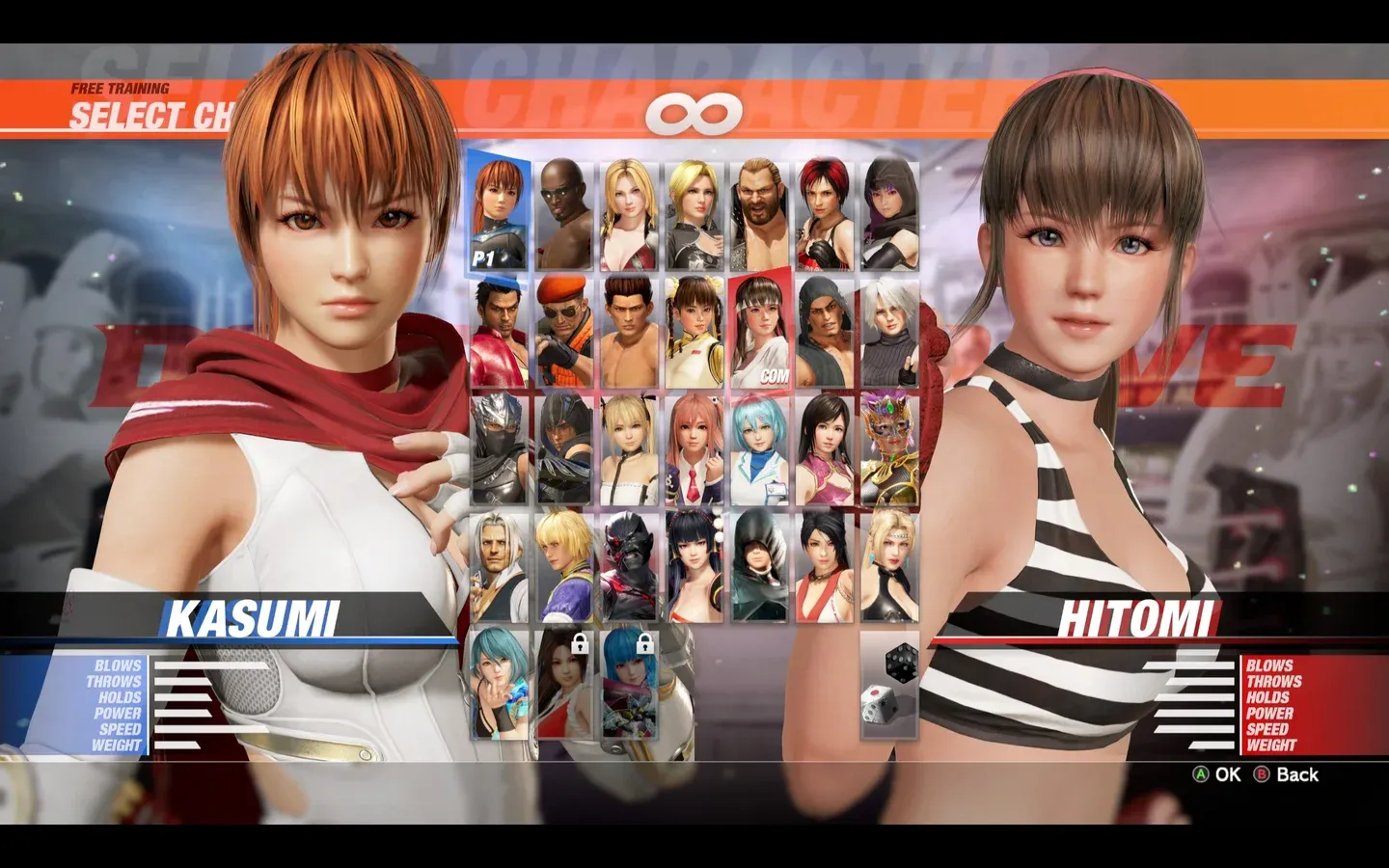
Full roster available day one
Who are the best characters to play?
Beginner-friendly picks
Three characters stand out as strong starting points. Hitomi, Kasumi, and Jann Lee all have intuitive move lists, straightforward combo routes, and mechanics that teach core DOA concepts without demanding advanced execution. Pick one and commit to understanding their toolkit before branching out.
Jann Lee's Jeet Kune Do style rewards aggression with flashy aerial combos. Kasumi's Mugen Tenshin Ninjutsu gives you fast string pressure and excellent offensive tools. Hitomi sits in the middle, offering balanced offense and defense that suits players still learning the Triangle System.
Competitive tier picks
At the top of the current meta, Kasumi, Hayabusa, Ayane, and Marie Rose appear consistently on high-level tier lists. Kasumi's speed makes her a relentless pressure character. Hayabusa's Izuna Drop setups produce explosive burst damage from almost anywhere on screen. Ayane's back-turned stance and evasive movement make her one of the hardest characters to corner. Marie Rose's Systema toolkit offers exceptional mix-up potential that punishes opponents who think they've read her patterns.
Guest and DLC characters
Mai Shiranui and Kula Diamond from The King of Fighters arrive with mechanics that feel distinct from the DOA-native cast. Both are balanced for competitive play and have combo routes that reward players willing to learn their unique quirks.
How does the Triangle System actually work?
Every interaction in DOA6 runs through the Triangle System. Strikes beat throws. Throws beat holds. Holds beat strikes. That's the whole foundation, and understanding it changes how you read every match.
On top of that, DOA6 introduced the Break Gauge, a super meter that fills as you deal and receive damage. A full gauge lets you spend meter in three ways:
- Break Blow: A cinematic super attack with armor properties
- Break Hold: A defensive meter spend to escape pressure
- Sidestep Attack: A meter-enhanced evasive strike
The Critical System sits at the center of high-level play. Certain attacks put your opponent into Critical State, a stagger window where they cannot block. Extending combos during Critical State deals more damage. Build enough hits and you trigger a Critical Burst, launching the opponent into a full juggle sequence. Knowing when to extend versus when to Burst is the skill gap between intermediate and expert players.
Stage positioning adds a third dimension. Walls create Wall Combo opportunities. Ledges trigger stage transitions with bonus damage. Danger Zones deal extra environmental damage when activated. Controlling where the fight happens is as important as controlling the exchanges themselves.

Break Gauge fills under pressure
How does the Switch 2 version compare to PS5 and PC?
The honest answer is that visual fidelity is the one area where the Switch 2 trails. PS5 and Xbox Series X run at higher resolutions with better texture detail and lighting. PC can exceed both consoles. During actual gameplay, the gap is smaller than the spec sheets suggest, but it is real.
Frame rate is the equalizer. All four versions target 60fps, and all four deliver it. Frame data is identical across platforms. A punish that works on PS5 works exactly the same on Switch 2. The competitive experience is not compromised.
Content is fully equal. Every character, stage, costume, and mode present on PS5 is present on Switch 2.
The Switch 2's genuine advantage is portability. Drilling combo muscle memory during a commute in handheld mode and then sitting down for ranked play at a TV is a workflow no other platform offers. That practice time compounds quickly.
Essential tips for new players
Learn the Triangle System before anything else. Combos and frame data matter, but reading whether your opponent will strike, throw, or hold wins exchanges at every level. Internalize the triangle first.
Use Training Mode before every online session. Set the dummy to record strings you struggle against, then practice holding them on reaction. The frame data display tells you which moves are safe on block and which leave you vulnerable. Even 15 minutes of focused Training Mode work before queuing ranked makes a measurable difference.
Pick one character and stay there. The temptation to try everyone is real, but DOA6 rewards character-specific knowledge. Knowing your character's safe strings, their Critical State extensions, and their best stage-positioning tools takes time to build. Switching characters resets that investment.
Watch your own replays. The replay system saves your matches for review. Patterns invisible in the heat of a match become obvious when you watch from the outside. Identifying your own habits is faster than any amount of online advice.
Use portability as a practice tool. Handheld mode plays identically to docked in terms of frame data and input timing. Combo execution practiced in handheld transfers directly to ranked play on a TV.
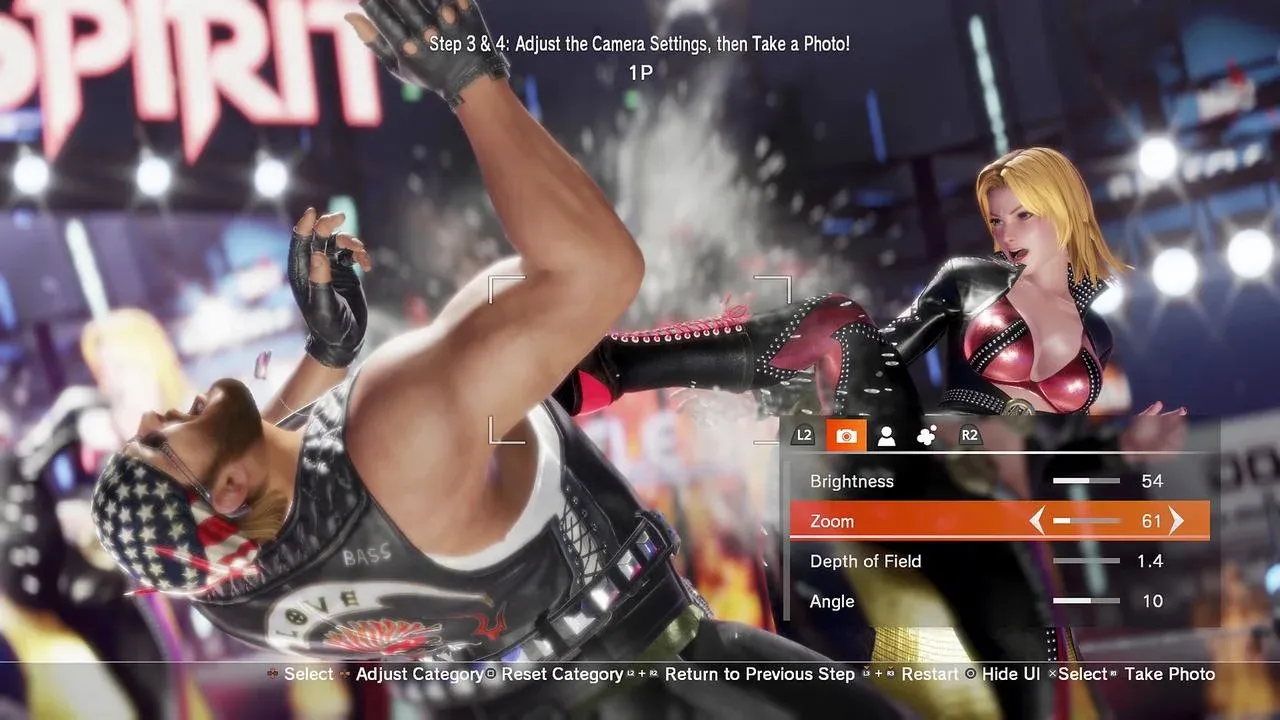
Training Mode with frame data on
Where to go next
Dead or Alive 6 Last Round on Switch 2 is a complete, uncompromised fighting game that fits in your pocket. The Triangle System gives it a strategic depth that holds up at high level, the roster covers every playstyle, and the 60fps performance means the platform never holds you back. If you're new to the series, start with Hitomi or Kasumi and spend your first hours in Training Mode before touching ranked.
For broader strategy across fighting games, the fundamentals here transfer further than you might expect. To go deeper on Dead as Disco and its rhythm-combat mechanics, the full Dead as Disco guide collection covers everything from combat and upgrade strategies to boss fights and builds.