
Biggest discounts, free games, and limited-time offers across every major gaming store.
Never pay full price again.
Overview
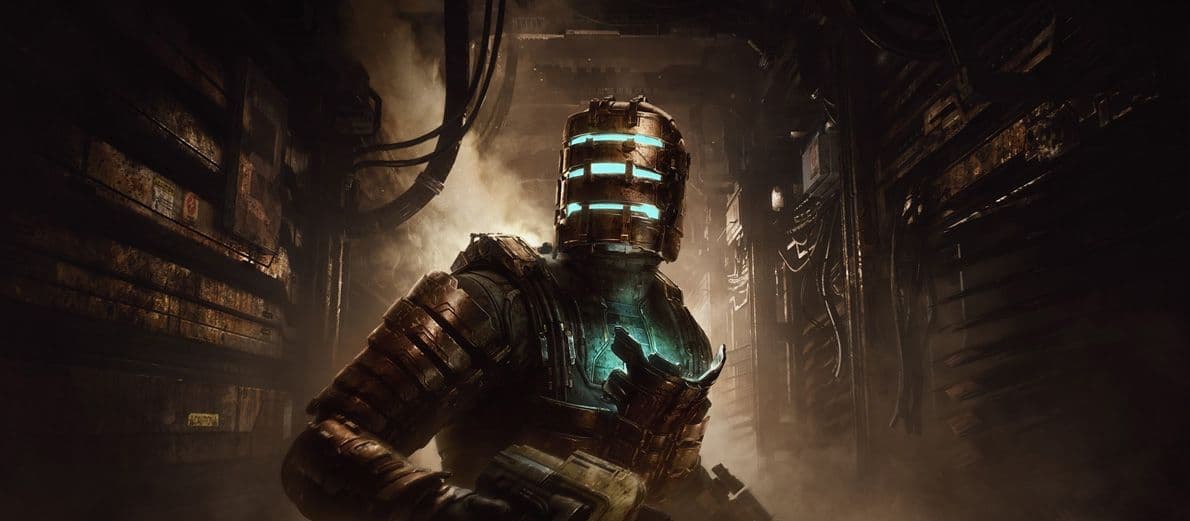
Dead Space drops you into one of gaming's most oppressive settings: the USG Ishimura, a planet-cracking mining vessel that has gone completely dark. You play as Isaac Clarke, a systems engineer sent to investigate a distress signal, who quickly discovers the crew has been transformed into Necromorphs, a grotesque category of reanimated corpses that move fast, absorb punishment, and do not go down from a headshot. The game released on October 13, 2008, developed by EA Redwood Shores (later Visceral Games), and it redefined what survival horror could look like in the third-person perspective.
The Ishimura is not just a backdrop. Every section of the ship has a function, a history, and a reason to feel wrong. From the medical deck to the engineering levels, the environment tells the story of a catastrophe that unfolded before Isaac arrived. The narrative threads Isaac's search for his girlfriend Nicole through audio logs, text messages, and environmental storytelling, doling out information at a pace that keeps the mystery alive without losing momentum.
Gameplay mechanics: how does Dead Space's combat actually work?
Dead Space's defining mechanic is dismemberment. Necromorphs do not die from conventional gunfire to the torso. Players must sever limbs to slow them down and eventually stop them. A Necromorph with both legs cut off will drag itself across the floor. One with its arms removed becomes less dangerous but still closes distance. This system forces every encounter to feel deliberate rather than frantic.
Key tools Isaac carries into combat include:
- Plasma Cutter: the default weapon, fires a horizontal or vertical energy beam ideal for limb removal
- Line Gun: fires a wide horizontal blast effective against groups
- Ripper: launches a spinning saw blade that hovers in place
- Stasis Module: slows enemies or environmental hazards temporarily
- Kinesis Module: moves objects, including enemy limbs repurposed as projectiles
All weapons are upgradeable through a node-based system. Supplies are limited enough that every upgrade decision carries weight, and players who spend nodes carelessly will feel it later.
What makes the UI design so effective?
Dead Space strips the HUD almost entirely from the screen. Isaac's remaining health appears as a glowing spine on the back of his suit. Ammo counts display on the weapon itself. Oxygen depletes visually through a gauge on his helmet. There is no minimap cluttering the corner, no floating waypoints unless you actively request a path. This design choice keeps the player inside the horror rather than managing menus, and it remains one of the smartest UI decisions in the genre's history.
World and setting
The Ishimura is massive, and Dead Space takes its time moving through it. Zero-gravity sections change the spatial rules entirely, letting Isaac walk on walls and ceilings while enemies approach from any direction. Vacuum sequences cut audio to near-silence, which is both technically accurate and deeply unsettling. The game's sound design throughout is exceptional, using the ship's groaning hull, distant screams, and directional audio cues to manufacture dread in empty corridors.
The religious cult subplot involving Unitology adds a human dimension to the horror. The Necromorphs are not random; they are the result of something that was sought out and deliberately triggered. That context makes the Ishimura feel less like a haunted house and more like a crime scene.
Impact and legacy
Dead Space sits alongside Resident Evil 4 as one of the games that proved survival horror could work from a third-person over-the-shoulder perspective without sacrificing tension. It spawned two direct sequels, a 2023 remake developed by Motive Studio, animated films, and a comic series. The original remains available on PlayStation, Steam, Xbox, and the Epic Games Store, and the core design holds up as a textbook example of how to build sustained dread through systems rather than scripted jump scares.
Conclusion
Dead Space is a survival horror benchmark. The limb-based combat, oppressive atmosphere aboard the Ishimura, and near-invisible HUD combine into an experience that still feels considered and deliberate well over a decade after release. For anyone interested in third-person horror games where resource management and enemy behavior actually matter, this is required playing.