Search games, articles, guides...CtrlK
Sign InGet Started
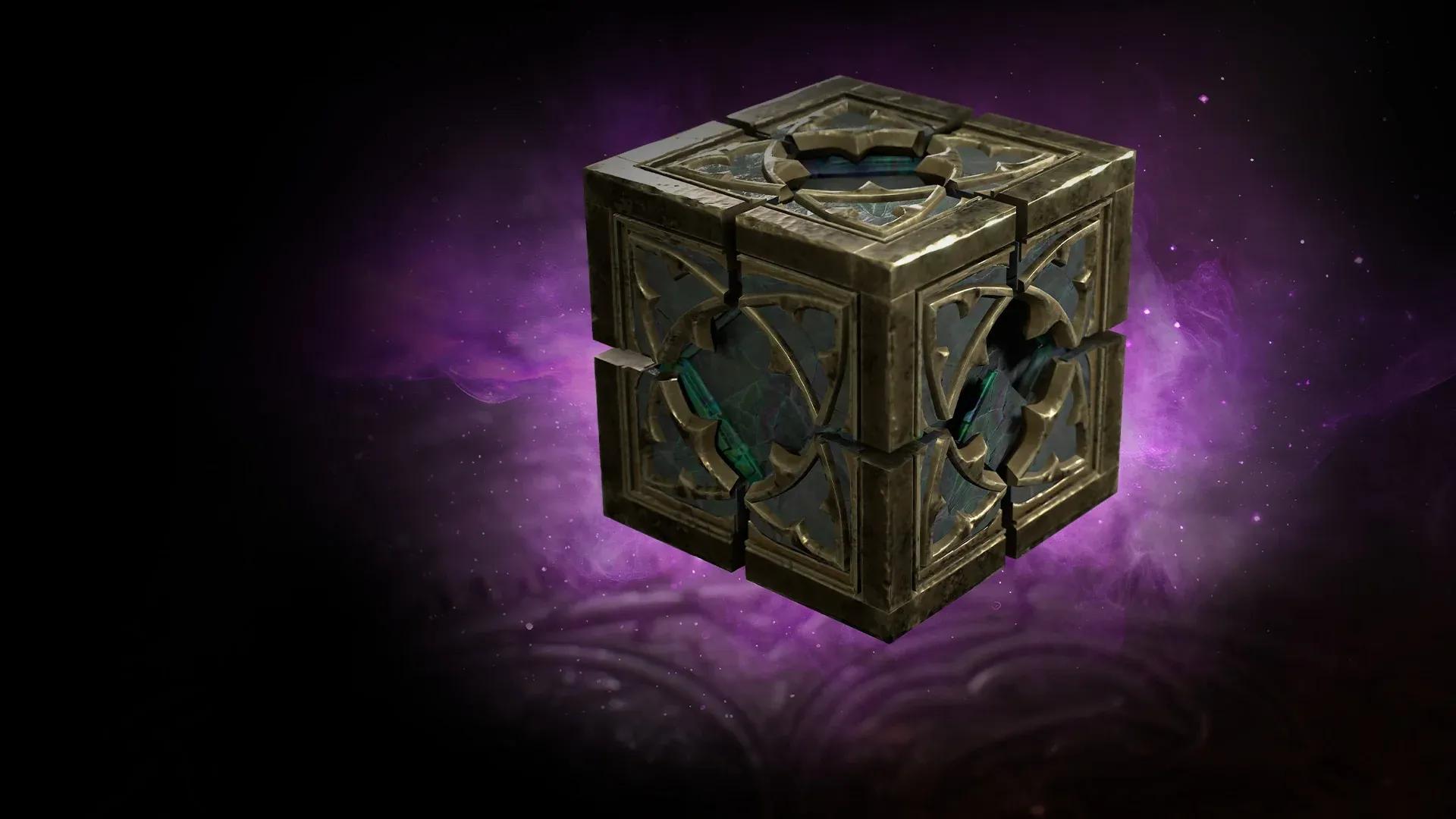
Master every Horadric Cube recipe in Diablo IV Lord of Hatred, from unlocking it in Temis to Transfiguration and Tuning Prisms.

Written by Nuwel
Content Writer
See more GAMES.GG guides on Google
Add us as a preferred source and our guides show up first in your results.
Diablo 4 Guide: How to Get Argent Veil
Farm the Argent Veil ring in Diablo 4 from top bosses and unlock a powerful auto-cast Paladin build with this complete guide.
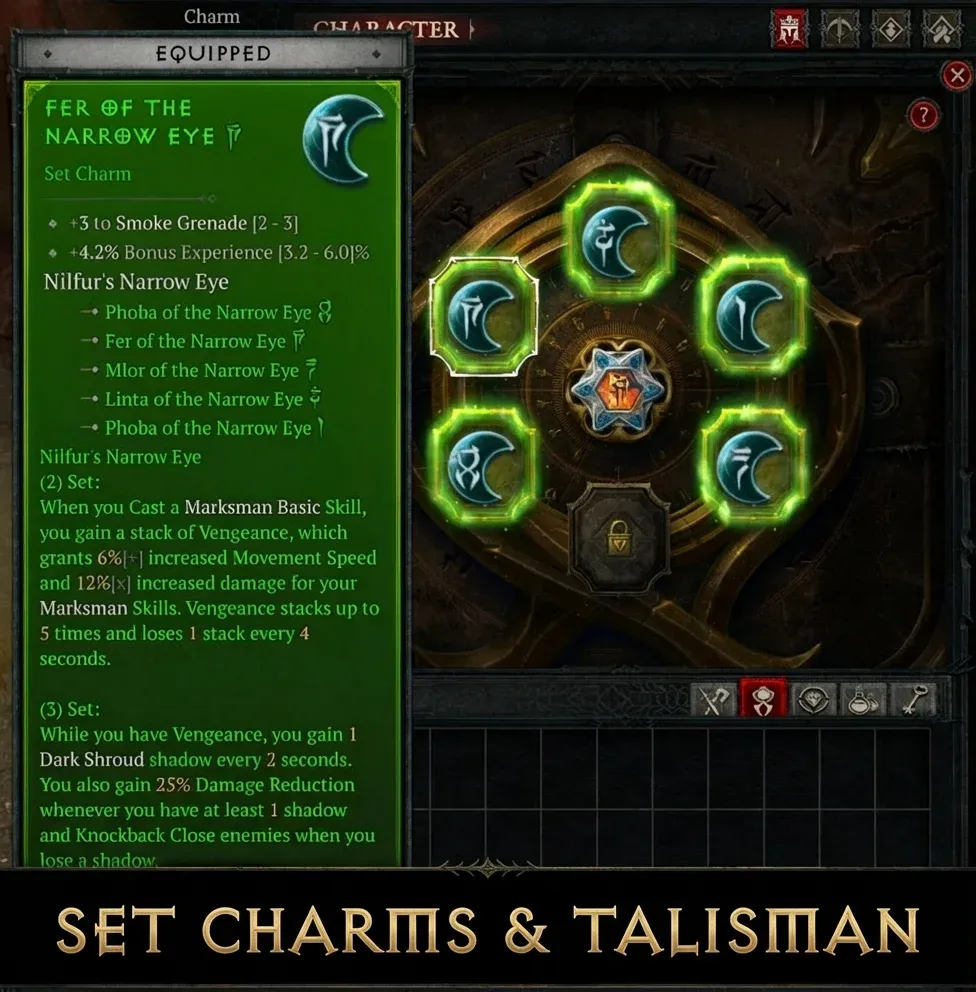
Diablo 4 Talisman System Guide: Seals, Charms, and Set Bonuses
Master the Diablo 4 Talisman system with this complete guide to Horadric Seals, set charms, and every class set bonus in Lord of Hatred.
Diablo 4 Season 13 Gold Farming Guide: Earn Billions Fast
Master the fastest Diablo 4 gold farming methods in Season 13, from Horadric Strongrooms to Kurast Undercity runs worth 50M+ per attempt.
The Horadric Cube is back, and this time it has teeth. Introduced in Diablo IV with the Lord of Hatred expansion (patch 3.0.0, Season 13), it functions as a full crafting station in Temis, the new endgame hub in the Skovos region. This is not a cosmetic callback to Diablo II nostalgia. Every recipe here has a real impact on your build, and the deeper you push into Torment difficulty, the more the Cube becomes your primary gearing tool.
The Cube is not handed to you at the start of Lord of Hatred. You earn access by completing the main campaign storyline, specifically through a quest called "The Fools", which appears roughly three-quarters of the way through the expansion. That places the unlock somewhere between 6 and 8 hours into the campaign, with the full storyline taking 8 to 12 hours to finish.
Once the campaign is done, the Cube sits in the center of Temis waiting for a single interaction. After that first use, it becomes available to every character on your account. A few hard limits apply:
For a full breakdown of what the expansion includes beyond the Cube, the Lord of Hatred expansion content breakdown covers the new systems without spoilers.
Once you interact with the Cube in Temis, the interface divides every recipe into two clear tabs on the right side of the screen: Item Transmutation and Gear Modification.
Item Transmutation converts items into something new entirely. This is where you combine duplicates, upgrade rarity tiers, and craft Unique Charms.
Gear Modification changes what is already on a piece of gear. Rerolling affixes, adding new ones, removing bad ones, and running Transfiguration all live here.
Both categories pull from the same material pool. Any item that passes through the Cube becomes a compound item, meaning it carries a crafted flag going forward.
The interface handles material management automatically. Place the required item, select the recipe, and the system pulls crafting materials directly from your material tab. No manual dragging required.
Primordial Dust is the backbone of nearly every recipe. It sits in your materials tab, cannot be traded, and gets consumed automatically. The tier of dust required scales with recipe power, and the rarer tiers only drop reliably at Torment I and above from Elite Monsters.
Raw Primordial Dust starts dropping from level 20 campaign Elites, so early stockpiling is worth doing. Everything rarer, including Volatile, Attuned, Enhanced, and Pure variants, requires Torment difficulty content.
| Material | Primary Sources |
|---|---|
| Raw Primordial Dust | War Plans Cache, Tree of Whispers |
| Coarse Primordial Dust | War Plans Cache, Tree of Whispers |
| Refined Primordial Dust | War Plans Cache, Tree of Whispers, Elite Monsters |
| Volatile Primordial Dust | War Plans Cache, Tree of Whispers, Elite Monsters, Season Rank Rewards |
| Attuned Primordial Dust | War Plans Cache, Tree of Whispers, Elite Monsters |
| Enhanced Primordial Dust | War Plans Cache, Tree of Whispers, Elite Monsters |
| Pure Primordial Dust | War Plans Cache, Tree of Whispers, Elite Monsters |
| Infused Horadric Resin | Salvaging Talisman Charms and Seals |
Infused Horadric Resin is entirely separate from the Primordial Dust loop. You get it by salvaging Talisman Charms and Seals, which means duplicate or unwanted Charms have real value. Do not discard them.
Tuning Prisms are optional additions to most recipes that reduce randomness by steering outcomes toward a specific affix category. Without one, a reroll or modification pulls from the full affix pool for that item slot.
All standard Prisms drop from War Plans Cache Rewards and Elite Monsters at higher difficulty tiers. They can also be obtained from the Undercity when running a Tribute of Ingenuity, with specific Bargains increasing the chance of getting the Prism type you want.
| Tuning Prism | Affix Category |
|---|---|
| Chromatic Tuning Prism | Resistances |
| Resourceful Tuning Prism | Resource generation |
| Aggressive Tuning Prism | Offensive stats |
| Adept Tuning Prism | Skill ranks and core stats |
| Protector's Tuning Prism | Defensive stats |
| Pragmatic Tuning Prism | Mobility and utility |
| Entropic Tuning Prism | Transfiguration (safe path) |
| Kullean Tuning Prism | Transfiguration on amulets only |
The Entropic and Kullean Prisms operate completely differently from the six standard ones. They interact exclusively with the Transfiguration recipe and carry permanent consequences. Their mechanics are covered in detail below.
These recipes turn items into something new. Common, Magic, and Rare gear that you would have salvaged without a second thought now have real value as crafting inputs.
Cost: 3 items of the same type (equipment, Talisman, or Rune)
Feed three pieces of the same item type into the Cube and receive one new random item of that type. This is the cheapest recipe available and works on Runes as well, giving a reliable path to combine lower-tier Runes toward higher ones.
Cost: 3 copies of the same Unique item
Three copies of the same Unique transmute into a fresh version of that Unique with rerolled stats. This is the core endgame loop for perfecting specific Uniques. Farm three, recycle, repeat until the affix rolls land where you need them.
Cost: 1 Rare item + 1 Pure Primordial Dust + 10 Raw Primordial Dust + optional Tuning Prism
Transmutes a Rare item into a Legendary with a random Legendary power. Pairing an Aggressive or Adept Tuning Prism here gives the best chance of landing a power relevant to your build.
Cost: 1 Common item + 1 Enhanced Primordial Dust + 10 Raw Primordial Dust
Transmutes a Common item into a random Unique of the same slot type. The pool per slot is large, so targeting a specific Unique this way is unreliable. That said, it is one of the few methods to target a slot when you cannot yet kill the relevant Lair Boss.
Cost: 1 Set Charm + 25 Raw Primordial Dust + 50 Infused Horadric Resin
Transmutes a Set Charm into a different Charm from the same Set. If you have the right Set but the wrong individual Charm, this is the direct fix instead of farming blind.
Cost: 1 Ancestral Unique + 3 any Unique Charms + 1 Enhanced Primordial Dust + 50 Raw Primordial Dust + 100 Infused Horadric Resin
Converts a Unique equipment item into a Unique Charm that retains the original item's aspect. Some Uniques are excluded from this recipe. The Horadric Seal specifically allows two Unique Charms, so there is room to double up on strong effects.
Cost: 5 of the same consumable, socketable, dungeon key, or Rare Boss Trophy
This recipe creates the two new gem tiers introduced in Lord of Hatred: Horadric and Flawless Horadric gems. These cannot be produced at the Jeweler. Amalgamation also works with Rare Boss Trophies to generate a random Unique drop from the corresponding Lair Boss, which makes it a strong gearing option when you cannot reliably defeat that boss yet.
These recipes change what is already on a piece of gear rather than converting it into something new.
Cost: 1 Common, Magic, Rare, or Legendary item + 1 Coarse Primordial Dust + 5 Raw Primordial Dust + optional Tuning Prism
Adds a random affix when the item has not yet hit its rarity cap. The caps are: Magic at 2, Rare at 2, Legendary at 3 to 4. The cost is low enough to use freely on strong Magic or Rare bases before committing heavier materials.
Cost: 1 Magic, Rare, or Legendary item + 1 Refined Primordial Dust + 15 Raw Primordial Dust + optional Tuning Prism
Rerolls a random affix to a completely different category. Without a Prism, this is a pure gamble. Reserve unguided uses for items where the current affix is so weak that any outcome is an improvement.
Cost: 1 Magic, Rare, or Legendary item + 1 Refined Primordial Dust + 15 Raw Primordial Dust + optional Tuning Prism
Rerolls a specified affix within the same category. For example, it can convert Crit Chance into Attack Speed when both fall under the Offensive category. This is the natural follow-up to Chaotic Reroll: once you have pushed an affix into the right category, Focused Reroll tunes it to the precise stat your build needs.
Cost: 1 Magic or Rare item + 1 Refined Primordial Dust + 15 Raw Primordial Dust + optional Tuning Prism
Removes a random affix from Magic or Rare items only. Cannot be used on Legendaries. Works best in combination with Add Affix, cycling through affix combinations on a strong base until the right setup lands.
Cost: 1 Ancestral Unique + 1 Attuned Primordial Dust + 100 Raw Primordial Dust
Rerolls the numerical value of the Unique power on an Ancestral Unique. The 100 Raw Primordial Dust per use is steep. Save this for Ancestral Uniques that are already close to ideal on every other affix and just need the power value pushed to its maximum.
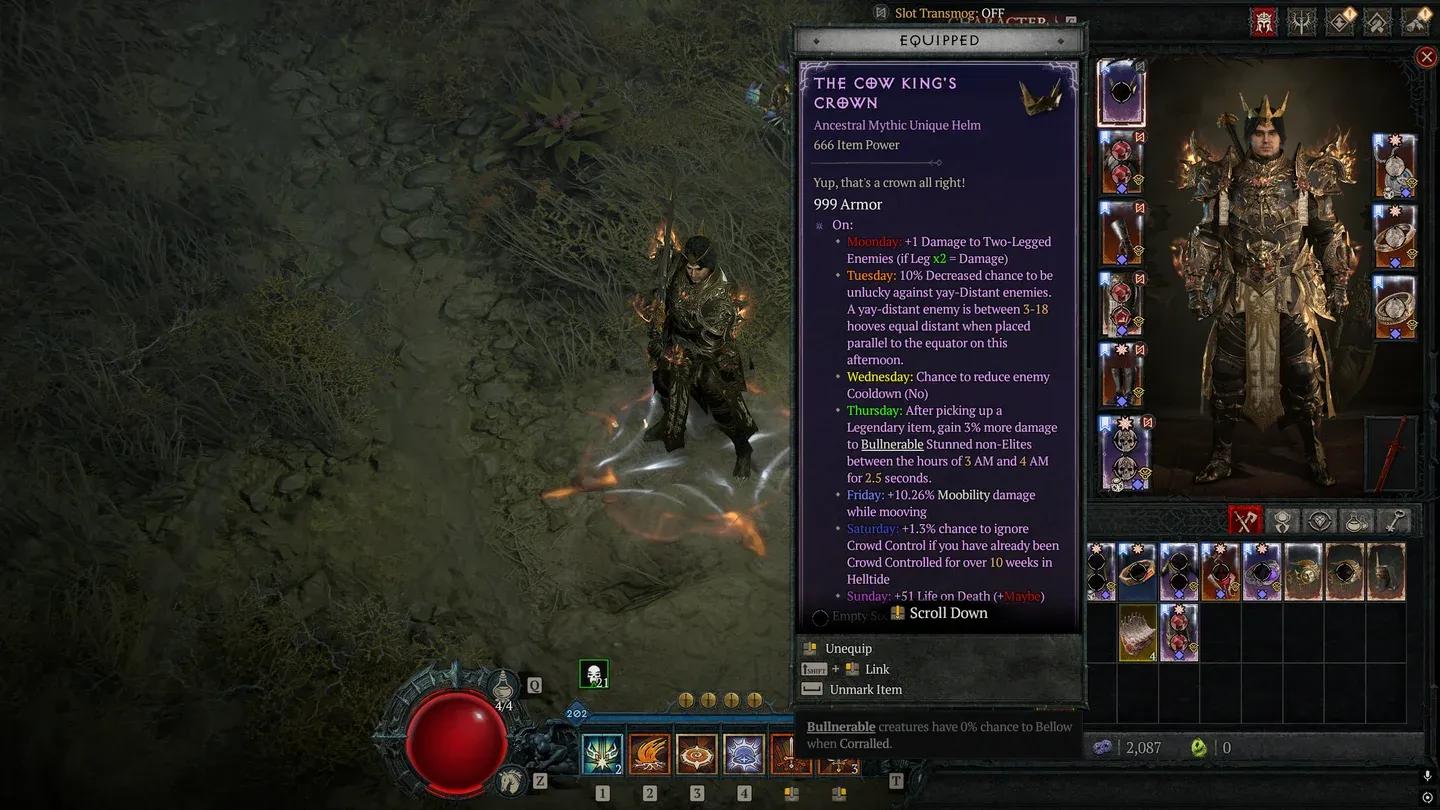
Unique Power Reroll recipe cost
Transfiguration is the most powerful and most permanent modification the Horadric Cube can perform. It adds a bonus modifier to Legendary, Unique, or Mythic gear, functioning as a permanent expanded version of the Season 11 Sanctification system.
The core risk: without a Kullean Tuning Prism, Transfiguration has a very high chance of making the item Unmodifiable with no benefit gained. When an item becomes Unmodifiable, you can still swap gems and runes, but all affix modification is locked out permanently.
Two Prisms control how Transfiguration plays out.
The Entropic Tuning Prism removes both the riskiest and the most powerful outcomes from the roll. Using it guarantees the item either improves or stays exactly as it was. The trade-off is significant: it carries a 100% chance of making the item Unmodifiable after use.
Use the Entropic Prism when you are ready to commit to the item's permanent final state and cannot afford to lose it to a bad roll. For easier-to-replace slots like boots or pants, skipping the Prism and accepting the gamble is a reasonable call.
The Kullean Tuning Prism is exclusively for amulets. It adds a random bonus in the form of an additional Legendary affix, and unlike the Entropic version, the amulet remains Modifiable after Transfiguration completes. This means you can keep re-rolling until you land the aspect your build needs.
The available aspect pool contains approximately 30 generic options, including Accelerating Aspect, Aspect of Inner Calm, and Aspect of Might. Class-specific aspects are not included. Know your target aspect before spending a Kullean Prism.
Kullean Tuning Prisms are expected to become among the most valuable materials in Lord of Hatred's economy. Unlike most endgame reagents, both Entropic and Kullean Prisms are not strictly Account Bound, which opens up direct player-to-player trading.
The material grind gates every high-tier recipe. Four sources cover the full spectrum of what you need.
The most targeted farming destination for Cube materials. You can specify what drops you want through Bargains, and the dungeon offers modifiers that reward large amounts of Cube materials per run. Use a Tribute of Ingenuity (Lesser or Greater) to enter. When you need a specific Primordial Dust tier, Undercity gives you more influence over outcomes than any other activity.
The primary source of Tuning Prisms and rarer Primordial Dust variants. After completing the campaign, use the command table in Temis to create a War Plan, then complete the chosen activities to claim rewards from the War Chest. Activities that feed into War Plans include Nightmare Dungeons, Helltides, the Undercity, Lair Bosses, Infernal Hordes, and the Pit.
A dedicated dungeon activity in Skovos that drops Cube materials directly. Patch 3.0.1 fixed an issue where multiple Horadric Portals would spawn during group completion. Group play is the intended approach for volume farming here.
Elites drop Primordial Dust at all Torment levels. Raw Primordial Dust starts from level 20 campaign Elites. Rarer variants require Torment I and above. Elite farming works as a passive source during any War Plans run since Elites spawn throughout every activity in the chain.
For a broader look at what Lord of Hatred adds to the game beyond crafting, the Lord of Hatred expansion overview covers the new classes and overhauled endgame systems.
Not every recipe deserves equal attention, especially early after campaign completion. Here is how to think about priority:
For more Diablo IV builds, class guides, and endgame strategies, browse more guides on GAMES.GG.