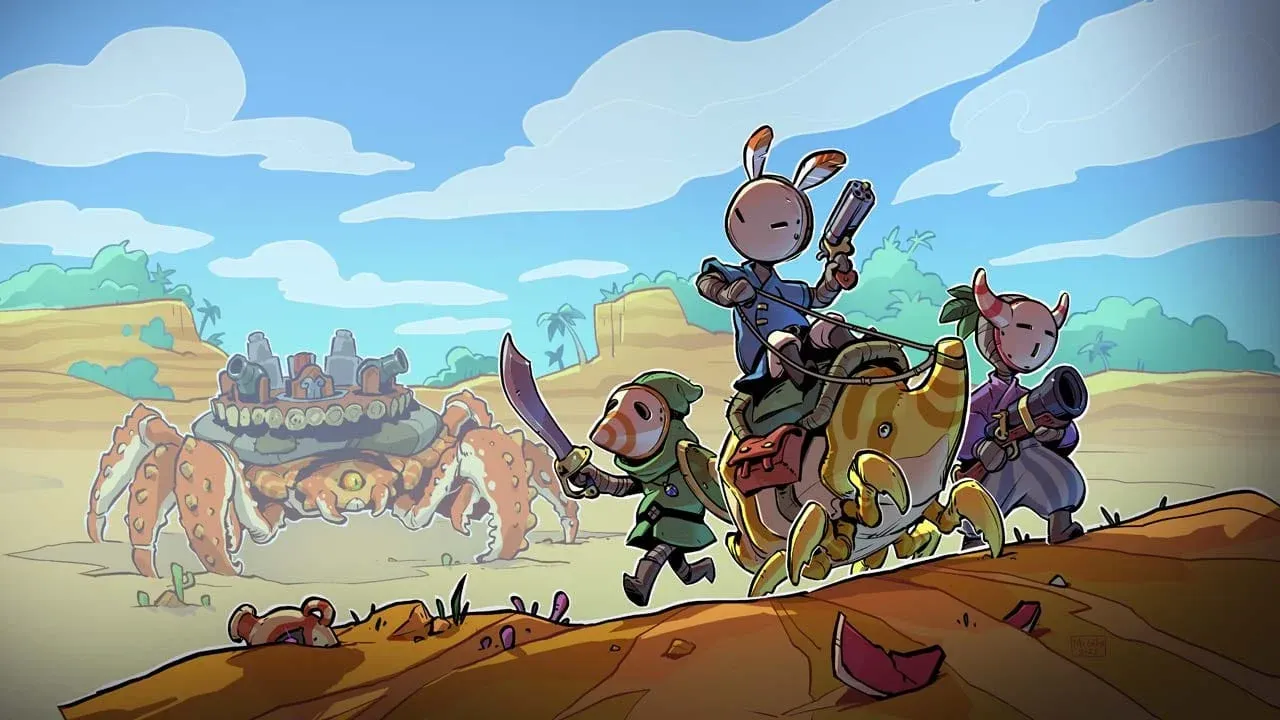


Playing DuneCrawl without a crew sounds rough on paper. You are expected to steer a giant crab, load cannons, repair broken legs, and fight off Vassal soldiers simultaneously. The good news: the game has a built-in answer for solo players in the form of the Old Keeper, a ghost companion who can take orders and cover roles you cannot fill yourself. Pair that with the right automation upgrades and gear choices, and solo runs become not just viable but genuinely satisfying.
What makes solo DuneCrawl different from co-op?
In a full squad, roles are divided naturally. One player handles the Helm, another loads cannonballs, and the Engineer keeps the legs repaired under fire. Go it alone and every one of those jobs falls on you. The result is a faster, messier game where prioritization matters more than raw skill.
The Old Keeper fills the gap. You can issue commands to the Old Keeper to handle specific tasks, including firing at enemies during encounters where you need to reposition. In the tutorial's optional Shielded enemy fight, for example, directing the Old Keeper to shoot the shielded target while you flank from behind is the cleanest way to take it down without burning through your own ammo.
Beyond the Old Keeper, upgrading your automation systems early is the other half of the equation. Auto-Repair Bots slowly fix Crawler damage over time, which matters enormously when you cannot sprint to a damaged leg mid-fight. Get these before you start pushing into harder Vassal territory.
How to handle the Dune Crawler on your own
The Crawler has momentum and turn-radius limitations that catch new players off guard. In co-op, the Helm player can focus entirely on movement and call out directions to gunners. Solo, you are doing both. The practical fix is to slow down more than feels natural. Use terrain, specifically sand dunes and rock formations, to break line-of-sight from enemy towers while you reload or repair.
Upgrading the Crawler follows a clear priority order for solo runs:
- Auto-Repair Bots first, to compensate for the legs you cannot manually fix during combat
- Weapon upgrades second, so your cannons hit harder with fewer shots fired
- Reinforced Carapace third, for the extra HP buffer
- Cosmetics last (the top hat can wait)
Expanding your Crawler's storage capacity also pays off early. Hoarding both Gold and Scrap gives you options when the economy gets tight.
What gear works best for solo players?
Tunic and Mask selection defines how survivable you are when fighting alone.
The Blasting Tunic is the stronger pick for most solo situations. Because you will be dodge rolling constantly to survive without a teammate watching your back, getting free explosive damage on every roll means your defensive movement also chips down enemy health. The Shielded Tunic is worth swapping to against bosses or encounters where you are taking sustained fire.
You can swap gear at your Crawler's wardrobe between missions, so there is no reason to lock into one setup permanently.
How to handle on-foot combat alone
The Dodge Roll is your primary survival tool, providing a brief window of invincibility frames. Stamina management is the thing most solo players get wrong. Running out of stamina mid-fight means you cannot roll when a Vassal wind-up attack lands, and that usually ends runs.
Weapon switching matters more solo than in co-op. The starting Revolver is reliable but reload-heavy. The Musket handles long-range targets well, while the Scattergun clears groups. The key habit to build: swap to a melee weapon like the Cutlass or Hammer to finish low-health enemies instead of reloading. Black powder weapons are slow, and wasting a reload on a 10% health enemy is a stamina and time drain.
Bomb Flowers found in the environment can be picked up and thrown at enemy groups, saving your own ammo for tougher targets. In the tutorial area specifically, you can use a Bomb Flower to open blocked paths as well.
For Shielded enemies, the Old Keeper trick is the cleanest solution: order the Old Keeper to fire at the shield while you circle behind and attack from the rear.
Vassal Tower sieges without backup
Rushing a tower with your Crawler exposed to three firing lines at once is how solo runs end prematurely. The "hull-down" approach works better: use terrain to break line-of-sight, fire a cannon volley to destroy the tower's turrets, then pull back to reload before re-engaging.
The alternative is the foot-infiltration approach. Park the Crawler safely outside the tower's range and go in on foot. Once inside, you can destroy the tower's power core or eliminate the operators directly. This is riskier for your character but keeps the Crawler's health intact. Towers consistently contain chests with Blueprints for advanced weapons, so the loot payoff justifies the risk.
How does the Polloi reputation system affect solo runs?
Completing quests for the Polloi (the bird-folk you are liberating) raises your reputation, which unlocks better merchant prices and, most valuably for solo players, AI Companions. Hired Polloi mercenaries can man your cannons or handle repairs. They are not as responsive as a human co-op partner, but their turret accuracy is solid and they free you up to handle the jobs that actually require your attention.
Do not skip the Bounty Boards in taverns in favor of rushing the main questline. Side quests push you into map corners where Talismans are hidden, and Talismans like Health Regen or Faster Reload Speed cannot be purchased anywhere. They are found or not found. If a main mission boss is stopping you cold, a few bounties and a Tunic upgrade will usually close the gap.
Economy tips: keeping scrap and gold balanced
Two currencies run the game: Gold for consumables and blueprints, Scrap for Crawler repairs and hull upgrades. The common mistake is converting everything to Gold and arriving at a damaged Crawler with nothing to fix it.
The Royal Honey Jar found in the tutorial sells for 60 Gold to a trader, which is a clean early injection of funds. Prioritize that sale before spending on anything else in the opening hours.
For more co-op and solo survival game guides, browse more guides on GAMES.GG to find strategies across the full range of current releases.