Unity's latest industry report for 2025 delivers a comprehensive look at how game developers are handling an increasingly demanding development environment. The findings reveal distinct patterns in resource management, platform selection, and technology adoption. As the industry expands globally, studios are sharpening their strategies to minimize risk and sustain long-term player engagement.

Unity 2025 Game Development Trends
Game Development Trends 2025
Game developers in 2025 are zeroing in on efficiency and risk reduction. The data shows 45 percent of developers are focused on using tools more effectively to boost productivity. Another 24 percent are prioritizing better operational results and exploring additional monetization methods. These priorities point to a practical approach—studios want to stay competitive without stretching resources too thin.
Most developers (62 percent) would rather keep working on existing projects than start new ones. Only 23 percent are exploring new game genres, while 10 percent stick to genres they already know. About 5 percent are aiming to create entirely new intellectual property. These choices reflect a broader industry preference for stability when the market feels uncertain.
When it comes to industry improvements, developers want better technology and infrastructure. Around 55 percent want more advanced end-to-end technology stacks, and 51 percent are looking for more effective tools. Additionally, 44 percent see access to larger audiences as a key area for growth. Developers identify Latin America and Southeast Asia as the regions with the most opportunity, with Brazil, Mexico, and India standing out as the most appealing markets for expansion.
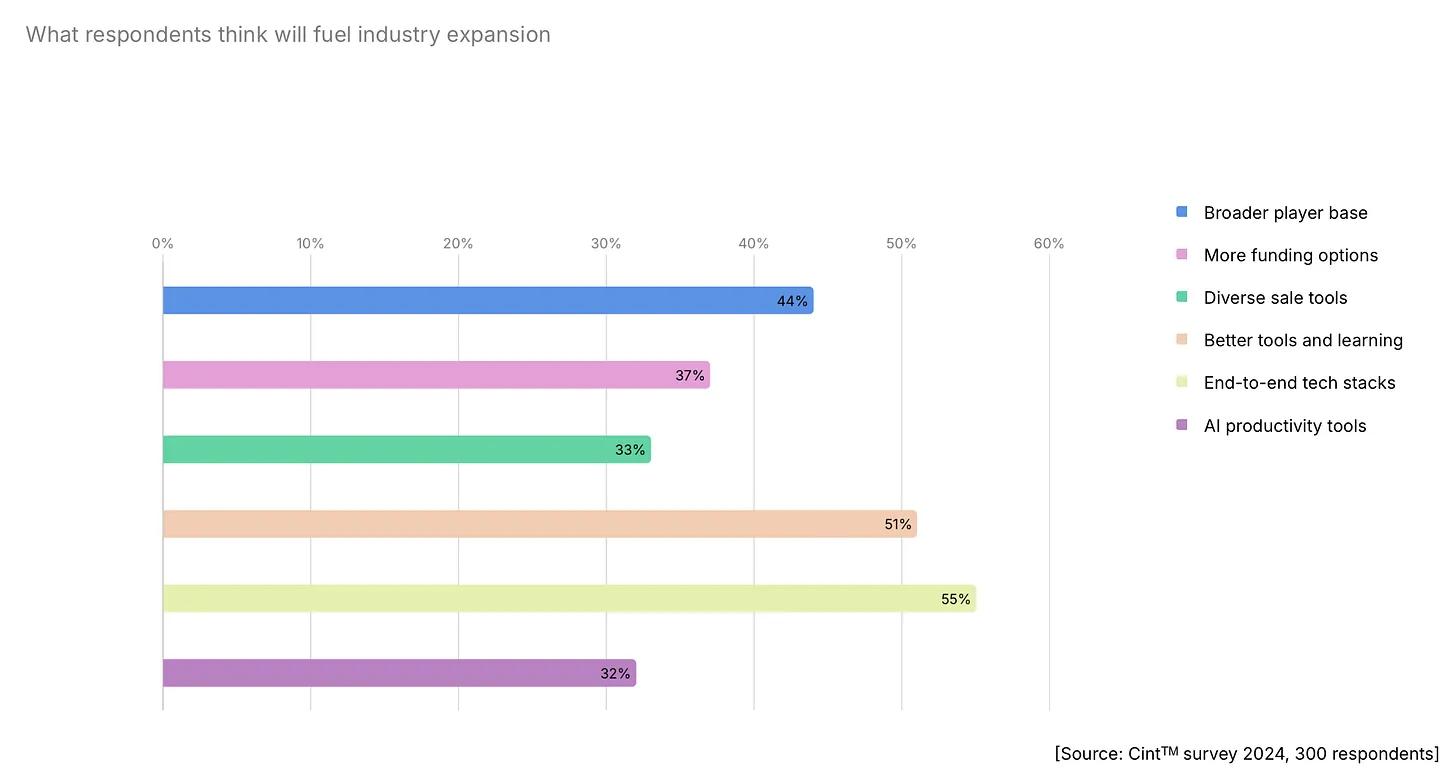
What Will Fuel Game Industry Expansion?
Pay less for your games.
Get discounts up to 80% off
Multiplayer Development Across Teams and Genres
Multiplayer gaming continues to gain momentum in 2025. About 58 percent of developers are working on projects with full multiplayer functionality. Another 32 percent are adding network features to primarily single-player games, while 6 percent are developing local cooperative games designed for shared-screen play. Only 4 percent of developers report no multiplayer components in their current projects.
These developments aren't limited to large studios. Teams of all sizes, including solo developers and two-person teams, are incorporating multiplayer elements. Genres like shooters and adventure games are more commonly associated with multiplayer experiences, though this likely reflects the overall popularity of those genres.
Multiplayer formats are evolving to include different play styles. A significant 69 percent of developers are implementing asymmetric multiplayer mechanics, where players take on different roles or have different capabilities. Meanwhile, 47 percent of multiplayer games are competitive. This variety suggests growing interest in not just competitive gaming, but also social and collaborative experiences.
Developers expect players to continue engaging with a wide range of genres, including role-playing games, strategy titles, MMOs, MOBAs, and shooters. This forecast indicates that multiplayer will remain a central feature in future game design.
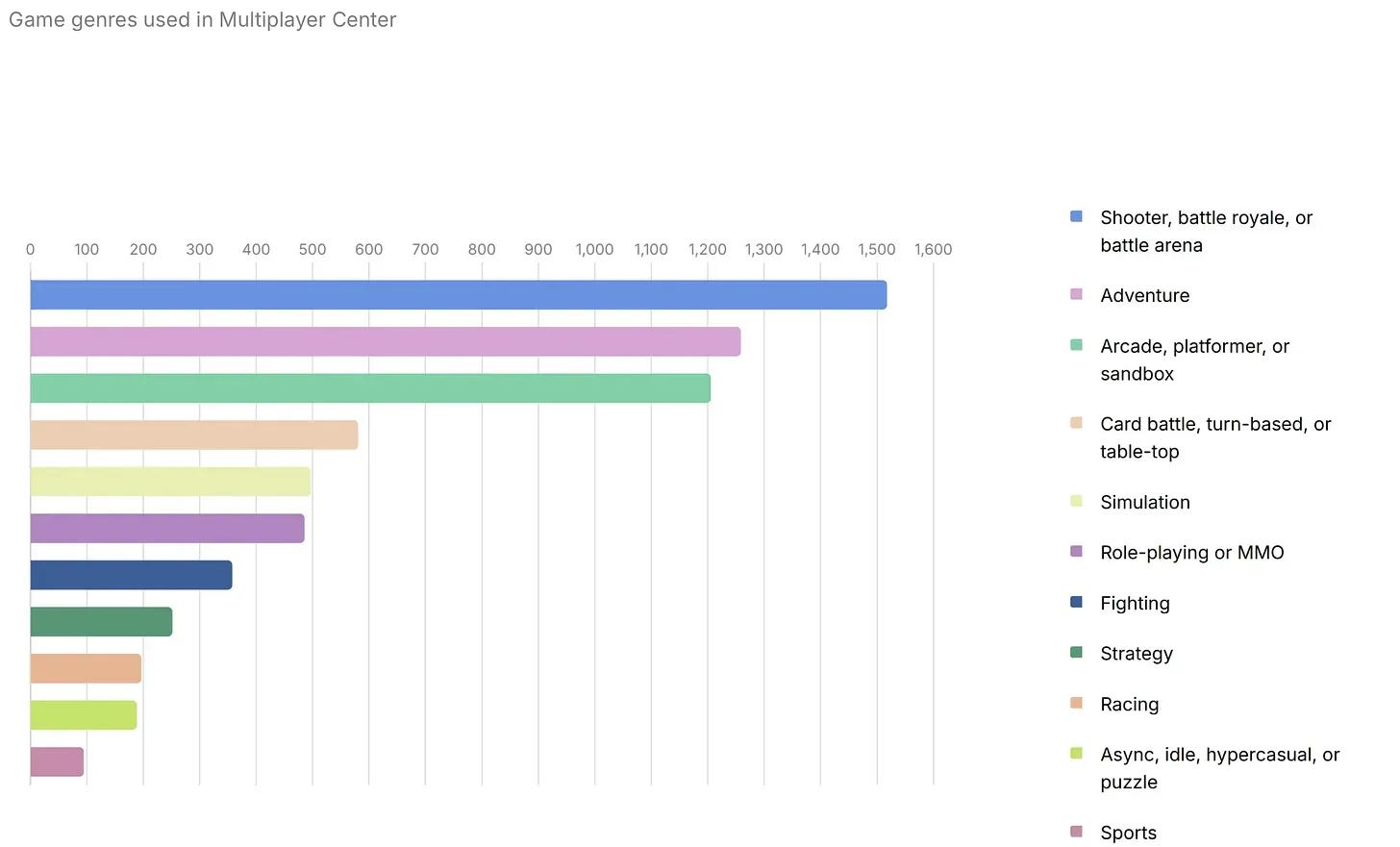
Game Genres Used in Multiplayer Centre
Platform Choices Remain Consistent: PC and Mobile
Developers continue to favor mobile and PC platforms in 2025, regardless of studio size. These platforms offer broad reach and established infrastructure that supports a wide range of game types. Console development, however, is more closely tied to team scale. While 84 percent of large studios are releasing games on consoles, only 19 percent of smaller studios with fewer than ten employees do the same.
Revenue patterns follow these platform choices. For smaller studios, mobile gaming typically generates the highest share of revenue. Console revenue tends to be more significant for larger studios, where resources and publishing capabilities are stronger. Overall, 84 percent of developers believe most of the industry's revenue comes from mobile devices and consoles.
Interest in web platforms remains limited. Only 11 percent of developers plan to release games for the web, and most of these projects are expected to launch within the next 18 months. Developers who aren't focusing on web platforms cite concerns over technical limitations, inconsistent browser support, and challenges related to mobile device compatibility. Despite some enthusiasm, web-based games aren't yet considered mainstream within the industry.
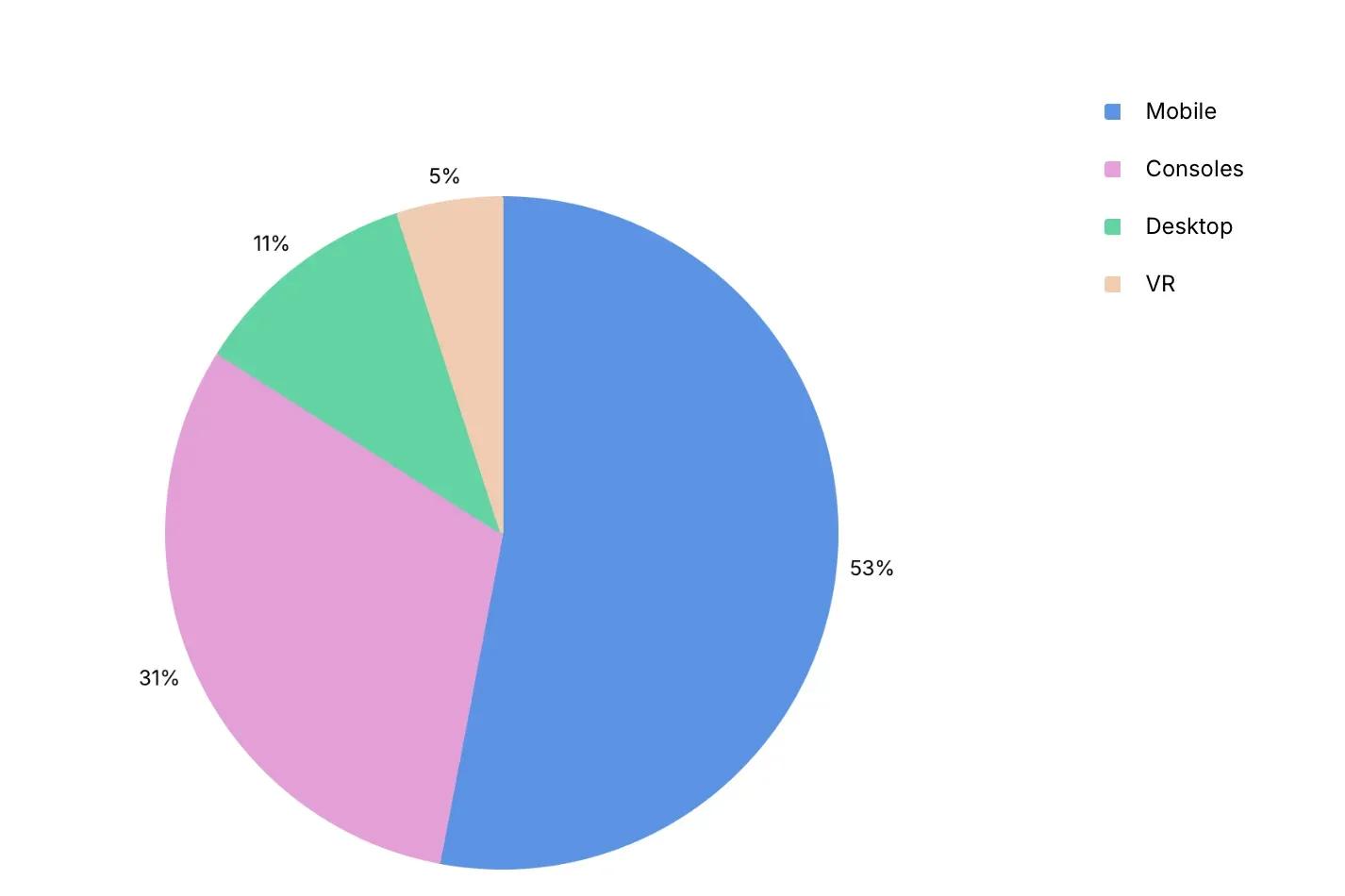
Mobile Revenue Accounts for the Largest Share Among Small Studios
Larger Games and Longer Engagement Times
Game sizes have increased significantly in recent years. The median build size has grown by 67 percent over the past three years, now reaching 167 megabytes. This growth corresponds with changes in player behavior. About 32 percent of developers have observed that players are spending considerably more time in games, while 56 percent report a smaller but noticeable increase.
To maintain user engagement, developers are employing different strategies. The most effective method, though also the most complex, involves regularly producing new content after a game's release. Currently, 55 percent of developers plan to support their games with post-launch content. Meanwhile, 27 percent do not plan to do so—a figure that may include premium games with more static gameplay models. Another 18 percent remain undecided, suggesting that ongoing content strategies often depend on a project's initial success.
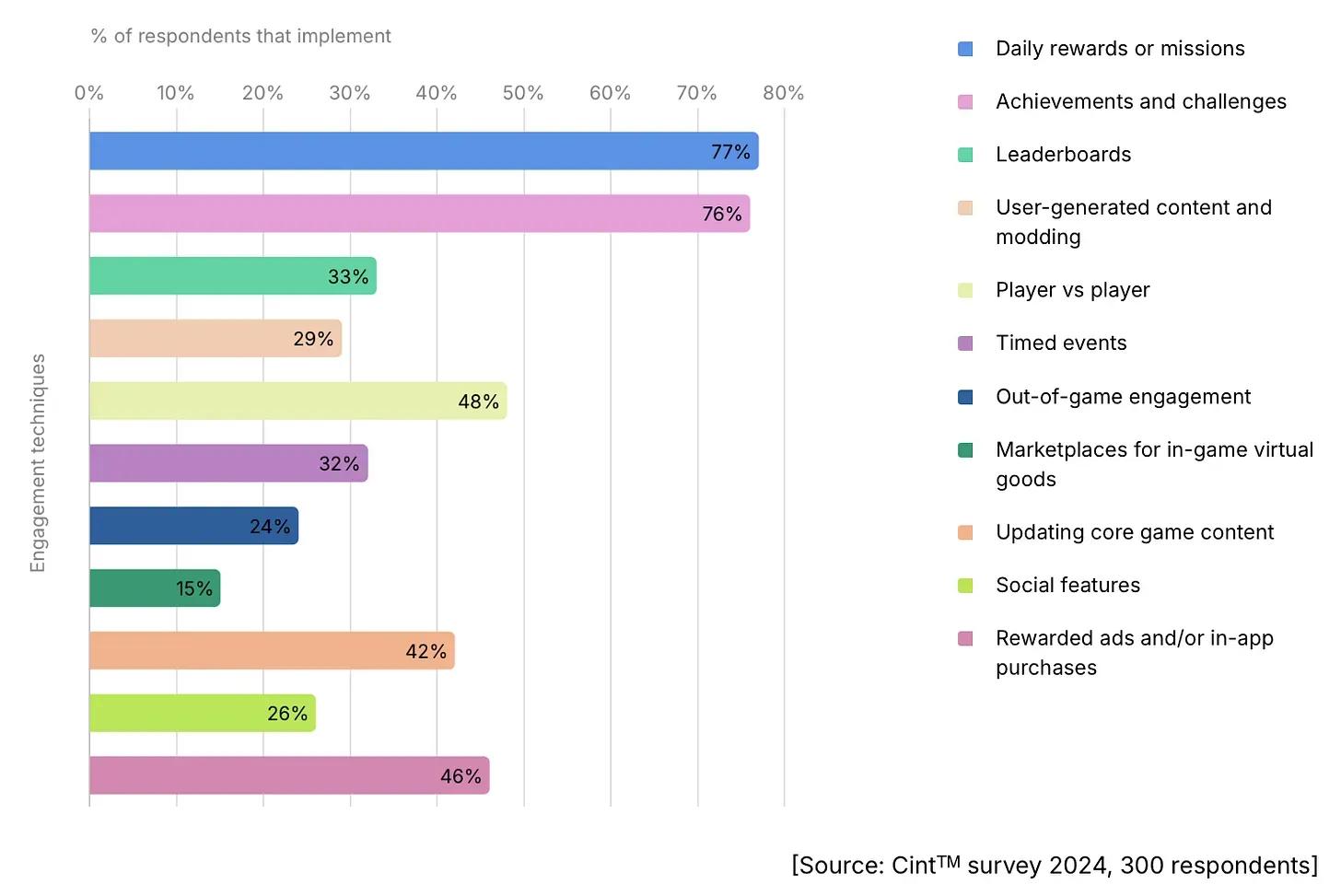
Ways to Maintain User / Player Engagement
Developers Turn to Technology and AI for Support
Technical and creative challenges continue to affect game development timelines. About 21 percent of developers say the research and development phase often causes delays, particularly when searching for original ideas. Other common issues include difficulty managing project scope (20 percent) and challenges with tool management (15 percent).
Live operations tools are widely used to manage ongoing game performance and player engagement. However, adoption of Unity's own monetization and advertising tools remains relatively low, with only 25 percent of developers using them.
Artificial intelligence tools are increasingly seen as valuable assets. The data shows 79 percent of developers view AI tools positively, and only 4 percent have no plans to incorporate them in 2025. While enthusiasm for AI is high, many developers still rely on proven traditional tools. This suggests that AI adoption is occurring alongside, rather than in place of, established development practices.
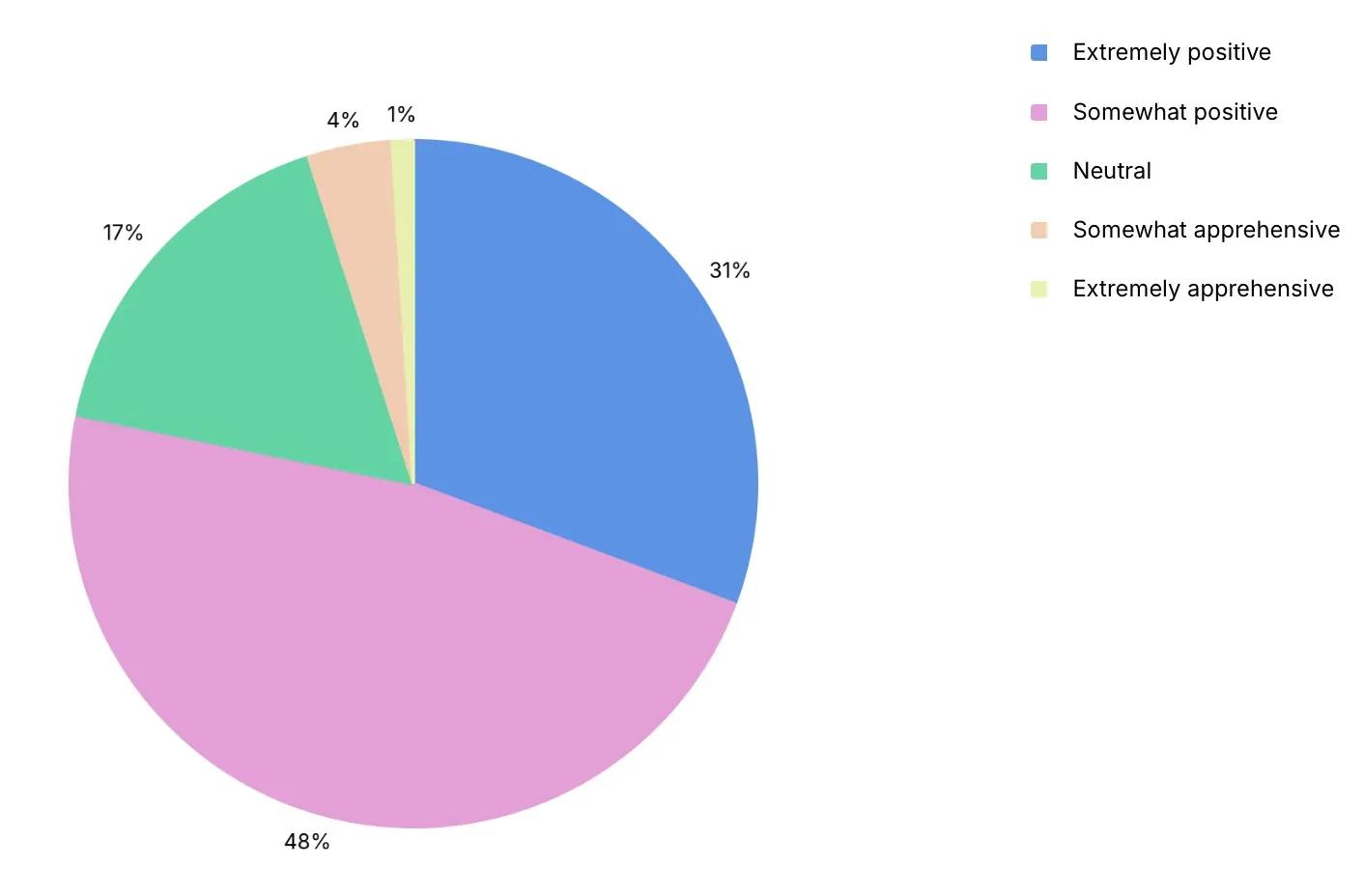
Over 79 Percent of Game Developers View AI Tools Positively
Final Thoughts
Unity's 2025 industry findings reveal a development landscape shaped by cautious innovation, practical platform selection, and growing interest in multiplayer and AI-driven experiences. Developers are focusing on optimizing resources, reaching global audiences, and maintaining player engagement through content updates. While emerging technologies like AI are being embraced, developers continue to rely on familiar methods and tools to ensure consistent output and project stability. As the industry continues to grow and diversify, these trends highlight a measured yet forward-looking approach to game development.
Source: Unity