
Esoteric Ebb places players in an unusual arcanepunk world where they take the role of The Cleric, a government agent tasked with investigating strange supernatural events. Built on the Dungeons & Dragons 5th Edition ruleset, the game combines traditional CRPG mechanics with a narrative system where stats influence personality, dialogue, and even political alignment.
For beginners, understanding the core systems early makes a big difference. Character stats shape the Cleric’s behavior, Background Focus determines early strengths, and the Quest Tree tracks both story progress and character development. Learning how these systems work together will help players build a character that fits their preferred playstyle.
Understanding the Six Ability Stats
At the start of Esoteric Ebb, players receive 27 points to distribute across six ability stats. Each stat can reach a maximum of 15 base points, and players also receive two proficiency points that add +2 to a stat modifier.
Unlike many RPGs, these stats do more than affect combat numbers. They influence how the Cleric speaks, reacts to situations, and how other characters respond throughout the story.
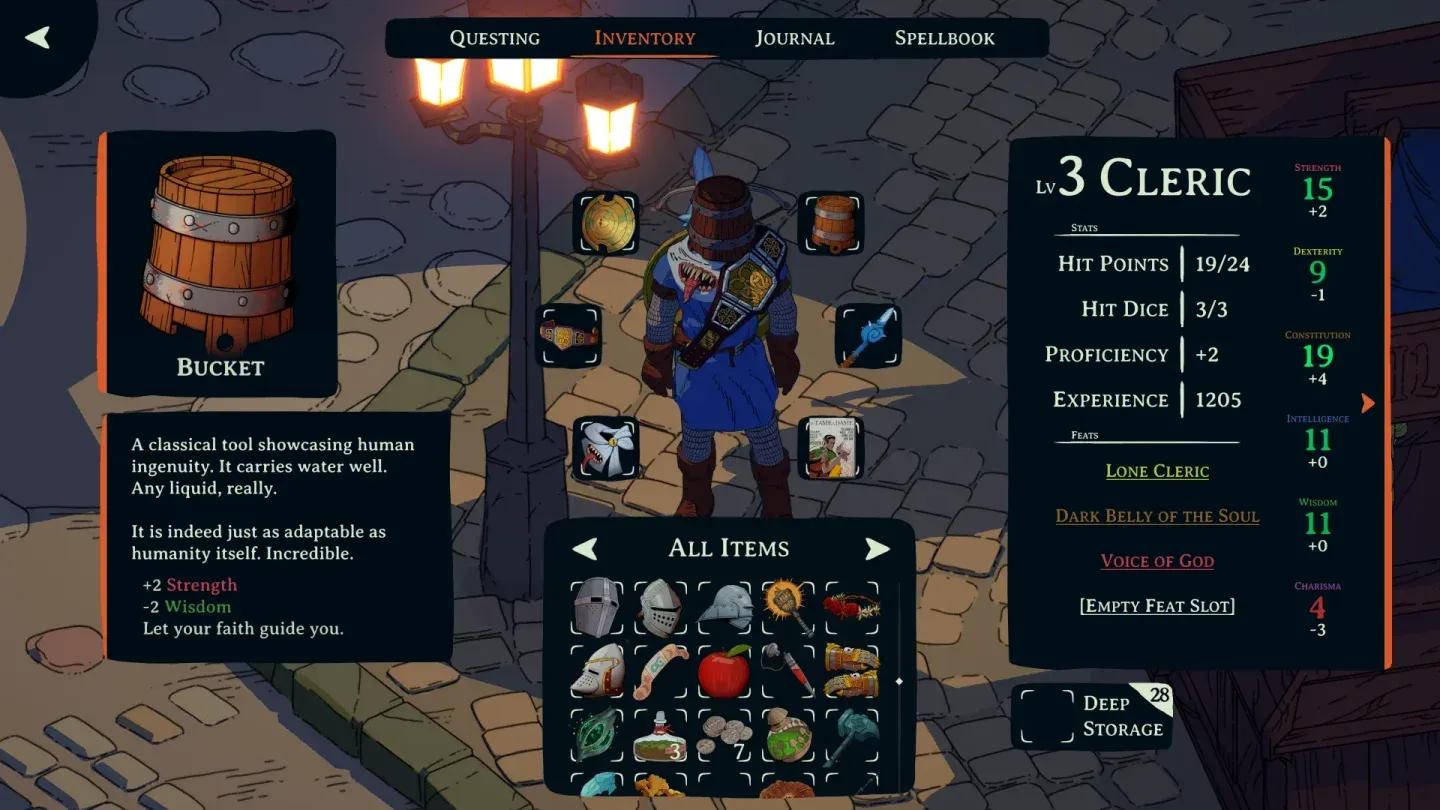
Stat allocation at game start

Strength
Strength begins with 6 base points and a -2 modifier. While it affects physical actions, it also represents conviction and directness.
A high-Strength Cleric tends to approach problems head-on. This character supports strong authority figures and prefers decisive action over negotiation. A low-Strength Cleric is more hesitant and often defers to stronger personalities.
Dexterity
Dexterity also starts at 6 base points with a -2 modifier. It governs stealth actions such as pickpocketing, lockpicking, trap avoidance, and initiative in combat.
Characters with high Dexterity are skilled at risky actions and quick decisions. They often succeed at sneaky or opportunistic approaches. Low Dexterity characters struggle with precision tasks and tend to fail when attempting stealthy solutions.
Constitution
Constitution begins slightly higher with 7 base points and a -2 modifier. This stat directly affects hit points and physical resilience.
A high-Constitution Cleric feels stable and capable in dangerous situations. These characters can endure damage and often trust their instincts when dealing with supernatural phenomena. Low-Constitution characters are physically fragile and more vulnerable during encounters.
Intelligence
Intelligence starts at 8 base points with a -1 modifier, making it the most efficient stat for early optimization.
This stat increases spell slots and magical knowledge, which makes it essential for spell-heavy builds. A high-Intelligence Cleric quickly solves mysteries and understands arcane systems. A low-Intelligence Cleric may struggle with complex situations or magical knowledge.
Wisdom
Wisdom begins at 6 base points with a -2 modifier. It strengthens spells when paired with Intelligence and improves social awareness and intuition.
High-Wisdom characters are good at reading people and noticing details others miss. Low-Wisdom characters tend to overlook clues or misunderstand social situations.
Charisma
Charisma also starts at 6 base points with a -2 modifier. It affects dialogue options, persuasion attempts, and store prices.
A high-Charisma Cleric can influence conversations and manipulate situations to their advantage. Low-Charisma characters often struggle in social interactions.
Choosing the Right Background Focus
After assigning stat points, players must choose a Background Focus. There are 18 options, each providing additional stat bonuses that shape the Cleric before the story begins.
Background bonuses stack with the points you already assigned, so this choice can strongly influence your early build.
Some examples include:
| Background Focus | Stat Bonuses |
|---|---|
| Punching Bag | +2 Constitution, +1 Charisma |
| Troll Killer | +3 Strength |
| Kiosk Kid | +2 Dexterity, +1 Charisma |
| Lore Enthusiast | +2 Intelligence, +1 Wisdom |
| Crowd Pleaser | +2 Charisma, +1 Intelligence |
| Little Weirdo | +3 Charisma |
| Azgalist Activist | +2 Wisdom, +1 Charisma |
| Urthguard Recruit | +2 Strength, +1 Dexterity |
| One Friend | +2 Dexterity, +1 Wisdom |
| Acolyte | +2 Strength, +1 Wisdom |
| Tower Apprentice | +2 Intelligence, +1 Constitution |
| Arcane Prodigy | +2 Intelligence, +1 Strength |
| Palace Pawn | +2 Charisma, +1 Strength |
| Faithful Harbinger | +2 Constitution, +1 Strength |
| Esoteric Expert | +2 Wisdom, +1 Constitution |
| Revolutionary Scribe | +2 Dexterity, +1 Intelligence |
| Abject Apostate | +2 Constitution, +1 Dexterity |
| Dead Cleric | +3 Wisdom |

Choose your background focus
How the Quest Tree Works
Instead of a traditional quest journal, Esoteric Ebb uses a system called the Quest Tree. This interface shows quests as branching nodes that expand outward as players progress through the story.
The Quest Tree functions as several systems at once. It tracks quests, records story decisions, and also works as a form of progression for the character.
Inside the Quest Tree menu, players can also access useful tools such as the world map, recent dialogue text, lore glossary, and the spellbook. Spells must be prepared at Shrines, which makes shrine visits important when preparing for upcoming encounters.
Another important detail is that the Quest Tree only displays paths that were actually discovered. If players missed an option during a quest, it will not appear in the tree.
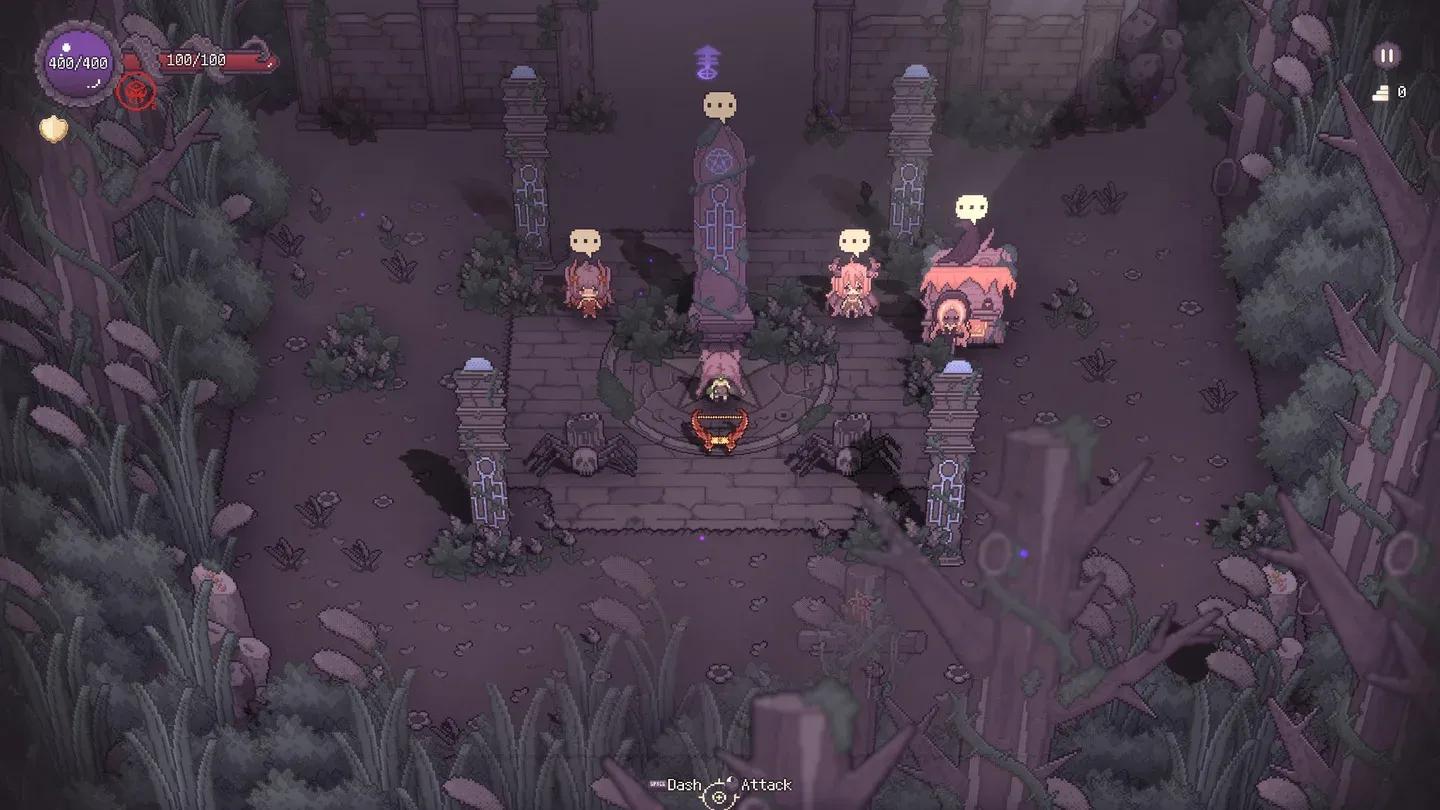
The Quest Tree at a glance
Minor and Major Quests
Quests in Esoteric Ebb are divided into Minor Quest Branches and Major Quest Branches.
Minor branches are simple quests with one outcome. These are usually straightforward tasks like delivering items or meeting specific characters.
Major branches are more complex and contain multiple possible outcomes. The result often depends on dialogue choices and character stats.
When a Major Quest Branch is completed, the branch takes root in the Quest Tree. This triggers a reflection where the Cleric processes the decisions made during the quest. After this moment, the player receives a Feat or chooses between two Feats.
Branches are also color coded to show the stat they are connected to. For example, Dexterity related branches appear in yellow while Wisdom related branches appear in green.
How Feats Work
Feats in Esoteric Ebb are not chosen from a standard skill menu. Instead, they are earned based on how the player behaves during quests.
The game analyzes your actions and dialogue decisions to determine which Feat you receive.
For example, players who regularly help certain factions might unlock a Wisdom related Feat tied to cooperation. Characters who frequently claim magical expertise may unlock an Intelligence Feat that increases spell capacity. Repeated pickpocket attempts can lead to a Dexterity Feat that improves success rates in future attempts.
Players can only have four active Feats at the same time, but previously unlocked Feats can be toggled on or off whenever needed.
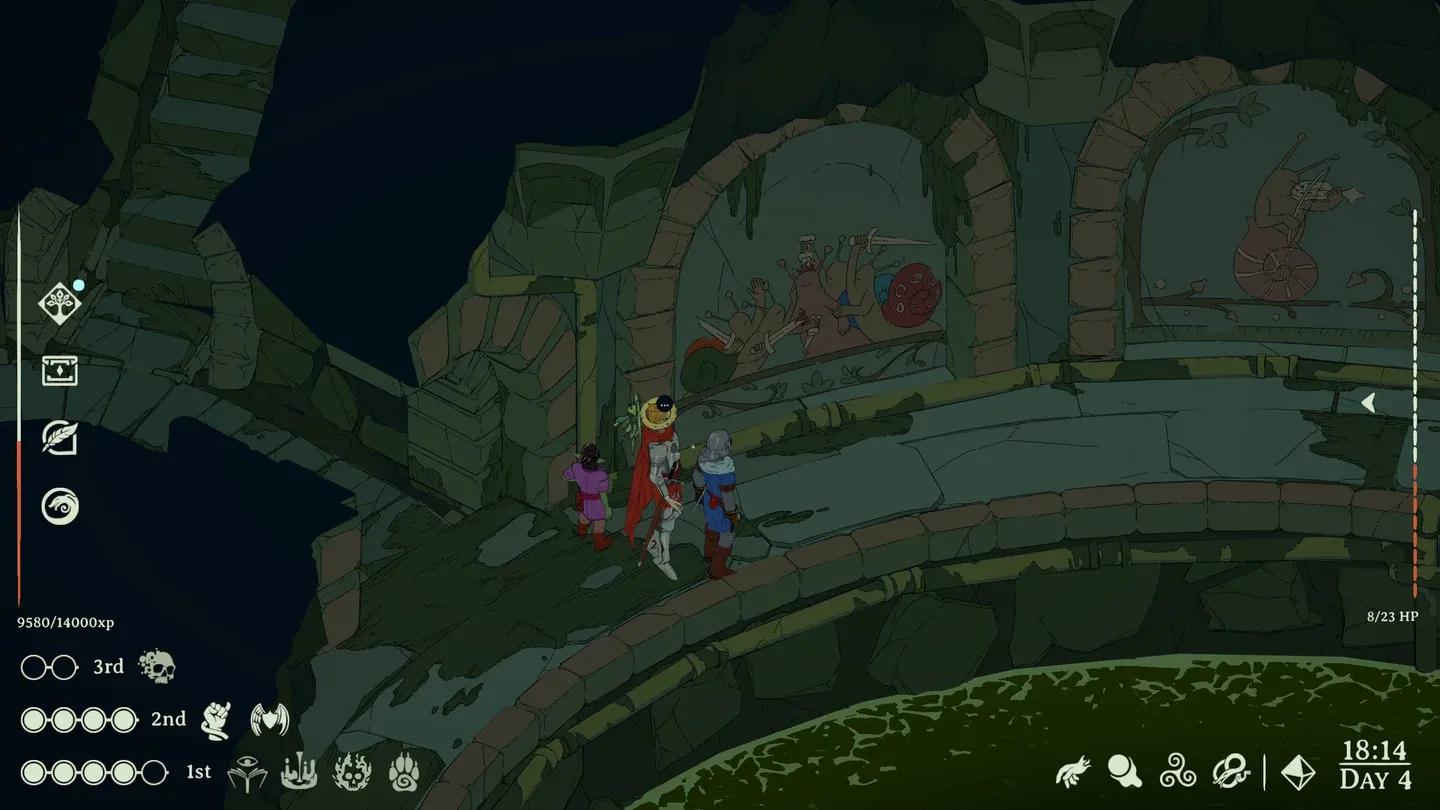
Feats reflect your story choices
Beginner Tips for Your First Character
Players starting Esoteric Ebb should focus on a few core principles when building their Cleric.
First, investing one proficiency point into Intelligence early provides strong value because it quickly produces a positive modifier. This helps spell-focused characters gain an advantage in both combat and dialogue checks.
Second, choose a Background Focus that supports your intended playstyle. Building further into a strong stat tends to be more effective than trying to balance everything.
Third, avoid ignoring Constitution. Even a small investment improves survivability and can unlock unique dialogue options tied to resilience.
Finally, pay attention to Major Quest Branch rewards. Since your decisions determine the Feats you receive, the way you approach a quest can influence long-term character growth.