
Esoteric Ebb drops you into a strange, politically charged world as a Cleric, and the six core skills you assign at the start define nearly everything that follows. Combat outcomes, dialogue tone, spell access, economic power, and even which Feats you unlock later all trace back to those initial point allocations. Getting this right from the beginning is the difference between a smooth, story-rich run and a frustrating slog through encounters you were never built to handle.
How Does the Skill System Work in Esoteric Ebb?
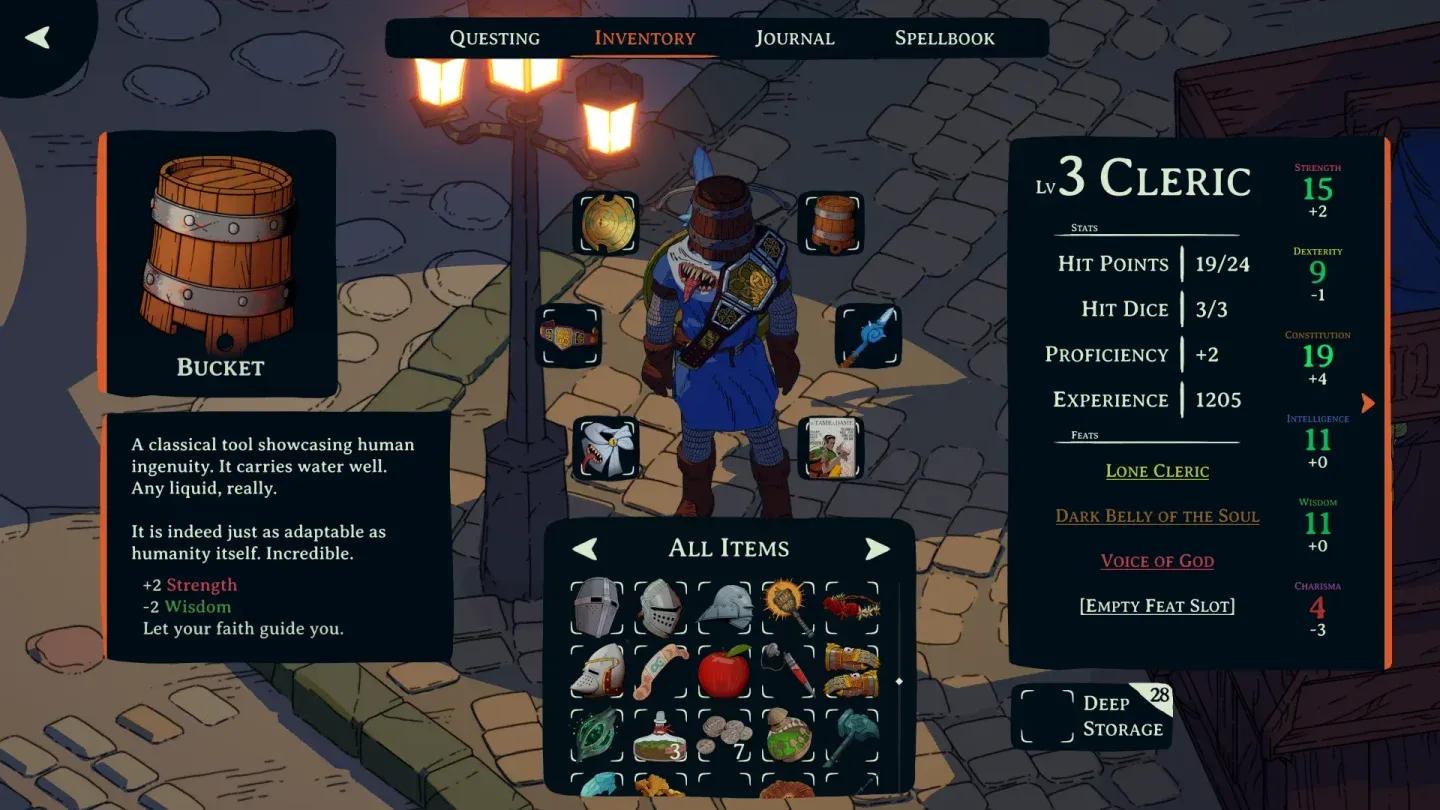
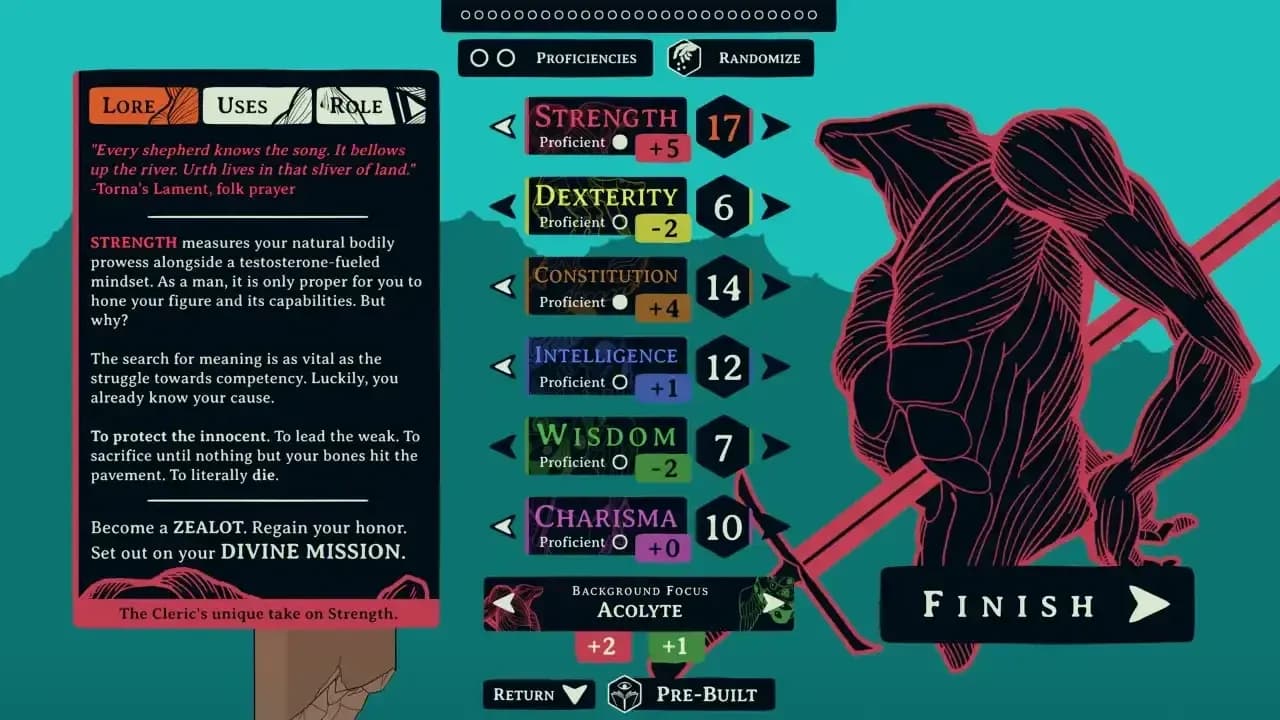
Esoteric Ebb draws heavily from a 5e-inspired framework. At character creation, you receive 27 points to distribute across six core abilities. On top of that, you get 2 proficiency points that add +2 to a single chosen stat. The maximum base stat value is 15, though proficiency can push a stat beyond that cap.
What makes this system genuinely interesting is that skills are not just combat modifiers. Each one shapes your dialogue options, your political alignment, your puzzle-solving approach, and your access to Feats tied to Major Quest Branches. Spreading points too thin produces a Cleric without a clear identity. Committing to a direction makes your character feel purposeful and opens up unique narrative paths.
Additionally, there are 18 Background Focuses available during setup. Each Background Focus provides bonus boosts to specific stats that stack separately from your 27 distributed points, giving you extra room to reinforce your chosen direction without spending your base budget.
Esoteric Ebb Skills Guide: All Six Abilities Explained

All Six Skills in Esoteric Ebb Explained
Here is a full breakdown of every ability, what it governs mechanically, and how it shapes your Cleric's personality and options.
| Skill | Base Points | Proficiency | Primary Role |
|---|---|---|---|
| Strength | 6 | -2 | Combat, zealot dialogue, puzzle brute-forcing, carry capacity |
| Dexterity | 6 | -2 | Lockpicking, traps, initiative, wealth generation, stealth |
| Constitution | 7 | -2 | Hit points, durability, stamina, gut-check decisions |
| Intelligence | 8 | -1 | Spell slots, arcana knowledge, planning dialogue, deductions |
| Wisdom | 6 | -2 | Spell scaling, empathy dialogue, perception, faction tone |
| Charisma | 6 | -2 | Shop discounts, persuasion, manipulation, political flexibility |
Strength
Strength controls how much your Cleric can carry and how aggressively you engage in encounters. High Strength opens bold, direct dialogue checks and lets you brute-force certain puzzles rather than solving them through skill. It also unlocks nationalist political options and religious zeal tone in conversations.
Low Strength tends to produce more passive or uncertain dialogue outcomes, which can feel limiting in confrontational scenarios. This stat suits players who want a forceful, heroic archetype that solves problems head-on.
Dexterity
Dexterity is one of the most economically valuable stats in the game. It supports lockpicking, pickpocketing, trap avoidance, and initiative in encounters. High Dexterity also generates more wealth opportunities and aligns you with the Revolutionary Freestriders faction.
In dialogue, high Dexterity lets you talk your way around tricky situations without direct confrontation. Low Dexterity means slower reactions, missed treasure opportunities, and clumsy risks that cost you resources.
Constitution
Constitution determines your Cleric's total hit points and physical resilience. Beyond raw survivability, high Constitution supports gut-instinct dialogue checks and helps you endure high-pressure situations with more margin for error.
Low Constitution makes every encounter more punishing. If you are new to Esoteric Ebb or prefer a forgiving experience, investing here reduces the risk of unexpected deaths derailing your run.
Intelligence
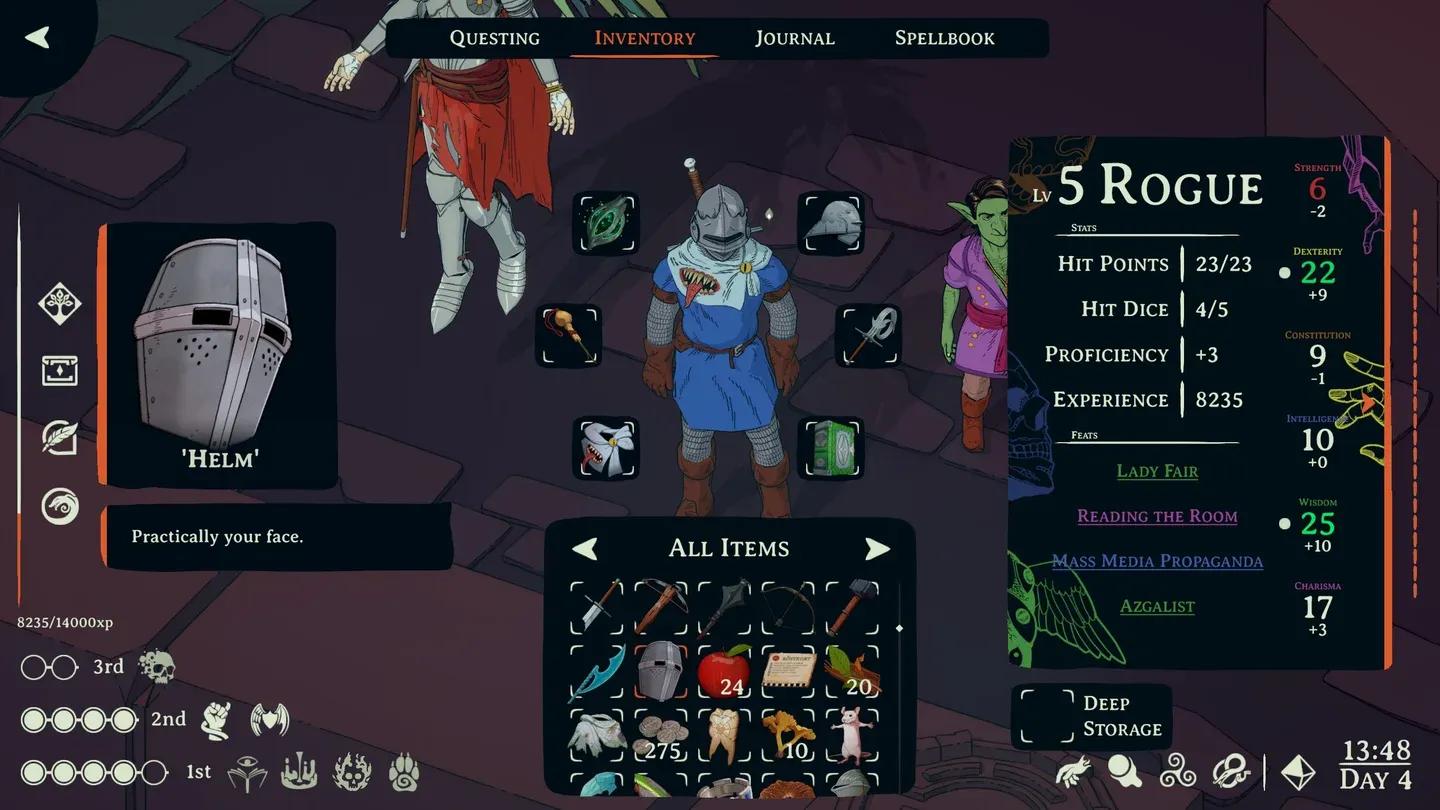
Intelligence governs your spell slot count and arcana knowledge. Higher Intelligence unlocks more spells early in the game and opens analytical dialogue paths and advanced solutions to mysteries. It also inflates your Cleric's ego, which surfaces in certain character interactions as a distinct personality trait.
This stat starts with a base of 8 and a proficiency modifier of -1, making it slightly more accessible to build toward than most other abilities. It is widely considered one of the strongest early investments because spell flexibility pays off across nearly every part of the game.
Esoteric Ebb Skills Guide: All Six Abilities Explained
Wisdom
Wisdom works alongside Intelligence rather than against it. While Intelligence determines how many spells you can cast, Wisdom amplifies how powerful those spells are. It also governs perception, empathy-based dialogue, reading other characters accurately, and faction-aligned tone in conversations.
High Wisdom makes your Cleric more socially aware and perceptive. Low Wisdom reduces your ability to notice subtle details and limits dialogue checks that require understanding others' motivations.
Charisma
Charisma is the social manipulation stat. It improves shop prices through better discounts, unlocks persuasion-based dialogue, and gives you flexible political positioning in faction interactions. High Charisma lets you shape conversations toward whatever outcome benefits you most in the moment.
Low Charisma limits your ability to smooth-talk your way through encounters and closes off certain economic advantages that make resource management easier.
What Are the Best Starting Skill Builds?
Four distinct archetypes cover the most effective starting configurations. Each one commits to a clear identity rather than spreading points evenly.
Spell-Focused Build
- Intelligence: 15
- Wisdom: 14
- Constitution: 12
This setup maximizes spell slot count and spell power simultaneously. Constitution at 12 keeps you alive through the early game while Intelligence and Wisdom do the heavy lifting in encounters and dialogue. Best for players who want to engage with the game's magical systems deeply.
Rogue Utility Build
- Dexterity: 15
- Intelligence: 13
- Constitution: 12
High initiative, strong economy, consistent lockpicking, and solid spell access make this one of the most versatile starting configurations. You will generate more wealth than almost any other build and react faster in encounters.
Hero Zealot Build
- Strength: 15
- Constitution: 14
- Wisdom: 12
Direct, durable, and forceful in both combat and conversation. This build suits players who want to play a true believer Cleric who solves problems through conviction and force rather than subtlety.
Smooth Talker Build
- Charisma: 15
- Intelligence: 13
- Dexterity: 12
Better prices, stronger persuasion checks, flexible spell options, and quick reactions. This build shines in conversation-heavy runs where economic advantage and social manipulation matter more than raw combat power.
Esoteric Ebb Skills Guide: All Six Abilities Explained
How Do Skills Affect Feats?
Feats in Esoteric Ebb unlock when you complete Major Quest Branches. The specific Feats that become available depend heavily on the dialogue and political choices you made throughout those quests, and those choices are shaped by your highest stats.
- Dexterity-heavy runs unlock coin-oriented and economy-boosting Feats
- Wisdom-aligned paths open faction support bonuses
- Intelligence-focused builds gain access to additional spell slot expansions
You can activate 4 Feats at a time, but the Feats in your pool are determined by how you played. This means your stat allocation at character creation has a downstream effect on your entire Feat roster, not just your immediate combat and dialogue options.
Which Skills Should You Level First?
For the strongest early-game impact, three stats stand out above the rest:
- Intelligence - Extra spell slots and encounter flexibility from the very first area
- Dexterity - Immediate money generation, initiative bonuses, and trap avoidance
- Constitution - Survivability that prevents early deaths from cutting your run short
Strength, Wisdom, and Charisma grow in value as your run develops and your roleplay direction becomes clearer. If you know early that you want a faction-aligned or conversation-focused experience, investing in Wisdom or Charisma from the start is absolutely valid. But for raw mechanical returns in the opening hours, Intelligence, Dexterity, and Constitution deliver the most consistent results.
Are Skills Permanent in Esoteric Ebb?
Yes. Once you confirm your character creation choices, your base stat values are fixed for the entire run. There is no respec system or mid-game adjustment. Feats can be toggled on and off as you unlock them, but the underlying stat identity of your Cleric does not change.
This makes your initial allocation genuinely consequential. Pick a direction, understand what that stat unlocks across combat, dialogue, and Feats, and commit to it rather than trying to cover every base with a few points in everything.