Search games, articles, guides...CtrlK
Sign InGet Started

Master every crafting station in Everwind, from pocket crafting basics to advanced alchemy and rune forging.

Written by Nuwel
Content Writer
See more GAMES.GG guides on Google
Add us as a preferred source and our guides show up first in your results.
Everwind Farming Guide: Grow Food on Your Airship
Learn how to set up crops, craft the right soil, and keep plants alive on your airship in Everwind.
Everwind Airship Building Guide: Upgrades, Builds & Tips
Build and upgrade your Everwind airship from scratch. Full upgrade tables, power tips, and layout advice to fly faster and higher.

Everwind Compendium Guide: Every Item Category Explained
Master the Everwind Compendium with this complete breakdown of all five categories, from creatures and crafting to foliage and natural resources.
Crafting in Everwind is not a side activity you can afford to ignore. Every tool, weapon, piece of armor, and ship component runs through one of its many stations, and understanding which station does what will save you hours of backtracking and wasted materials. This guide breaks down every crafting system in the game, from the bare-bones pocket menu to the advanced alchemy tiers, so you always know exactly what to build next.
The crafting system in Everwind is layered. You start with Pocket Crafting, a basic menu accessible directly from your inventory (the pipe and hammer icon, second from the left). This lets you produce essential items without any workbench at all. From there, you build physical stations and place them on your airship, each handling a specific category of production.
One thing to keep in mind: the game does not pull materials from nearby chests automatically. Every ingredient you plan to use needs to be in your personal inventory before you open any crafting menu. This catches a lot of players off guard mid-session.
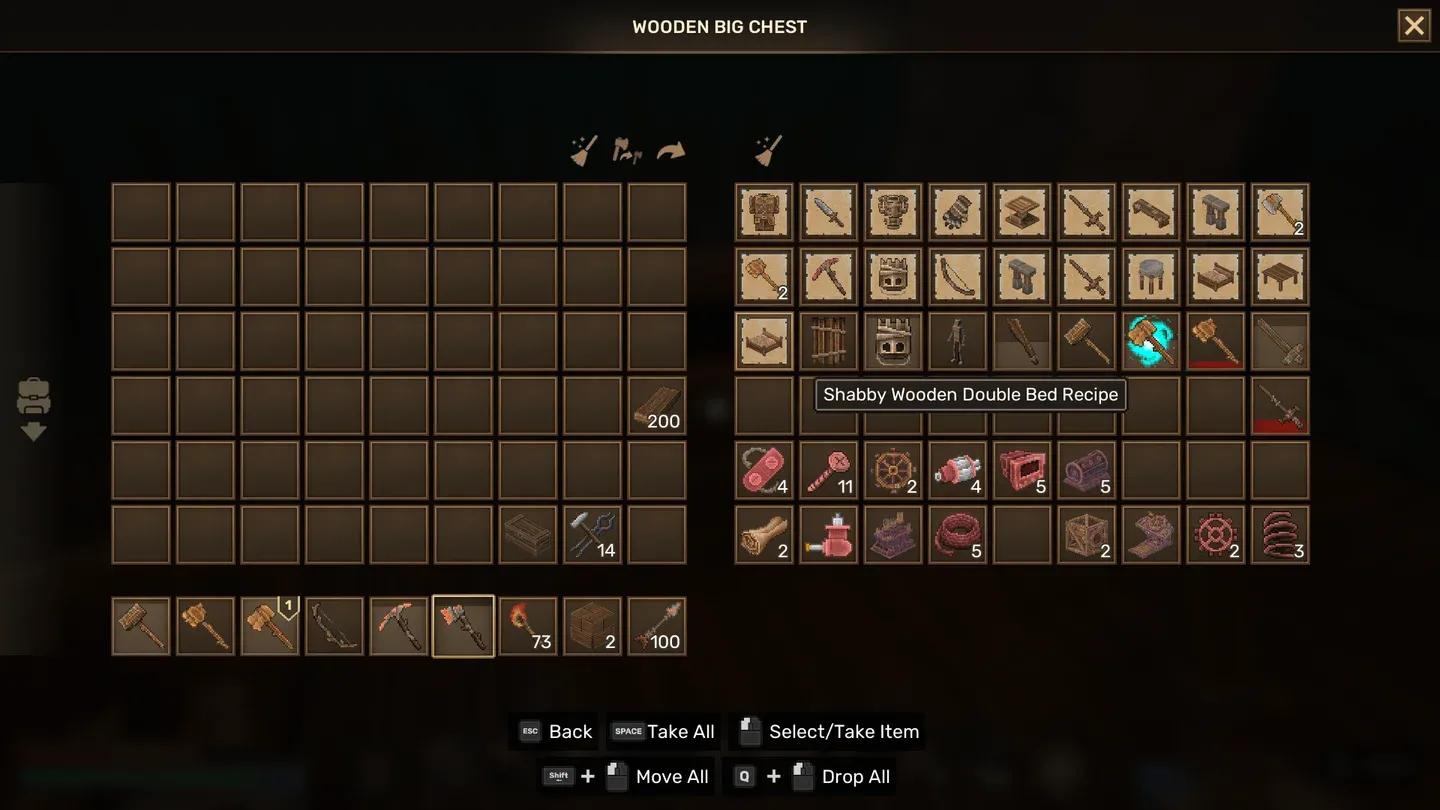
Alchemy station recipe menu
The progression works roughly like this: pocket crafting gets you a Crafting Station, the Crafting Station unlocks more advanced tables like the Smithing Station, Alchemy Station, and Carpenter Station, and those stations feed into end-game systems like rune forging and item upgrading.
Pocket crafting covers the raw essentials. Basic tools, starter armor, simple weapons, storage, and the workstations themselves all live here. The full recipe list is below.
| Item | Recipe |
|---|---|
| Crafting Station | 12 Forestwood Planks, 3 Ropes |
| Cooking Station | 2 Forestwood Planks, 4 Forestwood Logs, 10 Rocks, 1 Rope |
| Block Station | 15 Forestwood Planks, 4 Ropes |
| Bogwood Plank (3) | 1 Bogwood Log |
| Copper Nail (16) | 1 Copper Ingot |
| Forestwood Plank (3) | 1 Forestwood Log |
| Rotwood Plank (3) | 1 Rotwood Log |
| Stick (4) | 1 Forestwood Plank |
| Tropicalwood Plank (30) | 1 Tropicalwood Log |
| Thread | 2 Fibers |
| Rope | 4 Fibers |
| Cloth | 3 Threads |
| Bucket | 10 Forestwood Planks, 8 Copper Nails, 2 Ropes |
| Plank Shield | 4 Forestwood Planks, 3 Ropes |
| Torn Rags | 4 Cloths, 2 Threads |
| Thin Ragged Footwraps | 3 Cloths, 2 Threads |
| Wooden Helmet | 4 Forestwood Planks, 2 Ropes |
| Wooden Torch (4) | 1 Fat, 4 Sticks, 1 Cloth |
| Split Plank Edge | 5 Forestwood Planks, 2 Ropes, 2 Sticks |
| Stick Bow | 4 Sticks, 3 Ropes |
| Plank Blade | 8 Forestwood Planks, 2 Ropes, 2 Sticks |
| Repair Kit (3) | 1 Copper Bar, 1 Forestwood Plank |
| Stone Shovel | 2 Rocks, 3 Sticks, 2 Ropes |
| Stone Axe | 3 Rocks, 3 Sticks, 2 Ropes |
| Stone Pickaxe | 3 Rocks, 3 Sticks, 2 Ropes |
| Boat | 12 Forestwood Planks, 4 Sticks, 2 Ropes, 16 Copper Nails |
| Stick Block (3) | 8 Sticks, 4 Fibers |
| Wooden Torch Holder | 12 Forestwood Planks, 4 Ropes |
| Waypoint Flag | 4 Forestwood Planks, 2 Ropes, 1 Cloth |
| Wooden Chest | 14 Forestwood Planks, 8 Copper Nails |
| Wooden Big Chest | 28 Forestwood Planks, 12 Copper Nails |
| Dirt Block | 4 Dirt |
| Wood Plank Block | 4 Forestwood Planks |
| Sand Block | 8 Sand |
Once you have a Crafting Station placed on your ship, the recipe pool expands significantly. This is where you unlock all the major workstations, ship components, and mid-tier tools. For a deeper look at the alchemy side of things, the Alchemy guide on Everwind Wiki breaks down potion crafting in detail.
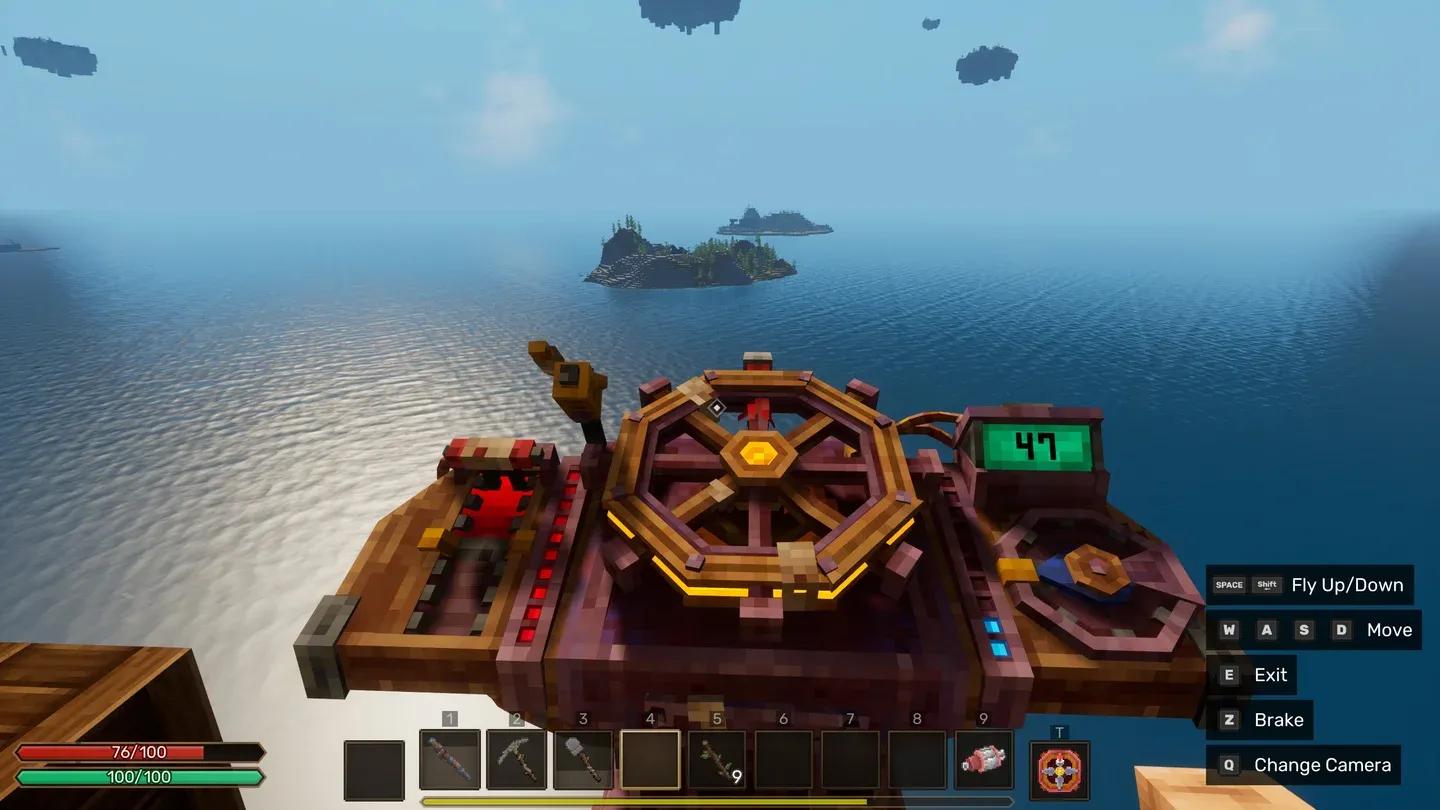
Crafting station on airship deck
| Item | Recipe |
|---|---|
| Primitive Repair Station | 5 Rocks, 1 Rope, 1 Forestwood Log |
| Alchemy Station | 10 Tropicalwood Planks, 6 Glass, 4 Copper Nails |
| Furnace | 15 Rocks, 15 Forestwood Planks |
| Smithing Station | 12 Forestwood Planks, 5 Rocks, 6 Copper Nails |
| Carpenter Station | 15 Forestwood Planks, 12 Copper Nails, 3 Copper Ingots, 8 Rocks |
| Advanced Alchemy Station | 1 Alchemy Table, 8 Jungle Planks, 4 Glass, 4 Iron Ingots |
| Upgrade Station | 10 Bogwood Planks, 6 Glass, 3 Crystals of Force, 5 Copper Ingots |
| Mastery Alchemy Station | 1 Advanced Alchemy Station, 4 Spiritwood Planks, 4 Ropes, 6 Rocks, 4 Steel Ingots |
| Bone Meal (2) | 1 Bone |
| Forest Farm Soil | 5 Dirt, 2 Bone Meals, 2 Waters |
| Wooden Pipe (3) | 4 Steamer Metal Scraps, 6 Forestwood Planks |
| Wooden Caged Pipe (3) | 4 Steamer Metal Scraps, 4 Wood Plank Blocks |
| Cockpit | 6 Steamer Metal Scraps, 10 Sticks, 1 Steering Gear, 1 Wooden Steering Wheel |
| Energy Generator | 12 Steamer Metal Scraps, 10 Forestwood Planks, 16 Copper Nails, 20 Rocks |
| Wooden Engine | 4 Steamer Metal Scraps, 9 Forestwood Planks, 10 Sticks, 1 Rotor, 4 Ropes |
| Processing Station | 8 Steamer Metal Scraps, 4 Steamwire Coils, 6 Forestwood Planks, 4 Copper Ingots, 1 Drive Piston |
| Wooden Balloon | 6 Steamer Metal Scraps, 4 Balloon Attachments, 10 Cloth, 8 Rope |
| Copper Arrow (16) | 1 Copper Ingot, 1 Stick, 8 Feathers |
| Rock Blade | 5 Rocks, 2 Ropes, 2 Sticks |
| Rock Splitter | 6 Rocks, 3 Ropes, 2 Sticks |
| Stone Pounder | 9 Rocks, 3 Ropes, 2 Sticks |
| Copper Shovel | 2 Copper Ingots, 3 Sticks, 2 Ropes |
| Copper Axe | 3 Copper Ingots, 3 Sticks, 2 Ropes |
| Copper Pickaxe | 3 Copper Ingots, 3 Sticks, 2 Ropes |
| White Candle (2) | 1 Rope, 1 Fat |
| Wooden Flowerpot | 5 Forestwood Planks, 4 Copper Nails |
| Rune Crafting Station | 20 Rocks, 2 Runalit, 6 Cloths |
Beyond the recipe tables, several stations handle maintenance and material transformation rather than producing new items directly.
Raw ores are useless until smelted. The Furnace converts mining finds into ingots, which feed into nearly every metal recipe in the game. Get this built early, because copper ingots are required for dozens of mid-tier recipes.
Tools and weapons degrade over time in Everwind. Higher-quality gear degrades more slowly, but nothing lasts forever. Bring Repair Kits to any Repair Station to restore durability. Crafting a Primitive Repair Station costs just 5 Rocks, 1 Rope, and 1 Forestwood Log, so there is no reason to delay.
Upgrade station improvement UI
This one requires Steamer Metal components and a connection to your ship's power system, but it pays off. The Processing Station breaks items back down into their base materials. Replaced your copper armor with something better? Feed the old set into the Processing Station and recover the ingots while you fly to your next destination.
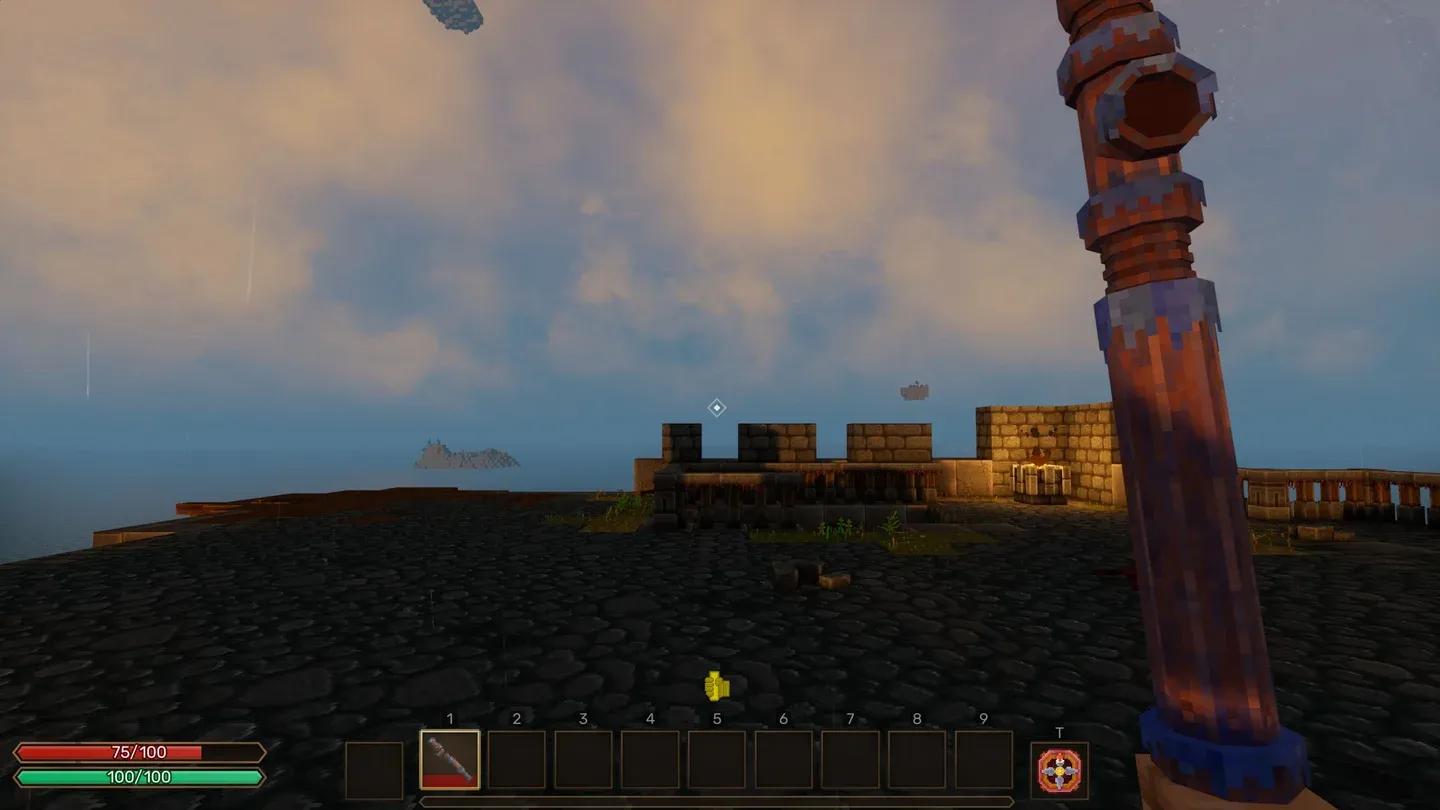
The Upgrade Station lets you improve weapons, armor, and tools beyond their base stats, making them progressively more durable and effective. The game even rewards the effort: fully upgrading the starting pipe weapon earns you an achievement.
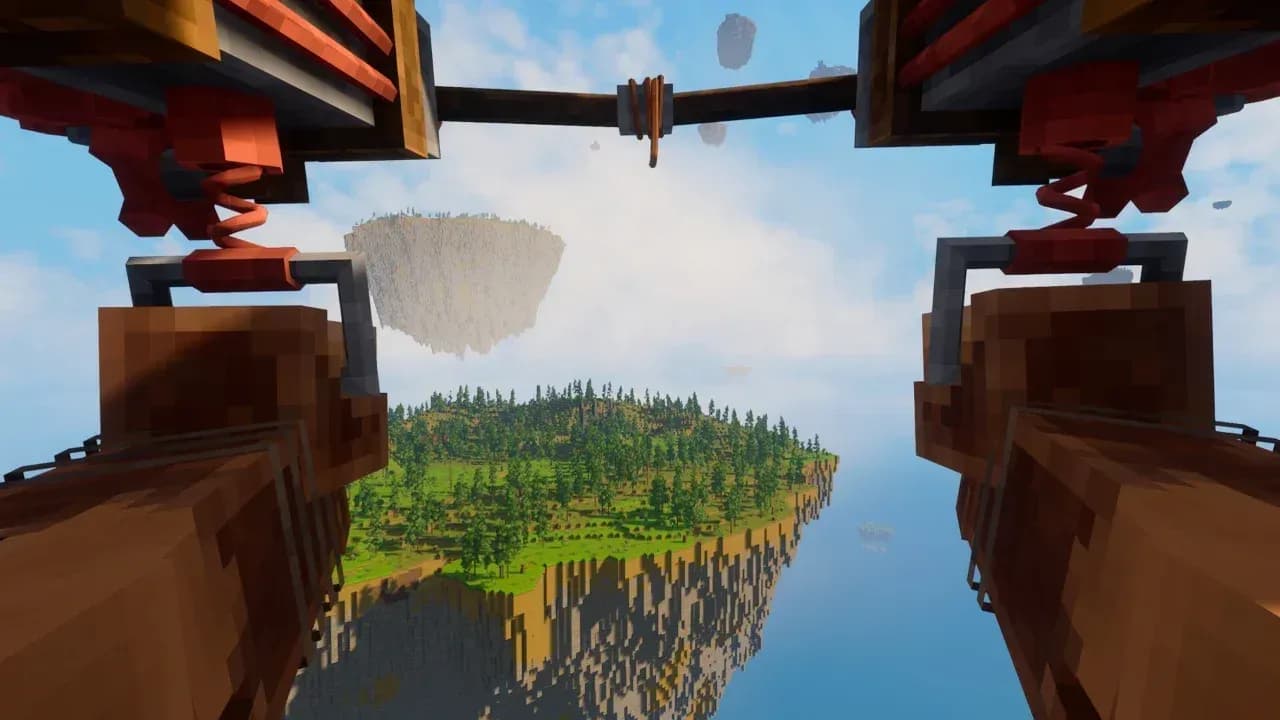
Rune Crafting is the closest Everwind gets to an enchanting system. After locating and building a Rune Crafting Station (which requires defeating Wraiths to find in the world), you combine 5 Runalit pieces with 5 Rune Fragments of the same type to produce a usable Rune. These attach to weapons and gear to provide special effects and stat buffs.
The key restriction: you cannot mix different Rune Fragment types in a single recipe. Five matching fragments produce one Rune. Experimenting with mismatched fragments wastes materials and produces nothing.
For a broader overview of the game's systems including dungeon rewards that feed into rune materials, the complete Everwind database at Everwind Wiki is worth bookmarking.
Rune crafting recipe screen
Everwind separates itself from other sandbox survival games by requiring raw resources to be converted into placeable blocks before you can build with them. The Block Station handles this conversion.
| Block | Recipe |
|---|---|
| Bogwood Plank Block | 4 Bogwood Planks |
| Clay Block | 4 Clay |
| Stone Block | 4 Rocks |
| Tropicalwood Plank Blocks | 4 Tropicalwood Planks |
| Wood Plank Blocks | 4 Forestwood Planks |
| Green Tile Roof | 3 Forestwood Planks, 3 Clay |
| Wooden Roof | 6 Forestwood Planks |
| Clay Bricks Block | 6 Clay, 2 Rocks |
| Sand Block | 8 Sand |
| Grass Block | 4 Dirt, 8 Fibers |
| Swamp Dirt Block | 4 Dirt, 3 Peat |
| Swamp Grass Block | 4 Dirt, 10 Fibers, 3 Peat |
| Forest Litter Block | 4 Dirt, 5 Water |
| Leaf Thatched Roof | 3 Forestwood Planks, 6 Fibers |
| Polished Sandstone Block | 12 Sand |
| Sandstone Bricks Block | 12 Sand |
| Rubble Stone Blocks | 6 Rocks |
| Chipped Stone Pillar Block | 8 Rocks |
| Rotten Dirt Block | 4 Dirt, 1 Blaze Crystal Dust |
| Rotten Grass Block | 4 Dirt, 8 Fibers, 1 Blaze Crystal Dust |
This is not the complete list as the game is in early access and new block types are still being added, but the table above covers the recipes confirmed in current builds.
Here is the recommended build order based on what gates the most content:
The alchemy tier alone has three levels: the base Alchemy Station, the Advanced Alchemy Station (requires Jungle Planks and Iron Ingots), and the Mastery Alchemy Station (requires Steel Ingots and Spiritwood Planks). Each tier expands your potion and magical crafting options considerably.
For more guides covering airship builds, skill trees, and co-op strategies, browse the full collection at games.gg/guides/.