The engine behind every fight
FATAL FURY: City of the Wolves runs on a set of interlocking systems that reward players who understand them and punish those who ignore them. The REV System, S.P.G., Counter Hits, Wild Punishes, and the Power Gauge all feed into each other in ways that aren't obvious at first glance. Spend time in training mode with these mechanics and matches start making a lot more sense.

What is the REV System?
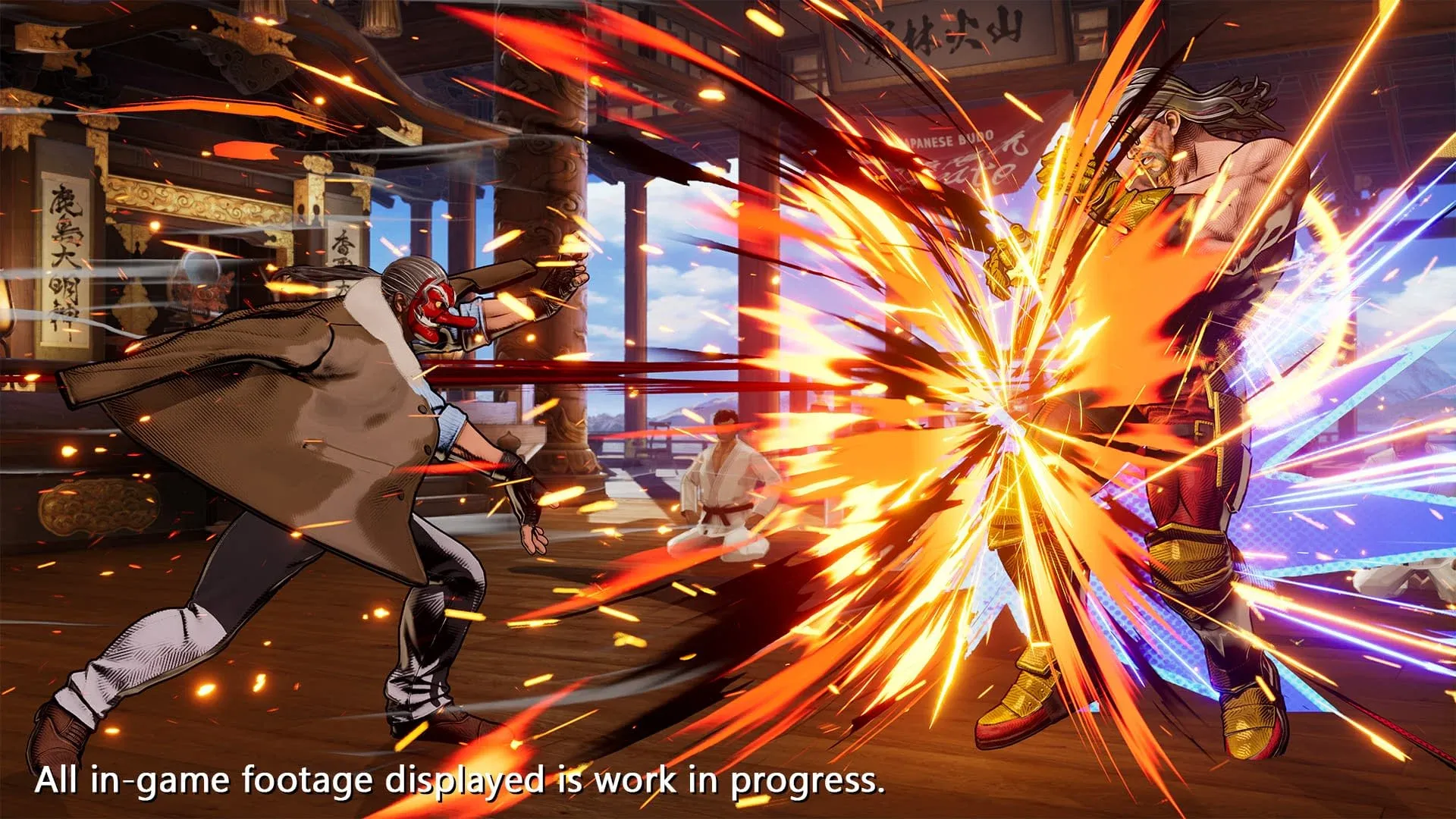
The REV System is the overarching framework for City of the Wolves' meter-based actions. Every REV Action you take feeds into the REV Gauge, a shared resource that opens up powerful options but carries real risk when mismanaged. The four REV Actions available are REV Arts, REV Accel, REV Guard, and REV Blow.
Think of the REV Gauge as a heat meter. You want to use it aggressively, but letting it hit 100% triggers Overheat, and that's somewhere you never want to be.

REV Gauge at near-Overheat
How does the REV Gauge fill and drain?
The gauge starts at 0% each round and moves up or down based on your actions:
Gauge increases when you:
- Block incoming attacks
- Use a Guard Cancel
- Use REV Arts, REV Blow, or REV Guard (REV Guard only increases the gauge when it actually blocks a hit)
Gauge decreases when you:
- Move forward (walking or dashing forward roughly doubles the passive decay rate)
- Land hits on your opponent (any attack except REV Blows and Guard Cancels)
- Successfully execute a Just Defend or Hyper Defend
- Land a Hidden Gear (resets the gauge to 0% immediately, even from Overheat)
Passive decay kicks in after a 3-second window (180 frames) since the gauge last increased. Crouching or moving backward cuts that decay rate in half, so turtling while hot is not a great escape plan.
What happens when you hit Overheat?
Overheat activates at 100% REV and slaps you with a red outline and a list of penalties that can lose you a round:
- REV Blow, REV Arts, REV Guard, Just Defend, Hyper Defend, and Guard Cancels are all disabled
- Fully invulnerable special attacks lose their invulnerability (super attacks keep theirs, making them your only reliable reversal option)
- Blocked attacks now drain your Guard Gauge instead of your opponent's REV
- If the Guard Gauge empties, you enter Guard Crush, a long stun state where your opponent can confirm into a full combo
Overheat ends 3 seconds after it starts (the gauge begins cooling down), but during that window the passive decay rate doubles. Landing a Hidden Gear during Overheat resets the REV Gauge to 0% and ends the state immediately.
One technical detail worth knowing: when REV Gauge increases, the meter fills gradually over about 0.5 seconds rather than instantly. This means if you're close to Overheat, you can sometimes squeeze in an extra REV Accel before the gauge actually tips over, provided you cancel fast enough. Terry at 80% REV can still chain REV Accel into REV Burning Knuckle into REV Crack Shoot at round-start distance, but the same sequence fails after a backdash because the timing window tightens with distance.
What is S.P.G. and which ratio should you choose?
S.P.G. (Selective Potential Gear) is a pre-match setting where you designate a portion of your health bar as a power zone. While your health sits inside that zone, you get a set of buffs. The three settings are Accel Ratio, Flux Ratio, and Final Ratio, corresponding to the beginning, middle, and end of your health bar respectively.
Active S.P.G. bonuses include:
- 10% increased attack damage
- Incoming damage reduction (varies by ratio)
- Reduced REV Gauge costs for REV Arts, REV Accel, REV Blow, and Guard Cancel
- Exclusive access to REV Blow and Hidden Gear (neither is available outside S.P.G.)
How do the three ratios compare?
| Ratio | When Active | Damage Reduction | REV Cost Discount | Risk Level |
|---|---|---|---|---|
| Accel | Start of round | 10% | None | Low |
| Flux | Mid health | 20% | Moderate | Medium |
| Final | Near death | 30% | Highest | High |
Accel Ratio activates immediately at round start, so you get the S.P.G. benefits right away with no conditions. The trade-off is no REV cost discount and the smallest damage reduction. Good for aggressive players who want access to REV Blow from the opening bell.
Flux Ratio sits in the middle. You get a moderate REV discount and 20% damage reduction while in the zone. It's a reasonable choice if you want consistent mid-round power without the pressure of Final.
Final Ratio is the highest-reward option. You get 30% damage reduction and the steepest REV cost discounts, but it only activates when your health is nearly gone. Landing a big comeback from Final Ratio is satisfying, but you're also one mistake away from losing the round before it even activates.
The REV cost differences are meaningful. A standard REV Art costs 25% of the gauge with no SPG active, drops to 19.95% under Flux, and falls further to 17.45% under Final. That gap compounds across a full combo chain.
Counter Hits and Wild Punishes explained
Landing a Counter Hit means your attack connected during the startup frames of your opponent's move. You also get a Counter Hit if you punish the recovery of a REV Blow or a fully invulnerable special. The game even applies Counter Hit rules to button priority situations, where a heavy attack wins against a simultaneous light attack.
Counter Hits give you:
- 20% extra damage on the hit that lands (stacks multiplicatively with S.P.G.'s 10% bonus for a total of 32% extra damage)
- Unescapable normal grabs
- Additional advantage frames (light normals get 2 extra, everything else that doesn't knock down gets 5)
- Special moves that normally knock down will instead launch or wall-bounce, opening up combo extensions
- REV Blows crumple grounded opponents on Counter Hit, giving you time to confirm into a full combo
A Wild Punish happens when you hit an opponent during the recovery of a completely whiffed attack. Blocked attacks cannot become Wild Punishes. The damage bonus here is 10% (not 20%), stacking with S.P.G. for 21% total. Moves that knock down don't gain extra advantage on Wild Punish, and the launch/crumple effects from Counter Hits don't apply either.
The standout Wild Punish interaction: if a grounded heavy normal connects as a Wild Punish, the camera zooms in, the game briefly slows down, and the heavy normal gains 20 extra advantage frames. That's enough time to walk in and confirm into a full combo from what would normally be a simple punish.
How does the Power Gauge work?
The Power Gauge runs from 0 to 2000, matching the REV Gauge's scale. You need 1000 (50%) for an Ignition Gear (Level 1 super), and the full 2000 for a Redline (Level 2) or Hidden Gear (Level 3).
Power builds based on the base damage of attacks, unaffected by Counter Hits, Wild Punishes, S.P.G. modifiers, or combo scaling. The one exception is the 50% OTG damage penalty (such as off a Wild Punish sweep), which cuts power gain for both players by half.
Power gain rates:
- Attacker on hit: 100% of base damage (150% for REV Blows)
- Defender on hit: 60% of base damage
- Attacker on block: 35% of base damage
- Defender on block: 60% of base damage
- Just or Hyper Defend grants the defender 3 extra power (~0.17%)
Most special moves also build an additional 20 power during their startup frames. Super attacks build no power on hit or block.
REV Blows always build 180 power (9%) on hit regardless of combo scaling, which makes them valuable for power generation even at the end of a long string. Hokutomaru, for example, builds 36% power from a BnB Counter Hit REV Blow combo that ends with a double REV Blow. Since power build isn't reduced when the opponent lacks enough health to absorb the full damage, ending rounds with a REV Blow or your highest-damage special is the correct play to carry power into the next round.
Putting it all together
The systems in City of the Wolves reward players who think about multiple meters simultaneously. Your REV Gauge dictates what options you can access, S.P.G. ratio shapes how aggressively you can spend it, Counter Hits and Wild Punishes change the math on every punish situation, and the Power Gauge determines when your strongest supers become available.
Spend time in training mode running through each ratio setting and tracking how many REV Accel extensions you can fit before Overheat. The difference between Accel and Final on a three-extension chain is roughly 22% of the gauge, which is the difference between landing a full combo and triggering a dangerous Overheat state mid-pressure. For deeper character-specific applications of these systems, the FATAL FURY: City of the Wolves strategy guides have everything broken down by roster.
If you're newer to fighting games and City of the Wolves is your entry point into the genre, these systems look dense on paper but become readable quickly once you've played a few dozen matches. The REV Gauge is visible at all times, and Overheat is hard to miss. Start by learning one ratio setting, get comfortable with REV Arts, and build from there.