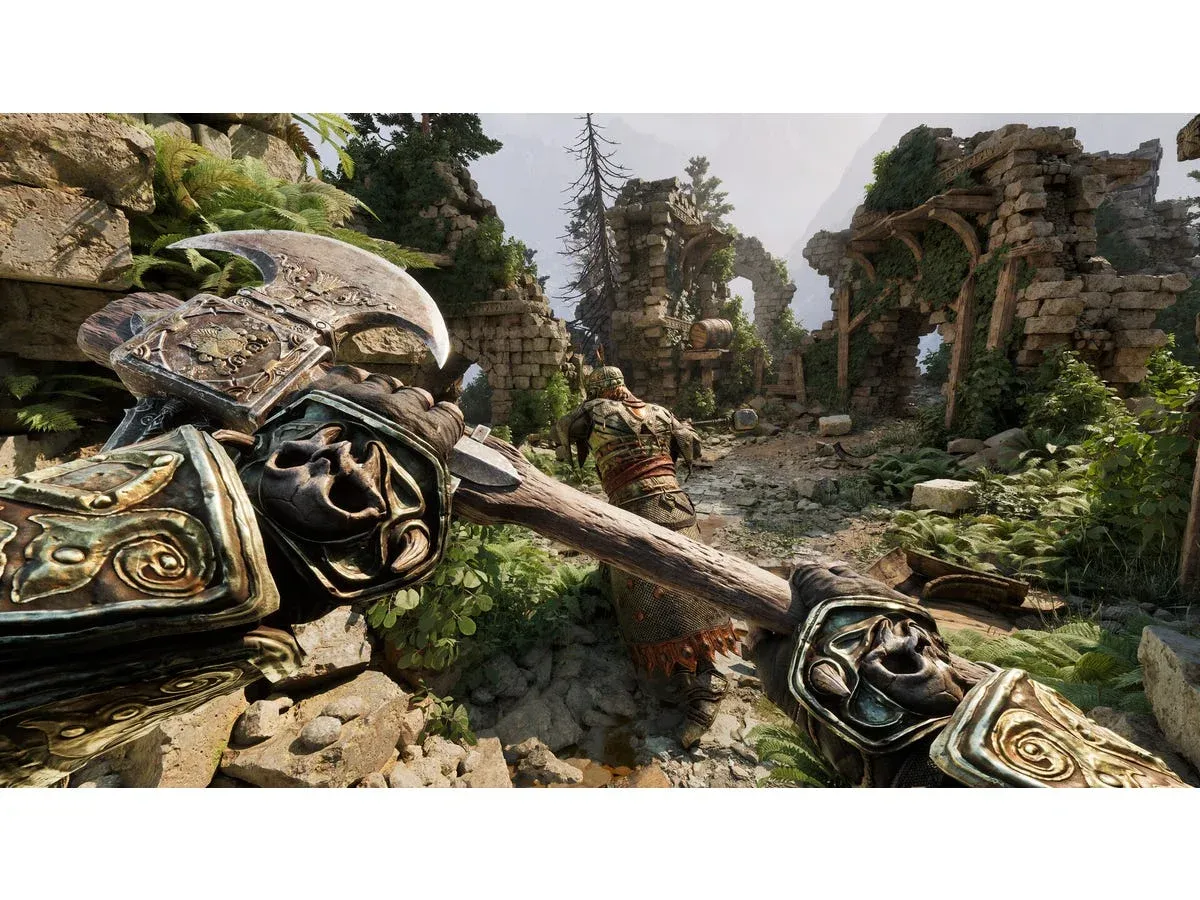


Fatekeeper is the new dark fantasy action-RPG from Paraglacial and THQ Nordic, and it pulls no punches from the first encounter. Fans of Dark Messiah of Might and Magic will feel the DNA immediately: physics-driven combat, environmental kills, and a skill tree that demands real decisions. This guide covers everything from your first hour of survival to taking down the game's major bosses, with zero hand-holding required.
What should you do in your first hour of Fatekeeper?
The biggest mistake new players make is treating the opening zone like a tutorial corridor. It is not. Fatekeeper gives you real systems from the start and expects you to test them, not master them immediately.
Spend your first hour learning enemy timing rather than chasing upgrades. Test your weapon's reach against different enemy types, and hold off on committing skill points until you know what playstyle feels natural. Most importantly, clear every side room you find. Hidden relics in these off-path areas can fundamentally reshape your build in ways no upgrade merchant can match.
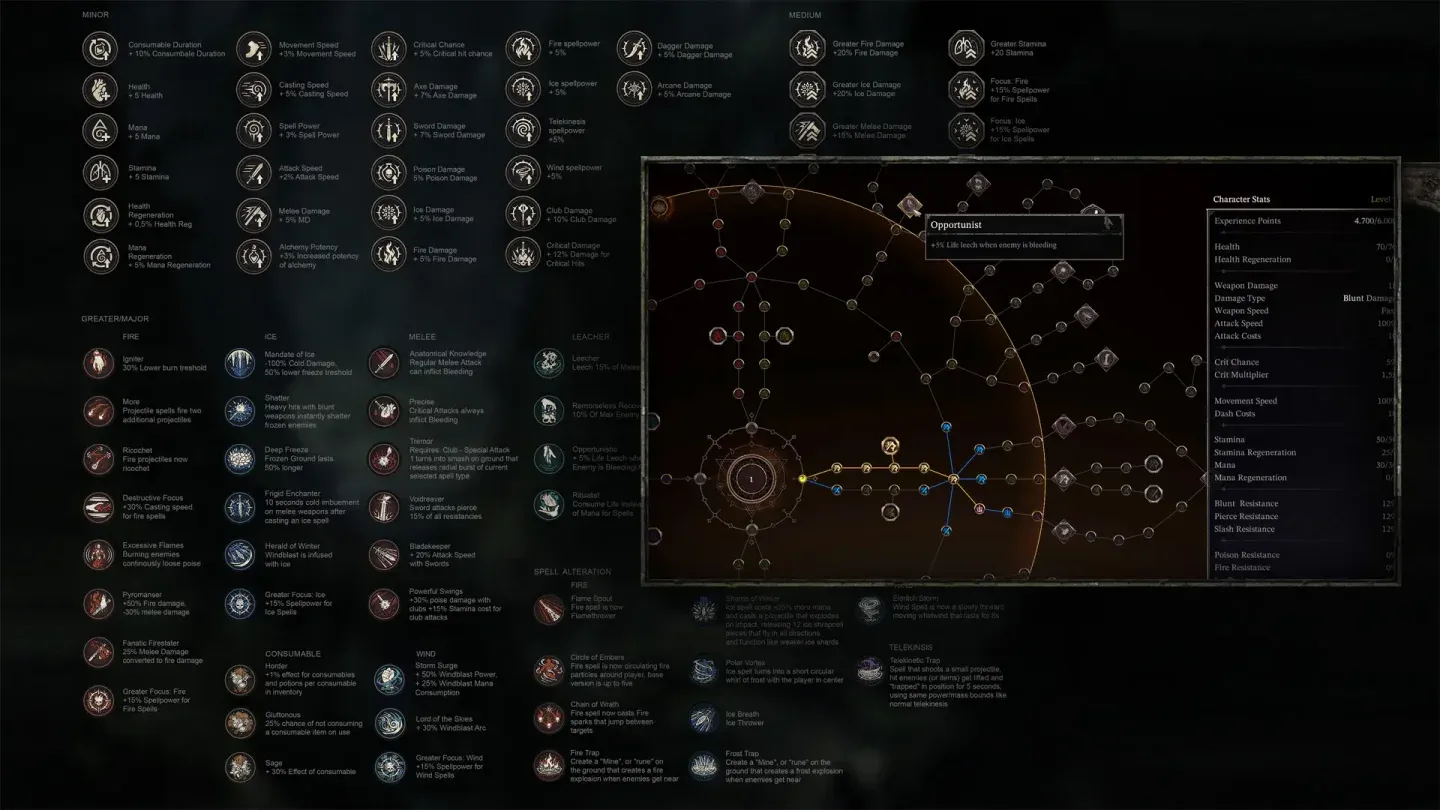
First-hour survival decisions
Here is a quick decision framework for surviving the opening without burning through scarce materials:
How does combat work in Fatekeeper?
Combat sits somewhere between Dark Messiah and DOOM: fast, physics-driven, and punishing if you button-mash. The game does not use invincibility frames, which means you cannot roll through attacks. You need to physically backstep or side-dodge to avoid damage. That single design choice changes everything about how fights play out.
The kick is your most powerful tool and it costs zero mana with a short cooldown. Use it constantly and creatively. Shove enemies into spike walls, explosive barrels, or off ledges. The environment is your best weapon, full stop. Spiked walls, holes in the floor, pressure plates, destructible platforms, and oil patches are all valid kill methods.
A reliable setup: position yourself next to a hazard, wait for the enemy's incoming attack, dodge to the opposite side, and then kick them straight into it.
Telekinesis works as a ranged version of the kick. Pull archers off their perches, drag enemies into pit traps, or yank a target toward you mid-swing for a free heavy attack window. Ranged enemies are one of the biggest threats in the game, and Telekinesis hard-counters them.
A few other combat mechanics worth knowing:
- Perfect dodge: Time your dash to the exact moment of an incoming attack and the game slows time briefly, giving you a clean window to counterattack.
- Active parry: Holding block is a stamina drain and cannot stop ranged attacks. Active parries stagger enemies and open them up for critical counterattacks.
- Charged heavy attack: Backpedal while charging a heavy swing. You avoid the enemy's hit and land a significantly harder blow than any standard swing.
- Mid-combo weapon swap: You can equip two weapon sets simultaneously. Poking with a spear to maintain distance and then swapping to dual daggers when an enemy staggers is a legitimate and effective tactic.
- Staying mobile: Running around the combat area to isolate enemies and spot environmental hazards beats standing in place and trading hits every time.
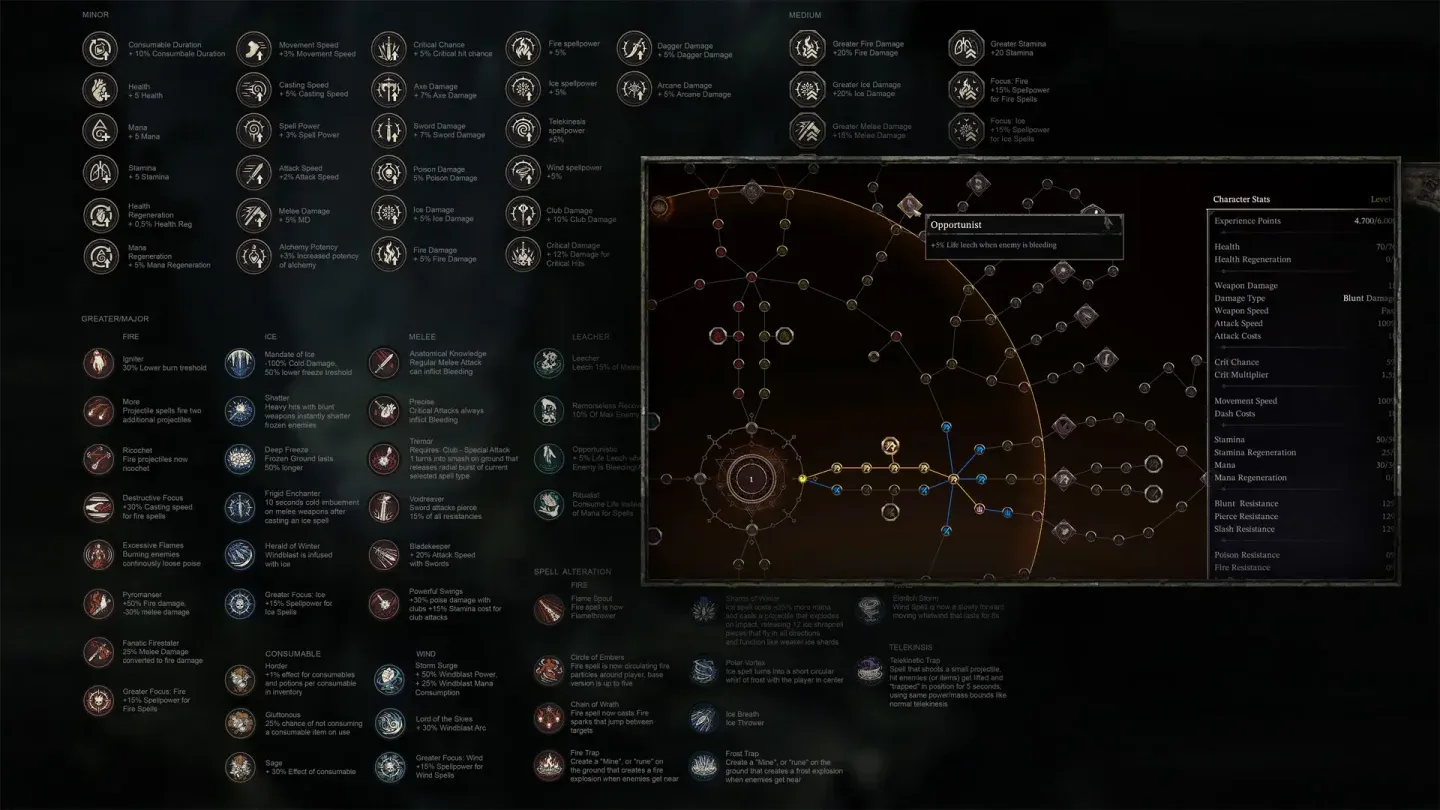
Kick sends enemies into traps
How does the Fatekeeper skill tree work?
The skill tree is large, branching, and non-exhaustive. You cannot unlock every node in a single playthrough, so your choices actually matter. The tree is divided into four broad sections: weapon damage on the right, alchemy at the bottom, stamina on the left, and health at the top.
For most players, stamina and health nodes are the highest-priority early investments. Stamina fuels dodging, sprinting, and kicking. Health gives you the buffer to survive mistakes. Weapon damage matters less when environmental kills and the kick handle so much of the heavy lifting.
The three perk tiers break down as follows:
- Minor Perks (24 nodes): Stacking baseline buffs covering health regeneration speed, movement, crit chance, and dodge stamina cost. These form the foundation of any build.
- Medium Perks (9 nodes): Playstyle-defining unlocks. Shield bash is one example. Stats increase significantly here.
- Greater and Major Perks: Capstone abilities that change how your character fundamentally operates. Phantom Step, for instance, converts your dodge into a short-range teleport.
If you want to experiment with a different setup, respec at the Sanctuary of First Flame. Respecs are free early in the game. Later, they cost a rare resource found through exploration.
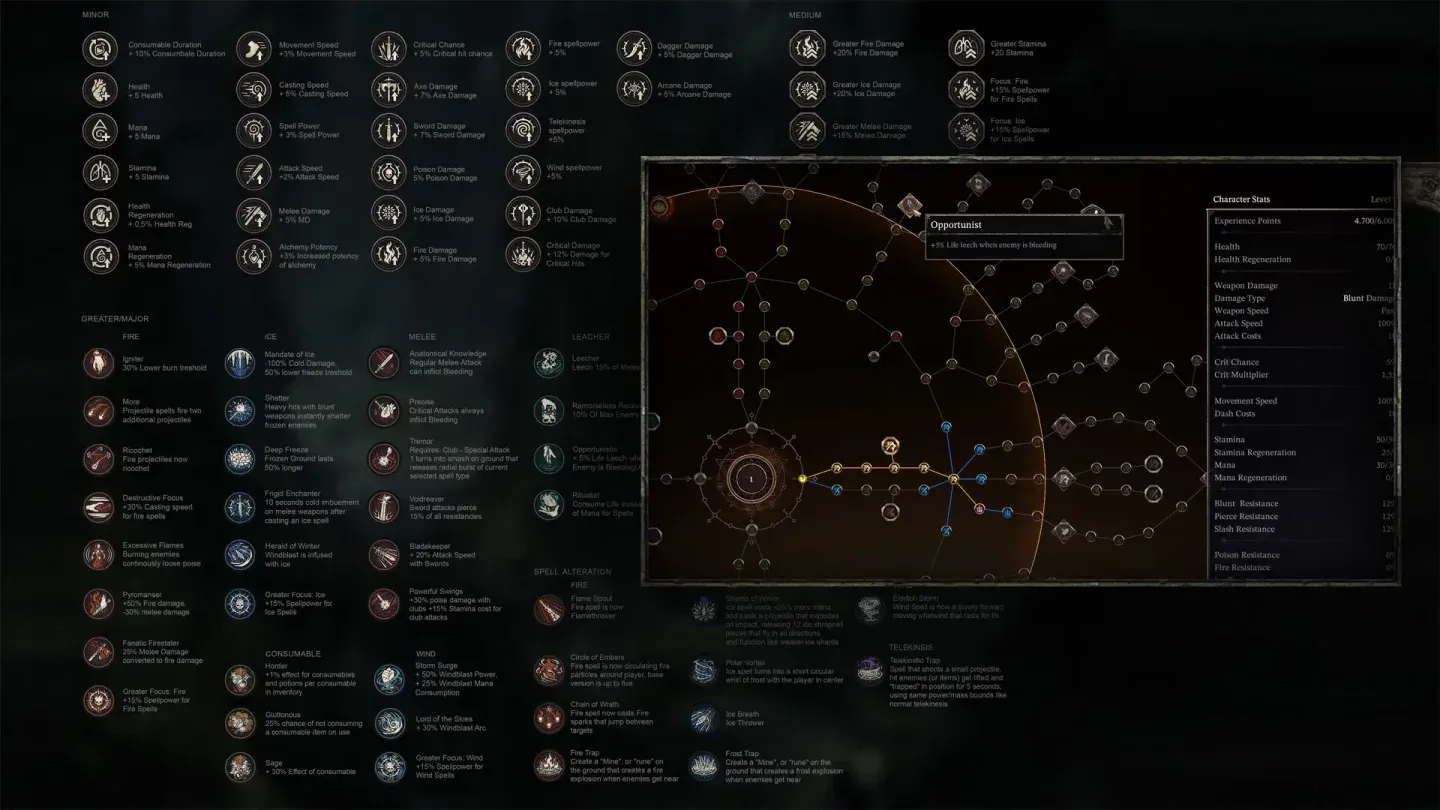
Skill tree perk tier breakdown
What are the best beginner builds?
Three builds stand out as strong starting points depending on how you want to play:
- The Druid Adept: A hybrid across melee, magic, and alchemy. This is the safest first-playthrough option because it handles any enemy type without hard counters.
- The Frost Reaper: Pairs Cryomancy with heavy melee weapons. Freeze enemies solid, then shatter them with physical attacks for massive burst damage.
- The Blood Knight: Combines Sanguimancy with sword and shield. Every attack leeches health back, making this the best endurance build for sustained fights.
Treat these as starting blueprints rather than final builds. Test each system yourself before locking in, because what works in the Blightwood may not hold up in later zones.
How do magic schools and elemental combos work?
Magic is not an optional side system. You can cast spells between melee attacks mid-combo, and the four elemental schools each serve a distinct tactical role:
- Pyromancy: Pure damage output and ignites oil surfaces for area denial.
- Cryomancy: Freezes enemies solid, setting them up for heavy physical shatter attacks.
- Aeromancy: Utility-focused. Push enemies off ledges or deflect incoming arrows.
- Sanguimancy: Drains health from targets to sustain you through close-quarters brawls.
Beyond the four schools, the Spell Alteration tree lets you modify how your magic behaves. Nodes like Split Cast turn a standard Fireball into an armor-melting tool.
The real damage comes from chaining elements together. Hit a frozen enemy with fire to trigger Shatter Melt for a massive damage burst. Hit a burning enemy with wind to trigger Wildfire Spread and ignite the entire room at once.
Weapons, gear, and what to look for in your inventory
Gear in Fatekeeper is looted, not crafted. That means you find unique synergies rather than grinding upgrade materials, which keeps the focus on exploration.
The five weapon categories each fill a different role:
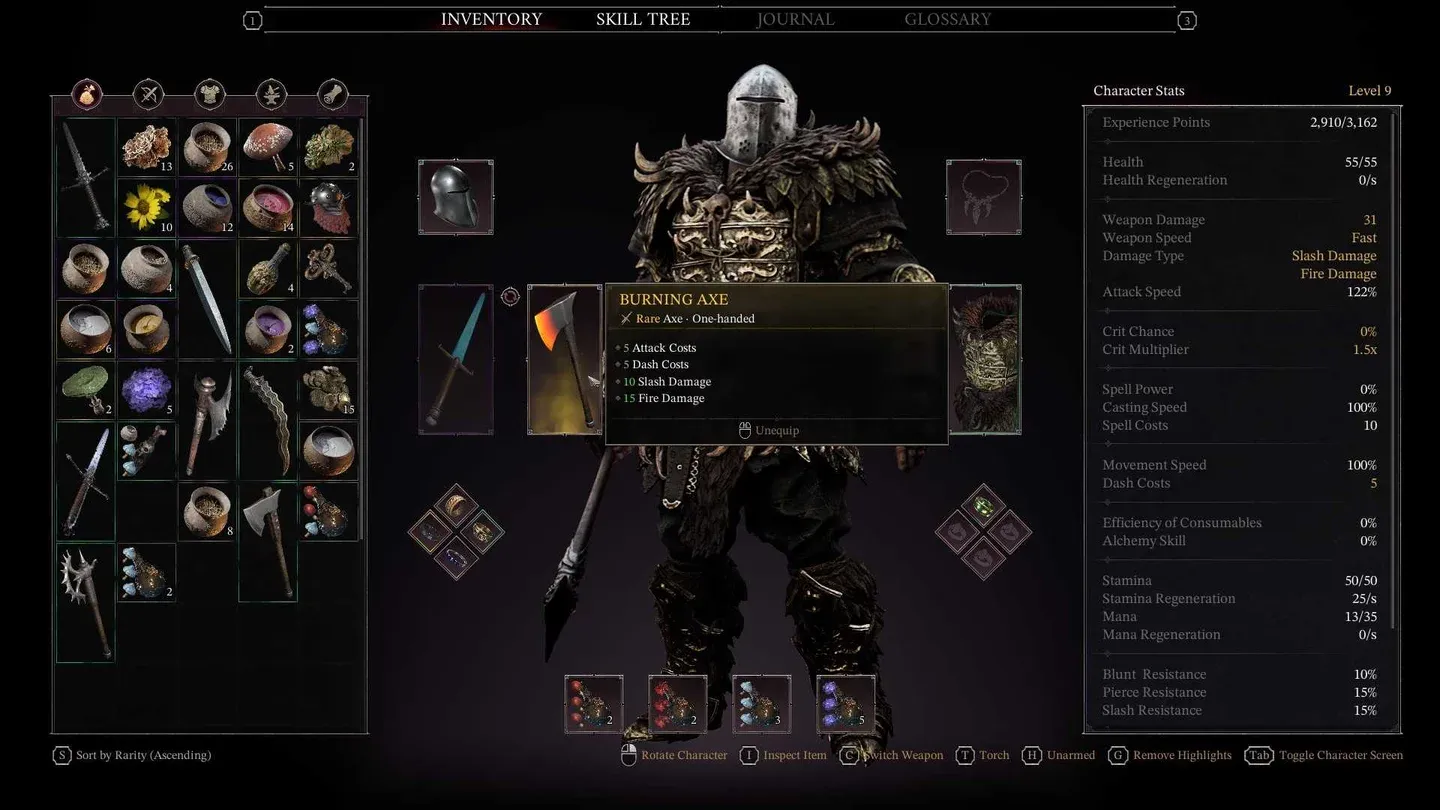
Armor follows a straightforward trade-off: heavy armor reduces incoming damage but slows movement and drains stamina faster, while light armor extends dodge distance and speeds up stamina recovery.
Always inspect your artifacts in the inventory menu. Some items carry hidden properties that the basic tooltip does not display. Boots that leave an ice trail or rings that add frost to fire spells are the kind of combinations that make a build click.
Check artifacts for hidden bonuses
How do you beat elite enemies and major bosses?
Elite enemy tactics
Different enemy types require different approaches. Here is what works against the standard mob roster:
- Shortlings: Fast swarmers. Use a greatsword to clear groups or daggers to pick them off before they surround you.
- Corrupted Footmen: Shield-blockers. Kick their shields to break guard, then follow with a heavy combo.
- Orc Berserkers: Cannot be staggered during heavy swings. Wait for the red attack tell, backstep, then counterattack.
- Giant Centipedes: Drop from ceilings in dark areas. Burn their outer armor with fire spells.
- Armored Minotaurs: Charge attackers. Sidestep right before impact and they stun themselves on the wall.
- Corrupted Druids: Backline healers. Ignore the frontline tanks and kill the druids first.
- Giant Lizards: Fast tail-whip spin attack. Keep distance with a spear or use active parries against their lunges.
How to beat the Blightwood Ancient
The Blightwood Ancient is a three-phase fight built around environmental awareness.
Phase 1: Target the glowing root nodes at the base of the trunk with Pyromancy spells. These take massive burning damage and are the fastest way to push the boss into its next phase.
Phase 2: The boss begins slamming the ground to trigger cave-ins. The stone pillars around the arena block falling debris. Stay behind them.
Phase 3: The Ancient floods the room with poison roots. Use wind magic to clear the poison clouds, then close the fight with fire combos.
How to beat Lord Commander Veydris
Veydris is a pure melee fight with no heavy magic. His sword speed is the threat.
Stay close rather than retreating. Running away gives him the initiative and his gap-closing thrust punishes distance hard. Time active parries against his fast three-hit sword string to stagger him and create counterattack windows.
For the thrust specifically: watch for his shoulder to drop as the tell, then side-dodge to land a clean backstab.
Exploration: zones, NPCs, and what to prioritize
Fatekeeper has 5 handcrafted sandbox zones: the Blightwood, the Sundered Keep, the Crystal Deeps, the Ashen Steppe, and the Sunken Ziggurat. Hidden paths connect areas throughout, and the elements you have unlocked determine where you can go. Fire spells melt hidden barriers. Ice spells expose illusory walls.
Rescuing lost NPCs scattered across these zones is worth the detour. Every character you bring back to the main hub permanently unlocks new gear shop options, additional lore, and skill point refund opportunities.
For more targeted help with specific systems, the Fatekeeper guides collection covers individual mechanics in depth.
Frequently asked questions
Is there crafting in Fatekeeper? No. Gear is entirely looted through world exploration. The design intentionally pushes you toward finding synergies rather than grinding materials.
Can you play co-op? No. Fatekeeper is strictly single-player. The studio is focused on delivering a polished solo campaign.
Will save data carry over between patches? Not guaranteed. The developers have warned that major updates can change core file structures, which may require a fresh character start. Back up saves before updating.
If you enjoy this style of physics-driven, exploration-heavy adventure games, Fatekeeper is one of the more demanding entries in the genre right now. Head back to the Fatekeeper game page for the latest updates as Early Access continues to evolve.