
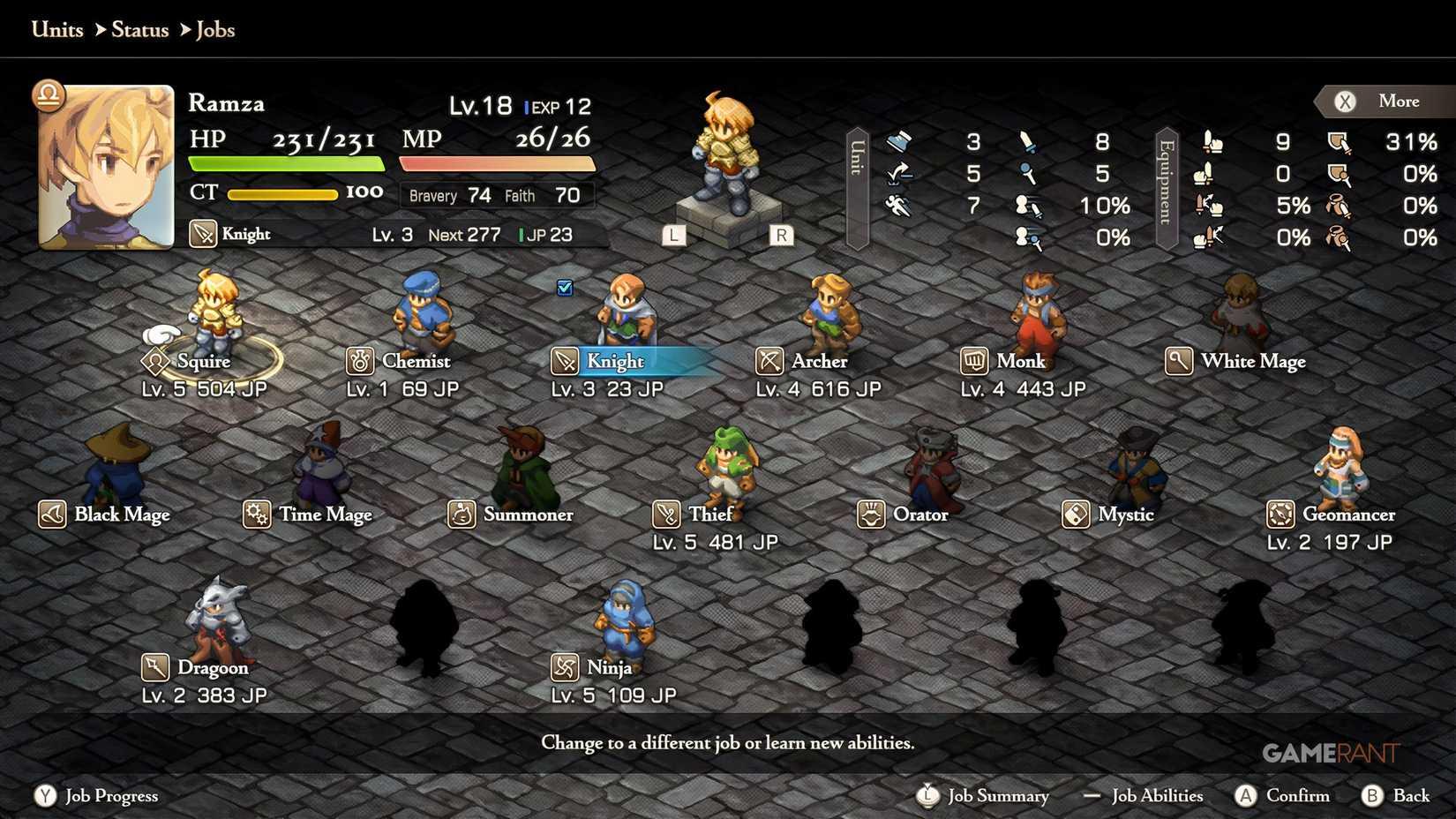
Building the perfect party in Final Fantasy Tactics comes down to understanding what each job actually does on the battlefield. With 20 jobs to pick from, each offering different abilities and stat curves, your choices shape whether you dominate Ivalice or spend half the game reloading saves.
Why jobs matter more than you think
Jobs determine your stat growth, equipment access, and available abilities. The twist: your active job sets your base stats and gear options, but you can equip a secondary ability set from any other job you've learned. This means the real power comes from mixing jobs intelligently, not just picking one and sticking with it forever.
Smart players invest time learning multiple jobs to build hybrids that handle whatever the game throws at them. The alternative is hitting a wall when your one-trick party meets an enemy formation that counters it.
Best Early Game Jobs in Final Fantasy ...

Job rankings: what actually works
S-tier: The jobs that break the game
| Job | Key Strengths | Why S-Tier |
|---|---|---|
| Chemist | Instant item usage, Auto-Potion reaction | No MP costs, works throughout entire game |
| Black Mage | Massive AoE damage, elemental variety | Highest magic attack power available |
| Ninja | Dual Wield capability, exceptional speed | Game-breaking damage potential when mastered |
Chemist sits at the top because it solves the resource management problem that plagues every other healer. Items work instantly, cost no MP, and the Auto-Potion reaction keeps any character alive without manual input. Slap this on a frontline fighter and watch them survive encounters that would drop anyone else.
Black Mage earns its spot through sheer destructive output. Flare and Meteor erase enemy groups, elemental spells exploit weaknesses for massive damage, and the only real drawback is fragility—which positioning fixes easily.
Ninja becomes absurd once you unlock Dual Wield. This support ability lets any physical job attack twice per turn, effectively doubling damage output. Combined with the Ninja's natural speed advantage, you're looking at a character that acts more often and hits harder every time.
A-tier: Strong picks that do one thing extremely well
A-tier jobs excel in specific roles but lack the universal utility of S-tier options.
Knights function as your defensive anchor. Weapon Break and Armor Break cripple dangerous enemies by destroying their gear, while high HP and heavy armor access make them perfect for holding chokepoints. They won't win battles alone, but they create space for everyone else to work.
White Mages handle healing and protection through Cure, Raise, and defensive buffs like Protect. Every successful party needs reliable healing for sustained battles, which makes White Mages non-negotiable.
Time Mages control battle flow. Haste doubles turn frequency, Slow cripples enemies, and Teleport ignores terrain entirely. They don't deal direct damage, but their tactical impact often decides who wins.
Summoners deliver crowd control through AoE attacks that don't hit your own units. Ifrit, Shiva, and Titan devastate enemy formations, and the Halve MP support ability fixes resource problems for any magic-heavy build.
Mystics specialize in status manipulation—Blind, Silence, and Paralyze disable threats before they act. Their abilities ignore evasion, making them reliable against agile enemies that dodge everything else.
B-tier: Solid specialists with clear limitations
These jobs fill important niches without the versatility of higher tiers.
Monks combine self-sufficiency with respectable damage. Chakra heals without MP costs, and their high physical growth makes them excellent candidates for Dual Wield builds later.
Orators offer unique recruitment through Entice and boost ally stats with Praise. Their speech-based abilities work differently from magic, providing alternative approaches when standard tactics fail.
Geomancers blend physical prowess with terrain-based magic. Attack Boost significantly enhances melee damage, while Tanglevine and similar spells provide AoE options without MP costs.
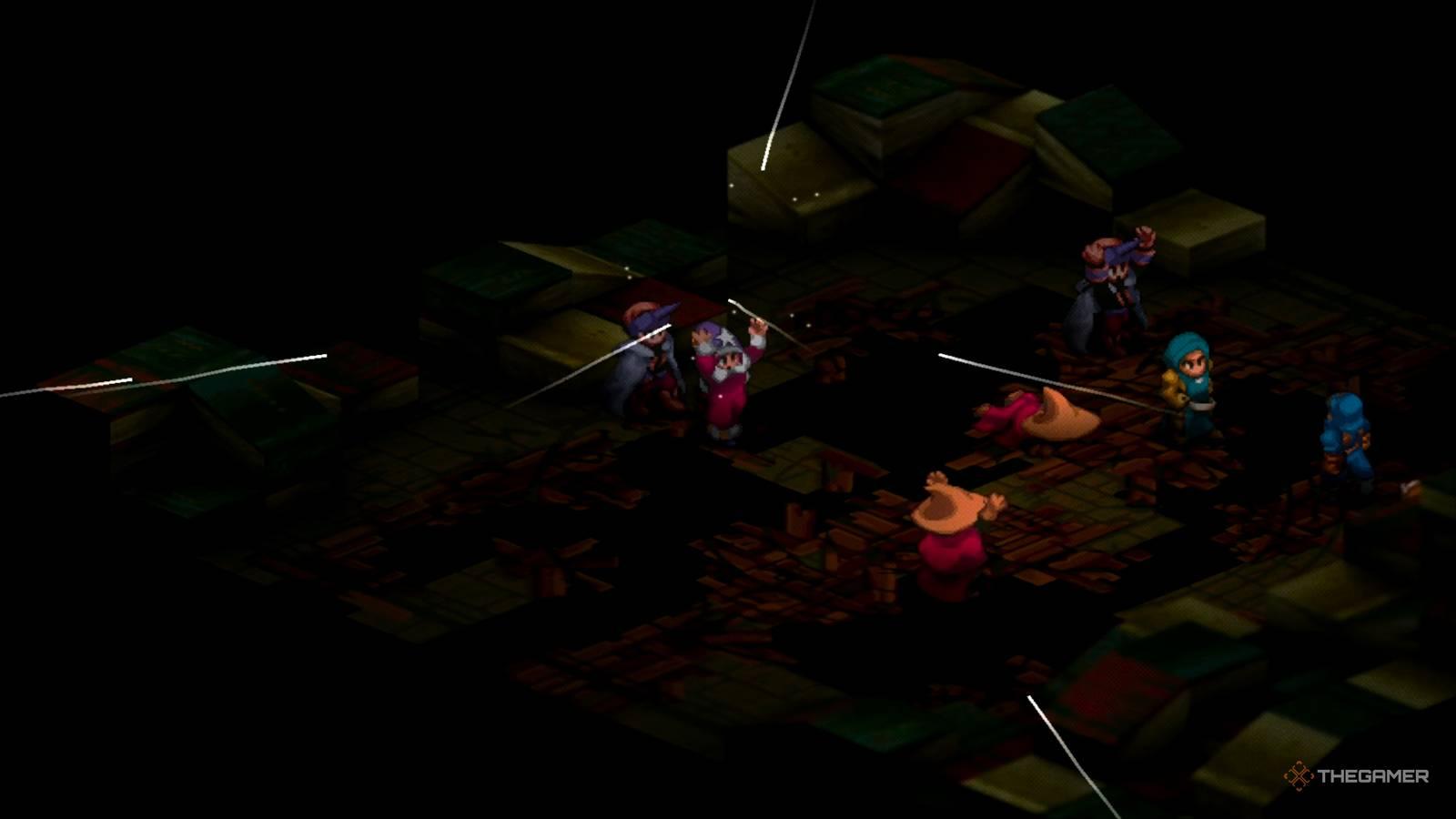
Status Effects In Final Fantasy Tactics ...
Dragoons excel at eliminating specific targets through Jump attacks. The aerial delay creates vulnerability windows, but properly timed jumps devastate enemy backlines before they can react.
Dancers provide passive battlefield control through AoE debuffs. Their dances affect all enemies simultaneously, gradually weakening entire formations without targeting anyone specifically.
C-tier: Situational tools that serve specific purposes
C-tier jobs work in narrow circumstances but lack consistency for regular use.
Squires function mostly as stepping stones to better jobs, though Ramza's unique version gains powerful story abilities. The JP Boost support ability makes early grinding significantly faster, which is its main contribution.
Archers offer safe ranged damage through Aim abilities, but charge times create vulnerability. The Concentration support ability helps other jobs land attacks against evasive targets, which is more useful than the Archer itself.
Thieves provide mobility through Movement+2 and equipment acquisition via stealing. Damage output disappoints, but utility abilities transfer well to other jobs.
Samurai combine magic utility with physical stats through Draw Out abilities. The reliance on consumable katanas limits sustained effectiveness—you'll run out of weapons mid-battle if you're not careful.
D-tier: Jobs with more problems than solutions
Arithmeticians theoretically break the game through instant, MP-free spellcasting based on mathematical formulas. In practice, their complex mechanics and terrible stats make them difficult to use effectively. You'll spend more time calculating formulas than actually playing.
Bards provide AoE buffs through songs but suffer from cast delays and poor survivability. The benefits rarely justify the investment required to make them functional.
Mimes copy ally actions without costs, potentially doubling your strongest abilities. The inability to act independently and equipment restrictions severely limit practical applications. They're a novelty, not a strategy.
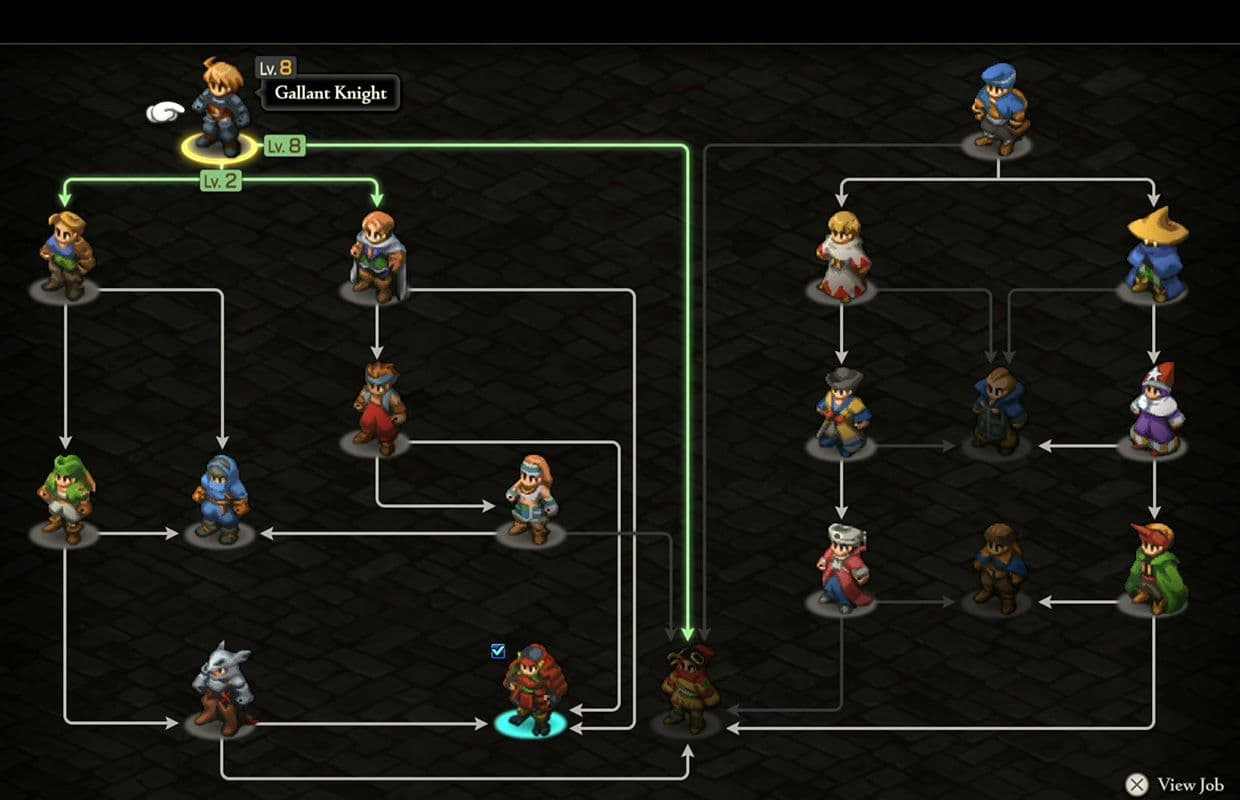
Final Fantasy Tactics - The Ivalice ...
How to progress through jobs efficiently
Early game foundation (Chapters 1-2)
Start every character with Squire to unlock JP Boost, then immediately switch to Chemist for Auto-Potion. These two abilities alone dramatically improve survival rates during the brutal early chapters.
Your first combat specialists should include:
- Knight for tanking and equipment breaking
- Black Mage for AoE damage
- White Mage for healing support
- Archer to unlock Thief prerequisites
Learn one or two abilities per job before moving to the next. Spreading too thin early prevents accessing powerful advanced jobs when you actually need them.
Mid-game expansion (Chapter 3)
With basic jobs established, pursue advanced combinations:
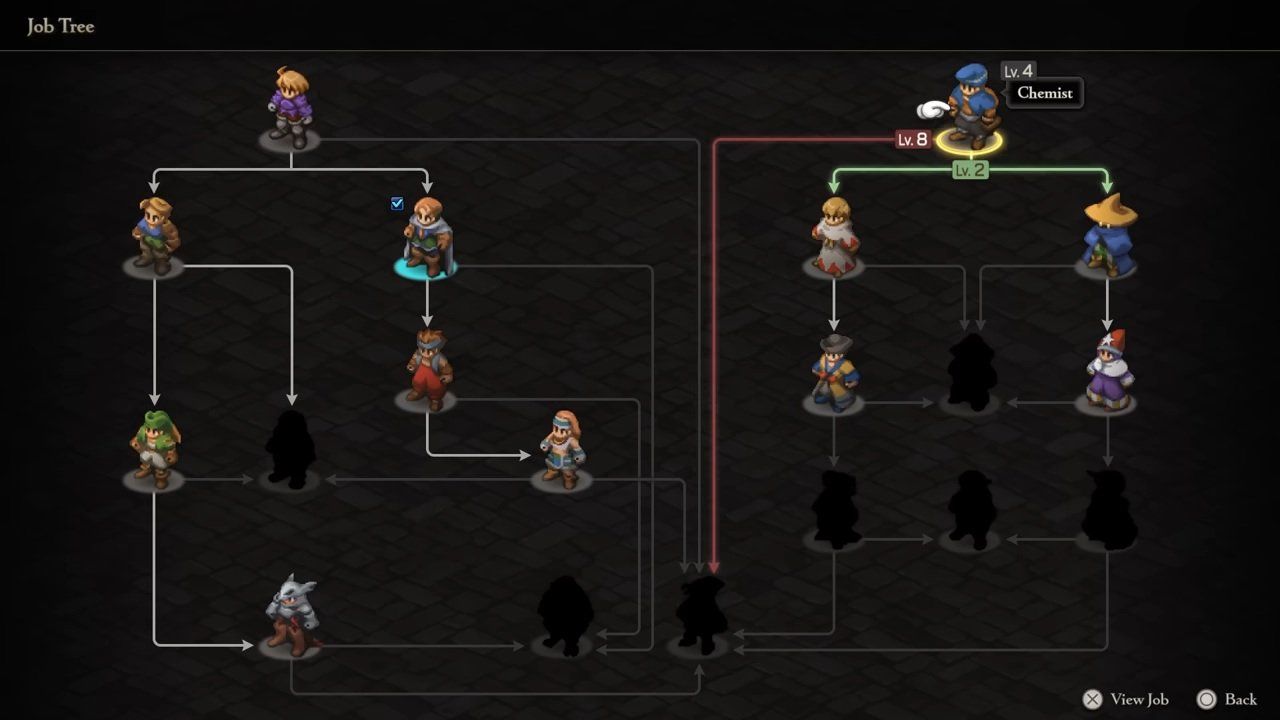
Physical Path: Knight → Monk → Geomancer → Ninja. This sequence provides durability, self-healing, damage boosts, and ultimately Dual Wield for devastating attacks.
Magical Path: Black Mage → Time Mage → Summoner. Develops from single-target nuking to battlefield control through speed manipulation and friendly-fire-immune AoE.
Utility Path: White Mage → Mystic → Orator. Creates versatile support characters capable of healing, debuffing, and battlefield manipulation.
Late game mastery (Chapter 4)
Experiment with hybrid builds combining the best abilities from multiple paths:
- Ninja/Monk: Dual Wield with Chakra self-healing
- Knight/Time Mage: Tanking with Teleport mobility
- Black Mage/Summoner: Maximum magical destruction with Halve MP
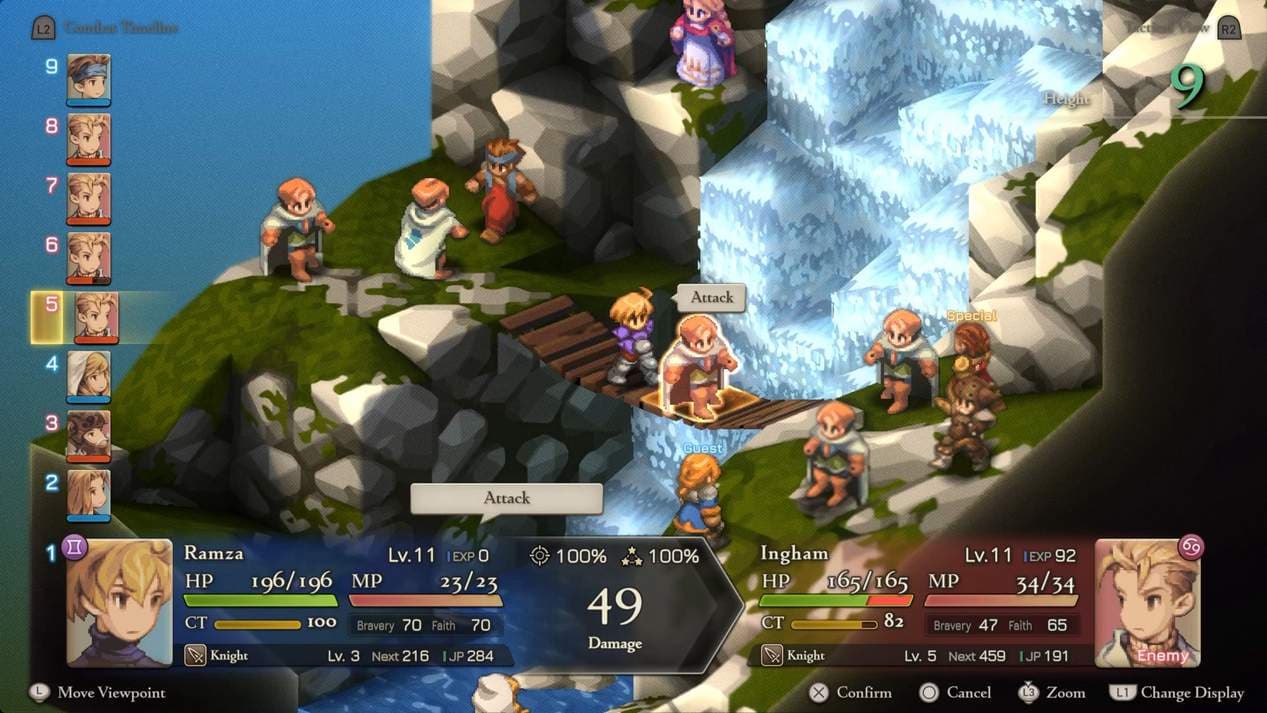
FINAL FANTASY TACTICS - The Ivalice ...
Ability combinations that actually matter
Support abilities worth equipping
| Ability | Job | Effect | Best Used On |
|---|---|---|---|
| JP Boost | Squire | +50% JP gain | Everyone early game |
| Dual Wield | Ninja | Attack twice per turn | Physical damage dealers |
| Teleport | Time Mage | Ignore terrain movement | Mobile support units |
| Auto-Potion | Chemist | Automatic healing when damaged | Frontline fighters |
Reaction abilities that save lives
Counter from Monk provides free physical retaliation. Blade Grasp from Samurai offers superior evasion against weapon attacks. Damage Split from Arithmetician reflects half of received damage back to attackers.
Movement skills that change positioning
Beyond the obvious Movement+2 from Thief, consider Ignore Height from Geomancer for terrain navigation or Float from Time Mage for water crossing.
Tactical applications for different situations
Party composition that covers all bases
Effective parties balance roles while maintaining tactical flexibility. A typical endgame setup includes:
- Primary Damage: Ninja with Dual Wield and Monk abilities
- Tank/Support: Knight with Time Mage secondary for Teleport
- Healer/Buffer: White Mage with Summoner abilities for AoE options
- Crowd Control: Black Mage with Chemist secondary for survivability
- Utility: Thief with various stealing abilities for equipment acquisition
Adapting to enemy types
Different enemy types require tactical adjustments:
Heavy Armor Enemies: Knights with breaking abilities, Monks for raw damage. Magic Users: Fast units with Silence from Mystic, Dragoons for aerial strikes. Large Groups: Summoners and Black Mages for AoE devastation. Boss Battles: Time Mages for speed control, Chemists for sustained healing.

Wiegraf At Windflat Mill In FFT ...
Mistakes that waste time and resources
Spreading too thin
New players often try learning every ability immediately. Focus on mastering 2-3 jobs completely before branching out. A specialist character outperforms a generalist in most situations.
Ignoring prerequisites
Advanced jobs require specific level combinations. Plan your progression path to avoid wasted time in unwanted jobs just to meet unlock requirements.
Neglecting support abilities
Passive abilities often provide more impact than flashy attacks. Auto-Potion, Dual Wield, and movement enhancements frequently determine battle outcomes more than any single spell or skill.
Abandoning basic jobs too early
Chemist and Monk remain viable throughout the entire game. Don't abandon effective strategies just because they seem simple or basic.
Getting the most out of each job
Stat growth optimization
Characters gain different stat bonuses depending on their active job during level-ups. Plan accordingly:
- Physical builds: Level as Monk or Knight for HP/PA growth
- Magical builds: Level as Black Mage or Summoner for MP/MA growth
- Speed builds: Level as Ninja or Thief for speed optimization
Equipment synergy
Job selection determines available equipment. Knights access heavy armor and shields, while Ninjas excel with dual weapons. Match your job choice to your intended equipment setup rather than fighting against it.
Faith and bravery management
These hidden stats affect magical accuracy and physical reaction rates. Maintain appropriate levels for your character's role—high Faith for casters, high Bravery for physical fighters. Letting these stats drift can cripple an otherwise strong build.
The job system rewards experimentation and strategic thinking. S-tier jobs provide the strongest foundation, but every job contributes valuable abilities to your tactical arsenal. Master the basics first, then explore advanced combinations to create party compositions that can handle any challenge Ivalice presents.
For more Final Fantasy Tactics, check out our Best Party Build guide.