

Fishbowl is the kind of game that sneaks up on you. Developed by the two-person team at imissmyfriends.studio and published by Wholesome Games Presents, this debut narrative title released on April 2, 2026 for PS5 and PC via Steam. You play as Alo, a 21-year-old who has just moved to a big city for her first job, only to find herself grieving her grandmother's death while the world locks down around her. The result is one of the most honest portrayals of early-pandemic young adult life that games have managed so far.
What is Fishbowl actually about?
The story unfolds over a single in-game month. Alo is a video editor living alone, cut off from her family by both distance and lockdown, and still processing a loss she hasn't had time to sit with. The game is set at the start of the COVID-19 shelter-in-place period in 2020, which gives every mundane daily task a specific emotional weight that players who lived through that period will recognize immediately.
The game draws a strong parallel between Alo's physical unpacking of boxes and her emotional unpacking of grief. That toy fishbowl sitting among her grandmother's belongings is more than set dressing. It becomes the object through which the game's core memory sequences are unlocked.
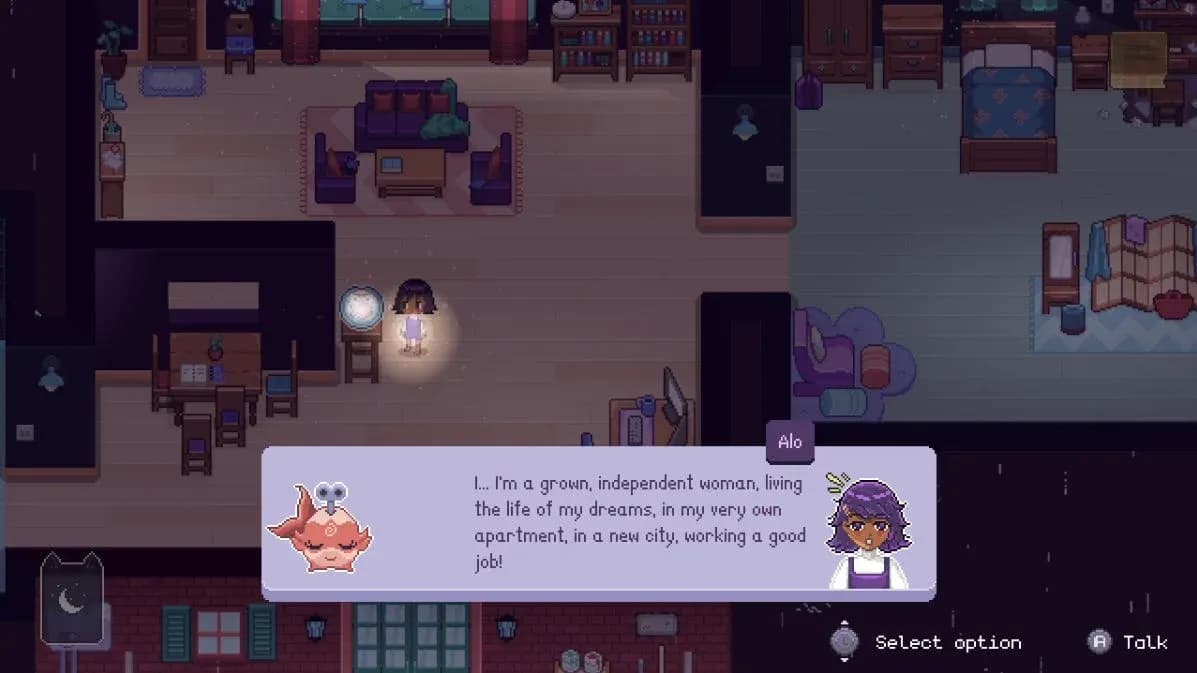
Unpacking triggers core memories
How does the mood system work?
The mood gauge is the mechanical spine of Fishbowl. Displayed at the top of the screen, it rises and falls based on every choice you make during the day. Brushing your teeth, showering, and making coffee all push it upward. Scrolling your phone on the couch or binge-watching TV drags it back down.
Here's where it gets specific: once you interact with a low-mood activity like the phone or tablet on the couch, you cannot back out of it unless your mood is already high enough. Every activity is essentially a yes-or-no gate, with some including a simple quicktime event to give the feeling of agency. The system is a surprisingly accurate model of how depression and inertia actually work.
Some activities are locked entirely at the start of the game. Alo simply isn't in the headspace for them yet. The bubble bath, for example, is unavailable early on due to a plumbing issue that only gets resolved once you've built a relationship with your landlord. Progress is tied to relationships, not just mood numbers.
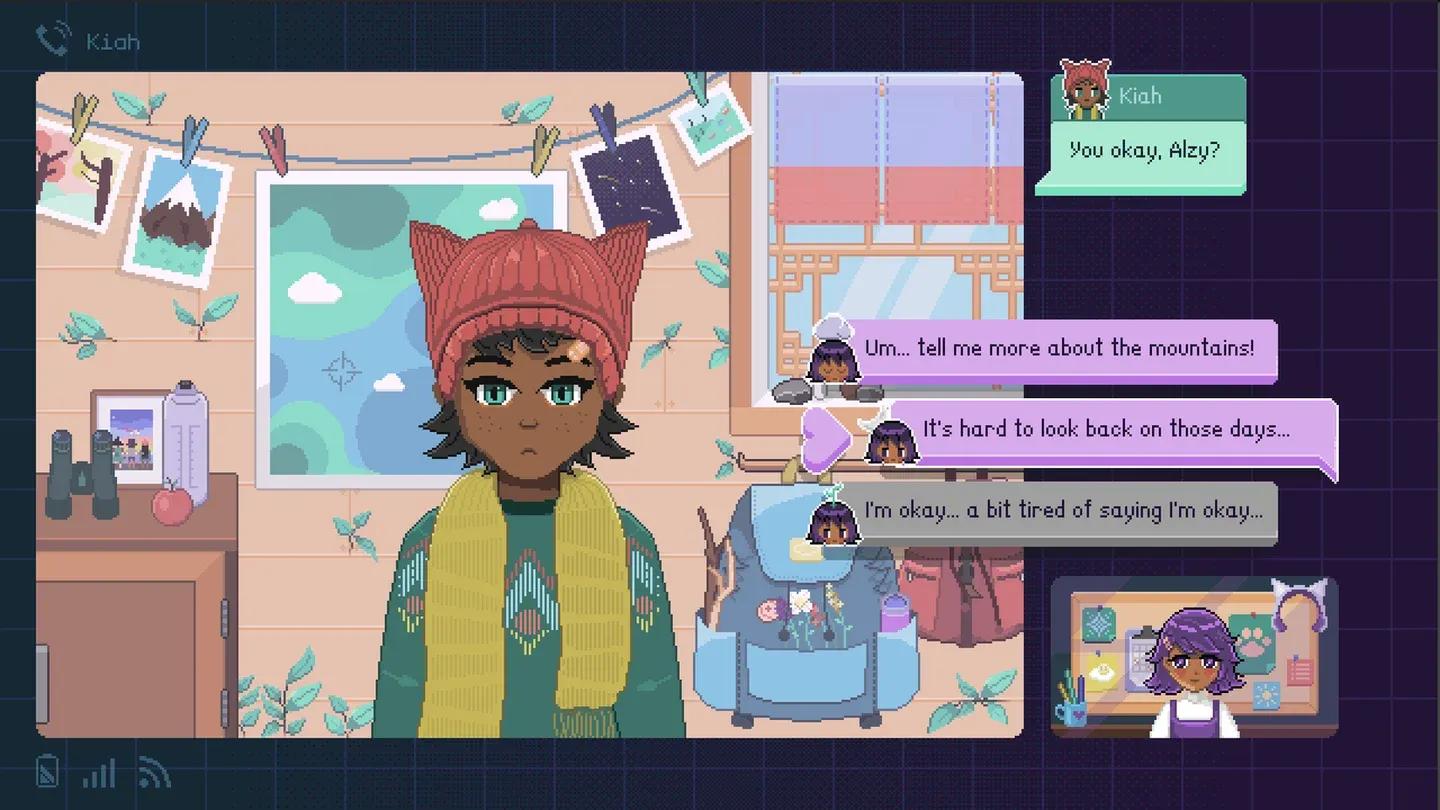
Mood gauge tracks daily wellbeing
What are the daily activities and mini-games?
The daily routine in Fishbowl is structured but flexible. There's no time pressure on most tasks, so you can approach them in whatever order suits your current mood rating. The full list of regular activities includes:
- Morning hygiene (toilet, brushing teeth, showering)
- Making coffee and eating meals
- Working from home as a video editor
- Calling family, friends, and co-workers via video chat
- Playing games on a handheld device
- Listening to music on a record player
- Writing in a journal (unlocked as mood and progress improve)
- Cooking (unlocked after discovering a cookbook from grandmother's belongings)
- Unpacking boxes to trigger core memory sequences
The work mini-game deserves a mention on its own. When Alo logs on to her computer, she does a quick check-in with co-workers before playing a time-based file sorting game. Images, audio, and video clips appear on a timeline and need to be sorted correctly, with some files requiring deletion. It's simple by design, and there's even an achievement tied to abusing the game's version of Clippy.
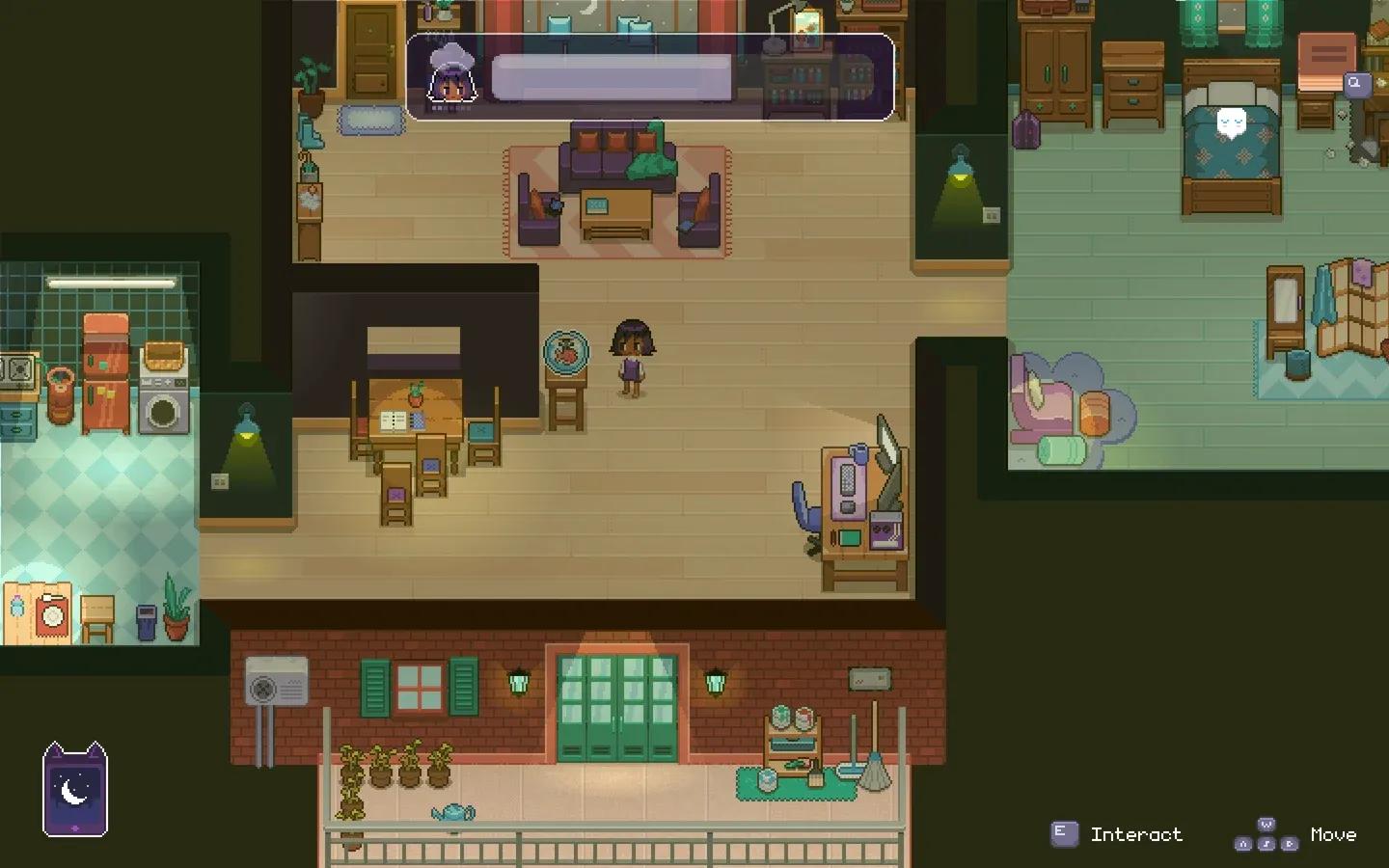
Work mini-game sorts media files
How do core memories work?
Each time Alo unpacks an item from her grandmother's boxes, a core memory sequence unlocks. These are playable flashbacks from Alo's childhood, triggered through interaction with the toy fish that came with the grandmother's belongings. The toy fish gradually becomes Alo's primary in-person companion throughout the month.
These memory sequences do more than tell backstory. They actively affect Alo's mood and sometimes teach her new skills or reintroduce old ones, like playing music or cooking. The cookbook discovery is one of the strongest examples: finding it in a box doesn't just unlock a recipe system, it reconnects Alo to specific flavors and moments from her past.
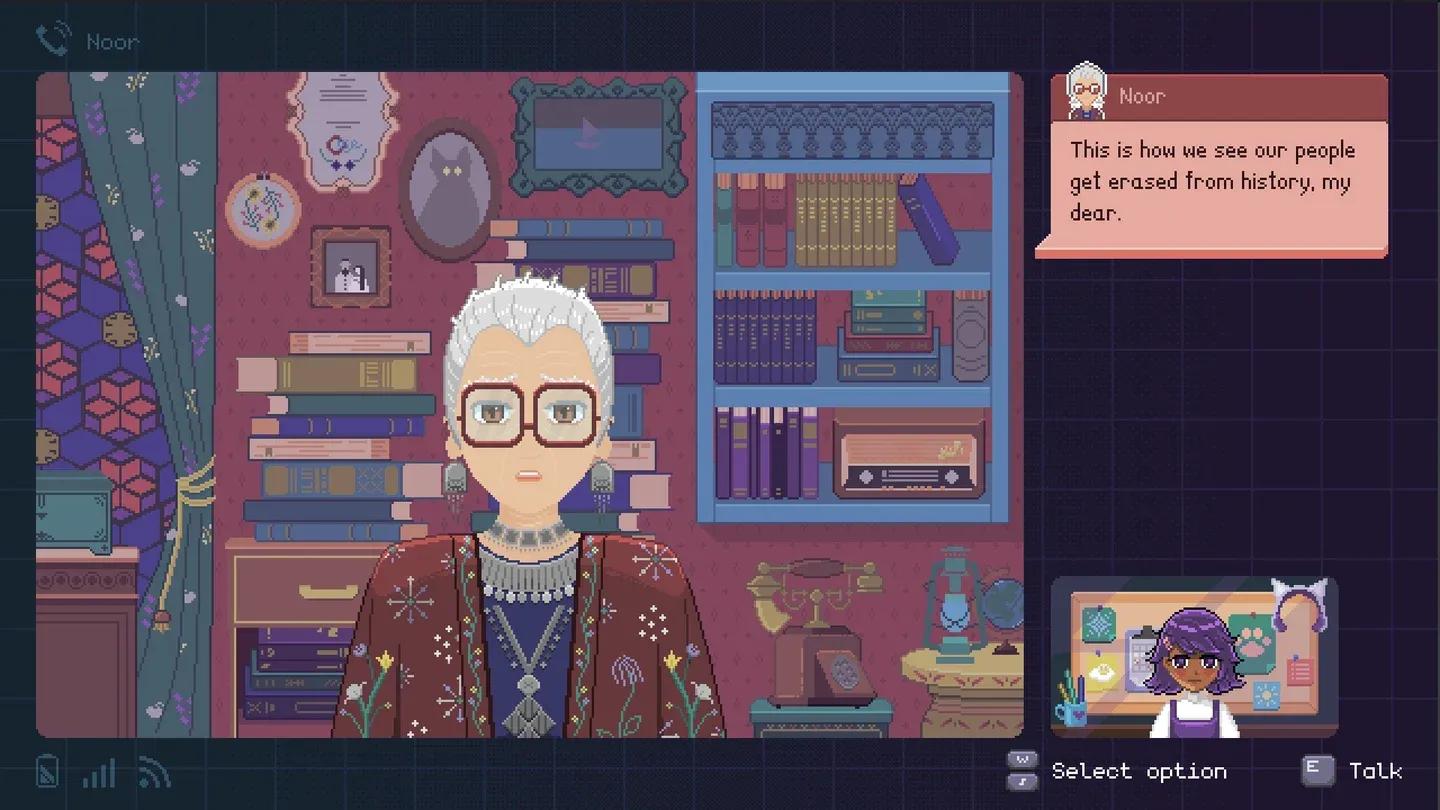
Core memories reshape Alo's skills
Does Fishbowl have multiple endings?
Yes, and your daily choices feed into which ending you receive. There is no punishment mechanic in the traditional sense, but the cumulative weight of your decisions across the month shapes the outcome. Playthroughs can run anywhere from 8 to 10 hours depending on pacing and how much you explore.
The game is rated E by the ESRB and is available on PS5 and PC via Steam. A free demo is available on Steam, taking approximately 1 to 1 hour 45 minutes to complete depending on how much you explore.
| Detail | Info |
|---|---|
| Developer | imissmyfriends.studio |
| Publisher | Wholesome Games Presents |
| Platforms | PS5, PC (Steam) |
| Release date | April 2, 2026 |
| ESRB rating | E |
| Playtime range | 8 to 10 hours |
| Demo available | Yes (Steam) |
| Endings | Multiple (choice-dependent) |
Is Fishbowl worth playing?
Fishbowl has earned strong critical reception, with scores ranging from 4 out of 5 to a perfect 5 out of 5. Reviewers consistently note the game's emotional honesty and the accuracy of its mood system as standout qualities. At least one reviewer called it the first game to make them cry since 2010.
The game will hit differently depending on your personal history. Players who lost someone close, lived through the early pandemic as a young adult, or have any connection to Asian family dynamics will find specific moments that land hard. That said, the game has been broadly recommended, not just to people with direct experience of grief.
The one honest caveat: if you're expecting action, challenge, or a dramatic payoff, Fishbowl is not that. It's a slow, deliberate, cozy game that rewards patience. Playing it day by day rather than in one sitting is probably the right call.
For more cozy game coverage and narrative indie reviews, browse the latest guides at GAMES.GG to find your next low-stress play.