
The most chaotic sandbox game just got a new home
Goat Simulator 3 throws you onto the sandbox island of San Angora as Pilgor the Goat. It's the sequel to 2014's original Goat Simulator, and the pitch hasn't changed: lick, headbutt, and wreck your way through an open world stuffed with quests, hidden secrets, and NPCs who had it coming. The game launched in November 2022 and has picked up seasonal content drops since then. The Nintendo Switch 2 version bundles all that post-launch stuff in from day one. Here's how to stop wandering around like an idiot and actually play the thing properly.

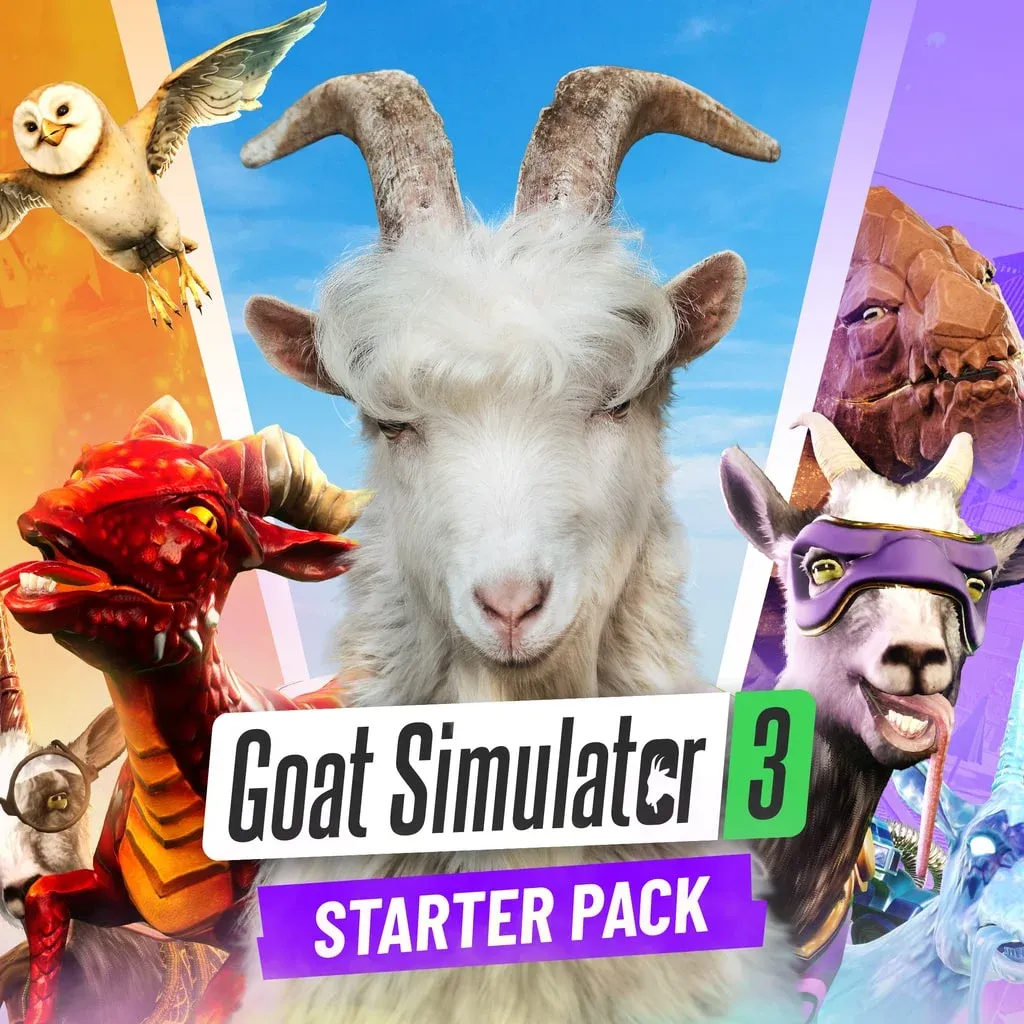
What is Goat Simulator 3, and why should you care?
Goat Simulator 3 is a sandbox built around doing whatever you want. There's a tutorial, but the developers make it clear they won't hold your hand past that. The world rewards poking around. Quests are there, secrets are everywhere, and NPCs react to your chaos in ways that stay funny longer than you'd expect.
The Nintendo Switch 2 version ships with all the seasonal content added since November 2022, so new players get the most complete version of the game right out of the gate.
How does exploration work in San Angora?
San Angora is an open-world island, and the game doesn't plaster map markers everywhere pointing you toward every secret. That's on purpose. The smart play is to treat every building, rooftop, and back alley as worth checking out. Quests are scattered around the world instead of handed out from a central hub, so you'll run into objectives naturally while exploring instead of ticking off a list.
Your core movement kit (licking objects to drag them, headbutting NPCs and structures, crashing into everything at speed) doubles as your exploration toolkit. Objects you mess with can set off chain reactions, and those chain reactions often open up hidden areas or kick off new events.
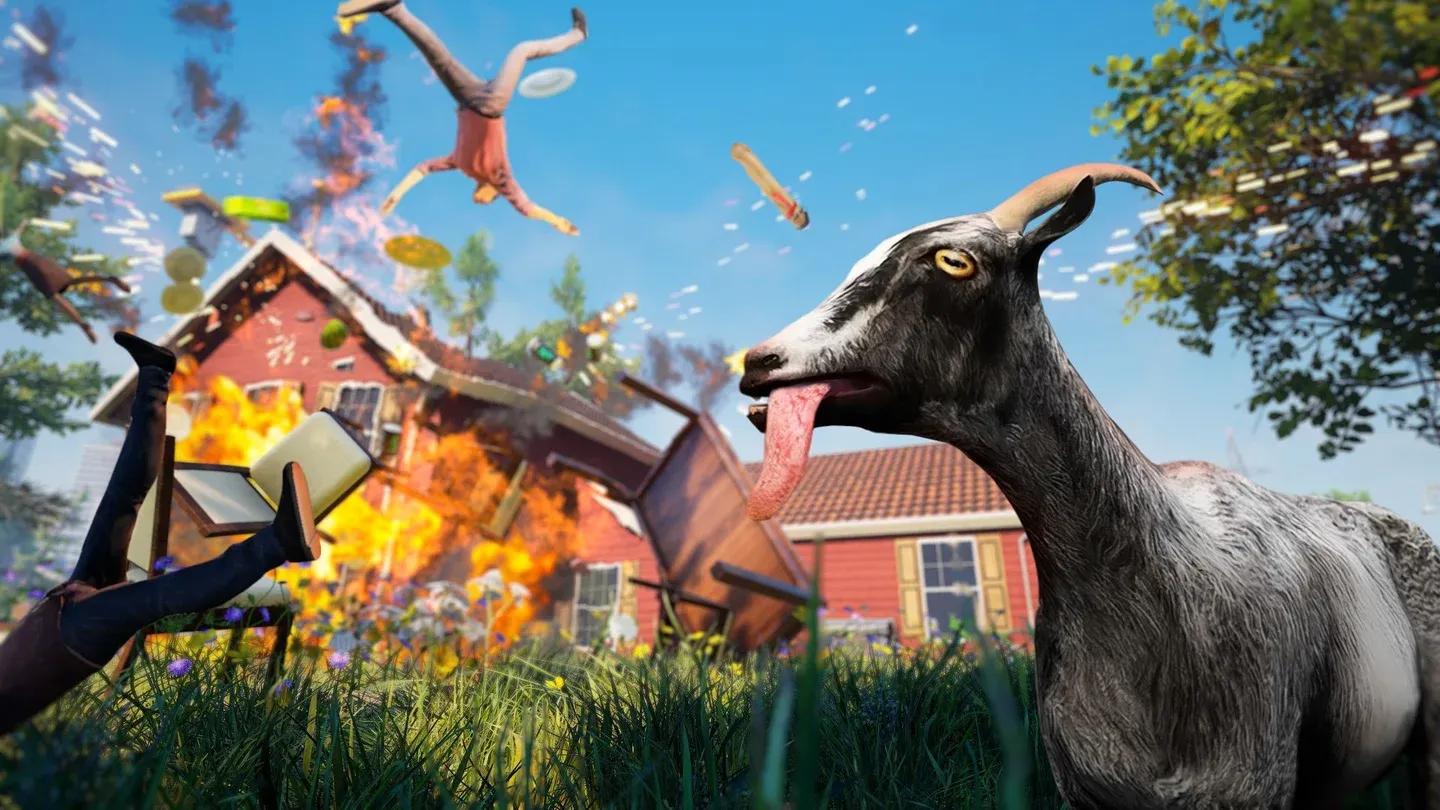
Pilgor lick mechanic in action
What secrets and collectibles are worth hunting?
The game packs in events, collectibles, mini-games, easter eggs, and secrets. There are more of these than you can reasonably find in one playthrough, which means revisiting areas you've already cleared will keep turning up new stuff. Easter eggs especially tend to hide in spots that need specific interactions to trigger, so use your full ability set in every area instead of just passing through.
How does co-op change the experience?
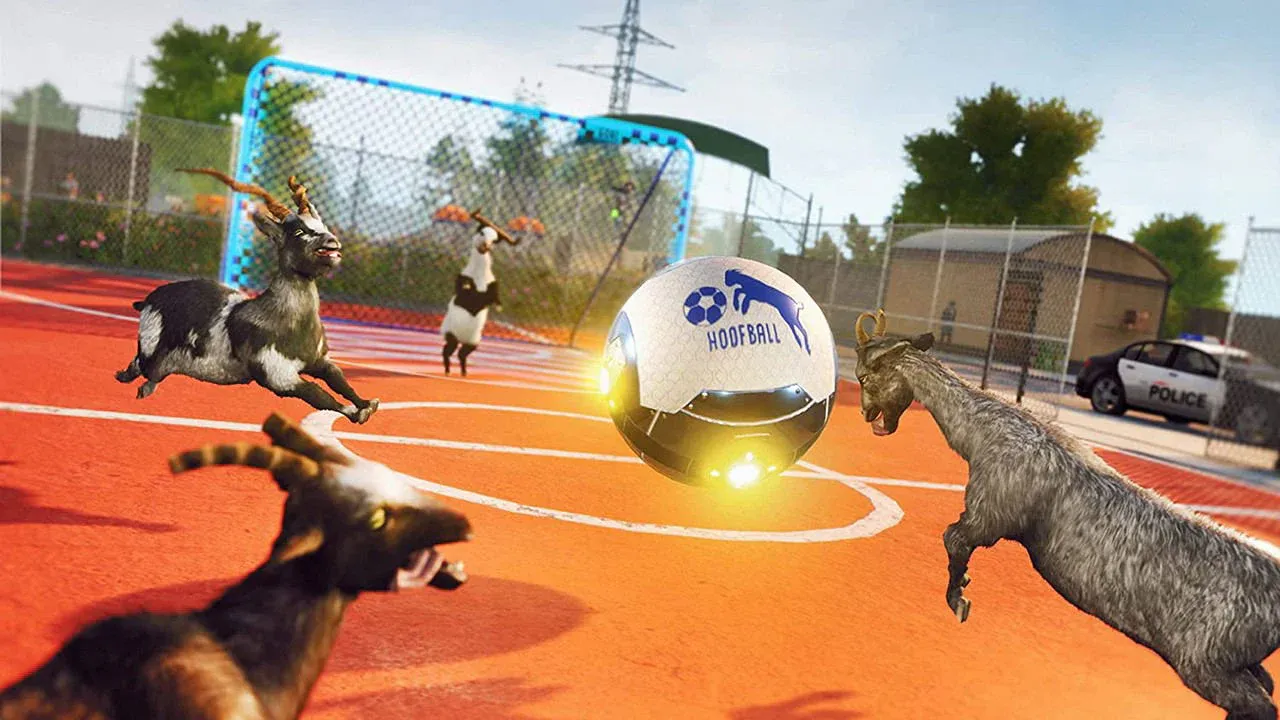
Goat Simulator 3 supports both local co-op and online co-op, letting a second player join as a second goat on San Angora. Co-op opens up the ability to explore as a duo, wreck things together, and compete in mini-games. The competitive mini-game component matters because it gives co-op sessions structure beyond pure sandbox chaos.
The game also has customization options designed to keep both players from wearing the same outfit, which is a small detail but shows the co-op mode was built for actual two-player sessions instead of tacked on.
| Mode | Players | Features |
|---|---|---|
| Solo | 1 | Full open world, quests, secrets, collectibles |
| Local Co-op | 2 | Shared screen exploration, mini-games, carnage |
| Online Co-op | 2 | Same as local co-op, played remotely |
What customization options does Goat Simulator 3 have?
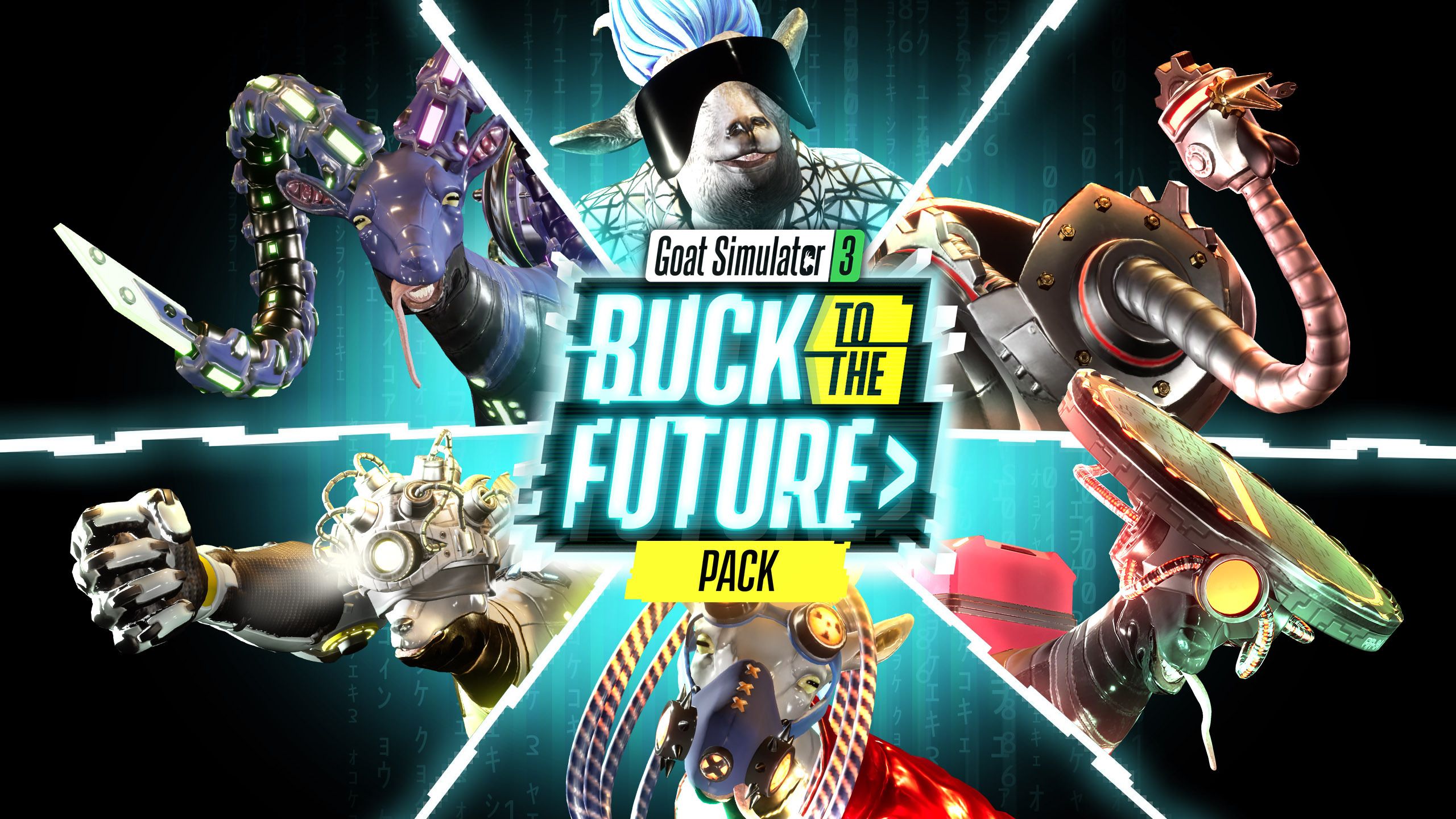
Customization in Goat Simulator 3 goes past cosmetic skins. You can dress Pilgor in a range of items including toilet rolls, tea trays, jetpacks, and firework launchers. Skins include tall goats, stripey goats, and a bunch of other variants.
The key thing to understand is that some of these aren't purely aesthetic. Equipping a jetpack or firework launcher changes how you move through the world, which means customization feeds directly into how you approach exploration and chaos creation.
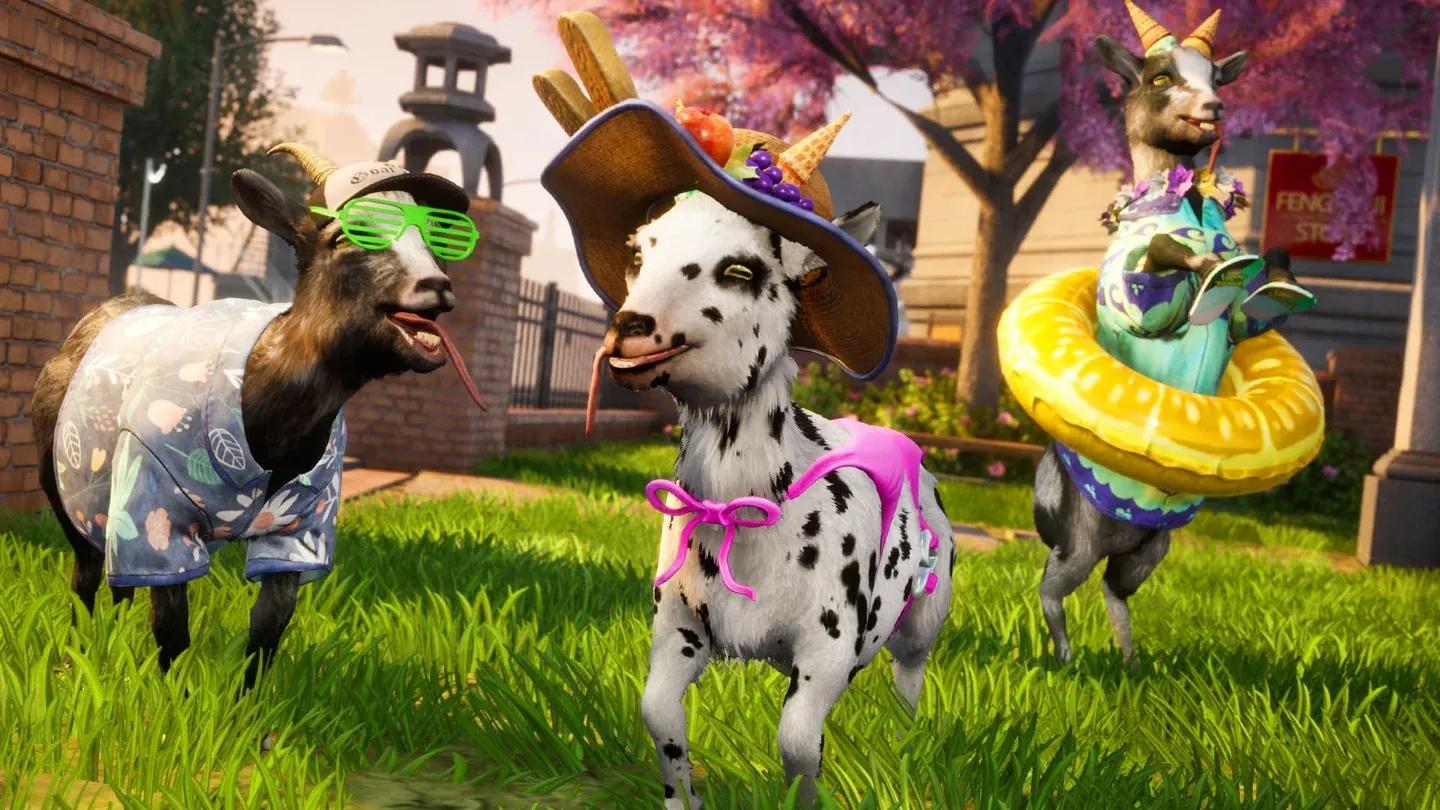
Goat customization options
What content was added after launch?
Goat Simulator 3 launched in November 2022 and picked up seasonal content updates over the years that followed. The Nintendo Switch 2 version, which dropped in April 2026, includes all of this content bundled in. That means players on Switch 2 start with the full post-launch content set instead of needing to download updates or buy additional content separately.
The seasonal additions expanded the already large pool of events, collectibles, and mini-games present at launch. The volume of content added is described as substantial in the game's materials.
Is Goat Simulator 3 worth playing on Nintendo Switch 2?
The Switch 2 version is the most complete release of the game, combining the base experience with years of post-launch content. The co-op modes work in both local and online formats, the customization system has real gameplay implications, and the open world of San Angora is built to reward players who explore thoroughly instead of rushing through quests.
For players who want a sandbox that genuinely doesn't tell you what to do, Goat Simulator 3 delivers exactly that. The lack of hand-holding after the tutorial is intentional. The more time you spend experimenting with the interaction systems, the more the world opens up.
For more guides covering the latest releases across every platform, browse more guides at GAMES.GG and find your next game to master.