
Ore is the only currency that matters in Gothic 1 Remake, and the Colony is designed to keep you short of it. Sword training costs 250 nuggets. A single piece of Miner rags runs over 300. The four hunting skills from Drax total 725 nuggets and 4 Skill Points combined. The game is not going to hand you a pile of ore early, and the economy is deliberately tight by design. The good news is that stacking several modest income streams beats hunting for one big payout that does not exist.
How does ore work in Gothic 1 Remake?
Ore Nuggets are the primary currency of The Colony. Every trainer fee, every weapon purchase, every lockpick, and every map comes out of the same pool. What makes the economy feel brutal is a combination of three hard rules: items do not respawn once looted, enemies do not respawn after being killed, and vendors have limited ore that replenishes slowly. Dumping a stack of wolf fangs at a single merchant will tank the sale price to near zero before you have emptied your inventory. Spread sales across multiple traders, prioritize Fisk for weapons (who pays roughly double what mage or camp vendors offer), and never rely on one source.
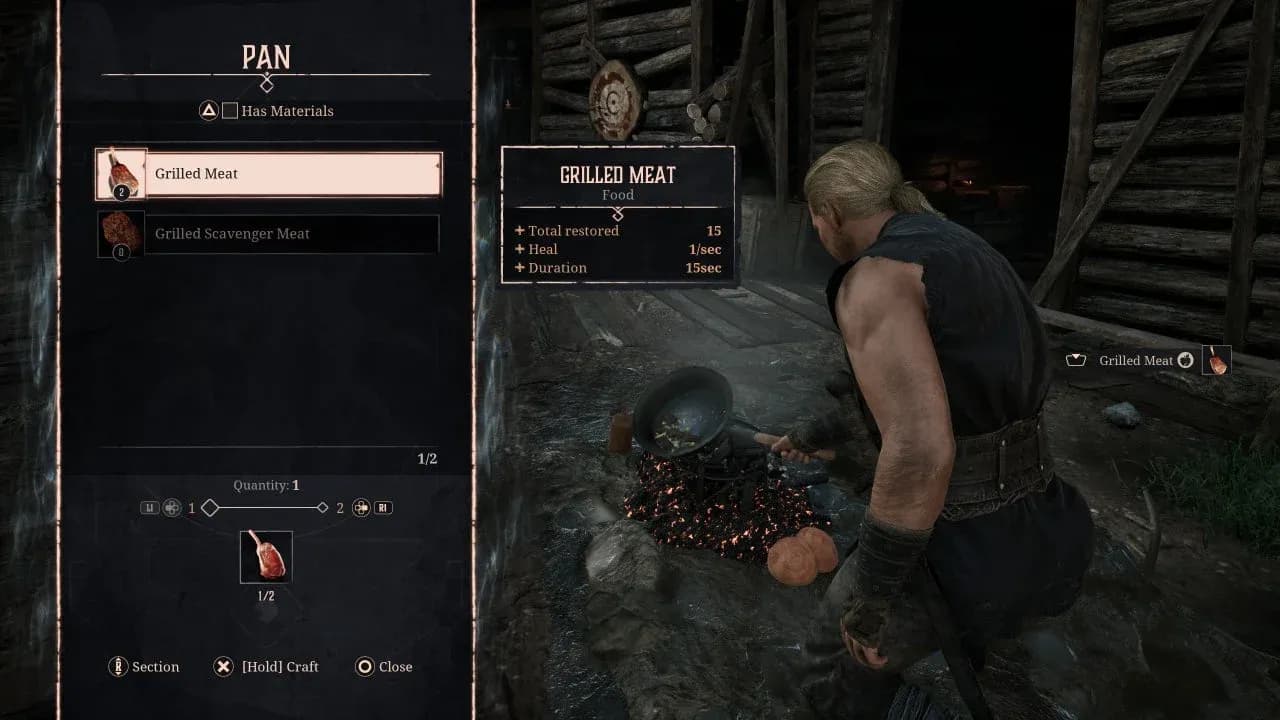
Sell weapons to Fisk first

What are the safest early ore methods?
The fastest ore you can get without risking your health bar comes from items that cannot fight back. Loose food, herbs, mushrooms, tools, cups, spare weapons, and random valuables scattered around The Colony all sell for small amounts, but those amounts add up quickly when you treat every run as a collection sweep. The road from the starting area through to the Old Camp has loose items on it from the very first minutes of the game.
The key discipline here is selling junk rather than holding it. Early inventory tends to fill with items that feel useful but are not immediately needed. Sell the extras to traders like Fisk and use the ore on training or supplies that make the next hour easier.
Completing early camp quests is the other low-risk method. These do not require the Nameless Hero to win dangerous fights and they pay in ore or useful items. Treat the Old Camp as a base of operations: talk to every NPC, loot what is safe to take without getting caught, sell unneeded gear, and only pick fights when the reward justifies the risk.
| Ore Method | Risk Level | Best Timing |
|---|---|---|
| Loot safe items and sell junk | Low | Immediately from game start |
| Cook raw meat before selling | Low | Any time wildlife is being killed |
| Camp quests | Low | First hour after reaching Old Camp |
| Mine ore in the Old Mine | Medium | After safe travel to northwest Colony |
| Hunting skills (Drax) | Medium | After first level-up and 725 nuggets saved |
| Lockpicking chests | Medium | After training with Fingers |
| Loot hostile humans | High | Once combat stats are solid |
Should you cook meat before selling it?
Yes, always. Raw meat from molerats, scavengers, and other wildlife is worth less than cooked meat, and cooking takes almost no time at a campfire. The more important reason to cook is that cooked food replaces potion use between fights. Potions are expensive and should be saved for emergencies during combat. Every fight recovered with cooked food instead of a potion is ore that stays in your pocket.
The practical rule: eat cooked meat when survival is the immediate problem, sell the excess when your food supply is already comfortable. Never sell raw meat when a campfire is nearby.
How to use Drax and hunting skills for more ore
This is where early ore income gets a real multiplier, but the investment is steep enough that timing matters. Drax is located near the Old Camp at the crossroads leading to the North Gate. Give him a Beer to open up conversation about hunting, and he will eventually offer to train hunting techniques.
The four skills and their costs:
- Extract Teeth: 1 Skill Point and 175 nuggets
- Remove Fur: 1 Skill Point and 250 nuggets
- Remove Claws: 1 Skill Point and 150 nuggets
- Skin Reptiles: 1 Skill Point and 150 nuggets
The total comes to 4 Skill Points and 725 nuggets. That is a serious upfront cost. The payoff is that every animal kill from that point forward yields sellable materials: pelts, teeth, claws, and reptile skins. The critical reason to rush these skills is that enemies do not respawn. Corpses you walk past without the right skill are permanently wasted income.
Prioritize Teeth and Fur first since those apply to the widest range of common enemies. Wolves and scavengers are everywhere early, and those kills become profitable instead of just dangerous. Spread the resulting materials across multiple vendors to avoid crashing the sale price.
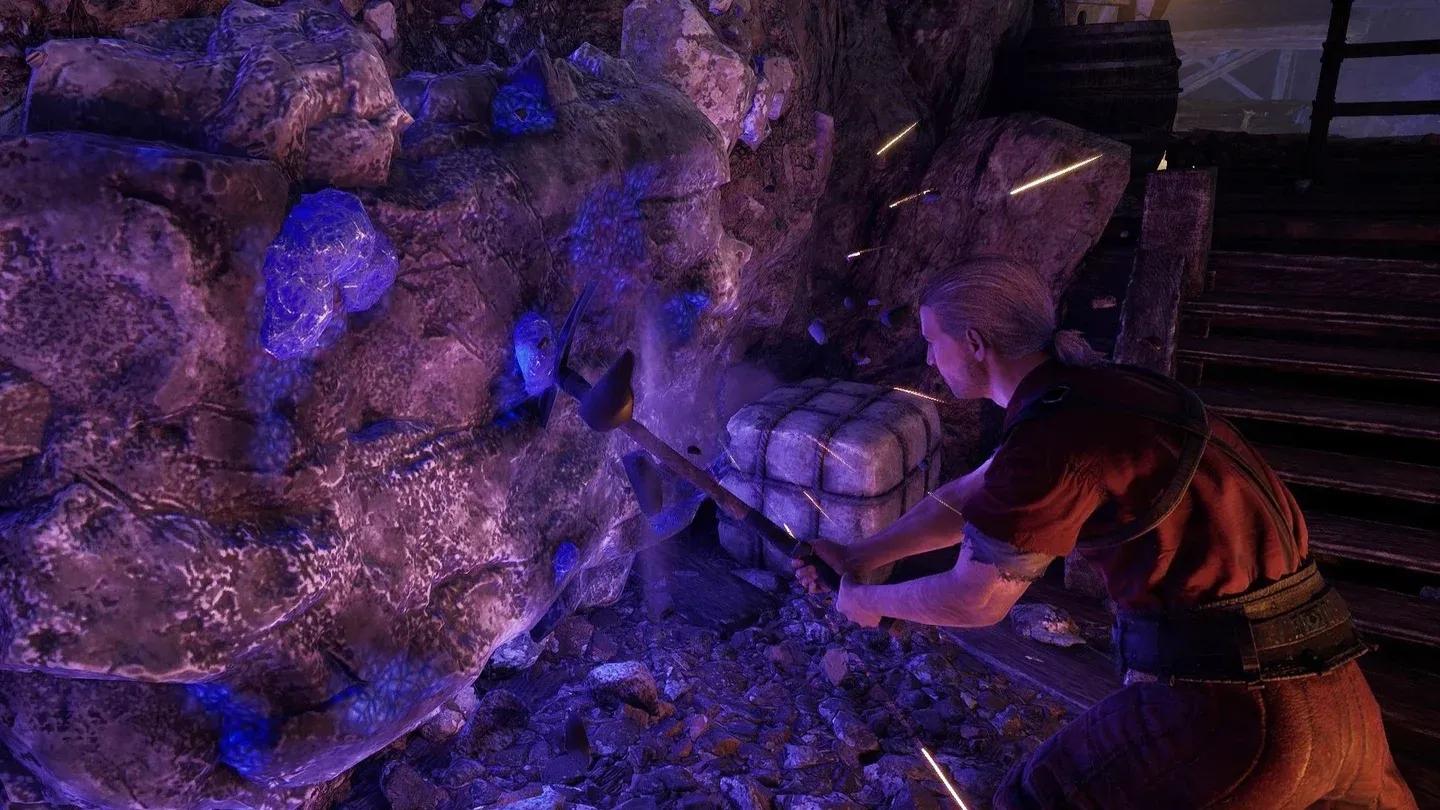
Drax hunting skill costs
How to mine ore in the Old Mine
The Old Mine sits in the northwest part of The Colony. To mine ore, equip a pickaxe and use it on the glowing blue ore nodes inside. This is not a get-rich method, but it is a reliable backup income source that does not depend on combat performance or vendor stock.
Mining works best as a gap-filler: when a skill, weapon, or stack of lockpicks is just out of reach, a mining run can close the difference. Pick up loose ore nuggets from around the miners when possible, and mine what you can safely reach without picking fights you are not ready for.
The practical limitation is travel. Getting to the Old Mine safely requires the Nameless Hero to handle the enemies along the route, so this method becomes more useful once combat has improved past the very early game.
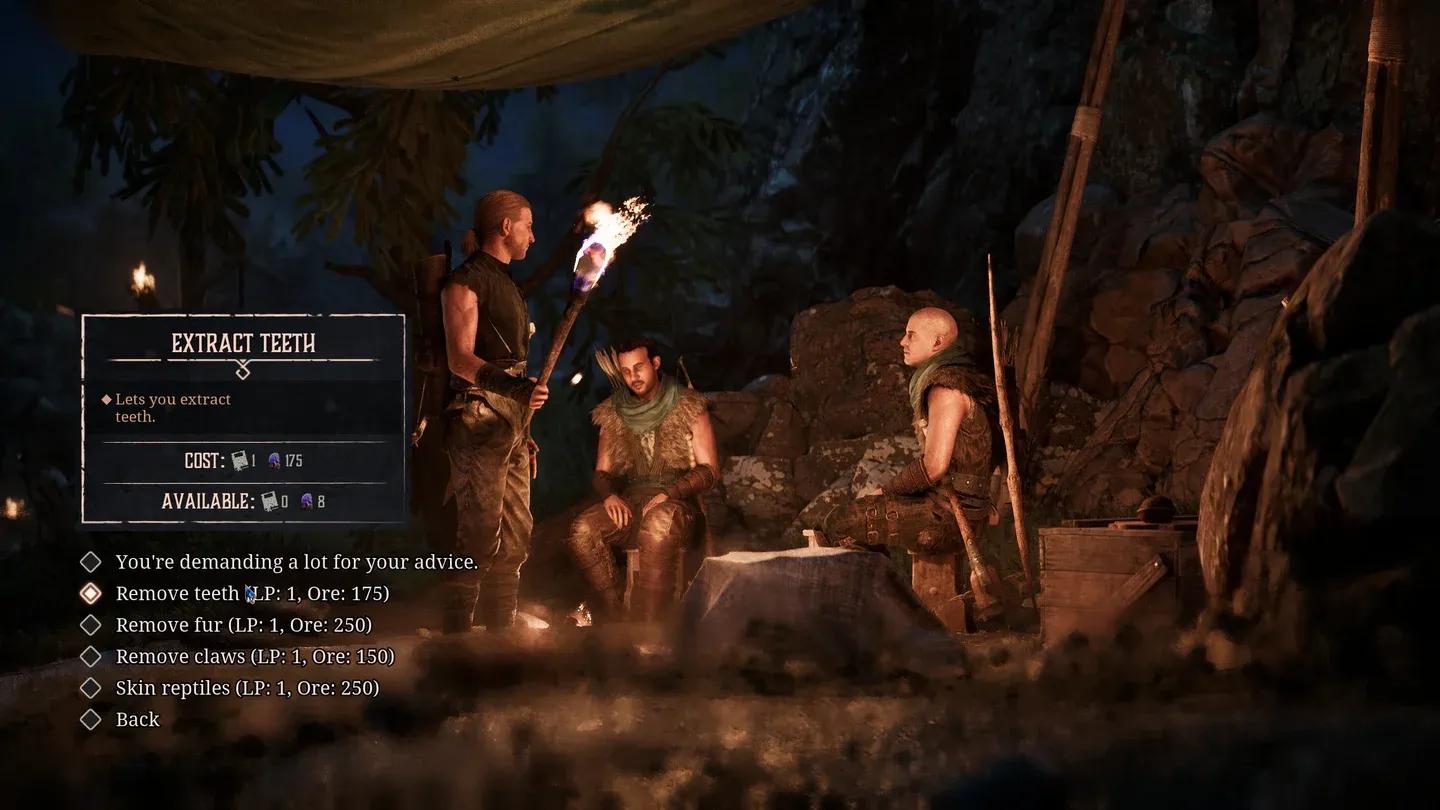
Mine ore nodes in the Old Mine
How does lockpicking help with ore income?
Locked chests throughout The Colony can contain ore, supplies, and sellable items. Fingers in the Old Camp teaches lockpicking for 50 nuggets and 1 Skill Point, and that training matters because untrained lockpicking burns through lockpicks fast. Lockpicks cost ore, so breaking too many turns chest looting into a money sink rather than a money source.
The other variable is visibility. Any NPC who witnesses the Nameless Hero breaking into a chest may turn hostile. Lockpicking is best done when the area is clear. Watch NPC patrol patterns, wait for the right moment, and have enough picks on hand to finish the job cleanly.
For players building toward a more utility-focused run, Fingers also teaches Pickpocket for 50 nuggets and 1 Skill Point. Random NPCs carry items and ore, and a higher Dexterity score improves the success rate of stealing without being caught. Getting caught means a fight, so this is a method for players who have already invested in Dexterity.
What should you spend ore on first?
Training is the best long-term ore investment because Learning Points are useless without a trainer to spend them on. Strength or Dexterity unlocks better weapons. Combat training makes fights less punishing. Hunting skills turn every kill into income. Utility skills like lockpicking open new income routes.
After training, the priority order is:
- Food and recovery items to keep exploration moving without burning potions
- Maps to reduce the risk of wandering into dangerous areas unprepared
- Weapons that match your current attribute requirements (buying a weapon you cannot use yet is wasted ore)
- Lockpicks if chest looting is part of your plan
| Good Early Ore Spending | Why It Matters |
|---|---|
| Combat or utility training | Makes Learning Points actually work |
| Cooked food and recovery | Preserves potions for real emergencies |
| Colony map | Safer travel, fewer expensive mistakes |
| Weapons matching current stats | Immediate combat improvement |
| Lockpicks (after Fingers training) | Opens chest income routes |
The rule that holds up through the whole early game: spend ore only when it makes the next hour of play easier or more profitable. A purchase that does not improve survival, travel, combat, training, or income can wait.
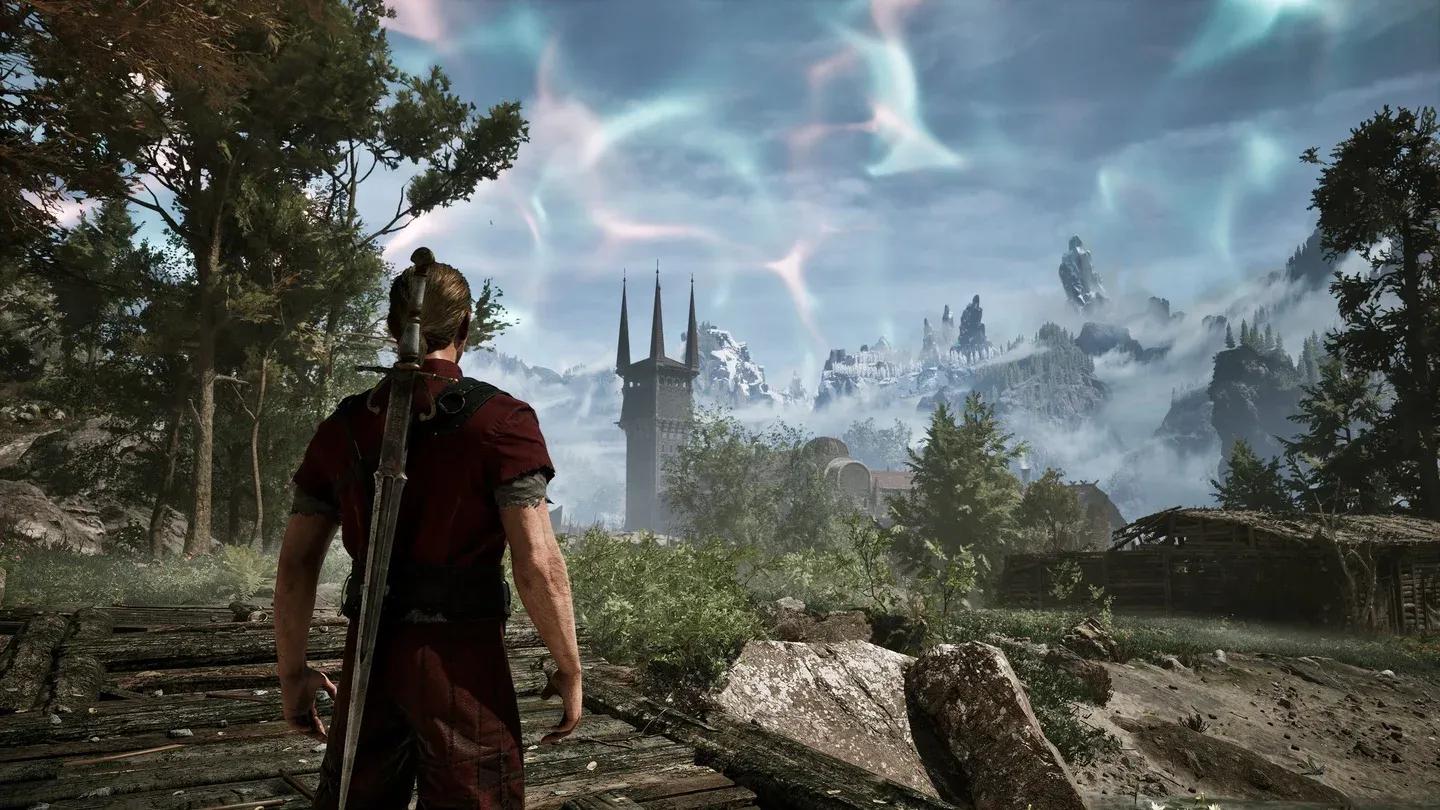
Spend ore on training first
Quick answers: Gothic 1 Remake ore
| Question | Answer |
|---|---|
| What is the fastest safe ore method? | Loot safe items and sell junk before engaging dangerous enemies |
| Do enemies respawn for farming? | No. Enemies and items do not respawn, making early kills permanently valuable |
| Can you mine ore directly? | Yes, use a pickaxe on blue ore nodes in the Old Mine |
| Are hunting skills worth the cost? | Yes, if you are killing wildlife regularly and want materials to sell |
| Is lockpicking profitable? | Yes, after training with Fingers to reduce broken picks |
| Who pays most for weapons? | Fisk pays roughly double compared to mage or camp vendors |
| Should you cook meat before selling? | Always, cooking increases value and saves potions |
Ore management in Gothic 1 Remake is less about finding one big source and more about building a system where multiple small streams keep the Nameless Hero solvent. The Colony's economy is intentionally stingy, vendors deplete fast, and nothing respawns. The players who stay ahead of the curve are the ones treating every kill, every chest, and every vendor conversation as part of a larger resource loop rather than a one-time transaction. For more strategies and guides covering the full game, the Gothic 1 Remake guides collection has everything you need to survive The Colony. Gothic 1 Remake sits alongside the best RPG games for players who want an economy that actually bites back.