
हालिया विश्लेषण इस बात की स्पष्ट तस्वीर पेश करता है कि कैसे डाउनलोड करने योग्य कंटेंट (DLC) सिंगल-प्लेयर गेम रेवेन्यू मॉडल का एक केंद्रीय हिस्सा बन गया है। यह अध्ययन अप्रैल 2020 से मई 2025 तक प्रमुख पश्चिमी बाजारों के परफॉरमेंस ट्रैकिंग डेटा पर आधारित है। यह PC, Xbox, और PlayStation टाइटल्स पर केंद्रित है जो पोस्ट-लॉन्च कंटेंट प्रदान करते हैं, और यह बताता है कि गेम के शुरुआती रिलीज के काफी समय बाद भी प्लेयर स्पेंडिंग पैटर्न कैसे विकसित होते हैं।

कोड TRYHARD33 का उपयोग करें और ऑफर समाप्त होने से पहले इसका लाभ उठाएं।
GAMES+ सब्सक्रिप्शन पर 33% की छूट पाएं
लॉन्च के शुरुआती वर्षों में DLC का बढ़ता महत्व
डेटा दिखाता है कि गेम के पहले वर्ष के दौरान DLC का प्रभाव लगातार बढ़ता है। रेवेन्यू शेयर शुरुआती महीनों में ऊपर जाता है, जो अक्सर छठे और 12वें महीने के आसपास अपने सबसे मजबूत स्तर पर पहुंच जाता है, जिसके बाद यह एक स्थिर रेंज में आ जाता है। पहले वर्ष के अंत तक, जब बेस गेम की खरीदारी को शामिल किया जाता है, तो DLC गेम के कुल रेवेन्यू का लगभग 9 प्रतिशत होता है।
दूसरे वर्ष से आगे, DLC और भी अधिक निरंतर योगदानकर्ता बन जाता है। दूसरे और पांचवें वर्ष के बीच, यह कुल रेवेन्यू के 23 प्रतिशत का औसत शेयर बनाए रखता है। हालांकि माइक्रोट्रांजैक्शंस इकोसिस्टम का हिस्सा बने रहते हैं, लेकिन वे अपडेट या लॉन्च विंडो के आसपास कम उतार-चढ़ाव के साथ अधिक स्मूथ पैटर्न दिखाते हैं। सिंगल-प्लेयर टाइटल्स में कॉस्मेटिक माइक्रोट्रांजैक्शंस, DLC रिलीज की तुलना में अधिक स्थिर लेकिन कम नाटकीय रेवेन्यू ग्रोथ जेनरेट करते हैं।
DLC परफॉरमेंस को प्रभावित करने वाले जॉनर ट्रेंड्स
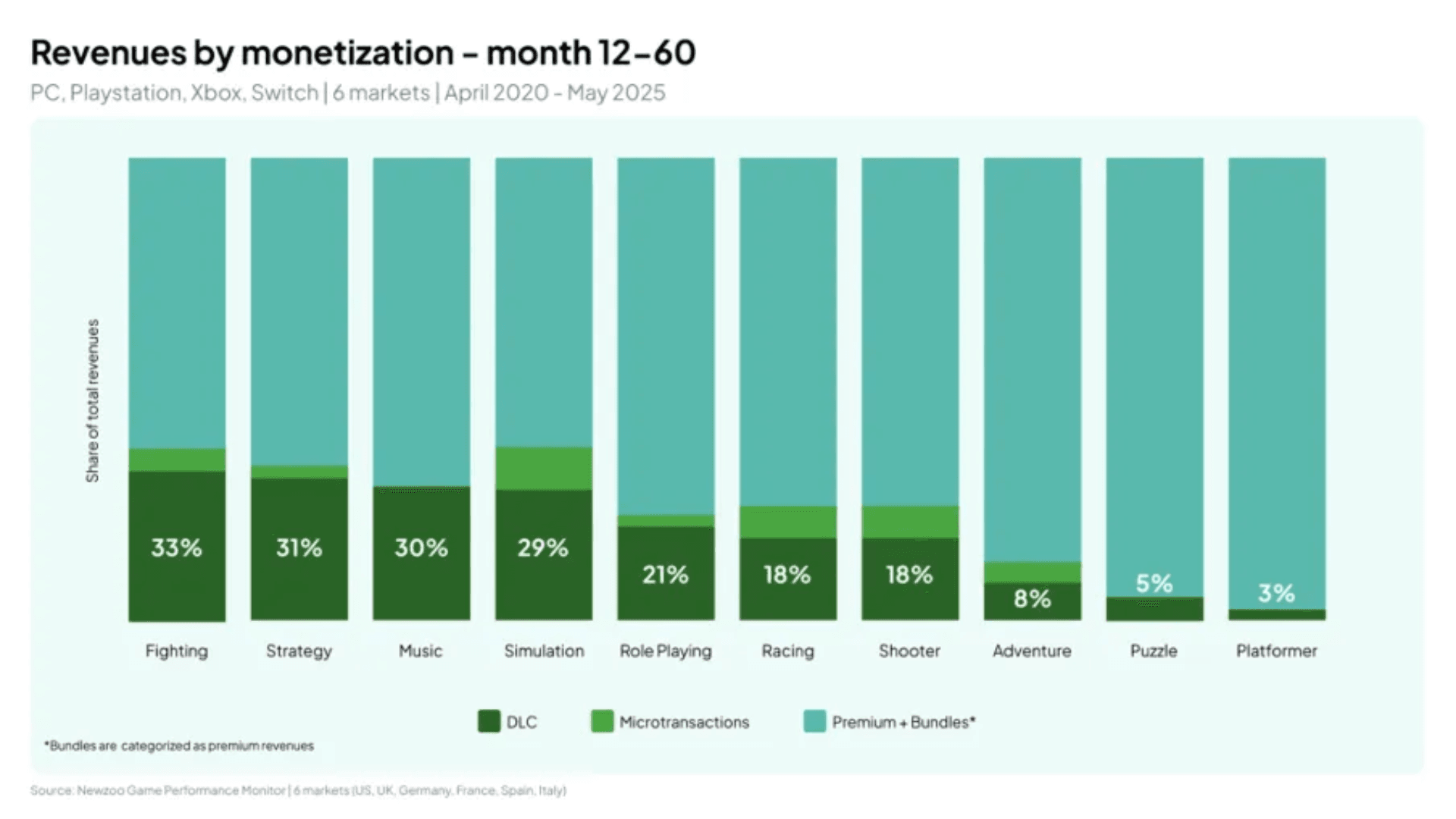
DLC का प्रभाव जॉनर (genre) से काफी प्रभावित होता है। एक बार जब गेम 12 महीने के मार्क तक पहुंच जाते हैं, तो रेवेन्यू डिस्ट्रीब्यूशन इस आधार पर काफी अलग होने लगता है कि प्रत्येक जॉनर कितना एक्सपेंडेबल है। फाइटिंग गेम्स, स्ट्रैटेजी टाइटल्स और म्यूजिक गेम्स DLC पर सबसे अधिक निर्भरता दिखाते हैं, क्योंकि ये जॉनर स्वाभाविक रूप से लंबी अवधि में नए कैरेक्टर्स, सिनेरियो और गानों को सपोर्ट करते हैं। RPGs भी नैरेटिव एक्सपेंशन और निरंतर प्लेयर स्पेंडिंग के बीच एक मजबूत संबंध दिखाते हैं।
ये निष्कर्ष इस विचार का समर्थन करते हैं कि DLC गेम्स को उनके लाइफसाइकिल को बढ़ाने और प्रतिस्पर्धी बाजारों में बने रहने में मदद करता है। The Hunter: Call of the Wild और Planet Zoo जैसे लॉन्ग-रनिंग टाइटल्स लगातार पोस्ट-लॉन्च अपडेट के माध्यम से अपने ऑडियंस को बनाए रखते हैं। फाइटिंग गेम्स में, नए फाइटर पैक्स न केवल सामान्य हैं, बल्कि एक्टिव एंगेजमेंट बनाए रखने के लिए आवश्यक भी हैं।
Hitman: World of Assassination में DLC का लॉन्ग टेल प्रभाव
Hitman 3 से Hitman: World of Assassination में ट्रांजिशन, किसी टाइटल की लॉन्ग-टर्म परफॉरमेंस को आकार देने वाले DLC का सबसे स्पष्ट उदाहरण है। एक एपिसोडिक स्ट्रक्चर के साथ शुरुआत करने के बाद, गेम एक व्यापक कंटेंट मॉडल की ओर शिफ्ट हो गया जिसमें Sarajevo Six जैसे नैरेटिव एडिशन्स, Freelancer और Elusive Target Arcade जैसे नए मोड्स, और Jean-Claude Van Damme, Conor McGregor, और Eminem जैसी हस्तियों के साथ कॉस्मेटिक कोलैबोरेशन्स शामिल हैं।
गेम के लिए DLC रेवेन्यू चार वर्षों में प्रति माह $150,000 से $1.4 million के बीच रहा। उस अवधि के दौरान, DLC ने कुल रेवेन्यू का लगभग 21 प्रतिशत प्रतिनिधित्व किया। जैसे-जैसे समय के साथ ओवरऑल रेवेन्यू कर्व धीमा हुआ, DLC का शेयर बढ़ गया, जो नए प्लेयर्स के आने की गति धीमी होने के बावजूद गेम की कमाई की क्षमता को बनाए रखने में इसकी भूमिका का संकेत देता है।
सब्सक्रिप्शन सर्विसेज और प्लेटफॉर्म प्रमोशन्स ने भी DLC परफॉरमेंस को प्रभावित किया। जब सितंबर 2021 में Hitman 2, PlayStation Plus पर आया, तो व्यापक फ्रैंचाइज़ी के लिए DLC रेवेन्यू लगभग दोगुना हो गया। जनवरी 2022 में Xbox Game Pass पर ट्रिलॉजी के लॉन्च की घोषणा के कारण उससे पिछले महीने DLC खरीदारी में भारी वृद्धि हुई, जिसका कारण संभवतः मौजूदा प्लेयर्स की ओर से फिर से जगी रुचि थी। बेस गेम पर भारी छूट के बावजूद—कभी-कभी 90 प्रतिशत तक—प्रति पेइंग प्लेयर औसत लाइफटाइम वैल्यू $28.7 तक पहुंच गई।
सभी DLC सीधे रेवेन्यू जेनरेट करने के लिए नहीं बनाए जाते हैं। कुछ अपडेट प्लेयर्स को फिर से जोड़ने, कम्युनिटी एक्टिविटी को मजबूत करने, या चल रही लाइव ऑपरेशंस रणनीतियों का समर्थन करने के लिए मौजूद होते हैं। सीजनल कंटेंट और मोड अपडेट अक्सर तत्काल वित्तीय रिटर्न की तुलना में रिटेंशन में अधिक योगदान देते हैं।
सिंगल-प्लेयर मोनेटाइजेशन में बड़ा बदलाव
कुल मिलाकर, ये निष्कर्ष इस बात को दर्शाते हैं कि सिंगल-प्लेयर गेम्स लॉन्च के बाद कैसे विकसित होते हैं। DLC अब बाजार में गेम की उपस्थिति को बढ़ाने में एक स्ट्रक्चरल भूमिका निभाता है, यह तय करता है कि पब्लिशर्स पोस्ट-लॉन्च प्लान कैसे बनाते हैं, और यह प्रभावित करता है कि प्लेयर्स लॉन्ग-टर्म कंटेंट के साथ कैसे इंटरैक्ट करते हैं। जैसे-जैसे लाइव ऑप्स टूल्स और web3-ड्रिवेन सिस्टम्स पूरे इंडस्ट्री में विस्तार कर रहे हैं, अधिक डेवलपर्स से उम्मीद की जाती है कि वे प्लेयर रिटेंशन और अनुमानित रेवेन्यू स्ट्रीम दोनों का समर्थन करने के लिए विभिन्न प्रकार के निरंतर कंटेंट को इंटीग्रेट करेंगे।
स्रोत: Newzoo
अक्सर पूछे जाने वाले प्रश्न (FAQs)
सिंगल-प्लेयर गेम्स के लिए DLC आमतौर पर कितना रेवेन्यू जेनरेट करता है?
डेटा दिखाता है कि DLC पहले वर्ष में कुल रेवेन्यू का लगभग 9 प्रतिशत प्रतिनिधित्व करता है और दूसरे से पांचवें वर्ष के बीच औसतन 23 प्रतिशत रहता है।
कौन से जॉनर DLC पर सबसे अधिक निर्भर हैं?
फाइटिंग गेम्स, स्ट्रैटेजी टाइटल्स और म्यूजिक गेम्स सबसे अधिक DLC रेवेन्यू शेयर दिखाते हैं, क्योंकि ये जॉनर स्वाभाविक रूप से बार-बार कंटेंट एडिशन्स को सपोर्ट करते हैं।
क्या सिंगल-प्लेयर गेम्स में माइक्रोट्रांजैक्शंस की बड़ी भूमिका होती है?
वे रेवेन्यू में योगदान करते हैं लेकिन DLC की तुलना में स्मूथ पैटर्न का पालन करते हैं, जो विशिष्ट रिलीज अवधि के आसपास कम तीव्र वृद्धि दिखाते हैं।
DLC ने Hitman: World of Assassination की परफॉरमेंस को कैसे प्रभावित किया?
गेम ने DLC से प्रति माह $150,000 और $1.4 million के बीच जेनरेट किया, जो चार वर्षों में कुल रेवेन्यू का लगभग 21 प्रतिशत था।
क्या Game Pass जैसी प्लेटफॉर्म सर्विसेज DLC सेल्स को बढ़ाती हैं?
हां। डेटा दिखाता है कि PlayStation Plus और Game Pass जैसी सर्विसेज में एडिशन्स मौजूदा प्लेयर्स के बीच रुचि को फिर से जगाकर DLC रेवेन्यू को काफी बढ़ा सकते हैं।
क्या सभी DLC का उद्देश्य सीधा रेवेन्यू ड्राइव करना होता है?
हमेशा नहीं। कुछ DLC मुख्य रूप से सीजनल कंटेंट, नए मोड्स, या क्वालिटी-ऑफ-लाइफ अपडेट के माध्यम से प्लेयर्स को वापस लाने के लिए मौजूद होते हैं, जो तत्काल बिक्री के बजाय लॉन्ग-टर्म एंगेजमेंट का समर्थन करते हैं।