


House Flipper Remastered Collection has a dirty secret: the game does not care how good your renovation looks. It cares whether you hit specific item-based checkboxes that the buyer algorithm is scanning for. Spend four hours installing premium marble countertops in a starter shack and you will walk away with a profit margin that barely covers paint costs. Understand the underlying system, and you can flip properties for hundreds of thousands per session. This guide breaks down exactly how the economy works, from early job strategy through late-game buyer targeting.
Why jobs come before house purchases
The single biggest early-game mistake is buying a property before you have the skills to renovate it efficiently. Every email commission on your laptop is a paid tutorial that also generates skill points across cleaning, painting, mounting, and handyman trees. Skipping those jobs to jump straight into flipping means you are spending twice as long on every task and bleeding money on paint consumption alone.
The Higher Payment perk in the Handyman tree deserves immediate attention. It increases email commission payouts by up to 50%, making those jobs significantly more lucrative than they appear at face value. Late-stage commissions pay upward of $20,000 for roughly 20 minutes of work. That is clean capital with zero renovation risk attached.
Build your liquid reserve to around $100,000 before touching your first property purchase. By that point you should have Penetrating Vision unlocked (it shows dirt as black spots on the minimap, cutting room cleaning time by roughly 40%) and enough painting perks that you are not burning through supplies at an embarrassing rate.
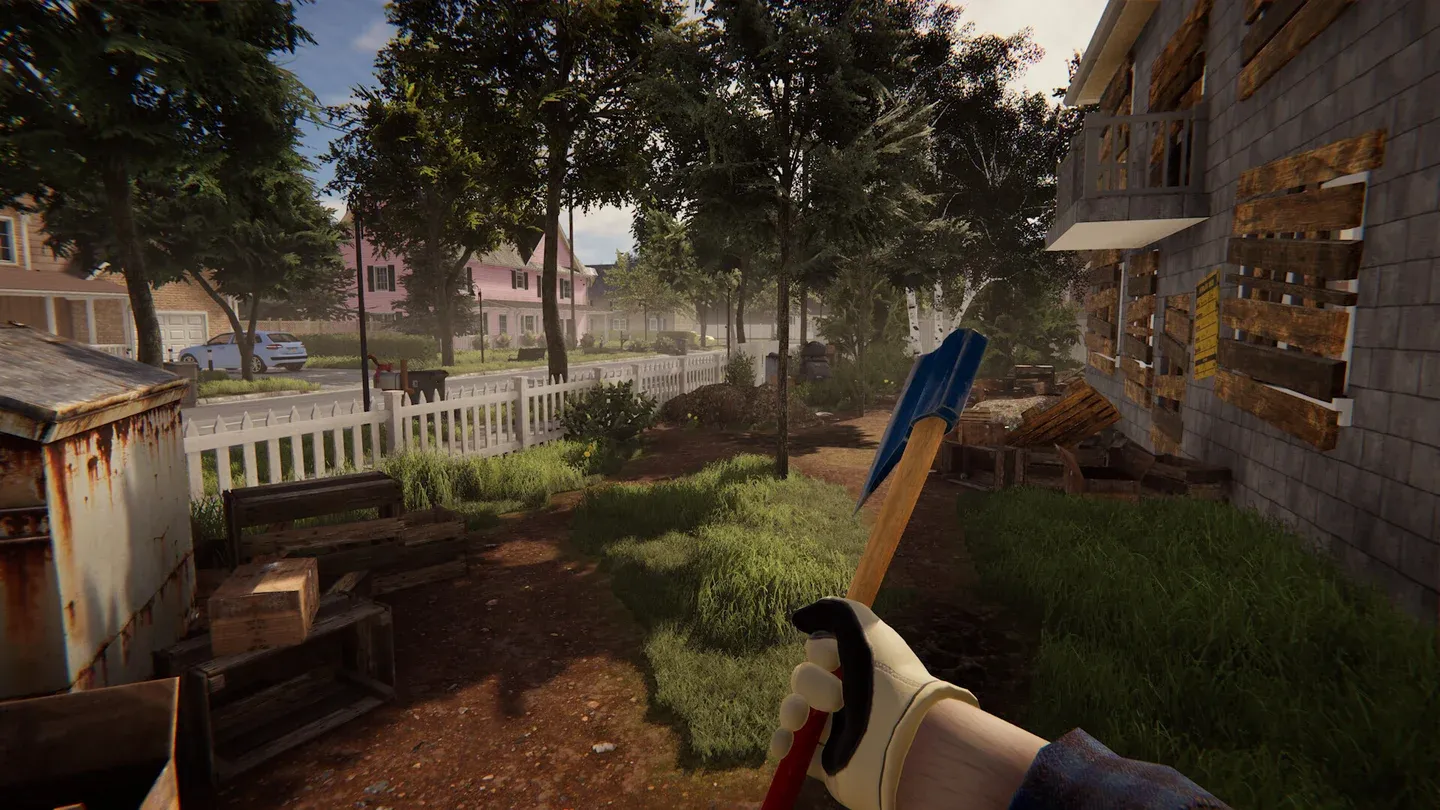
Laptop jobs fund early skill trees
Early skill priority table
What does the auction engine actually measure?
The game calculates a property's final value using four inputs: the base value of the land and structure, the cumulative value of placed furniture, the cleanliness state of every room, and a hidden satisfaction multiplier tied to the winning buyer's specific checklist. That last variable is where most players leave serious money on the table.
Buyers are not dynamic AI. They are state machines checking for specific item triggers. A bedroom requires a bed. A bathroom requires a toilet and a sink. The game does not distinguish between a $50 bed and a $1,200 luxury bed when it comes to room classification. Both satisfy the bedroom tag equally. The difference in purchase price only matters when your target buyer has a high-budget multiplier for that room type.
This means your renovation budget should always match the property tier, not your aesthetic preferences.
Property tier spending rules
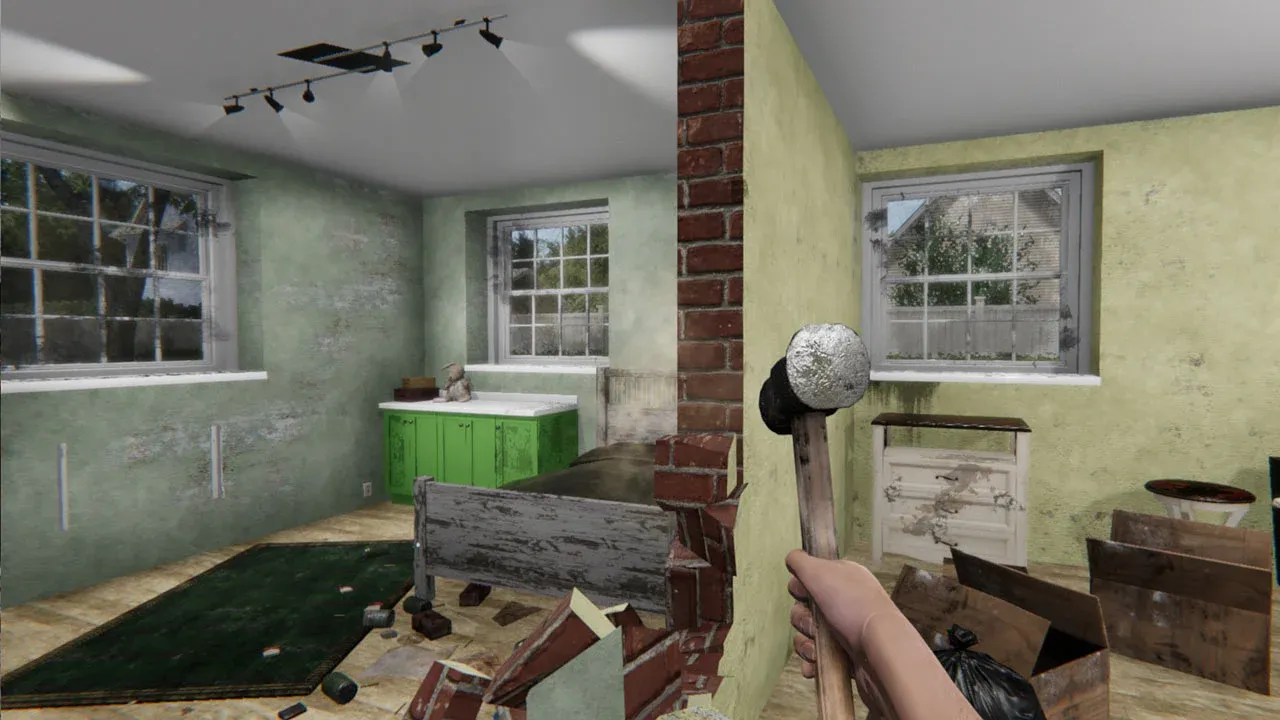
Room tags control buyer scoring
How to target specific buyers for maximum ROI
The most profitable late-game strategy is deciding which buyer you are renovating for before you pick up a single trash bag. Different buyers have radically different triggers, and matching your renovation to one target buyer's checklist produces far better results than designing for a generic audience.
Dolan Trusk responds to large open office spaces loaded with expensive modern furniture. Demolish interior walls to create one oversized room, designate it as an office with a desk, monitor, and chair, then fill it with high-value art and leather sofas. His budget multiplier for offices is high enough that the cumulative item value inflates the house price exponentially with relatively little structural work.
Gorgio Shanua wants 2 or more bathrooms and dedicated wardrobe space. Hit 100% satisfaction on his checklist and the negotiation slider becomes nearly automatic, allowing a 15-18% price increase on top of the final bid. On a $300,000 property, that negotiation alone adds $45,000.
The Smirk Family rewards bedroom quantity over quality. Multiple small bedrooms, each with a cheap bed, force their bidding algorithm upward. A large property subdivided into many sleeping spaces can produce strong returns with minimal per-room investment.
Buyer targeting overview
Why the four core rooms are non-negotiable
Every property needs a living room, kitchen, bathroom, and bedroom to reach baseline value. Missing even one tanks the auction price significantly. The good news is that the game's room classification is lenient. A bathroom only needs a toilet and a sink. A living room and kitchenette can share the same open space and the game counts both tags as satisfied.
If you buy a large empty property, your first task is always partitioning it into those four zones using the cheapest wall solution available. Upper half walls work fine for subdividing oversized rooms without destroying the floor plan. Extra bedrooms squeezed into attics or basements increase appeal for family buyers without requiring significant renovation investment.
The sauna is the most cost-effective room in the game
For the investment required, nothing beats a sauna. The room only needs a sauna heater and corner benches to register as a dedicated sauna space, and it triggers strong bidding responses from elder buyers and wealthy family profiles.
The faster method skips building a dedicated room entirely. A standalone shower and sauna combo unit purchased directly from the store can be dropped into an existing bathroom. The moment it is placed, the game flags the property as having a sauna and the value spikes. Converting a hallway or oversized bathroom into a sauna takes under two minutes and reliably adds $20,000 to $40,000 to the final auction price.
How does the garden contest multiplier work?
The Garden Competition is the single most powerful legitimate mechanic in the game, and most players ignore it entirely. A 5-star garden rating applies up to a 50% flat multiplier to the total sale price after all other calculations. On a $500,000 luxury property, that is a $250,000 bonus for planting the right vegetation and mowing the grass.
The system does not reward artistic garden design. It counts the total monetary value of vegetation and layout density. Plant high-value trees and conifers, ensure 100% of the grass is mowed, and submit before listing. If your first submission scores poorly, a cooldown applies. Wait 10 minutes, adjust the layout, and resubmit under a different category (English garden, American yard, or modern layout). A perfect score in any category triggers the full multiplier.
Skipping the garden on a luxury flip is the equivalent of leaving hundreds of thousands of dollars sitting on the lawn.
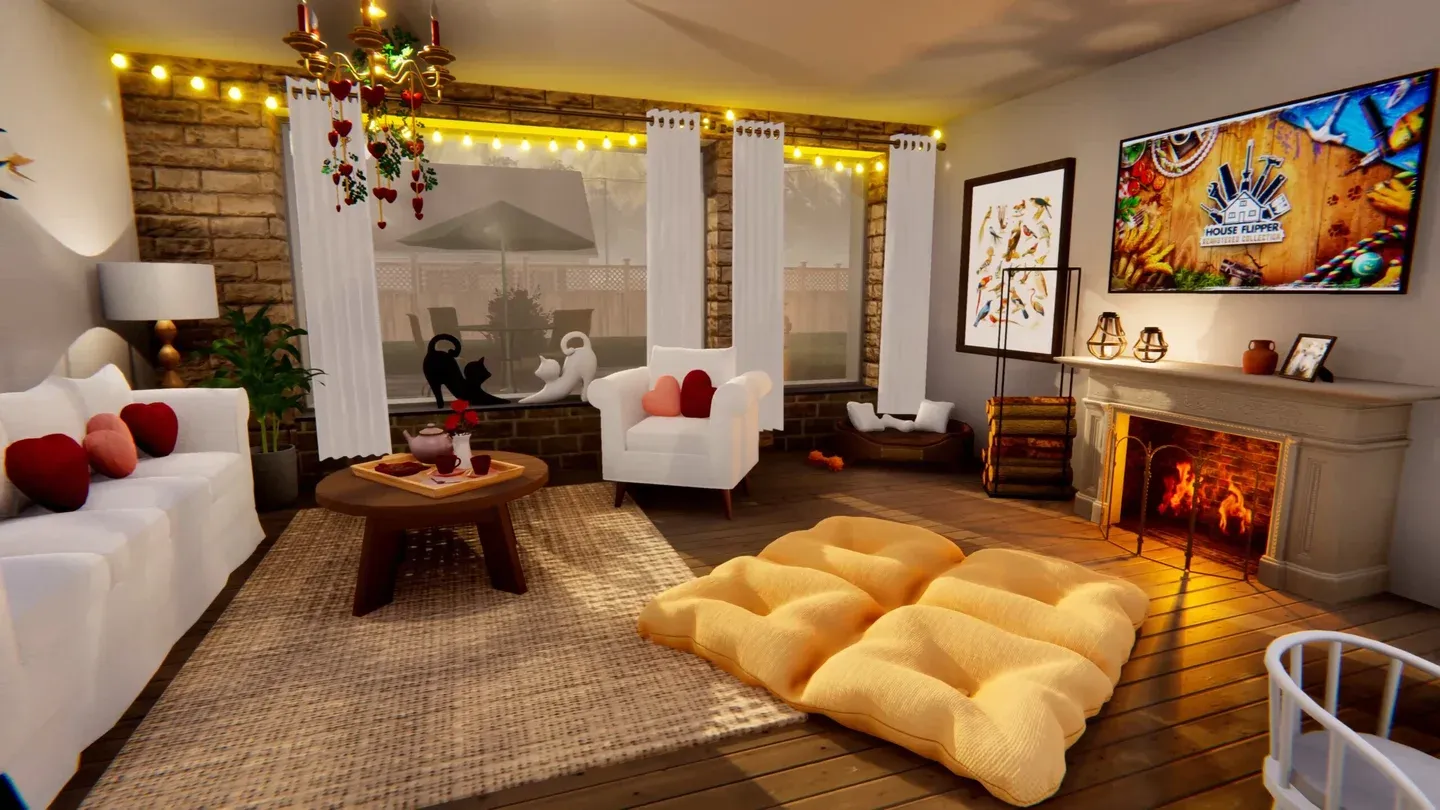
Garden score multiplies final sale price
Cleanliness is not optional
A house at 99% clean suffers a meaningful penalty at auction compared to one at 100%. Dirt hitboxes hide behind radiators, clip into window frames, and blend into dark flooring. The minimap dirt overlay from Penetrating Vision is non-negotiable for efficient cleaning, but you still need a systematic room-by-room approach.
Clean ceiling to floor, moving clockwise through each room. Never leave a room until its individual room UI confirms 100% clean. A single overlooked smudge in a 10-room mansion will cut into your final payout and waste all the optimization work done on the furniture layout.
For exterior cleaning, skip hand-pulling weeds. The lawnmower shreds weeds instantly and leaves a clean, high-value lawn behind in a fraction of the time.
What is the fastest property to flip for profit?
In the mid-to-late game, time efficiency matters more than raw profit per flip. Spending four hours on a massive mansion for $100,000 is mathematically weaker than completing three smaller flips in the same window for $50,000 each, unless you optimize the larger property aggressively.
The most reliable high-ROI loop uses properties like the Hacker Loft (targeting Chang Choi or Dolan Trusk, estimated $250,000+ profit) or The House that is Hiding Something (Dolan Trusk, estimated $140,000+). Clean immediately using the fully upgraded cleaning perk, paint every room white (the cheapest option, and the game's valuation engine does not reward expensive tile over paint in standard bedrooms), drop high-value art and a sauna, complete a 5-star garden, and list.
High-ROI property overview
For more strategies across all content regions and DLC areas, the House Flipper Remastered Collection guides collection covers the full progression route from starter properties through Heart Valley.
Negotiation timing and the 20% ceiling
Maxing the Negotiation skill tree unlocks the ability to push the auction slider for a higher final price. The success rate is not random. It is weighted by how completely you satisfied the winning buyer's checklist. A buyer at 100% satisfaction allows the negotiation to succeed at a near 95% rate, pushing the price up to 15-18% above the base bid. On a $300,000 sale, that is a free $45,000 to $54,000 for understanding the math and building to the right checklist.
Never negotiate when a buyer's satisfaction is below 100%. The failure rate climbs sharply and a failed negotiation can cost you the optimal bid entirely.
Common mistakes that kill your margins
Most money problems in House Flipper Remastered Collection trace back to a handful of repeated errors:
- Buying luxury furniture for starter homes
- Ignoring the garden before listing
- Leaving rooms at 99% clean
- Purchasing fixtures one at a time instead of bulk-queuing in the tablet
- Renovating without a target buyer in mind
- Selling expensive items that came with the property before checking if a buyer profile requires them
Sell off surplus fixtures when you first enter a property. Extra radiators, redundant plumbing, and excess windows are free money if no buyer profile demands them. Liquidate immediately and redirect that cash toward items that actually trigger high-value buyer responses.
If you enjoy renovation-style games and want to explore other titles in the shooter games genre or beyond, the GAMES.GG library covers a wide range of experiences worth your time. For everything specific to this game, check out THE HOUSE OF THE DEAD 2: Remake as a completely different kind of property destruction experience.