


House Flipper Remastered Collection looks simple from the outside: buy a wreck, fix it up, sell it for profit. Spend a few hours with it and you'll realize the gap between players who scrape by and those pulling in $90,000+ per flip comes down to a handful of systems most people never bother to learn. Developed by Frozen Way and released on June 4, 2026, THE HOUSE OF THE DEAD 2: Remake sits in a completely different genre, but if you enjoy action-packed shooter games, this renovation sim offers a satisfying contrast with its methodical, high-reward gameplay loop. This guide covers everything from your first email job to negotiating six-figure sales on premium properties.
What is House Flipper Remastered Collection?
House Flipper Remastered Collection is a first-person renovation and investment simulation developed by Frozen Way. You play as a one-person crew: cleaning, demolishing, rebuilding, decorating, and selling properties for profit. The remastered version adds improved visuals, full voice acting, a reimagined narrative with new characters, and bundles every major expansion into a single package.
Paid DLC packs include Garden Flipper, Luxury Flipper, HGTV Flipper, Pets DLC, Dine Out DLC, and Farm DLC. Free packs like Cyberpunk Flipper and Apocalypse Flipper round out the content. As of launch, the game sits at Mixed reviews on Steam (66% positive from 398 reviews), with critics scoring it between 8/10 and 9/10.
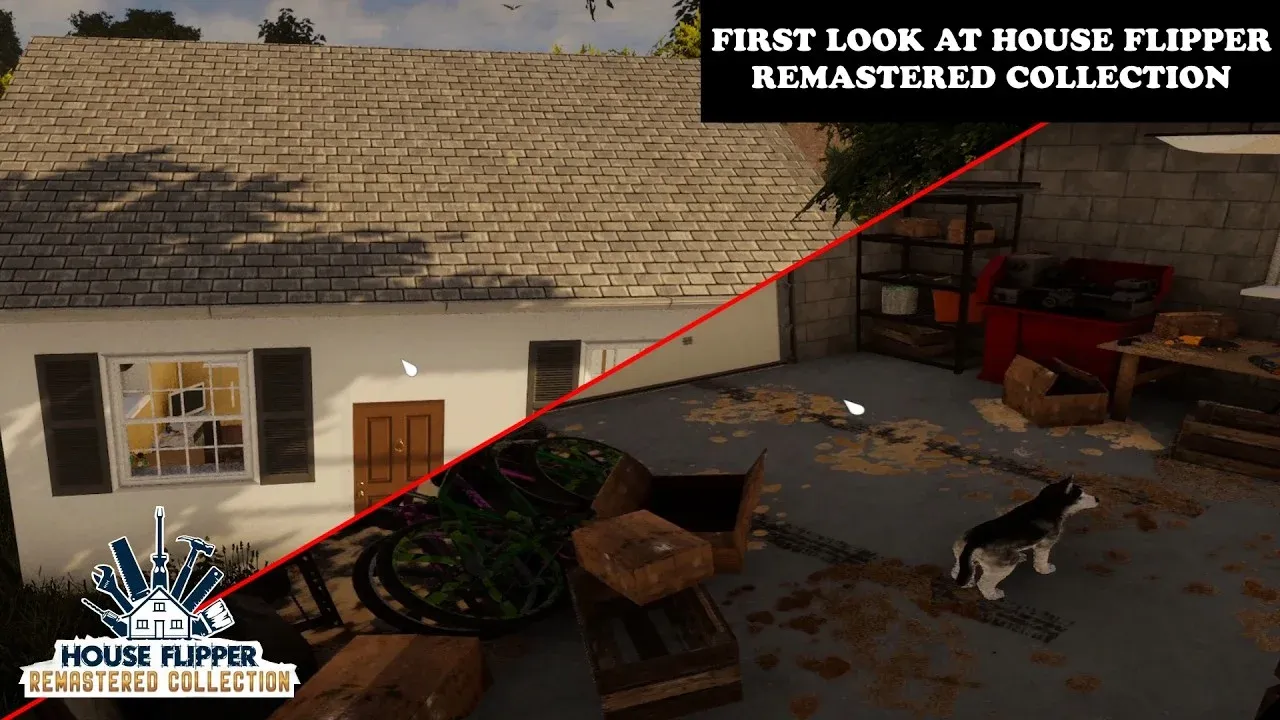
Choosing your next flip
How do you make money early in the game?
The early game is entirely about email jobs. These aren't optional busywork: they're the fastest way to unlock tools, earn XP, and build the mechanical fluency you need before touching a real property.
A few things most players miss about the job system:
- Jobs never disappear after completion. Finished jobs move to a completed folder and can be replayed, which matters for 100% completion runs.
- Your tablet is smarter than it looks. Tapping any objective that requires a specific tool or item jumps you directly to that item's page in the catalog, skipping manual browsing entirely.
- You don't need to read every email before heading to the job site. All objectives appear on the tablet once you arrive.
The money split is straightforward: early game income comes from jobs, late game income comes from house sales. One well-executed flip on a high-value property beats many small jobs combined.
What tools do you get and when?
Tools unlock gradually rather than all at once. Knowing what each tool does and when it becomes available prevents confusion mid-renovation.
Which perks should you unlock first?
Skill upgrades are the single biggest quality-of-life improvement in the game. Ignoring them early is one of the most common beginner mistakes.
Prioritize in this order:
- Money-earning perks first. Faster progression means access to better properties sooner.
- Cleaning speed upgrades second. Cleaning is the most time-consuming part of every flip, and a perk that shows dirt locations on the mini-map alone saves enormous amounts of time.
- Handyman skill improvements third. Installing sinks, radiators, outlets, and appliances goes from tedious to fast.
- Paint efficiency perk as soon as it's available. Without it, the roller keeps applying paint past full coverage, wasting material. With it, painting stops automatically at 100%.
- Tile efficiency upgrades later. Placing multiple tiles simultaneously turns one of the slowest tasks into one of the fastest.
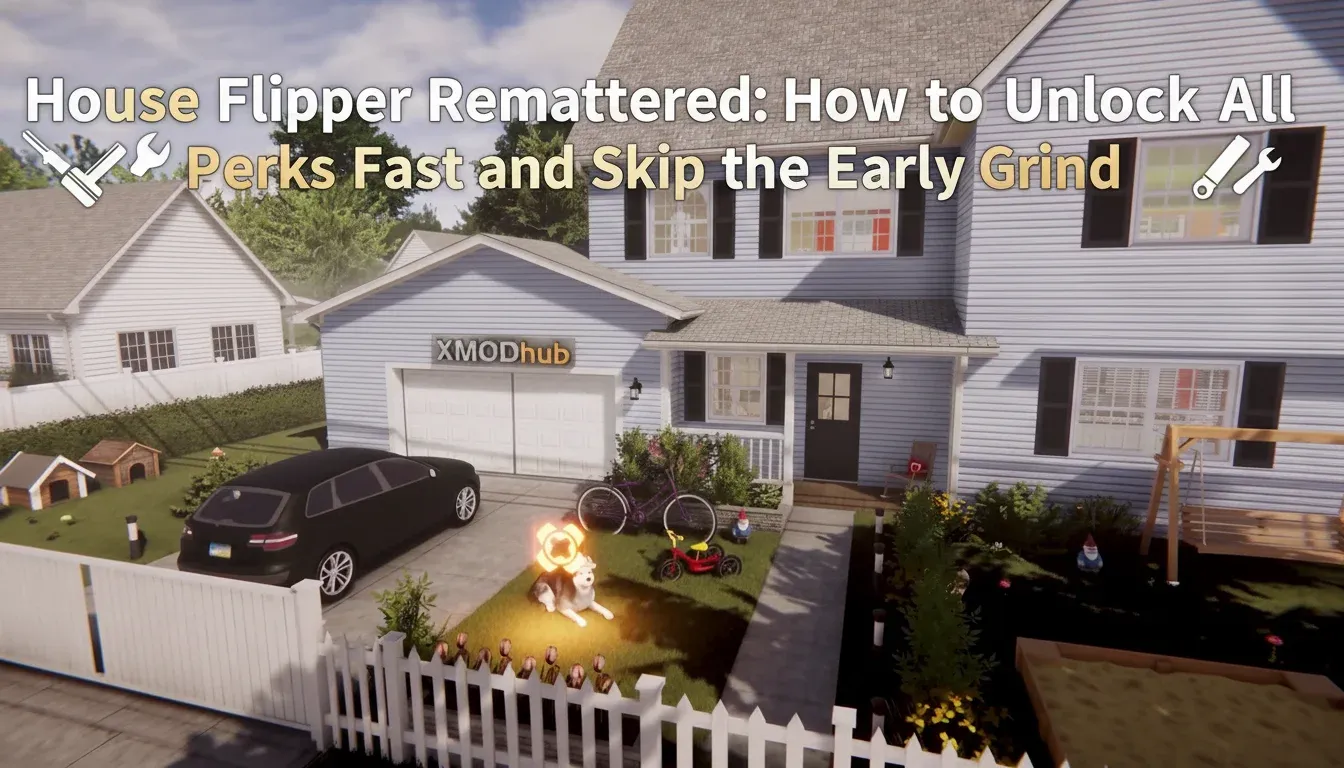
Spend skill points early
What is the most efficient renovation workflow?
Order matters more than speed. Doing things out of sequence means cleaning around furniture you installed too early, or painting walls you'll need to demolish.
The workflow that consistently produces clean results:
- Remove all garbage first
- Sell everything you don't plan to keep
- Clean all dirt, stains, and windows
- Demolish or build walls
- Fix plastering
- Paint, tile, and lay flooring
- Install fixtures and appliances last
This sequence ensures nothing you install blocks access to surfaces that still need work.
Cleaning secrets most players miss
Reaching 100% cleanliness on a room that looks spotless is one of the game's most frustrating moments. Hidden dirt is almost always the culprit.
Common hiding spots:
- Behind plants and radiators
- On door frames and window niches
- Under furniture
- On exterior walls near the roofline
The mini-map is your primary tool here. With the right perk unlocked, dirt appears as markers on the map. The mop also cleans based on cursor targeting, not physical contact, so placing the targeting cursor precisely over the dirt spot is what triggers the clean. Dragging the mop near dirt without accurate cursor placement does nothing.
Windows are the most commonly forgotten surface during final cleanup passes. Always check them last.
How do room labels affect sale price?
This is the mechanic that separates players who make decent money from those who make great money. The game uses room logic: a space only counts as a bedroom, bathroom, office, or kitchen if it contains the specific items that define that room type.
A cheap bedroom with a real bed contributes more to sale price than an expensive, beautifully decorated room the game doesn't recognize as anything.
What raises house sale price the most?
Sale price is driven by a combination of factors. Expensive furniture alone doesn't guarantee profit.
Cleanliness comes first. Dirty houses drag down buyer interest regardless of how good the furnishings look. Functional room labels come second. Buyer-targeted renovation comes third: picking one buyer profile before spending money and building the house around their preferences produces a stronger top offer than trying to please everyone.
The Oceanside Villa sale example illustrates this well. Furniture purchased for the flip totaled just $3,170.47. The house sold to Dolan Trusk for $433,290.37, producing $92,154.41 in profit against an original purchase price of $339,247.09. Controlled spending, not expensive decoration, drove that result.
Buyer offers after renovation
Confirmed buyer feedback from the Oceanside Villa sale
Dolan Trusk won despite having a minor complaint. You don't need to satisfy every preference. You need the target buyer to like the house more than anyone else does.
How do you use negotiation correctly?
Negotiation is a multiplier on a strong sale, not a rescue tool for a weak one. Use it only when these conditions are met:
- The top buyer's offer is clearly ahead of the next highest bid
- The buyer's complaints are minor, not fundamental problems
- The house value is high enough that a larger increase matters
- Basic cleaning and room functionality are complete
For the Negotiator achievement specifically, use a high-value property and push buyer satisfaction as high as possible before negotiating. Attempting it on a small starter house rarely produces a meaningful result.
Hidden rooms and secret treasures
Some properties contain rooms built inside walls. These hidden spaces hold high-value items, and a single painting found this way can be worth more than $10,000. One specific property features a secret room behind a basement wall containing artwork valued at over $40,000 on its own.
When buying a new property, study the floor plan for dead space or areas that don't connect to any accessible room. If the layout doesn't add up, use the sledgehammer. The economics of an entire renovation can shift based on one discovery.
How do garden contests work?
The Garden Flipper DLC adds a competition system that can increase property value by over 30%. Garden categories include American, Modern, English, Japanese, and Crop. American and Japanese gardens are the most efficient to build.
The process: clean the yard, remove weeds, trim grass, plant flowers, place category-specific items, add lighting, then submit. A well-executed garden contest entry adds thousands to the final sale price.
Common beginner mistakes to avoid
- Installing appliances before cleaning, then discovering dirt hidden behind them
- Selling leftover paint or tiles too early, then needing them again mid-renovation
- Ignoring perks entirely or saving skill points for later
- Forgetting windows, exterior surfaces, and hidden dirt during final cleanup
- Decorating without a buyer target, which produces random furniture costs and a weaker top offer
- Negotiating on a house where the buyer's lead is marginal or their complaints are still about core problems
- Assuming expensive furniture automatically increases profit
Mini-map dirt and device markers
Increasing property value beyond the basics
Once functional rooms are covered, several additions push sale prices higher:
- Extra bedrooms: any room with recognized sleeping furniture counts
- Additional bathrooms: each complete bathroom set adds value
- Storage areas: bookshelves, shelving units, filing cabinets, and garage storage all contribute
- Decoration items: a few carpets, plants, pictures, and sculptures are enough
- Sauna rooms: either a full sauna with benches or a shower-sauna system works, but confirm room recognition in Remastered before building a strategy around it
- Gym spaces: an exercise machine and wall bars satisfy the requirement
- Indoor pools: add substantial value when the property has space for one
For more strategies and walkthroughs across every property type, the House Flipper Remastered Collection strategy guides cover specific flips in detail.