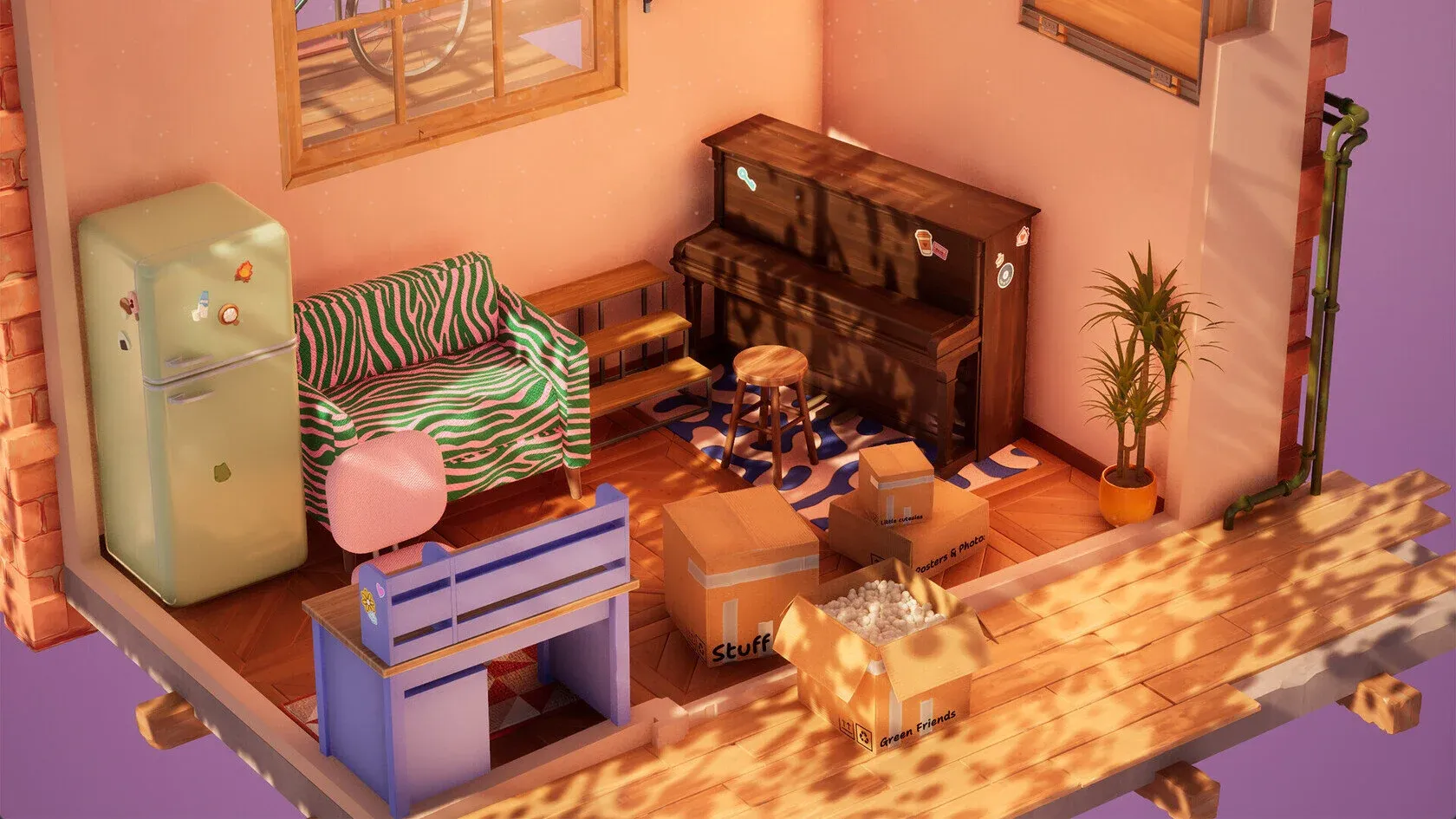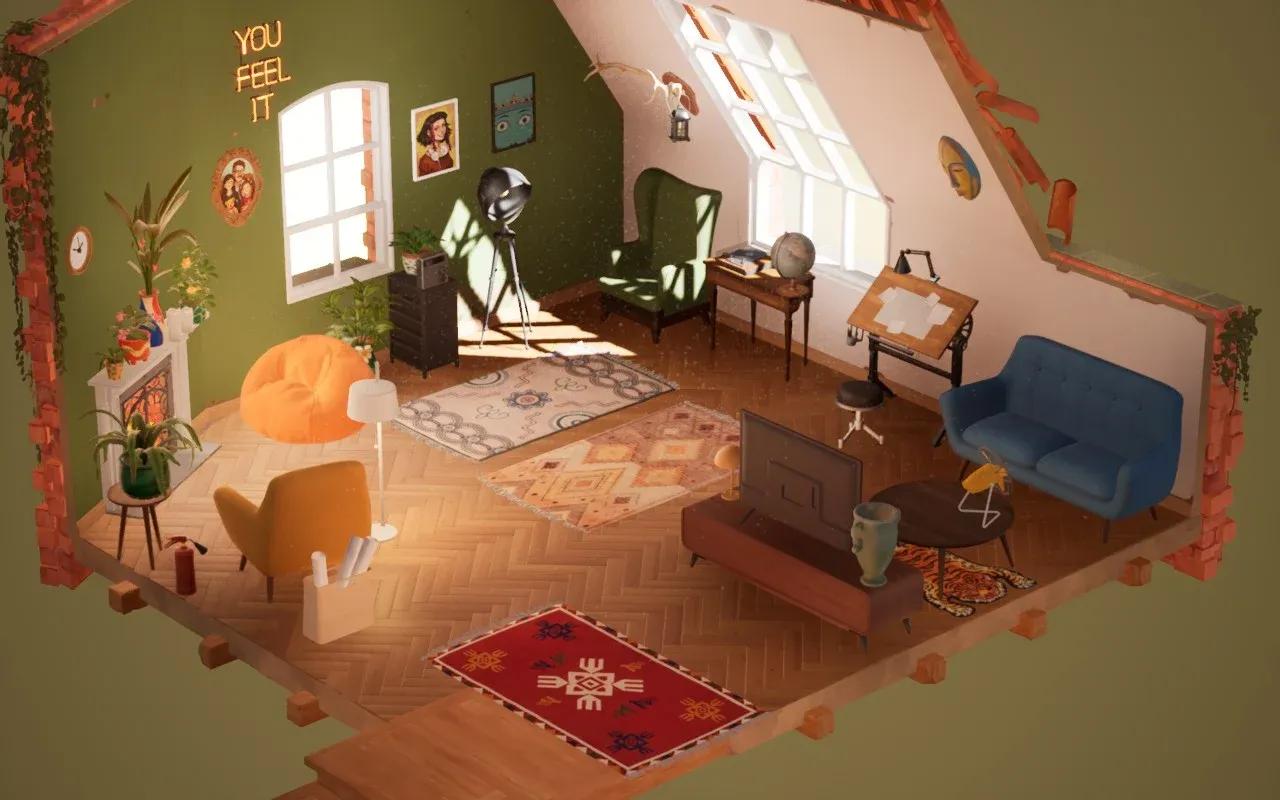

Hozy is one of those rare games where the loop itself is the reward. You walk into a dusty, cluttered room, scrub it clean, slap some paint on the walls, unpack boxes of furniture, and slowly watch a chaotic space transform into something that genuinely feels like a home. There are 9 main levels, no combat, no timers, and no pressure beyond your own aesthetic standards. That said, a few mechanics can trip up new players, and some rooms are significantly harder to balance than others. This guide covers everything from system requirements and controls to advanced decorating strategies and the levels most likely to leave you staring at the screen wondering what went wrong.
What do you need to run Hozy?
Before anything else, check your specs. The game's cartoonish art style is deceptive; it still handles interactive physics and high-quality textures across every room. Here are the minimum and recommended requirements:
| Requirement | Minimum | Recommended |
|---|---|---|
| OS | Windows 10 (64-bit) | Windows 11 (64-bit) |
| Processor | Intel Core i3-6100 / AMD Ryzen 3 1200 | Intel Core i5-8400 / AMD Ryzen 5 2600 |
| Memory | 8 GB RAM | 16 GB RAM |
| Graphics | NVIDIA GTX 760 / AMD Radeon R7 260x | NVIDIA GTX 1060 / AMD Radeon RX 580 |
| Storage | 5 GB available | 10 GB (SSD recommended) |
Running below the recommended spec won't break the game, but stutters during the cleaning phase kill the ASMR atmosphere that makes Hozy worth playing.
Check specs before you start

How does the core gameplay loop work?
Every room in Hozy follows the same four-phase structure. Skipping ahead or rushing through any phase tends to create problems later, so understanding the order matters.
Phase 1: Cleaning
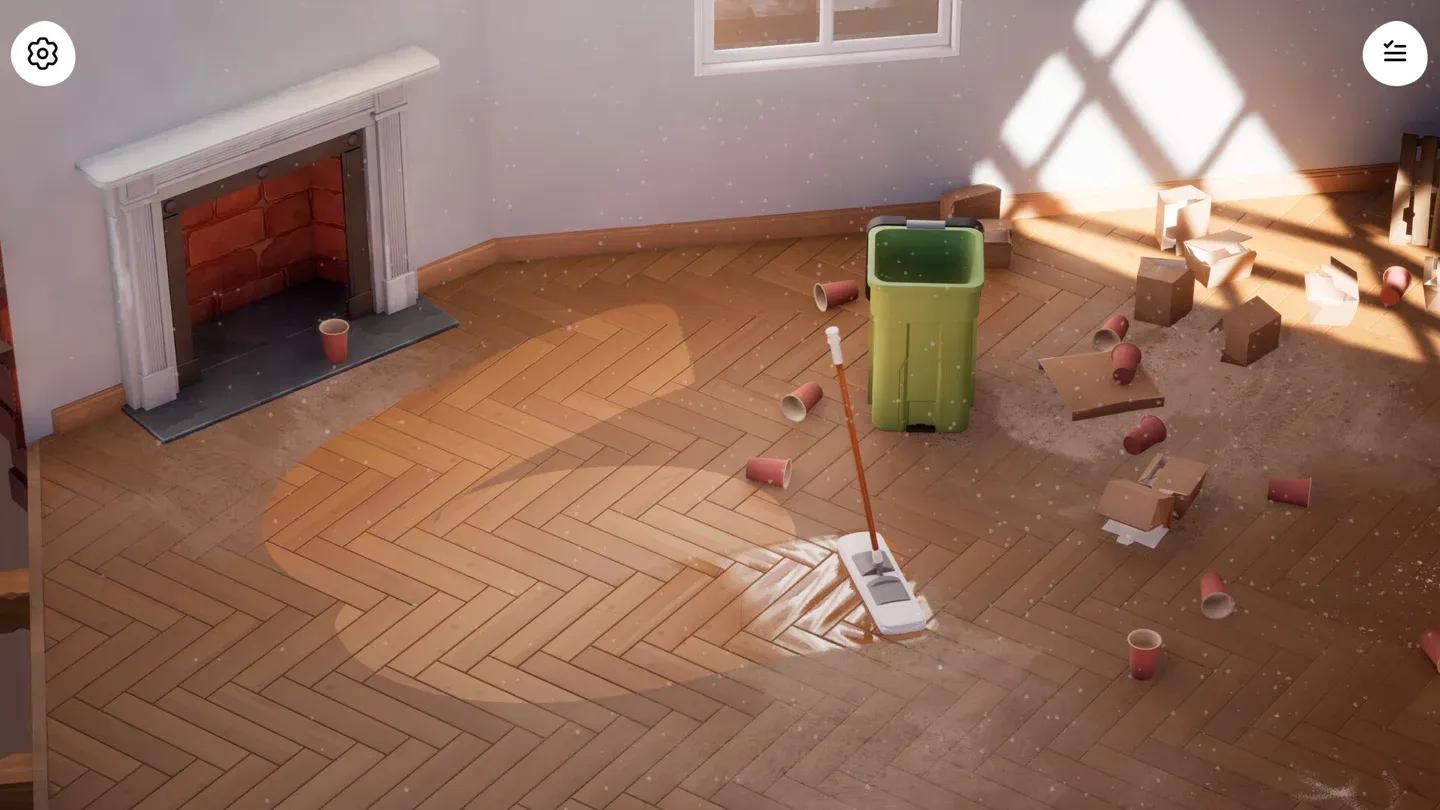
Cleaning is the foundation. You cannot place furniture effectively in a room still covered in dust and grime. The four main cleaning tasks are trash collection, window scrubbing, floor mopping, and wall preparation. Pay attention to audio cues here: a high-pitched squeak means a surface has hit 100% clean, and the mop sound changes noticeably once the thickest dust layers are gone.
One practical trick: move the bin closer to your work area rather than walking across the room repeatedly. Your character has a limited carrying capacity, and the extra steps add up fast.
Phase 2: Painting and wallpaper
Once the room is clean, you choose your color scheme. Paint goes on wet and dries to a different finish, so colors will look slightly different once the sheen fades. For rooms with fireplaces, warm tones like terracotta and soft oranges work well with the ambient glow. In smaller apartments, lighter shades make the space read as larger.
The paintbrush and roller will glide right over pictures and posters already on the walls without affecting them. You never have to strip the walls bare to repaint.
Phase 3: Unpacking boxes
Boxes are labeled with their contents: lights, huge things, tech, flowers, wall items, and a catch-all "Other" category. Open the Huge boxes first. Huge items are typically sofas, refrigerators, and large shelving units. Get these placed before opening smaller boxes, because small trinkets from the Other category tend to get lost in the visual noise if the big furniture isn't anchored yet.
Phase 4: Arranging and detailing
This is where the room actually comes together. Small items like candles, plants, and desk objects go on last, after the major furniture zones are established.
| Phase | Primary Actions | Goal |
|---|---|---|
| Cleaning | Trash collection, window scrubbing, mopping | Clear the workspace completely |
| Renovation | Painting walls, choosing wallpaper | Set the base aesthetic |
| Installation | Unpacking and placing Huge furniture | Establish functional zones |
| Detailing | Plants, candles, small decor | Add personality and finish the vibe |
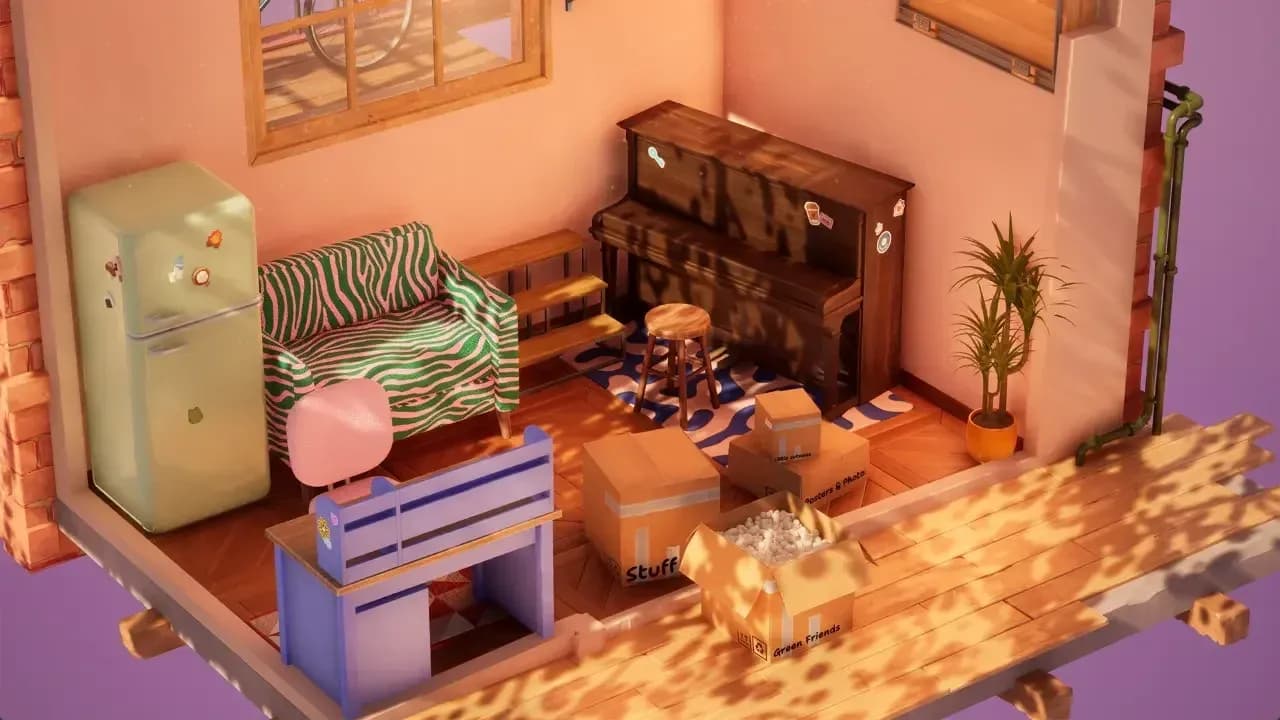
Open Huge boxes first
What's the best way to handle the checklist?
Every level has a task list, and it's worth reading before you touch anything. Completed tasks pop up in the top-right corner. If a task isn't checking off despite your best efforts, the culprit is almost always an incomplete cleaning step. Go back over the right-side window, check for a specific drawer that needs closing, or run the mop over a corner you missed. The game requires 100% completion of the cleaning phase before it registers furniture placement as finished.
How do you make a room feel balanced instead of cluttered?
This is where most players hit a wall, and it's the reason certain levels have dramatically lower completion rates than others. The Dreams and Cafe levels sit at roughly 10-12% completion, compared to much higher rates for early rooms. The problem isn't mechanical complexity; it's visual logic.
Here are the strategies that actually work:
- Define zones with rugs. A plush rug in front of a fireplace creates a reading zone. A smaller patterned rug under a desk marks a work zone. Rugs are the fastest way to give a room structure.
- Use vertical space. Walls and shelves are not decoration; they're storage for visual weight. Masks, clocks, and paintings distributed across the walls prevent that "everything is on the floor" problem.
- Layer your lighting. Overhead lights alone make rooms feel flat. Combine floor lamps in corners, table lamps on mantles and desks, and candles in clusters on the fireplace. Sunset lamps deliver dramatic warm glows, fairy lights along shelves create a softer effect, and desk lamps work best for task-specific areas near pianos or drafting tables.
- Rotate everything. Use the scroll wheel while holding an item to rotate it. A slight 5-degree tilt on a chair makes the room look lived-in rather than staged.
Can you discard items you don't want?
Yes. Drop any object outside the room boundary and it lands in a discard box. This means you have real control over clutter. Three rugs feel like too many? Throw one out. The tiger rug clashes with everything? Gone. The game encourages using all provided items, but your creative satisfaction takes priority. Some players tuck awkward pieces behind larger furniture instead of discarding them, which is also valid.
Which Hozy levels are the hardest?
Hozy has 9 main levels, and they don't all create the same kind of challenge. Here's the breakdown:
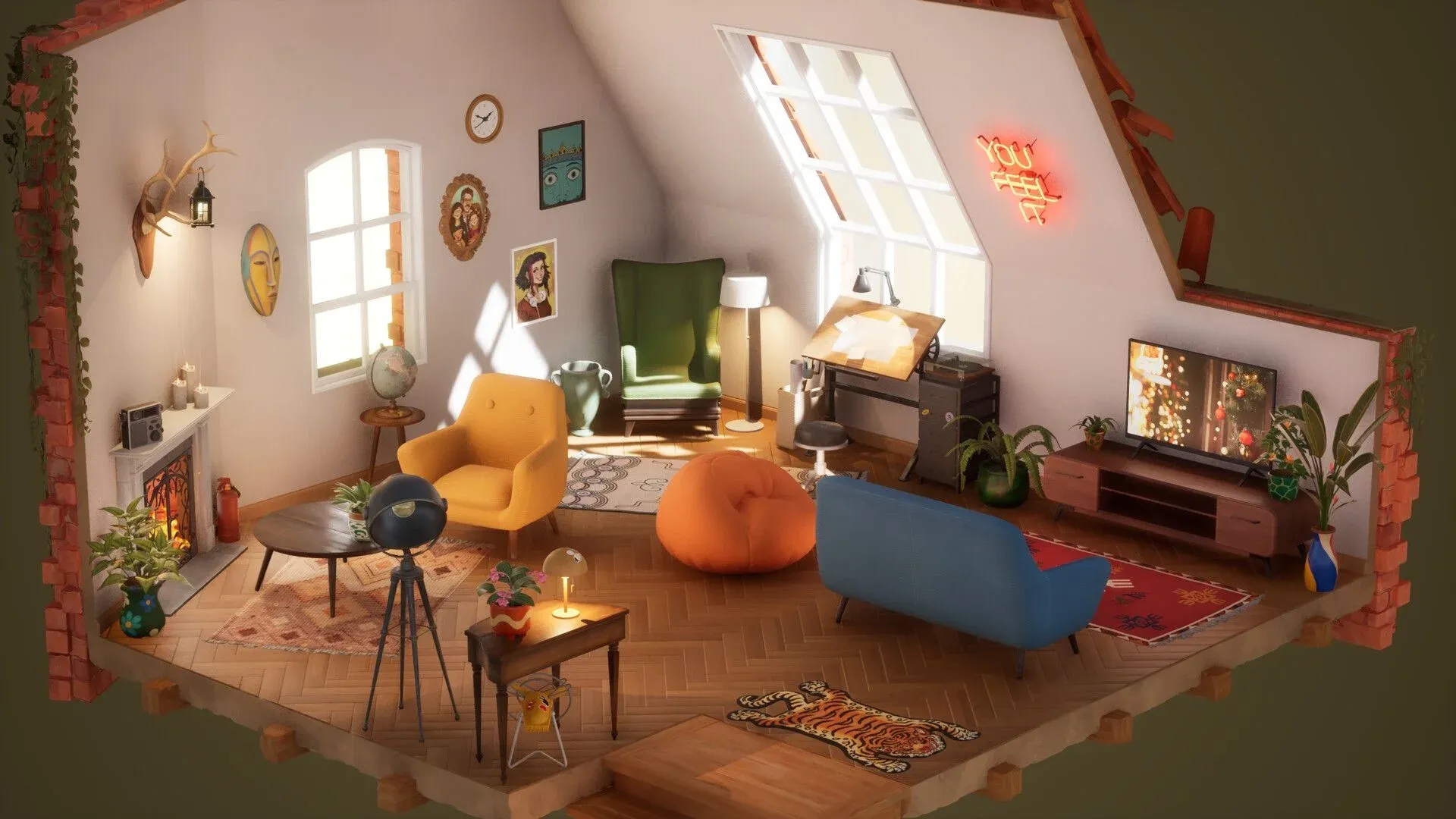
- Attic: The first real room. It establishes the decorating rhythm and blends rustic elements like a brick fireplace with modern furniture. A good place to practice zone creation.
- Workshop: Memorable early space, generally readable and well-liked.
- Dark Music Hall: Stylish but not typically a layout frustration.
- Small Apartment: Easier to control visually due to its size.
- Treehouse: Playful, low layout pressure.
- Penthouse: The hardest room to balance. It looks impressive but resists cohesion. If your layout keeps feeling busy or unbalanced, this is why.
- Cafe: Easy to over-decorate. The personality of the space invites adding too much before the layout is settled.
- Dreams: The strangest level in the game. It feels surreal and stops following normal visual logic. Only about 10-12% of players complete it.
- Lighthouse: Distinctive late-game room without the same visual confusion as Dreams.
If you only need help with two rooms, make them Dreams and Penthouse.
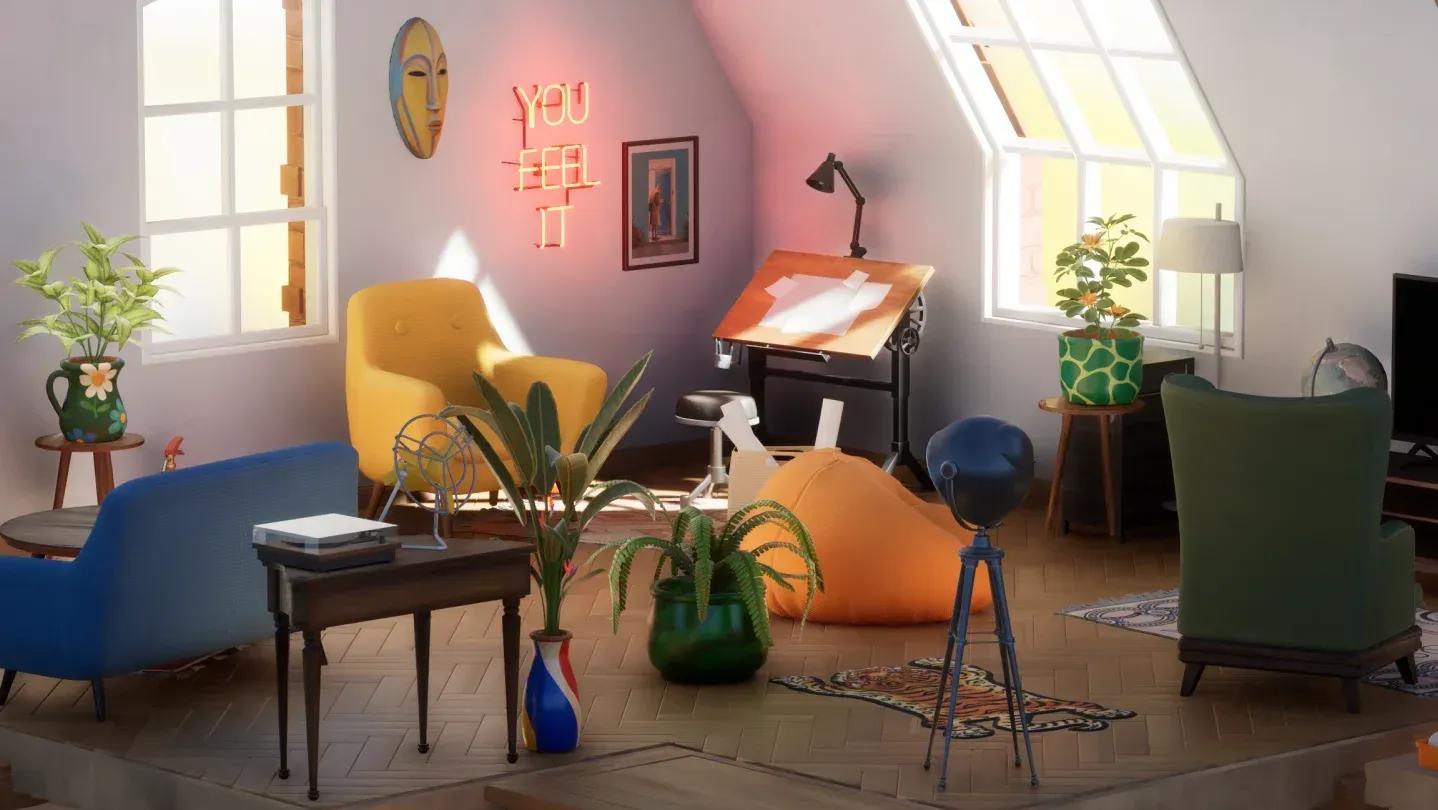
Penthouse needs clear zones
Photo mode and finishing a room
Once everything is placed to your satisfaction, use photo mode before you close out the room. It offers six filter options beyond a standard screenshot: Regular, Black and White Sketch, Blueprint, Soft Black and White, Soft Color, and Retro Photo Effect. These aren't just cosmetic; the Blueprint filter in particular turns the whole room into a technical drawing that looks genuinely striking as a final image.
Some items also have speech bubbles with story context attached. Others can be toggled on for ambient light or sound. Turning on the radio, the fan, and all the lamps simultaneously before taking your photo creates a more active, lived-in scene.
Small space tips for cramped levels
As you move into smaller rooms like the downtown studio apartment, verticality becomes the main tool. Key strategies:
- Install shelves high on the walls, above the bed or desk, for books and keepsakes.
- Place the microwave on top of the fridge to save counter space.
- Use the windowsill for small vases or candles, freeing up table surfaces for larger items like a microphone or laptop.
The foldable bed and wall-mounted shelving in these levels are there specifically to solve the space problem. Use them before reaching for creative solutions.
For more cozy game guides and the latest releases in the decorating genre, browse more guides on GAMES.GG.