


Invincible VS plays nothing like most fighters on the market right now. The 3v3 tag system, a combo meter that punishes greed, and characters capable of zero-to-death strings against unprepared opponents make this one of the steepest learning curves in recent memory. Getting a handle on the fundamentals early is the difference between climbing ranked and getting looped forever. Here's what you need to know.

Combo meter fills fast
How do combos work in Invincible VS?
Every fight starts with understanding button cancels. The cancel system follows a simple hierarchy: any attack can be cancelled into another of equal or higher strength. Lights flow into lights, mediums, and heavies. Mediums flow into mediums and heavies. Heavies only flow into other heavies. Special moves and supers accept cancels from any normal attack.
Most characters share a universal combo template: crouching light, light, medium, heavy, down heavy (launches the opponent), then hold up to chase them into the air for a second sequence. Down heavy in the air typically slams them back down, though some characters have unique divekicks that skip the ground bounce, requiring different finishers depending on your character.
Two mechanics reset the combo meter mid-string. The first is a boosted dash, which creates room for extra hits after a launcher sequence. The second, far more important, is the active tag.
What is an Active Tag and why does it matter?
An active tag happens when you hold an assist button during a combo. This swaps in a teammate and resets the combo meter, giving you fresh room to continue the string. Active tags are the main way to extend combos past what one character can do alone, and they're the only method for continuing a combo after landing a super.
That makes them powerful. It also makes them predictable.
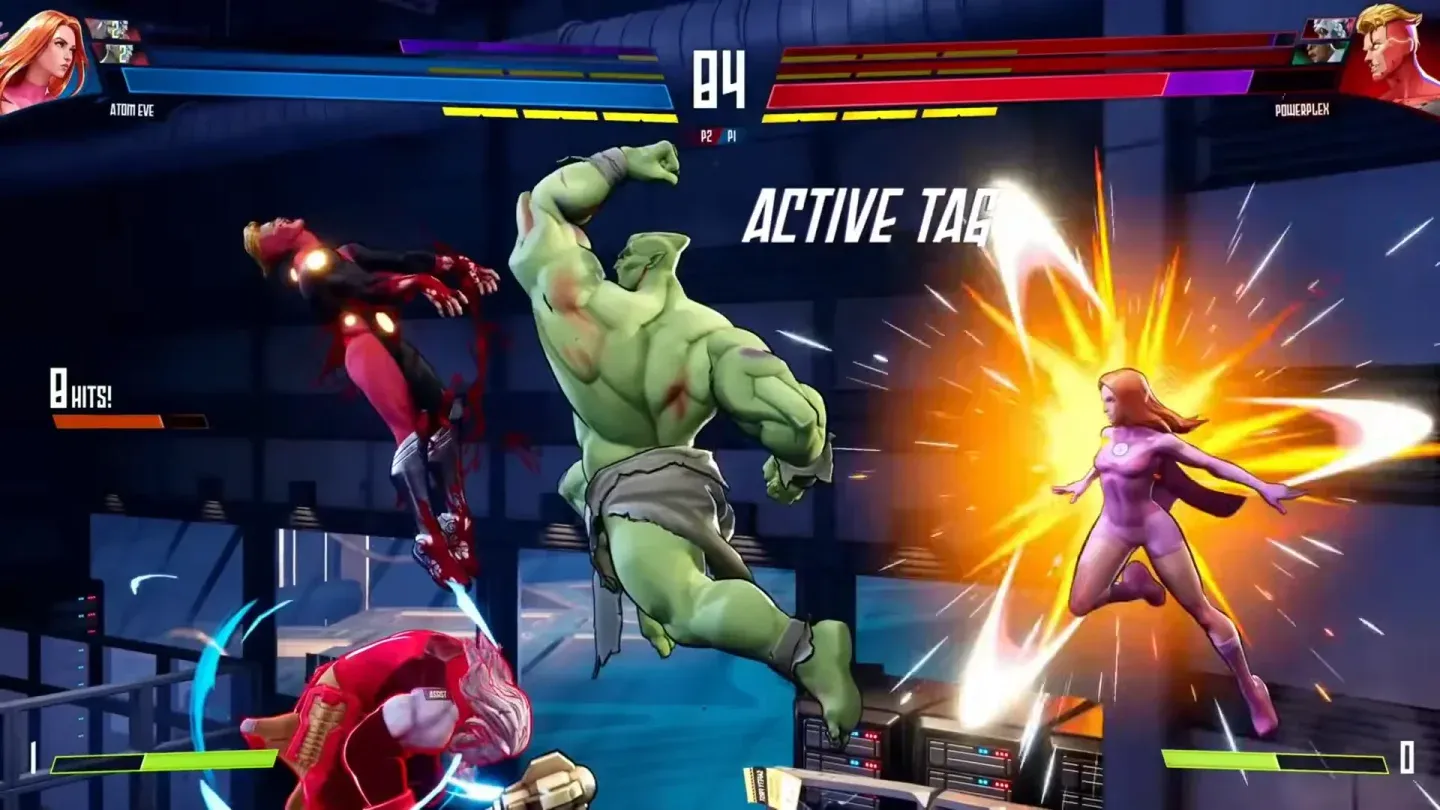
Active tag swap mid-combo
How do Counter Tags work?
Counter tags are your answer to active tags. Press medium and heavy together (medium and assist 1 on simplified controls) right before the incoming tagged character's attack lands. A successful counter tag stops the combo cold.
The mind game goes deeper than pure reaction. The attacking player has two options to beat a counter tag:
- Delay the active tag by pressing heavy before the tag connects, throwing off your counter timing.
- Feint the active tag completely, leaving you wide open if you committed to a counter tag.
If you feint and your opponent counter tags anyway, they're vulnerable, their assists enter a 3-second cooldown, and you get a fresh combo meter. If you feint and they don't bite, you're the one exposed. There's no universal right answer. Mix your timing, watch your opponent's patterns, and accept that you'll get baited sometimes.
One more thing: a delayed counter tag has significant recovery. If you land one, immediately cancel into a down heavy or a boosted special to maintain the combo. Otherwise the string ends.
Should you rely on Assist Breakers?
Short answer: no, not as a standard escape option.
Assist breakers (dash plus assist together) pull in a teammate to rescue your active character from a combo, but the price is brutal. Each use burns 2 bars of boost meter, forces the rescuing assist to take 50% of their health as recoverable red health, and locks both assists out for 10 seconds. That cooldown means you cannot counter tag if you get hit again during that window.
The recoverable health is also a liability. Any competent opponent will use a snapback to forcibly drag that damaged assist character into the fight, erasing all that health before it regenerates.
There is one legitimate use case: if your opponent has proven they can solo-kill a character, is sitting on 3 bars of meter, and the alternative is losing that character outright, commit to the breaker early in the combo.
How do Snapbacks punish assist breakers?
Snapbacks force the opponent to swap their active character for a specific teammate. Forward medium plus heavy brings in the middle character; back medium plus heavy brings in the top character (heavy plus assist 2 on simplified controls for both). You're at a frame advantage when the opponent snaps in, so maintain your offense unless you expect an invincible reversal.
If your opponent is burning assist breakers to protect a damaged character, snapbacks are how you drag that character back in before the health recovers. Don't skip this tool.
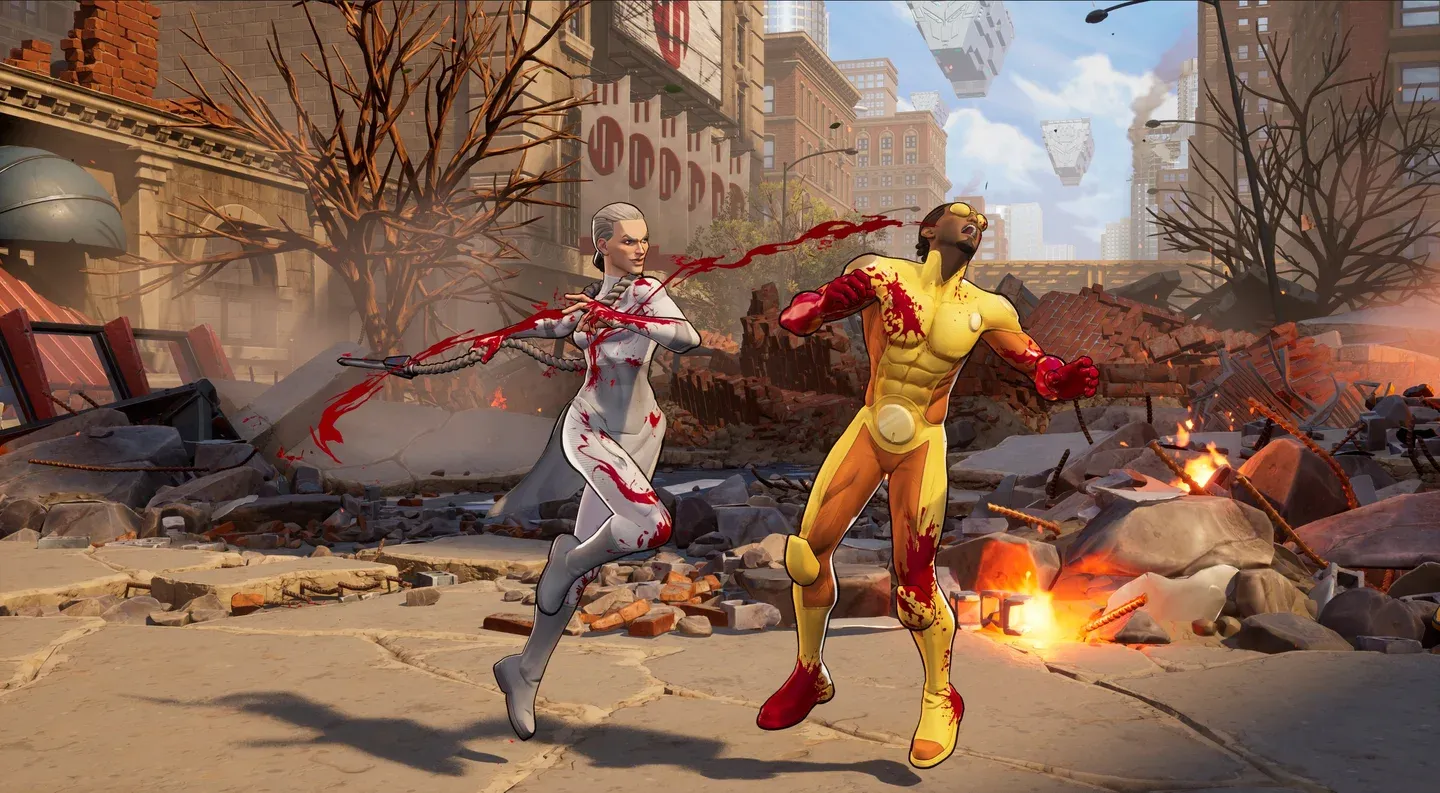
Snapback input reference
What defensive tools should beginners use?
Two defensive options stand out for new players.
Push blocks (back plus light and medium) cost half a bar of meter and create distance against aggressive pressure. Used correctly against the right move, they can open up whiff punish opportunities.
Heroic Strikes (back plus medium and assist 1 while blocking) cost 1.5 bars of meter but shut down an opponent's offense entirely and leave you at a slight frame advantage. Expensive, but effective when you need to reclaim your turn.
For a deeper breakdown of these tag mechanics in context, the Invincible VS gameplay guide at invinciblevs.org covers the 3v3 system and defense strategies in detail.
How should you move around the screen?
Movement in Invincible VS has more options than the average fighter. There are three ways to dash: double-tap forward, press light and medium together, or use the dash macro. Building the macro habit early saves you execution headaches later.
Cancelling a dash by pressing down lets you move unpredictably, bait reactions, and in some cases cross the screen faster by cutting the dash's recovery. Boosted dashes cost meter but are particularly strong for characters that can fly, opening up diagonal air approaches, surprise ground rushes, and projectile-clearing leaps.
How do assists fit into your gameplan?
Every character carries two assists. The forward assist generally extends pressure after a blockstring and can start combos if the opponent presses a button at the wrong moment. The back assist tends to be the more unique of the two, ranging from projectiles to anti-airs to combo starters in neutral.
Even characters with weaker assists can still cover unsafe moves or keep pressure going. Experiment with your team composition and figure out which assists complement your main's gaps.
For a more granular look at active tags and counter tag timing, the FRVR beginner guide for Invincible VS covers the Intermediate Tutorial mode, which goes into additional depth on these mechanics.
For more fighting game guides and competitive tips across all genres, browse the full guides section at GAMES.GG.