

Invincible VS plays nothing like most fighters you've touched. The 3v3 tag system, a combo meter that punishes greed, and a zero-to-death threat on every character from the jump make this one of the more demanding fighting games to get right at the start. The good news: once you understand the core rules, a lot of those scary situations become readable. Here's everything you need to know to stop losing to mechanics you don't understand.
How do combos work in Invincible VS?
The fundamental rule is straightforward: you can cancel any button into another button of equal or greater strength. Lights cancel into other lights, mediums, or heavies. Mediums cancel into mediums or heavies. Heavies only cancel into other heavies. Special moves and supers can be cancelled into from anything.
A basic bread-and-butter combo for most characters follows this pattern:
- Crouching light
- Light
- Medium
- Heavy
- Down heavy (launches opponent)
- Hold up to follow into an aerial string
- Down heavy in the air to ground bounce
Some characters have unique divekicks that skip the ground bounce, so you'll need to adjust your ender depending on who you're playing.
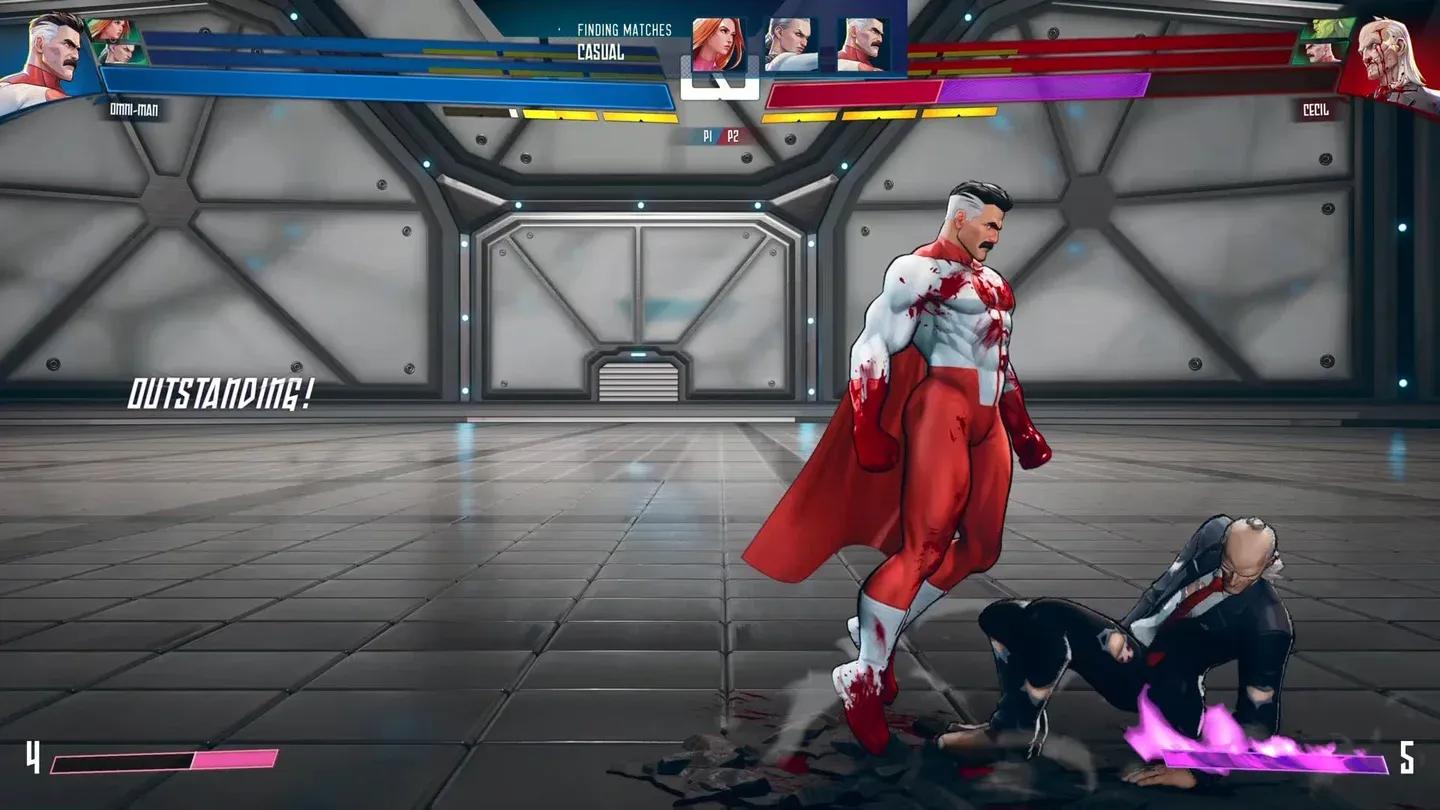
Combo meter fills with each hit

What does the combo meter actually do?
The combo meter is the most misunderstood system in the game for new players. As you land hits, the meter fills. Once it maxes out, your next hit drops the combo entirely, unless you use a boosted special move, which freezes the meter where it currently sits.
Two things bring the meter back down:
- Boosted dashes mid-combo (knock down with down heavy, knock back up with another down heavy, then boosted dash to squeeze in extra hits)
- Active tags, which drain the meter significantly and let you continue the combo with a fresh character
Longer combos are not automatically better. Burning meter on a boosted special to extend a combo only makes sense if the damage payoff justifies the resource cost. The meter system creates deliberate tension between ending a combo safely and pushing for maximum damage at the risk of resource depletion.
How do counter tags work and why do they matter?
Active tags are the main combo extension tool in Invincible VS, and they have direct counterplay. A Counter Tag is performed by pressing Medium + Heavy (or Medium + Assist 1 on Simplified Controls) right before the incoming tagged character's hit connects.
This is the single most important defensive skill to develop. Active tags are reactable if you're watching for them, especially after supers where players almost always tag to continue.
Here's where the mind game starts:
- If you predict a counter tag, delay the active tag by pressing heavy first to throw off the timing
- Alternatively, feint the active tag entirely. If the opponent counter tags your feint, they're wide open, your assists go on a 3-second cooldown, and you get a fresh combo meter
- If you feint and the opponent doesn't counter tag, you're the one left exposed
A delayed counter tag carries significant recovery, so if you use one, immediately cancel into a down heavy or boosted special to keep the combo alive. Dropping straight into normal attacks after a delayed counter tag will end your combo.
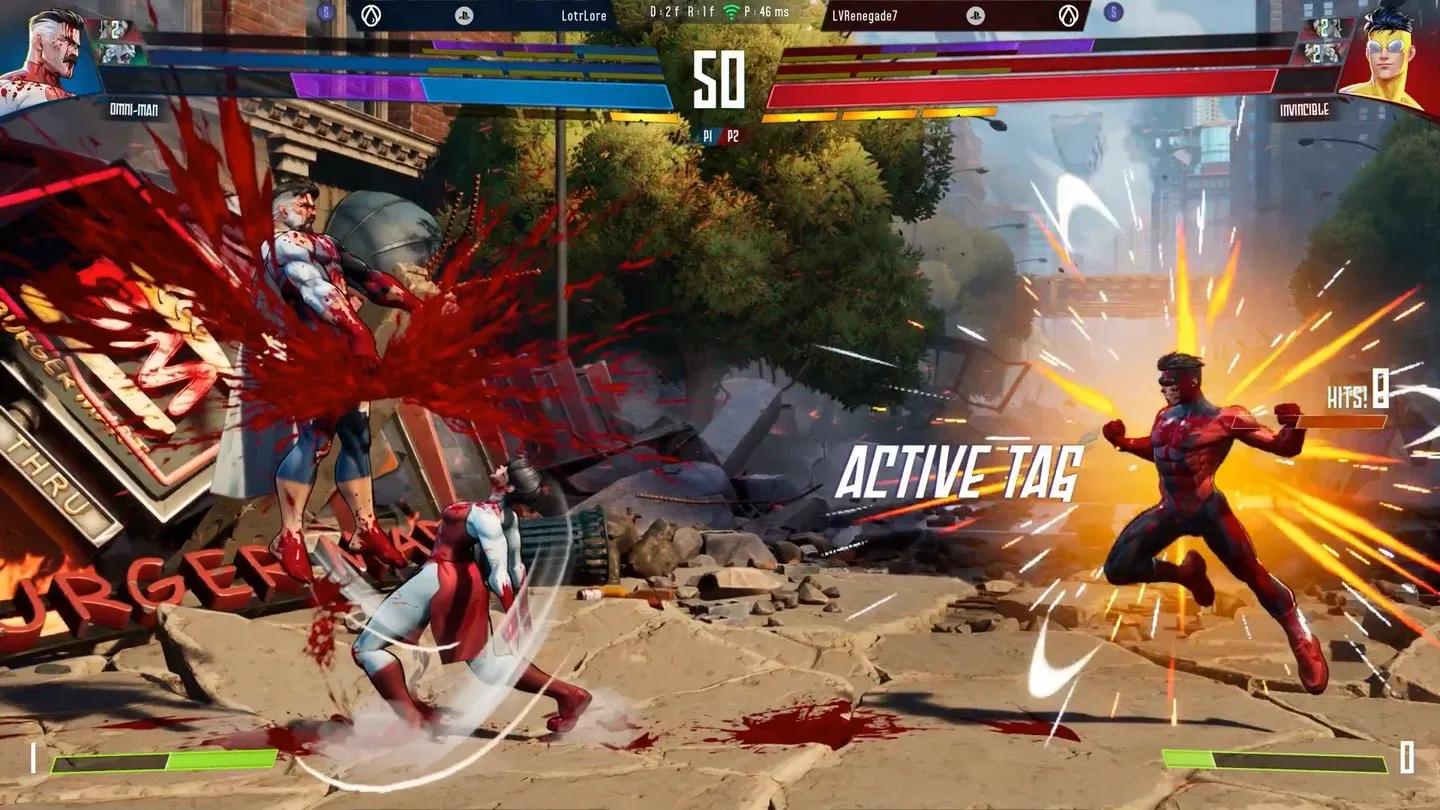
Counter tag window timing
Should you use Assist Breakers?
Assist Breakers (Dash + Assist simultaneously) are available more often than combo break mechanics in most other fighters, but the cost is steep:
| Cost Component | Penalty |
|---|---|
| Boost meter | 2 bars |
| Assist health | 50% as recoverable red health |
| Assist cooldown | 10 seconds (both assists) |
| Counter tag access | Unavailable during cooldown |
The 10-second cooldown on both assists is the part players underestimate. If you get hit again during that window, you have no counter tag option. The opponent can also snap in your damaged assist character immediately after, stripping away all that recoverable health before it regenerates.
Assist Breakers are worth using when the opponent has shown they have high-damage solo routes, is sitting on 3 bars of meter, or the alternative is losing the active character outright. If you commit to one, use it early in the combo and never at the end of a special move, since that's the most common cancel point into supers.
What are snapbacks and when should you use them?
Snapbacks forcibly swap the opponent's active character for one of their assists. The input is forward Medium + Heavy (or Heavy + Assist 2 on Simplified Controls) for the middle character, and back Medium + Heavy for the top character.
The main use case: punishing opponents who rely on Assist Breakers. When someone burns an Assist Breaker, their damaged assist character sits on the sideline recovering health every second. Snap that character in before it fully heals.
You land at a frame advantage after a successful snapback, so you can keep pressure going unless you read an invincible reversal or super coming.
Snapback inputs by position
How do movement and assists work together?
Dashing has three methods in Invincible VS: double-tap forward, press Light + Medium simultaneously, or use the dash macro. The macro is the most consistent option and worth building into your muscle memory.
Cancelling a dash by pressing down cuts the recovery and lets you move unpredictably. This can bait reactions from opponents and, with practice, lets you cross the screen faster than a standard dash would.
Boosted dashes cost meter but pay off significantly, especially for characters that can fly. Some options boosted dashes open up:
- Jump back, then diagonally boost forward to catch opponents walking in
- Quick ground boost to close distance unexpectedly
- Leap over a projectile and land directly in the opponent's face
For assists, every character carries two. The forward assist typically extends pressure after a blockstring and can start a combo if the opponent presses a button at the wrong time. The back assist is usually the more distinct option, ranging from anti-air coverage to projectiles to combo starters in neutral. Experiment with team compositions to find assist setups that cover your character's weaknesses.

Assist setup before match
Defensive tools you're probably ignoring
Two defensive options get overlooked by players focused on offense:
Push blocks cost half a bar of meter and are performed with back + Light + Medium. They create space against incoming pressure and can set up whiff punish opportunities if you read the opponent's follow-up move correctly.
Heroic Strikes cost 1.5 bars of meter and require back + Medium + Assist 1 while blocking. They shut down the opponent's offensive turn completely and leave you at a slight frame advantage, giving you the initiative to start your own offense.
Both tools require meter, so managing your boost bar is part of playing defense in Invincible VS. Spending all your meter on offense leaves you with nothing to stop a determined pressure sequence.
For deeper combo routes and character-specific sequences, the Invincible VS combos tutorial at invinciblevs.org covers universal BnB paths and notation in more detail. For more fighting game guides across every genre, browse the full guides library at GAMES.GG.