
John Carpenter's Toxic Commando drops you into a toxic apocalypse where your truck is just as important as your trigger finger. Saber Interactive built vehicular mayhem directly into the co-op loop, and players who treat vehicles as simple transport end up stranded, fuel-dry, and surrounded. Whether you're hauling through mutant-infested mud or winching your squad out of a ravine mid-horde, understanding every vehicle mechanic separates survivors from casualties. Here's everything you need to make your rides count.
What Vehicles Are Available in Toxic Commando?
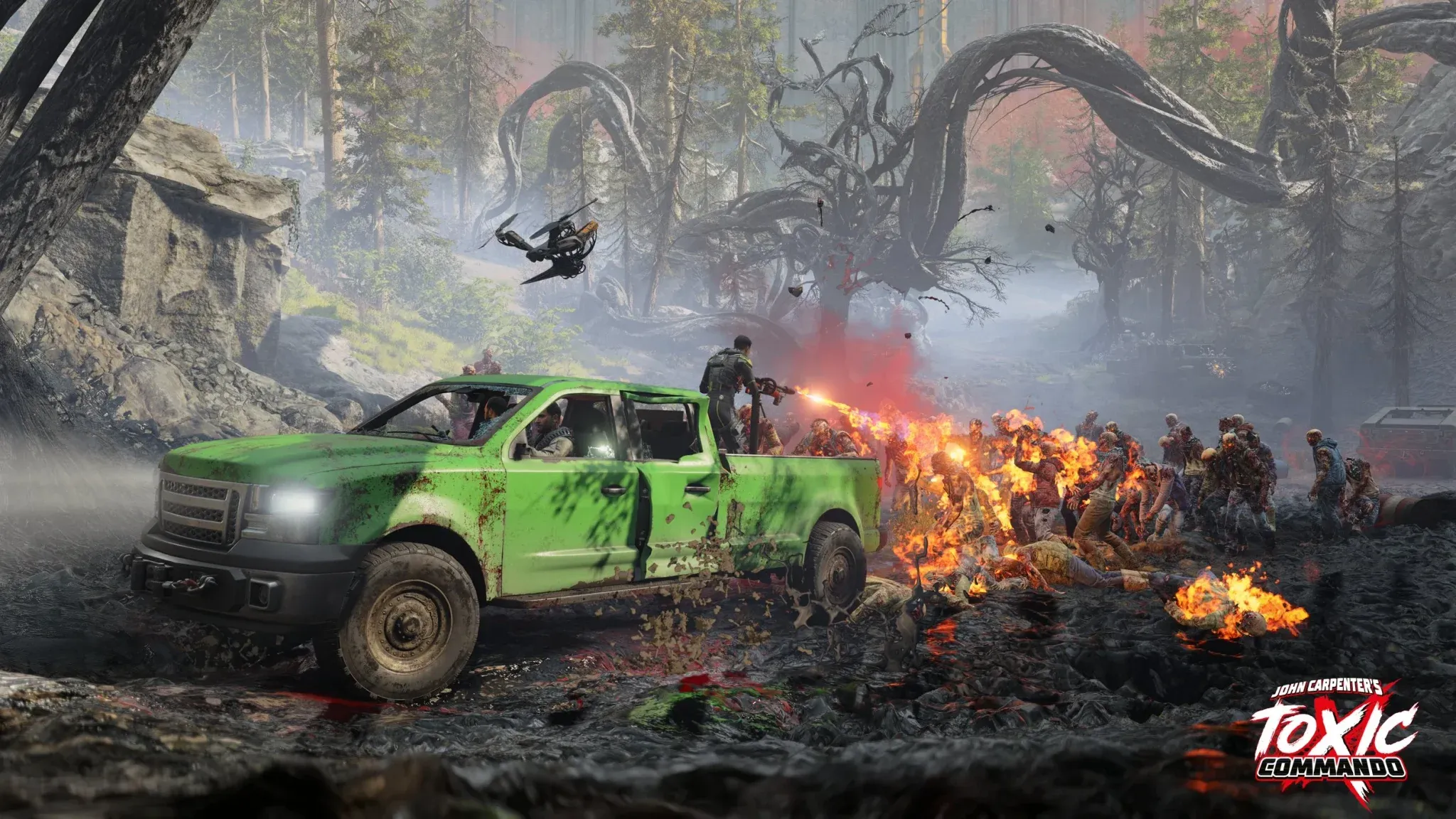
The game features several distinct vehicle types, each with a clear battlefield role. Picking the right one for your mission objective makes a measurable difference in how efficiently your squad clears objectives and escapes swarm events.

Vehicle mastery selection screen
| Vehicle | Speed | Armor | Special Ability | Best For |
|---|---|---|---|---|
| War Rider | High | Medium | Turbo Boost | Hit-and-run, scouting |
| Juggernaut | Low | High | Shield Barrier | Frontline pushes, tanking |
| Stealth Phantom | Medium | Low | Invisibility Cloak | Stealth objectives, flanking |
| Maverick | Medium | Medium | Built-in Winch | Utility, extraction, co-op |
The War Rider excels at rapid flanking and repositioning, making it ideal when you need to outrun a swarm rather than fight through it. The Juggernaut absorbs punishment that would destroy lighter vehicles, perfect for escorting teammates through dense mutant clusters. The Stealth Phantom suits niche stealth objectives but its low armor punishes mistakes. The Maverick is arguably the most versatile pick in co-op because its built-in winch solves terrain and extraction problems that other vehicles simply can't handle.

How Does Fuel Management Work?
Fuel is a constant pressure in Toxic Commando. Sludge terrain and mud actively drain your tank faster than clean surfaces, so poor route planning punishes you hard during extended runs. Missions run 20 to 45 minutes, and fuel shortages mid-objective are one of the most common reasons squads wipe.
Practical fuel rules to follow:
- Prioritize fuel stations early during exploration phases before committing to main objectives.
- Carry repair kits in your inventory since engine overheats trigger a timing-based mini-game that, if failed, accelerates fuel consumption.
- Upgrade vehicles with scavenged parts to unlock infinite gas cans, which eliminates fuel anxiety on longer runs.
- Assign the Operator class to drive whenever possible. The Operator's perks include lower fuel consumption and auto-repair while driving, which directly extends your vehicle's operational range.
How Do You Repair Vehicles Effectively?
Repairs in Toxic Commando use a timing-based mini-game triggered when your engine overheats. Nailing the timing window restores engine health quickly. Missing it wastes time and leaves you vulnerable during active swarm events.
The Operator class changes this entirely. Two key perks make the Operator the best driver in any squad:
- Auto-repair while driving (at a fuel cost) keeps the vehicle functional without stopping.
- Vehicle damage reduction means the truck takes fewer hits before repairs become necessary.
In co-op, having one Operator dedicated to driving and vehicle maintenance while three teammates handle gunfire is the most efficient split for sustained runs. The Operator's Drone ability adds another layer here since it can repair broken vehicles and generators mid-horde without the driver ever stopping.
What Are the Best Winch Tactics?
The winch mechanic is where Toxic Commando separates itself from standard horde shooters. It functions as a multi-tool for combat, traversal, and puzzle-solving.
Traversal uses:
- Hook onto solid anchor points to pull your vehicle out of ravines or mud traps.
- Pry open supply crates that are otherwise inaccessible on foot.
- Bust through heavy reinforced doors blocking objective paths.
Combat uses:
- Drag enemies into pre-placed kill zones (mines, Strike Fireball landing spots, Defender Barrier Dome areas).
- Create escape corridors by pulling obstacles out of your path during extraction.
- In co-op, one vehicle uses the winch to reposition while the second vehicle provides covering fire. This two-vehicle split keeps both trucks active and prevents either from getting surrounded.
Which Class Works Best With Vehicles?
Every class can use vehicles, but the Operator is built specifically for vehicular combat. Here's how each class interacts with the vehicle system:
- Operator: Reduced vehicle damage, auto-repair while driving, lower fuel consumption, and a Drone that repairs vehicles remotely. The undisputed vehicle specialist.
- Strike: Best placed as a gunner or turret operator. Fireball from a moving vehicle creates devastating AoE sweeps through dense packs.
- Medic: Ride as a passenger and deploy Healing Aura to keep gunners alive during extended vehicle pushes.
- Defender: Use the Barrier Dome from inside or near a vehicle to protect the truck during stationary repair moments or extraction standoffs.
Recommended co-op vehicle setup: One Operator driving, one Strike on the turret or mounted weapon, one Medic keeping the squad topped up, and one Defender anchoring the extraction point. This covers every scenario from fuel runs to boss-wave escapes.

Operator drone repairing truck
How Do You Unlock Better Vehicles?
Vehicle access expands through mission progression and milestone completion. The fastest paths to better vehicles:
- Complete side quests during each mission. Side objectives consistently reward vehicle unlock tokens and upgrade materials.
- Daily challenges rotate objectives that grant unlock tokens specifically tied to vehicle progression.
- Scavenge upgrade parts during exploration. These parts directly upgrade your current vehicle's stats (armor, fuel capacity, weapon mounts) without requiring a full vehicle swap.
- Sludge Seeds collected in side paths unlock additional skill points, and the Operator's vehicle-focused skill tree amplifies every vehicle you drive regardless of type.
Co-op Vehicle Discipline
Vehicle coordination in public matches breaks down fast without clear roles. These rules keep squads functional:
- One driver, three gunners during active horde pushes. Rotating driver duties causes positioning errors.
- Split into two vehicles for coverage on larger maps. One vehicle handles winch and utility while the other focuses on fire support.
- Stay within revive range during loot runs. Splitting too far means a downed teammate can't be reached before the timer expires.
- Call out winch needs verbally (or via ping). A winch pull at the wrong moment can reposition your vehicle into a worse spot if teammates aren't coordinated.
- Never park a winch vehicle in a location where it can be surrounded. Keep an exit angle clear at all times.
The campaign runs 6 to 8 hours for the main story, with full completion pushing past 20 hours. Vehicle mastery pays off most during Nightmare difficulty replays where fuel and repair resources become significantly scarcer.
Beginner Vehicle Mistakes to Avoid
- Ignoring fuel stations during early exploration because the main objective seems close.
- Abandoning a winch-equipped vehicle to grab a faster one without winch capability.
- Driving the Juggernaut through narrow corridors where its low speed makes it a stationary target.
- Not assigning the Operator class to the driver role in co-op, missing out on passive fuel and repair bonuses.
- Using the Stealth Phantom for frontline pushes where its low armor gets it destroyed in seconds.
Vehicles in Toxic Commando reward players who treat them as tactical assets rather than fast travel. Fuel discipline, winch creativity, and class-specific driving roles are what separate squads that extract cleanly from those that walk the last kilometer on foot through a mutant tsunami.