
Overview
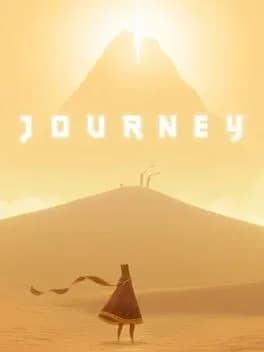
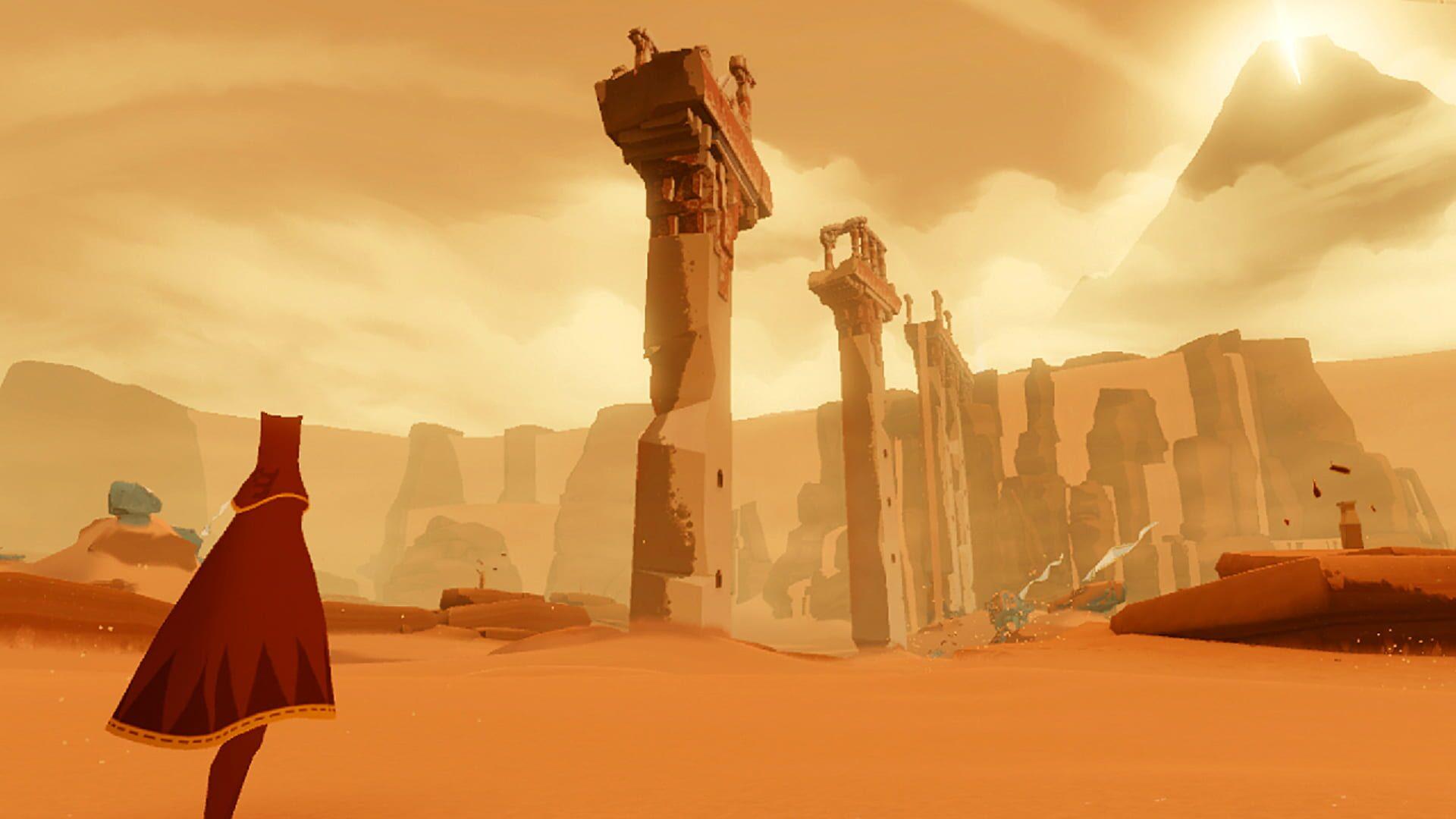
Released in March 2012 by ThatGameCompany and published by Sony Computer Entertainment, Journey is a third-person adventure game that strips interactive storytelling down to its most elemental form. A nameless, robed figure stands at the foot of a vast desert, a distant mountain peak splitting the horizon with a faint beam of light. No dialogue, no tutorial text, no explicit objectives: the experience speaks entirely through environment, movement, and music. It earned over 100 industry awards, including recognition from BAFTA, DICE, and the Game Developers Choice Awards, and remains one of the most critically celebrated independent games ever made.
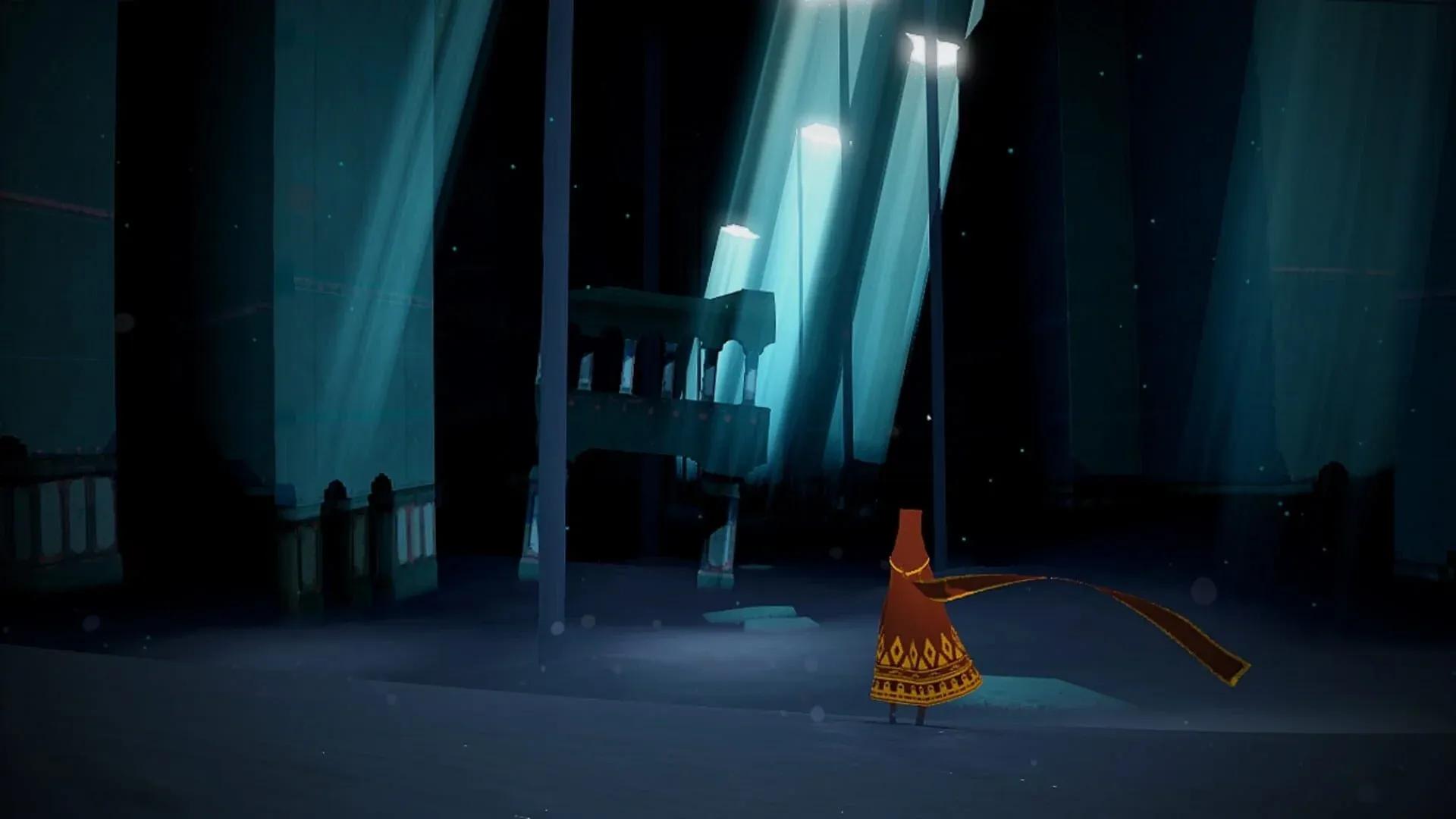
The premise sounds deceptively simple, yet the execution is anything but. Players guide their traveler across sweeping dunes, through crumbling ruins, and eventually into the punishing cold of the mountain's upper reaches. The world communicates its history visually: eroded stone structures, ancient murals, and scattered cloth creatures paint the picture of a civilization that rose and fell long before the traveler arrived. The storytelling approach is deliberate and disciplined, trusting players to interpret meaning rather than spelling it out.
Gameplay and Mechanics: What Makes Journey Unique?
Journey answers the question of what a game needs to be by removing almost everything conventional. The core mechanics are intentionally minimal, designed to serve emotional resonance rather than challenge or complexity:
- Movement and flight via a magical scarf
- Scarf recharging through cloth creatures or companion proximity
- Environmental interaction through a single resonant shout
- Collectible glyphs that extend the scarf's flight capacity
- Wordless multiplayer encounters with anonymous travelers
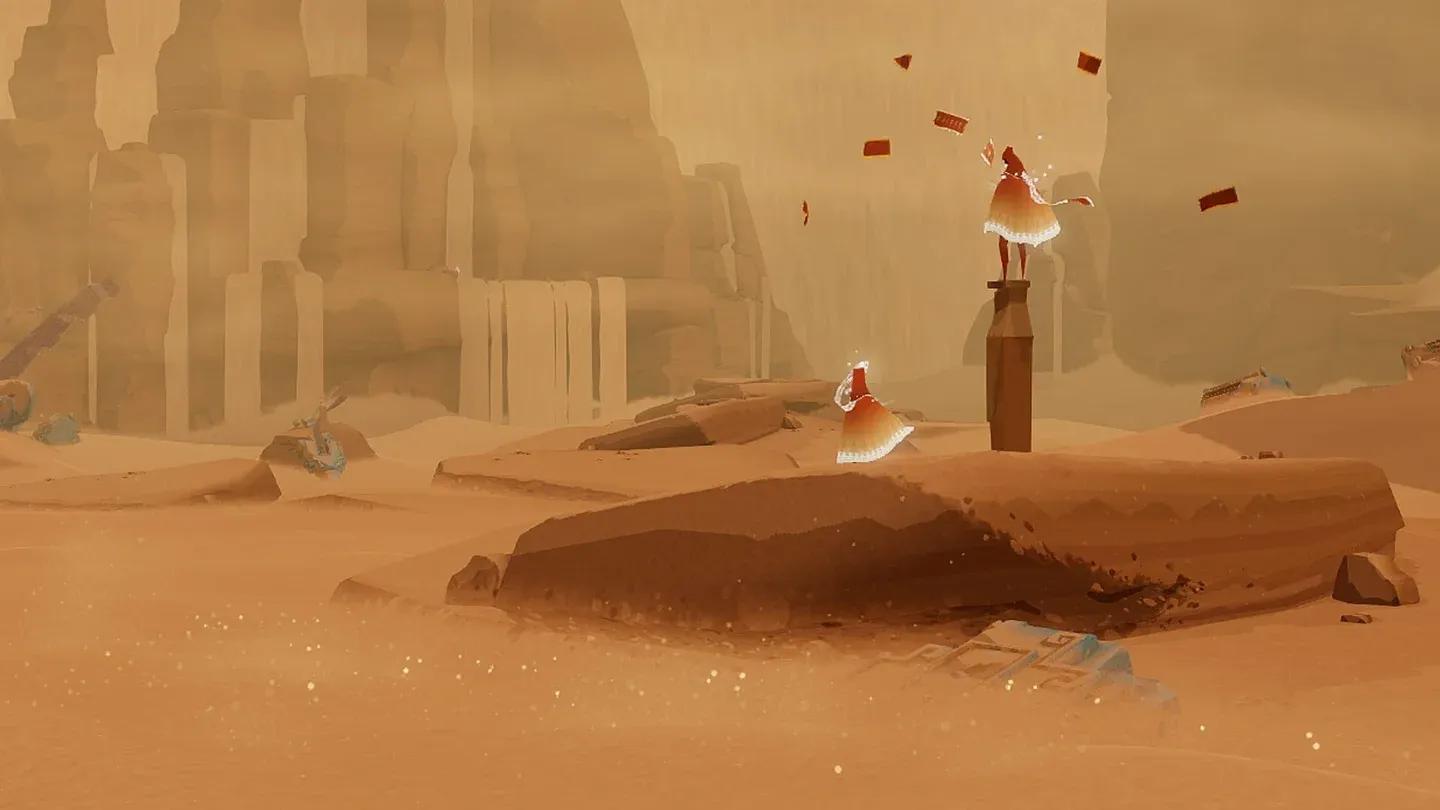
The scarf mechanic sits at the center of the experience. It charges through contact with scattered cloth fragments and friendly creatures found throughout each area, and its length determines how long the traveler can glide above the sand. This creates a quiet rhythm of exploration and resource-gathering that never feels mechanical.
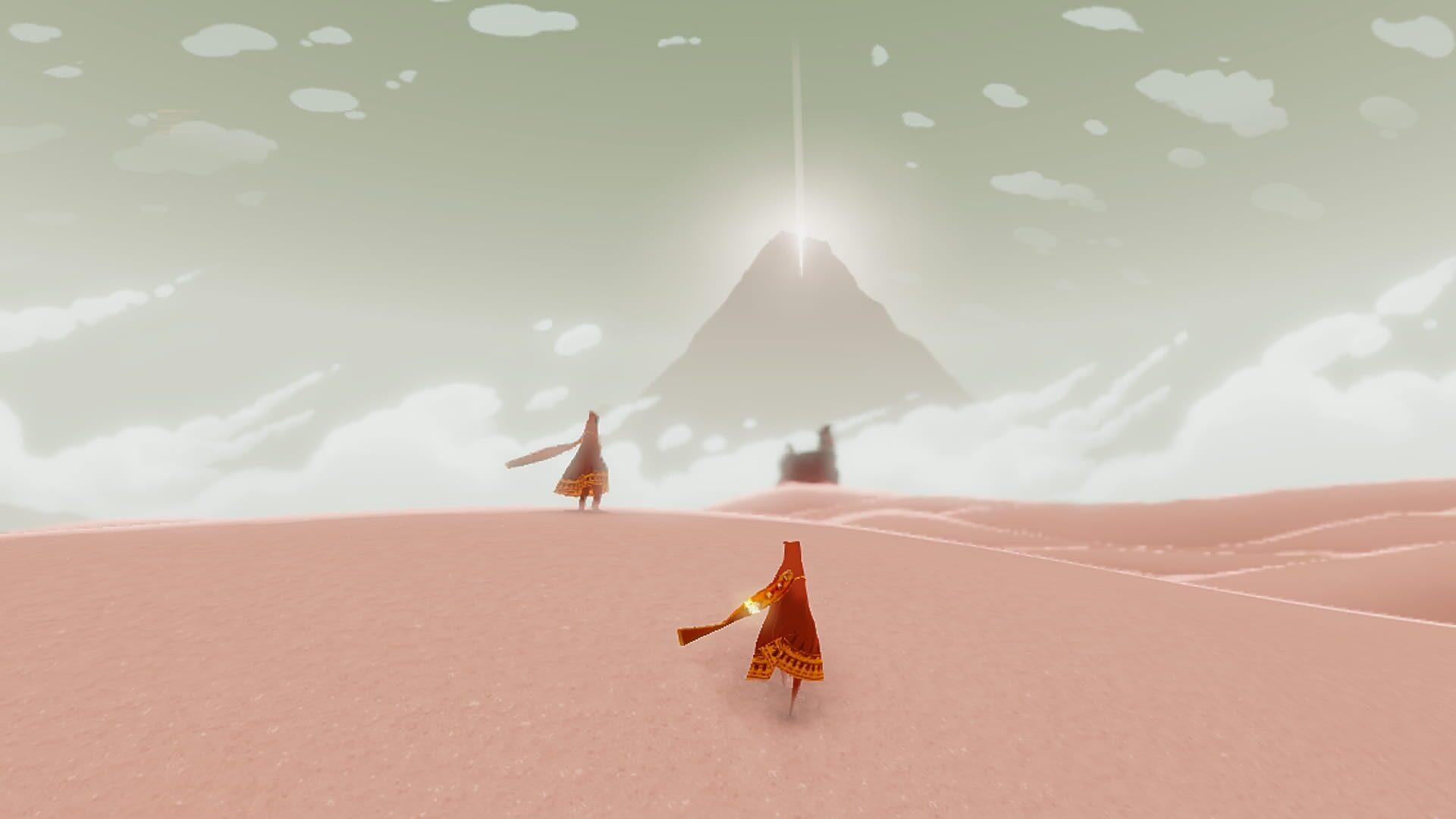
What makes the design particularly striking is the multiplayer integration. At any point, another player controlling an identically robed figure may appear alongside the traveler. There is no voice chat, no text, no way to identify who they are until the credits roll and their platform ID appears. Communication happens entirely through proximity and the same resonant shout used to interact with the world. Two strangers can charge each other's scarves, navigate obstacles together, and share the weight of the journey without exchanging a single word.
World and Setting: A Desert Civilization Remembered
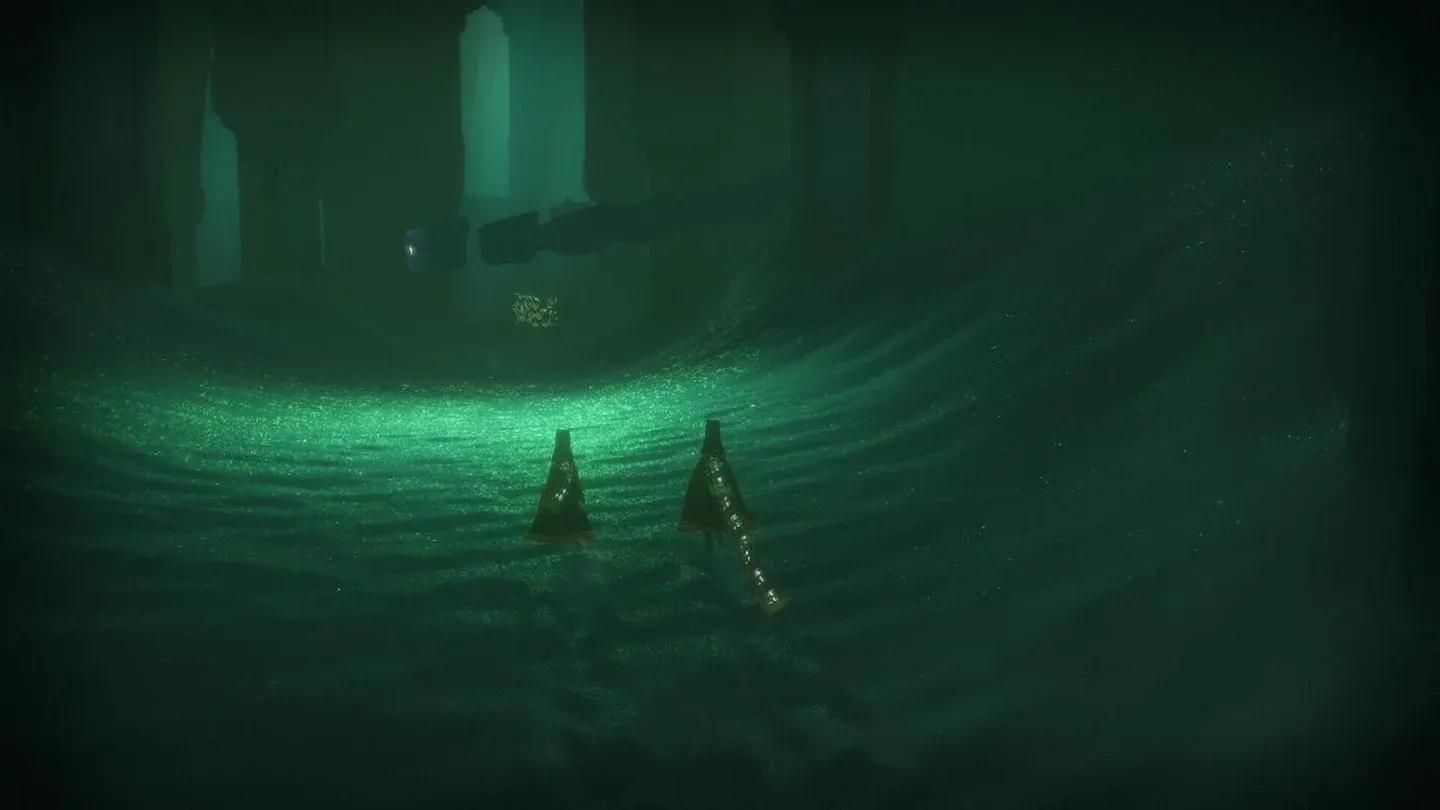
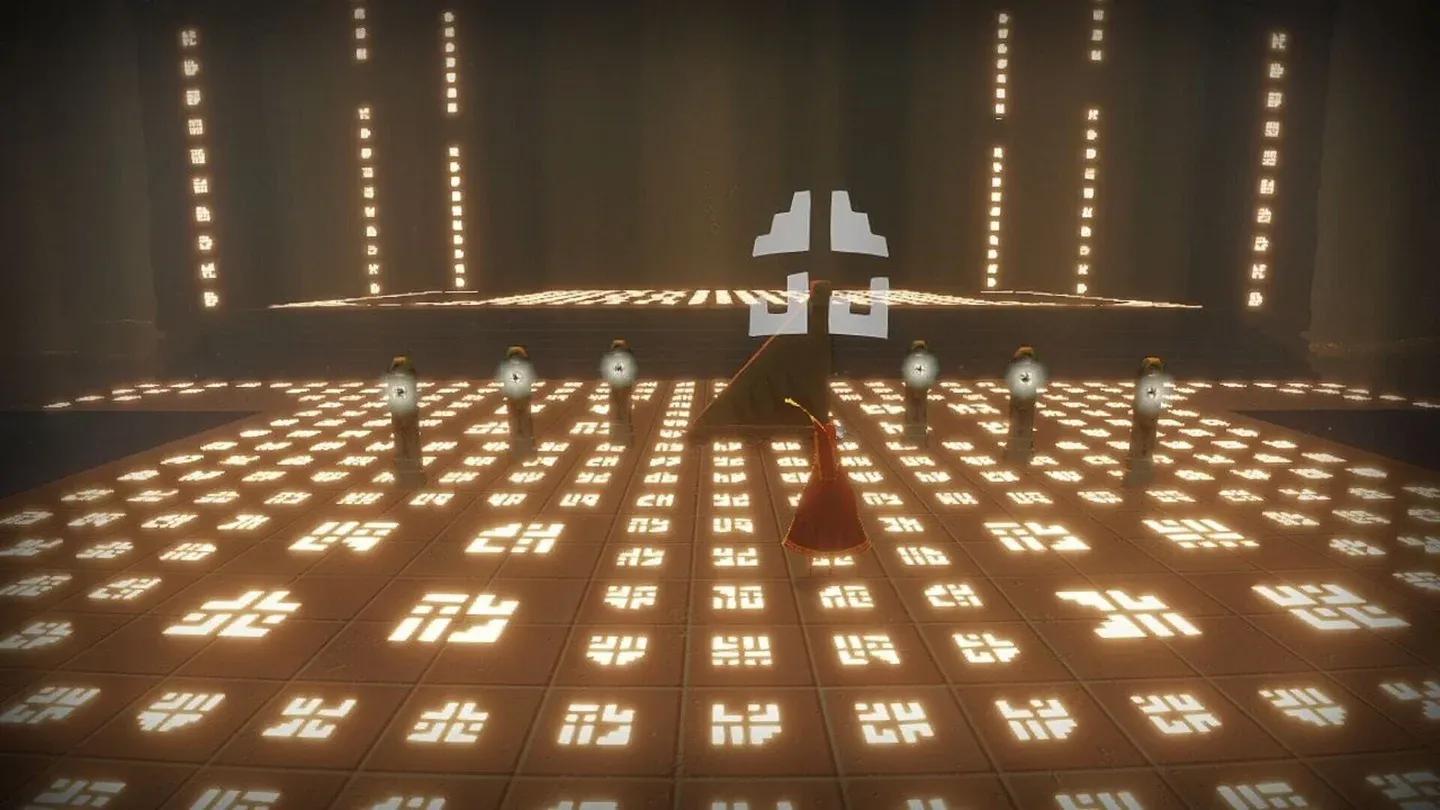
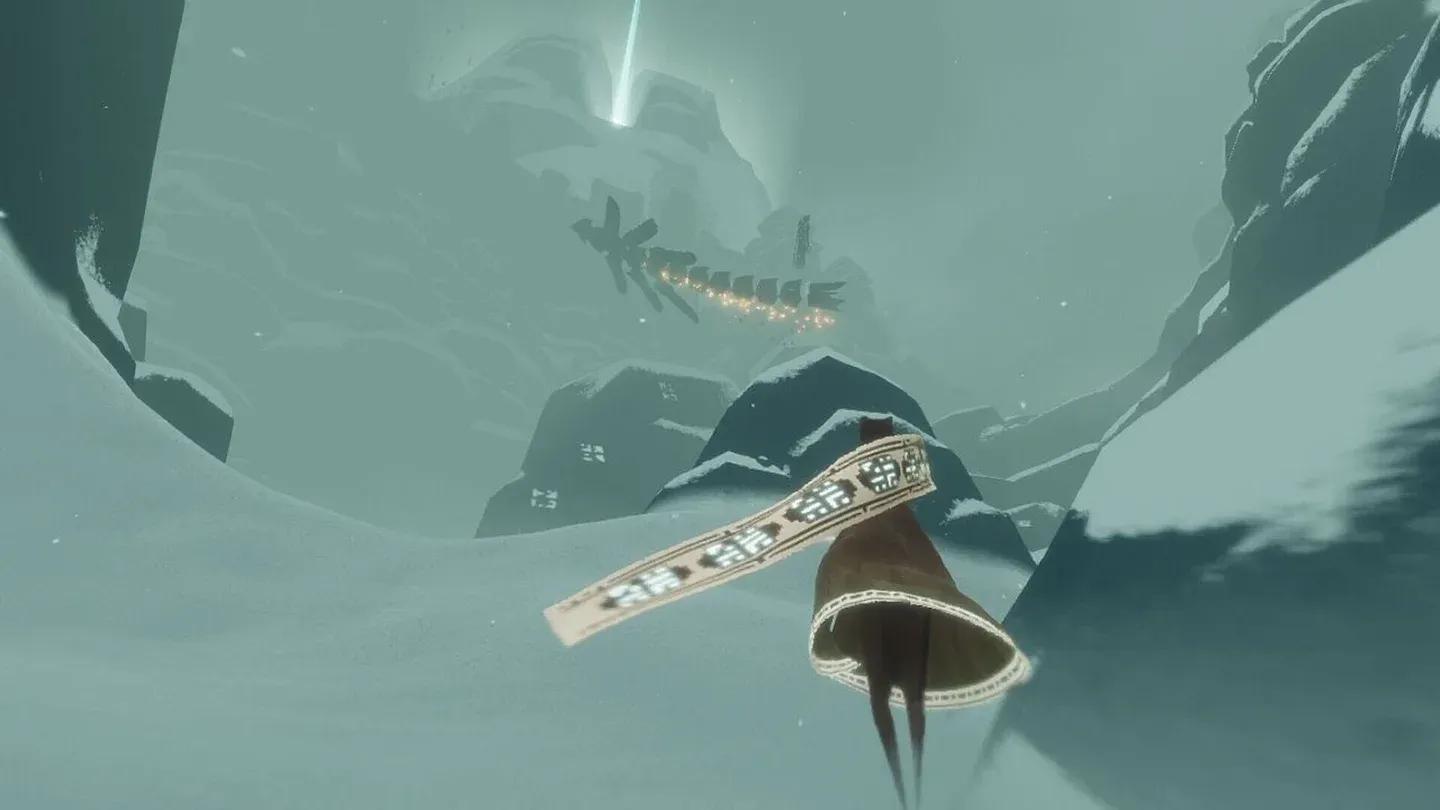
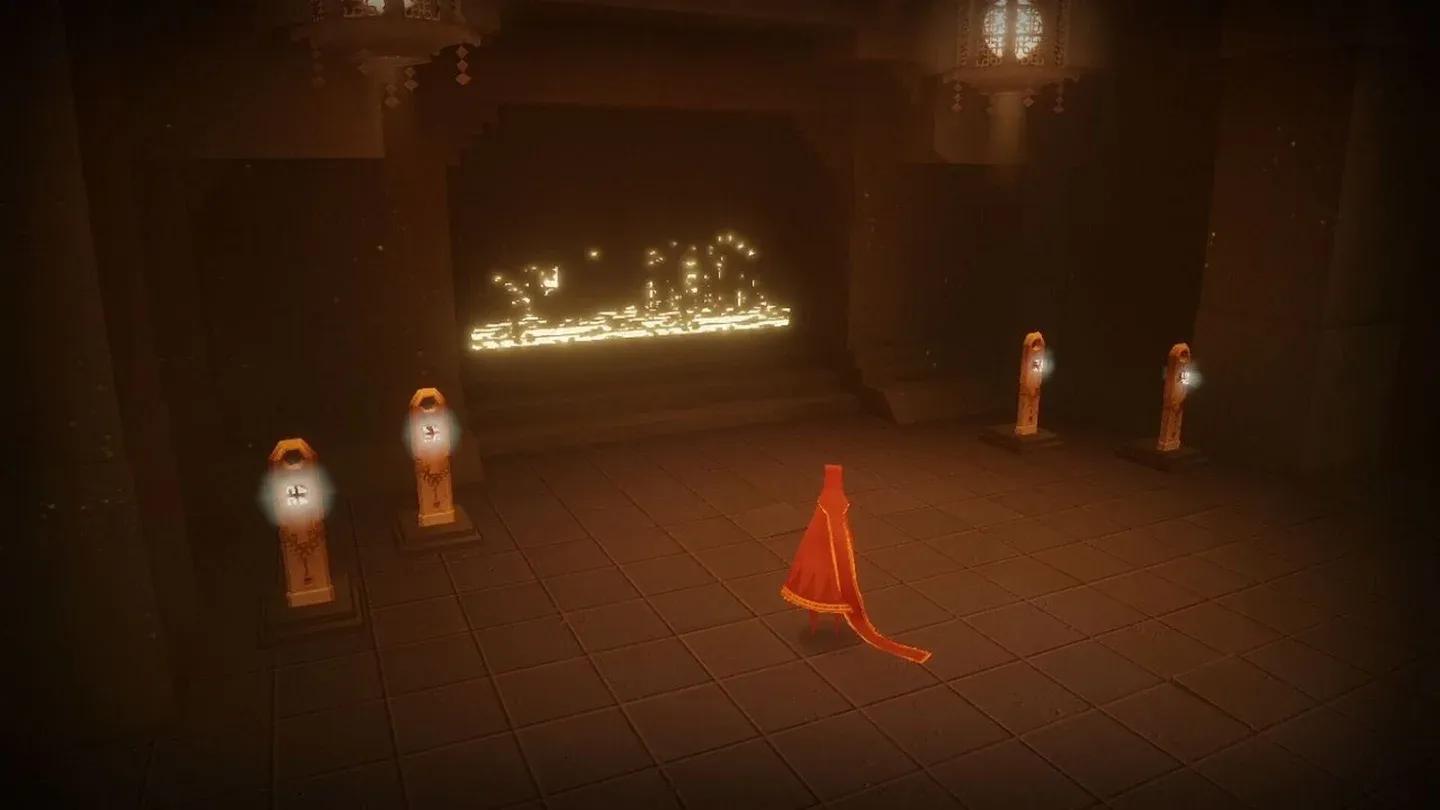
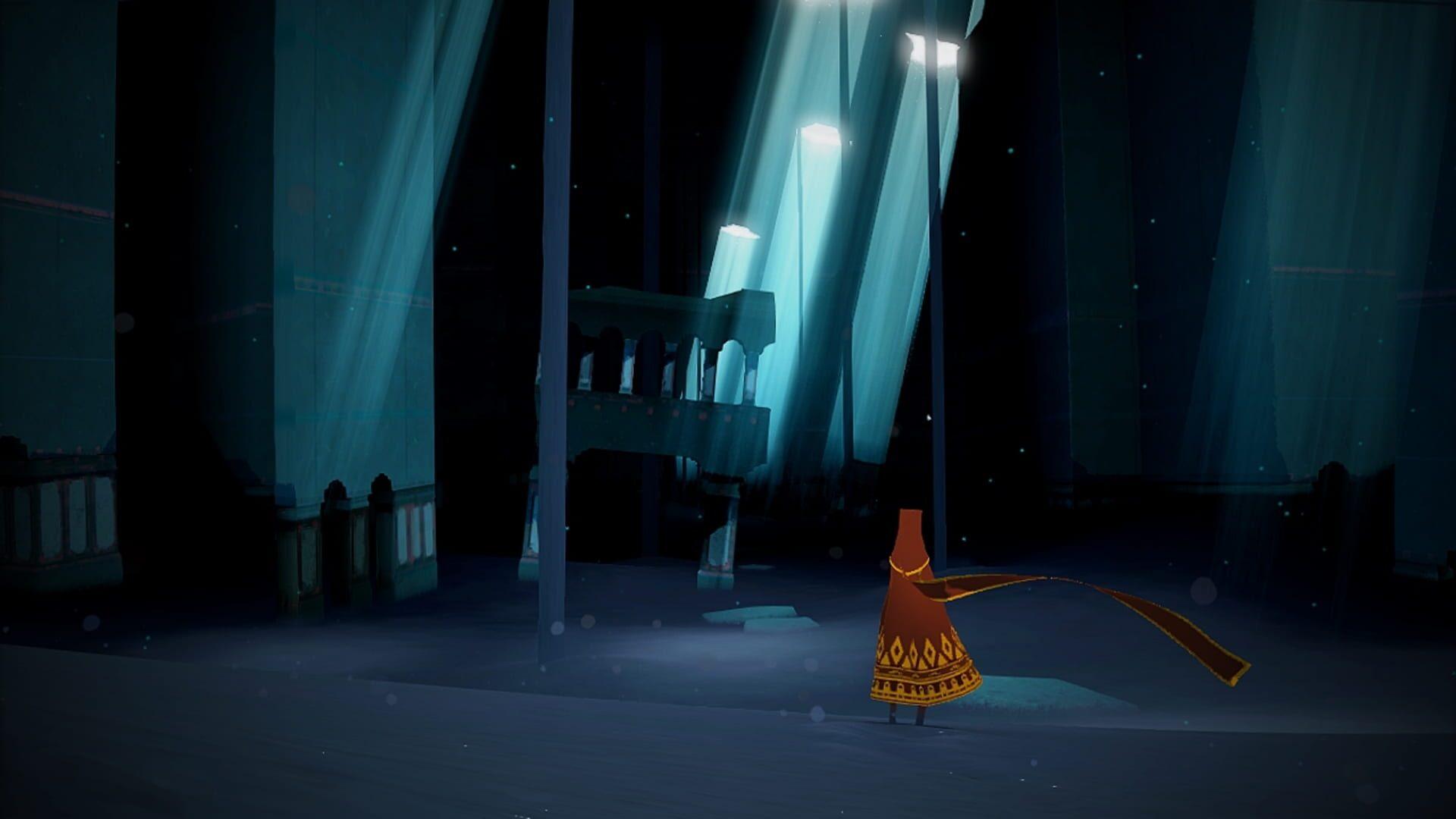
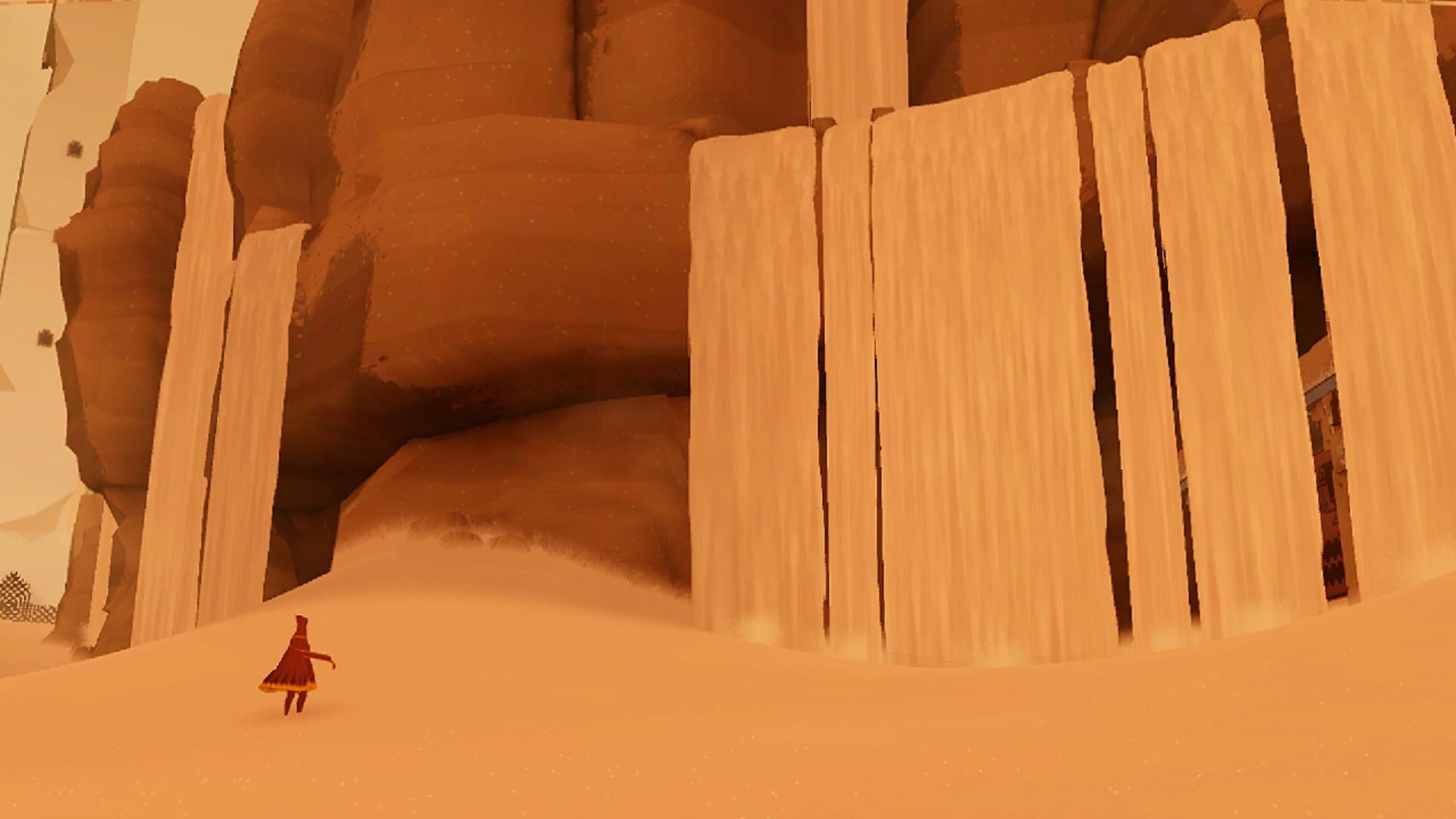
The environment in Journey functions as both landscape and narrative archive. Each area reveals more of the fallen civilization's story: towering stone structures half-buried in sand, ornate murals depicting a society's rise and eventual collapse, and the contrast between the warm desert below and the unforgiving snowbound mountain above. The visual progression is deliberate, moving from open golden dunes to confined ruins to a stark, windswept summit that tests the traveler's resolve.
The story reaches its emotional peak near the mountain's summit, where the traveler collapses in the snow. Six white-robed figures appear and restore the traveler's strength, allowing the final ascent into the light. It is a moment that lands with quiet force, shaped entirely by what came before it. The ending cinematic then retraces the entire journey, offering a new perspective on every step taken.
Visual and Audio Design: A Masterclass in Atmosphere
Journey's visual design draws on warm desert palettes, fluid cloth simulation, and sweeping environmental scale to create imagery that feels painterly without sacrificing technical precision. The sand reacts dynamically to movement, and the cloth creatures ripple and scatter with a lightness that gives the world a sense of breath. The art direction earned widespread praise for its cohesion and emotional clarity.
Austin Wintory's score, which became the first video game soundtrack nominated for a Grammy Award in the Best Score Soundtrack category, mirrors the traveler's emotional arc with precision. The music swells and retreats in direct response to player movement and proximity to other travelers, making it feel less like a soundtrack and more like a living component of the experience.
Impact and Legacy
Journey holds a rare position in gaming history: a title that changed how critics and players think about what the medium can express. The PlayStation Store rating of 4.69 out of 5 from over 137,000 ratings reflects an enduring connection with its audience. It is available across PlayStation, Windows, iOS, Steam, and the Epic Games Store, reaching players across multiple generations and platforms.
Conclusion
Journey stands as one of the most distinctive adventure games ever released, a title that proves emotional depth and mechanical simplicity are not opposites. Its wordless narrative, atmospheric desert setting, and quietly transformative multiplayer design combine into an experience that resists easy categorization. For anyone seeking a meditative, visually stunning exploration game that prioritizes feeling over friction, Journey remains essential.