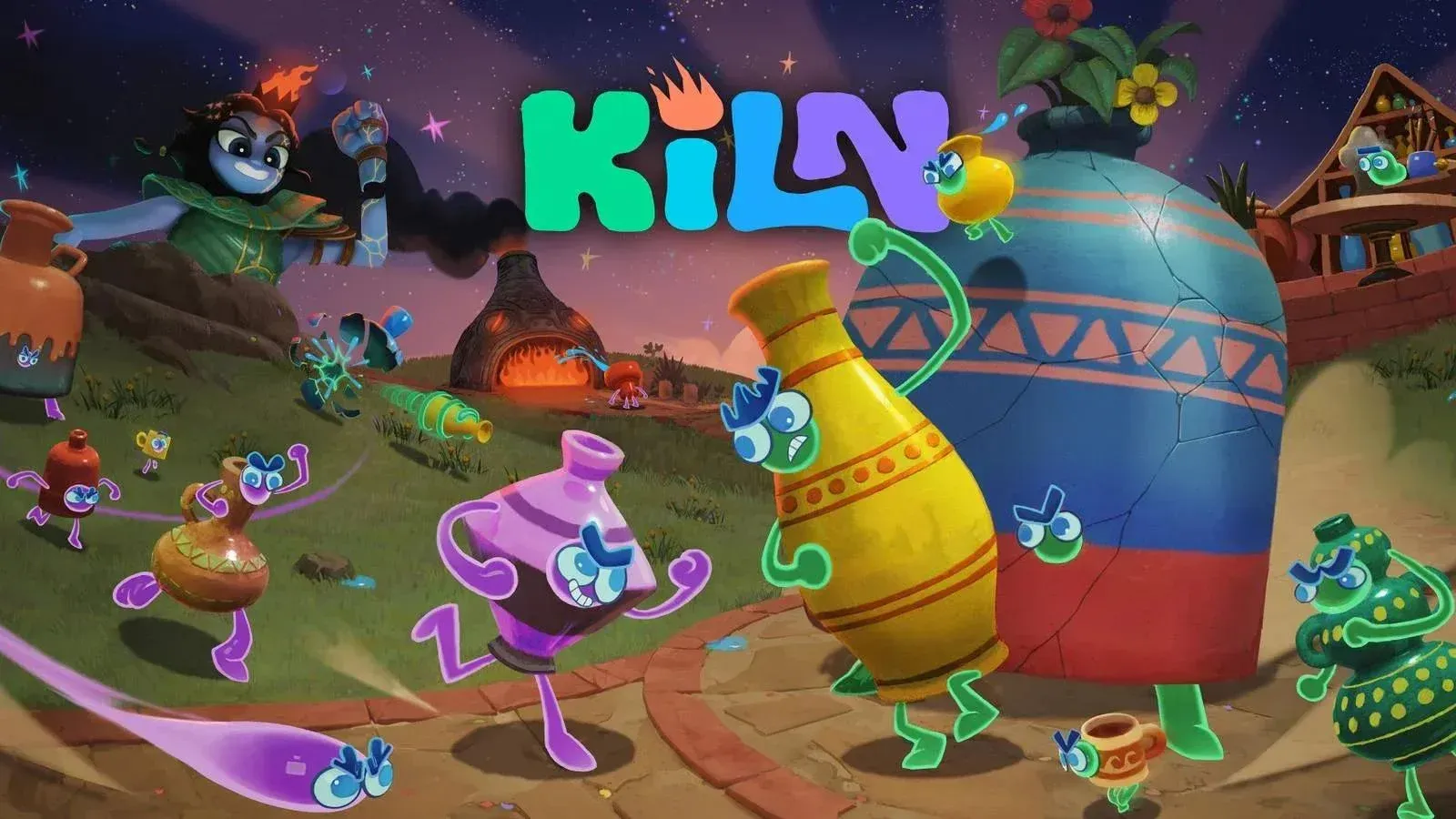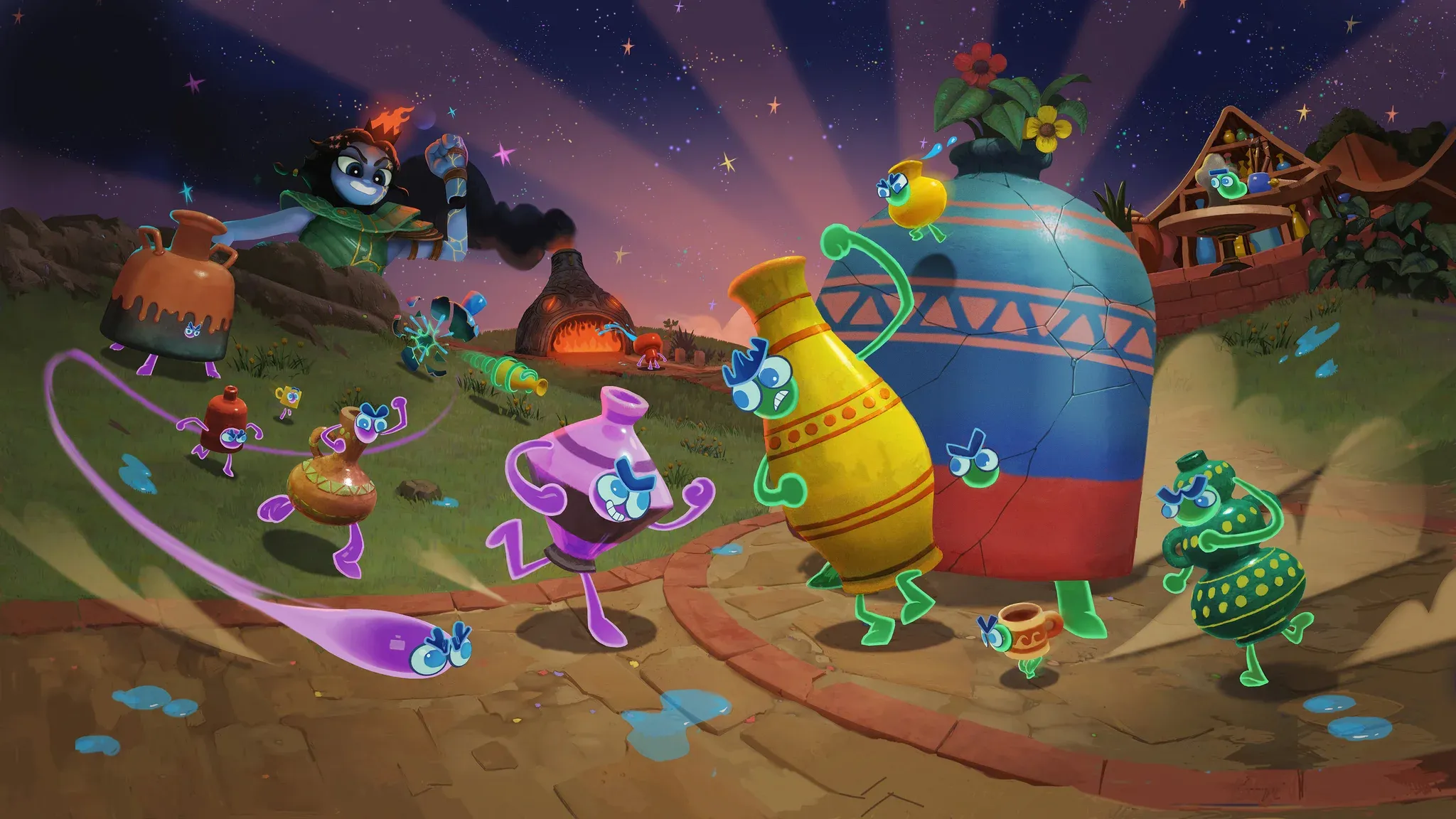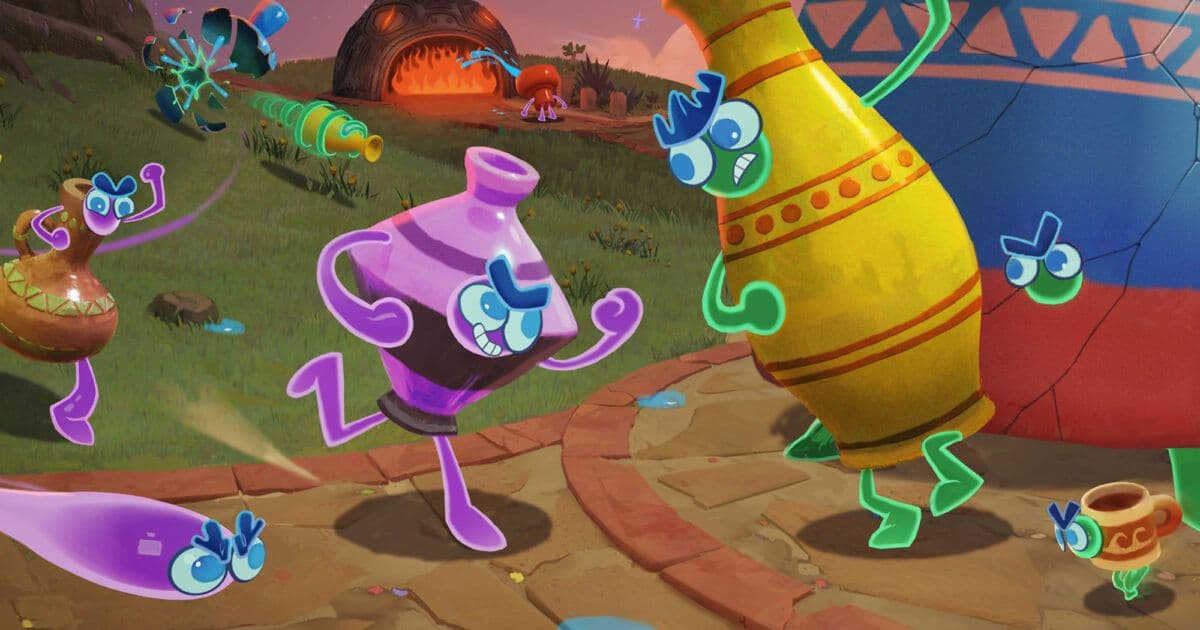

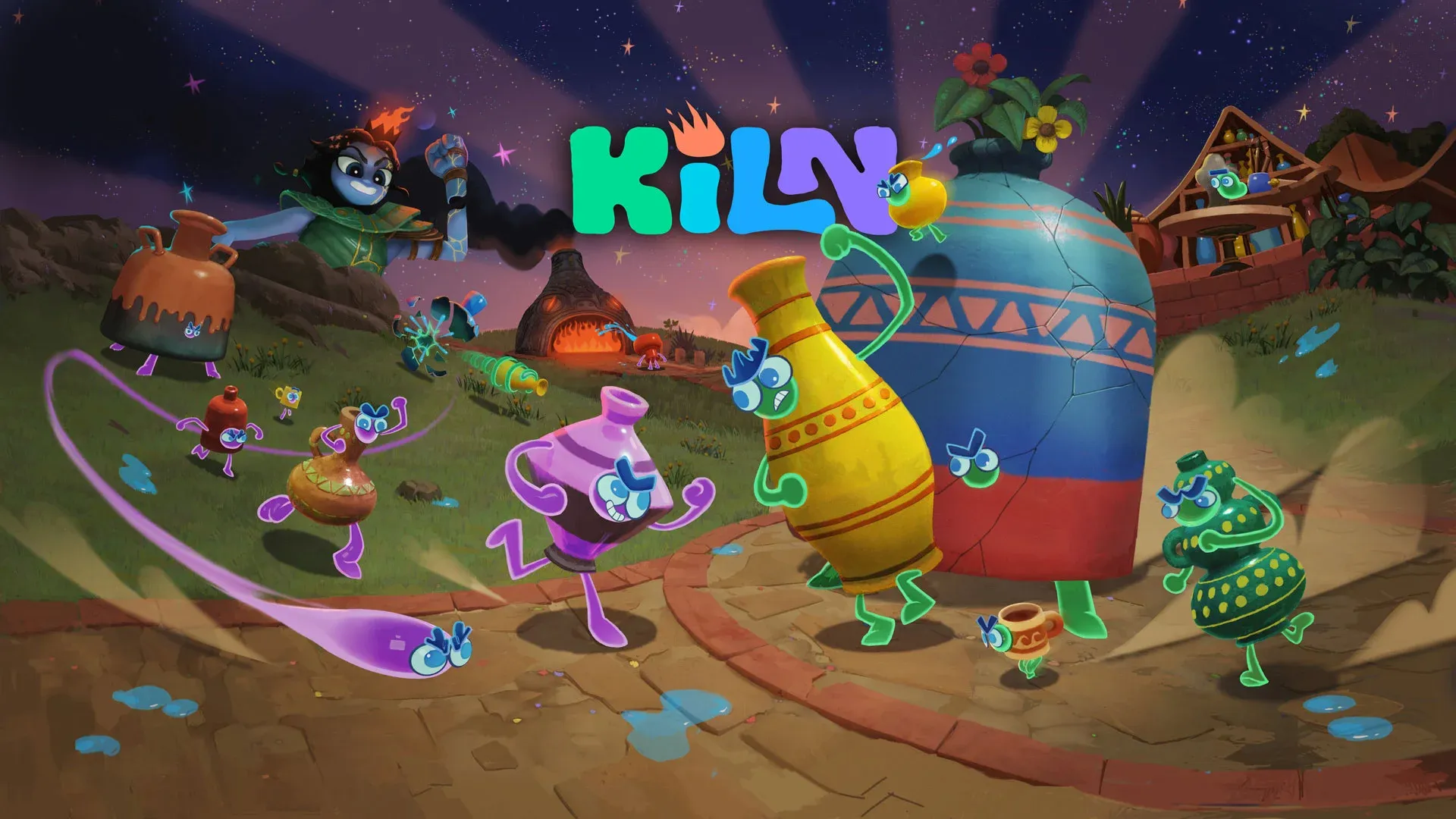
Double Fine's Kiln launched on April 23, 2026 across PS5, Xbox Series X|S, and PC, and it's one of the stranger multiplayer concepts to come out of a major studio in years. You and up to seven other players assemble teams of colorful spirits, sculpt ceramic battle armor on a pottery wheel, and then brawl to douse the opposing team's kiln. The size and shape of the pots you throw directly determine your play style and abilities. That's the whole game, and it's weirder and more tactical than it sounds.
What exactly is Kiln?
Kiln is an online multiplayer party brawler developed by Double Fine Productions and published by Xbox Game Studios. It supports 1 to 8 players with full cross-platform play across PS5, Xbox Series X|S, and PC via Steam. The game is rated E10+ for Fantasy Violence, Crude Humor, and Language. It's also available through Xbox Game Pass Ultimate at no additional cost to subscribers, which is probably the easiest way to try it given its current Steam numbers (more on that below).
The core loop is straightforward: sculpt pots on a pottery wheel, wear those pots as armor with specific abilities tied to their shape, then coordinate with your team to extinguish the enemy's kiln before they do the same to yours.

How does the pottery wheel system work?
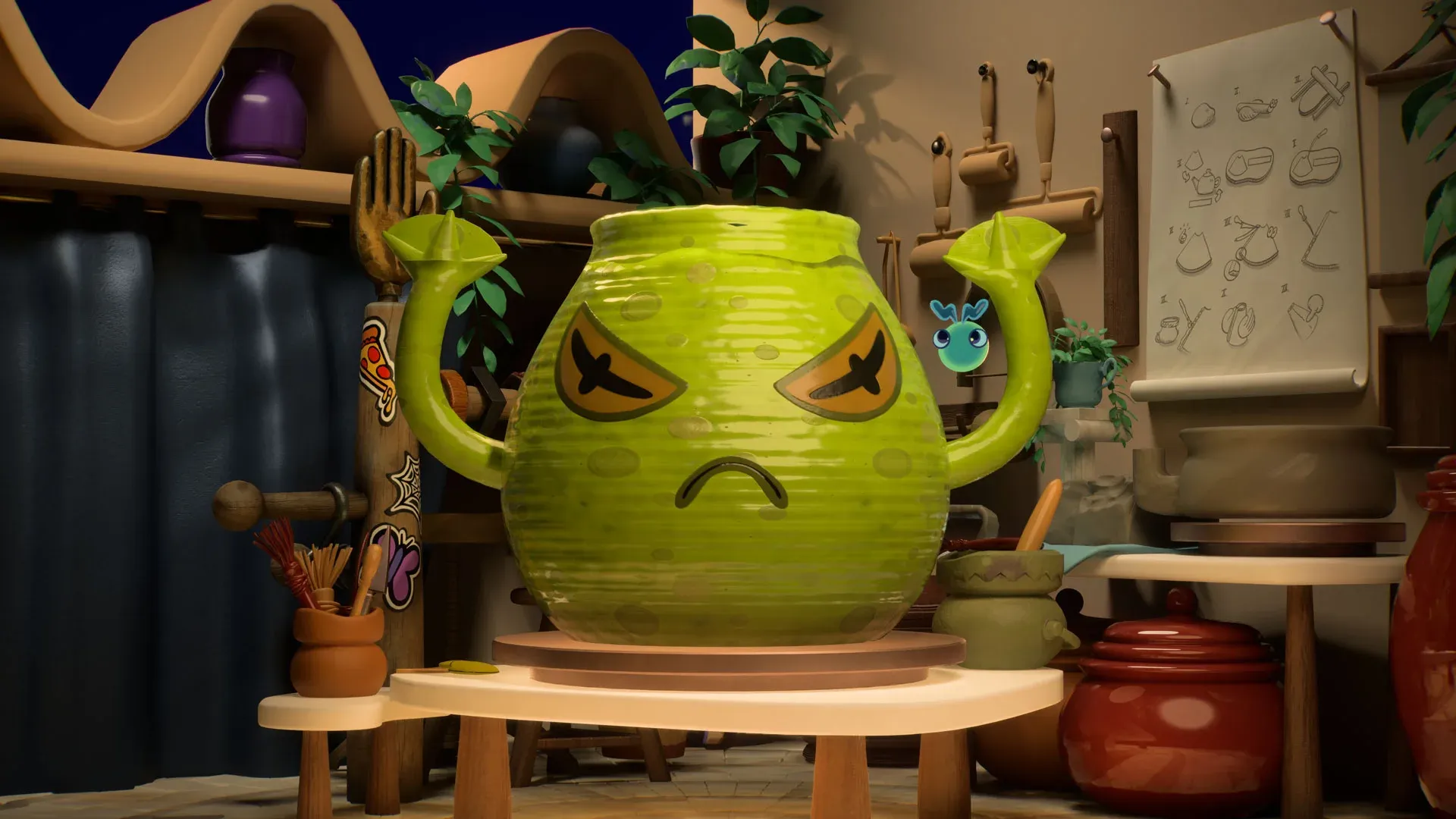
The pottery wheel is the mechanical heart of Kiln. The shape and size of the pot you sculpt determines what kind of armor you wear into battle, and that armor dictates your available abilities and play style. A wide, squat pot plays differently from a tall, narrow one. This means the crafting phase isn't just cosmetic; it's your character build.
The specific ability trees tied to each pot shape aren't fully documented yet, but the core design principle is clear: pot geometry equals combat role. Experimenting with different shapes during matches is part of how you discover what works for your team composition.
What's the main objective in a match?
Every match in Kiln revolves around one goal: douse the enemy team's kiln. Your team's kiln is also a target, so you're simultaneously pushing offense and defending your own structure. The brawling and pottery mechanics feed into this objective directly. Your ceramic armor gives you the tools to fight, and coordinating those tools with your team is what separates a win from a loss.
With support for up to 8 players total, matches can get chaotic fast. Team communication matters more than individual skill in most scenarios.
8 beginner tips to get ahead early
These tips are drawn from early community strategy and launch-week player experience.
- Match your pot shape to your team's needs. If your teammates are already running aggressive builds, consider a shape that supports or defends rather than doubling up on offense.
- Coordinate the pottery phase. Your team's collective armor loadout matters. A group of spirits all wearing the same shape is predictable and easy to counter.
- Protect your own kiln. New players tend to focus entirely on attacking. Leaving your kiln unguarded is the fastest way to lose a round you were winning.
- Learn one pot shape well before experimenting. The ability variety is deep enough that spreading yourself thin early will just slow your improvement.
- Use cross-play to your advantage. Queuing with friends across platforms keeps lobbies full and matchmaking faster, which is worth noting given the current Steam player counts.
- Don't ignore crude humor mechanics. The E10+ rating hints that some of the game's more absurd interactions are intentional and can be used tactically.
- Watch the enemy's armor shapes. Recognizing what pot geometry your opponents are running tells you their likely abilities before the fight starts.
- Play with friends when possible. Kiln is designed as a party game first. Random lobbies work, but the coordination layer becomes much more effective with voice chat and a pre-made group.
Is Kiln worth playing right now?
Honestly, the launch situation on Steam is rough. Fewer than 200 players checked Kiln out at launch, and that number dropped to approximately 40 shortly after. Early reviews haven't helped the player count either. For PC players, that means matchmaking can be slow unless cross-play is enabled.
That said, the game is on Xbox Game Pass Ultimate, which significantly lowers the barrier to entry for Xbox and PC Game Pass subscribers. If you have access through Game Pass, the weird pottery-brawler concept is worth experiencing with a group of friends even if the solo queue experience is inconsistent right now.
| Platform | Availability | Notes |
|---|---|---|
| PS5 | Digital purchase | PlayStation Store |
| Xbox Series X | S | Digital purchase + Game Pass |
| PC (Steam) | Digital purchase | Low player count at launch; cross-play helps |
Where to find more
Kiln is a niche game with a small but growing community. For more party game guides and multiplayer strategy, browse more guides on GAMES.GG to find coverage across the games you're actually playing. Double Fine's track record with creative multiplayer concepts suggests Kiln has room to grow if it finds its audience, but for now the best way to enjoy it is with a pre-made group of friends who can appreciate throwing pots at each other.