

KuloNiku: Bowl Up! drops you into the small town of KuloNiku as a city chef returning home to revive your late grandmother's restaurant, Bakosu. Developed by Gambir Studio and published by Raw Fury, it launched on April 7, 2026 for PC (with Steam Deck verification). The game blends tactile cooking mechanics, restaurant management, and competitive cooking duels into something that sits comfortably between Cooking Mama and Tavern Talk. If you've just started and want to know where to put your energy first, this guide has you covered.

Bakosu restaurant setup
What kind of game is KuloNiku: Bowl Up!?
At its core, KuloNiku: Bowl Up! is a single-player cooking simulation with management and social elements layered on top. You run Bakosu during the day, serving customers who place orders with specific preferences. The cooking itself uses tactile controls where you chop, boil, fry, torch, pour, sizzle, slice, and skewer ingredients. Every action has a satisfying physical feel to it, and the sound design rewards you for it: putting ingredients into the hotpot and pulling them out produces a popping sound that makes the whole process feel alive.
The story runs about 10 hours from start to finish. That's by design. The narrative gives you context and motivation without demanding constant attention. The real hook is the daily rhythm of running the restaurant and competing in Meatball Brawls.


How does Cozy Mode work, and should you use it?
Cozy Mode removes customer patience timers and cooking time pressure entirely. With it off, customers will lose patience if you take too long, and timed cooking adds a layer of stress to each order. With it on, you can take as long as you need on every dish.
For new players, Cozy Mode is the right call. The cooking mechanics have enough to learn without also managing a countdown. Once you're comfortable with the hotpot, chopping, and order customization flow, you can turn it off if you want more of a challenge. The game transforms significantly depending on which setting you choose, so treat it as a difficulty toggle rather than a cheat.
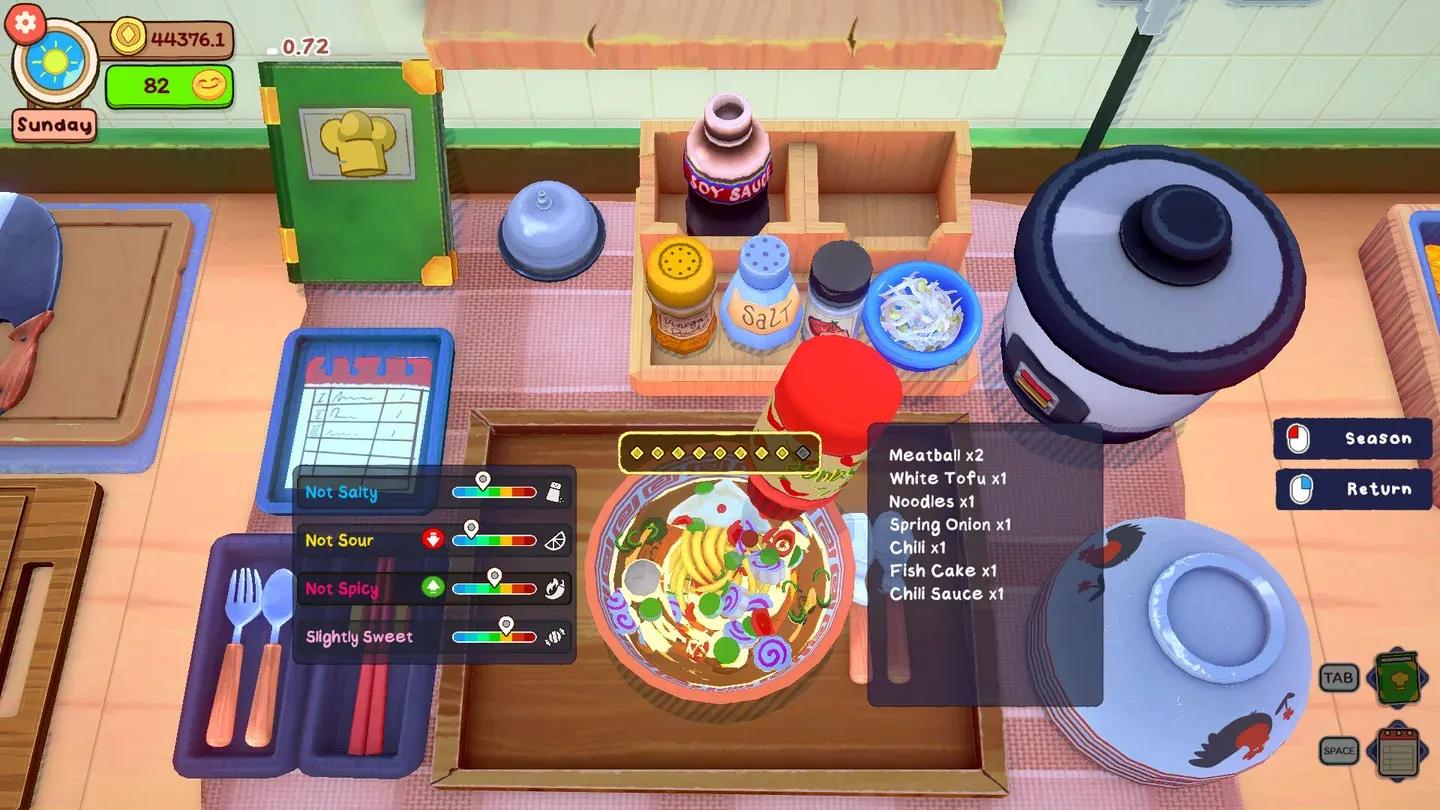
Cozy Mode toggle in settings
How do Meatball Brawls work?
Meatball Brawls (also called Meatbrawls) are competitive cooking duels held on Mondays and Thursdays. You travel to the studio via the in-town bus to set one up. In each Brawl, you and a rival chef cook for a rotating panel of judges. Points come from three sources: matching the judges' taste preferences, using that day's bonus ingredients, and earning audience points from live crowd requests.
The most effective strategy is to prioritize judge tastes and bonus ingredients over audience points. Audience points contribute less to your final score by comparison. Since each turn gives you a limited number of actions and the total turn count is fixed, spending those actions on what the judges want consistently delivers better results.
The tutorial covers the basics, but it can feel like a lot on first read. In practice, the system is more manageable than it looks. Pay attention to what each judge wants before you start cooking, then build your actions around hitting those preferences while weaving in the bonus ingredients where possible.
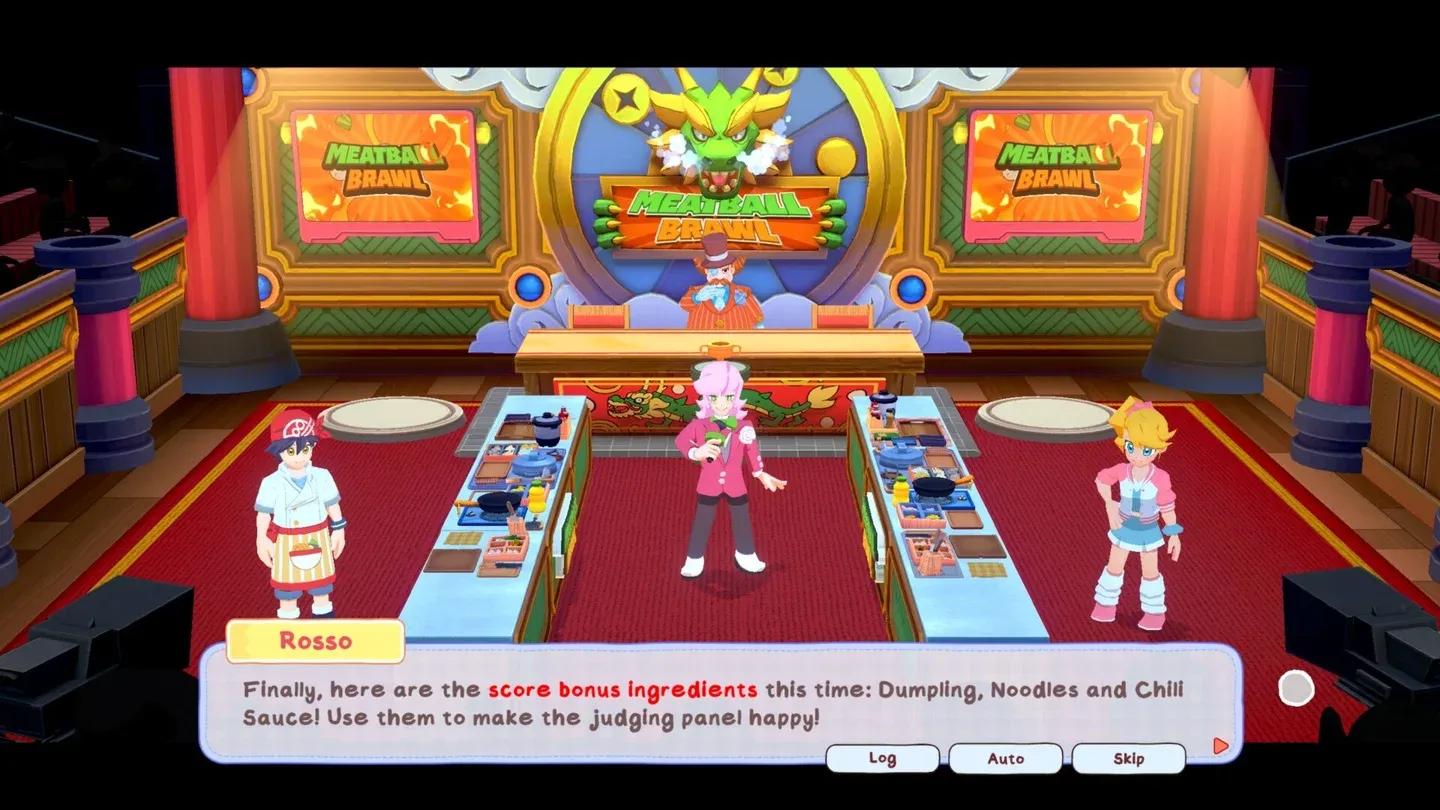
Meatball Brawl judge scoring
What should you buy first from Ume's shop?
Ume's shop is your source for ingredients, tools, and decorations. It restocks every Friday, so plan your purchases around that weekly reset. After closing Bakosu for the night, you can visit the shop before ending the day.
The single best early purchase is more bowls. The game's own item description makes the case plainly: opening a soup restaurant with only 2 bowls means you're washing them constantly between customers, which slows your service significantly. More bowls in rotation means less downtime.
After bowls, prioritize new ingredients. Expanding your ingredient list lets customers place more varied orders and unlocks new recipes they can request. This directly improves the day-to-day variety of what you're cooking, which keeps the core loop from feeling repetitive.
Decorations come third. They're not purely cosmetic: some items provide gameplay perks that help with customer satisfaction. Full decoration sets can be unlocked through festivals or by raising friendship levels with town residents, so there's no rush to buy everything from the shop immediately.
| Priority | Item Type | Why It Matters |
|---|---|---|
| 1 | Extra bowls | Reduces wash cycles, serves more customers faster |
| 2 | New ingredients | Unlocks recipes and expands customer order options |
| 3 | Decorations | Some give gameplay perks; sets unlock via festivals too |
| 4 | Furniture | Personalizes Bakosu; lower mechanical impact early on |
How do you build friendships with NPCs?
After Bakosu closes each day, you don't have to immediately end the day. NPCs sometimes appear on the sidewalk outside, and selecting them to talk raises your friendship level with them. This is separate from the relationships you build through Meatball Brawls.
Stella, the rockstar chef who runs rival restaurant Souper Starz, is your main competition. She has a tsundere personality and warms up over time, though her initial edge toward you comes partly from her admiration of your grandmother. She's the most prominent NPC in the competitive side of the game.
Raising friendship levels with town residents unlocks special illustrations and decorations, some of which can't be obtained any other way. It also makes the town feel like an actual community rather than a backdrop. The system is simple: talk to people when you see them, and the relationship meters climb naturally.
Quick reference: daily routine for new players
Here's the most efficient daily loop based on how the game structures its time:
- During the day: Open Bakosu, serve customers, focus on fulfilling customized orders accurately
- After closing: Visit Ume's shop on Fridays to restock ingredients and buy extra bowls
- Monday and Thursday evenings: Take the bus to the studio to set up a Meatball Brawl
- Any evening: Talk to NPCs on the sidewalk to build friendships before ending the day
The game limits how many customers you serve per day based on in-game time, so you can't grind cooking endlessly. Work with that structure rather than against it.

Hotpot cooking in Bakosu
Is KuloNiku: Bowl Up! worth playing?
The game earned a 9/10 score at launch, praised as a short but solid cozy title with warmth that suits its soup-restaurant setting. Standout elements include the sound design, the Meatball Brawls, and Cozy Mode. The main criticism was that some NPC personalities lean on familiar archetypes, and that more options for interacting with NPCs outside of sidewalk encounters would be welcome.
For players who enjoy Cooking Mama-style tactile cooking or the social rhythm of games like Tavern Talk, KuloNiku: Bowl Up! delivers on both fronts. The roughly 10-hour story keeps things focused, and the gameplay loop holds up well beyond the main narrative.
For more cooking games and cozy titles to add to your list, browse more guides on GAMES.GG.