
What is KuloNiku: Bowl Up! and is it worth playing?
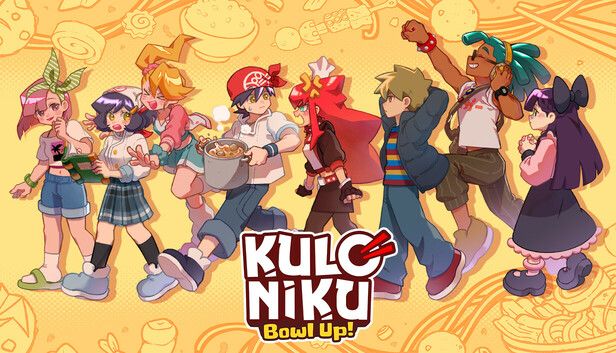
KuloNiku: Bowl Up! is a first-person cooking sim developed by Gambir Studio and published by Raw Fury, released on Steam on April 7, 2026. You play as a former city chef returning to the small town of KuloNiku to reopen your late grandmother's meatball restaurant, Bakosu. The game blends point-and-click cooking mechanics with life-sim friendship building and a genuinely strategic competition system called Meatball Brawls. Steam reviews currently sit at roughly 90% positive, with most players landing between 8 and 9 out of 10 in their personal assessments. The main storyline runs about 10 hours, but the sandbox loop of cooking, shopping, and socializing extends well past that. It holds Steam Deck Verified status and offers a Cozy Mode toggle for pressure-free play.
Bakosu's hotpot in action


How does the daily routine at Bakosu work?
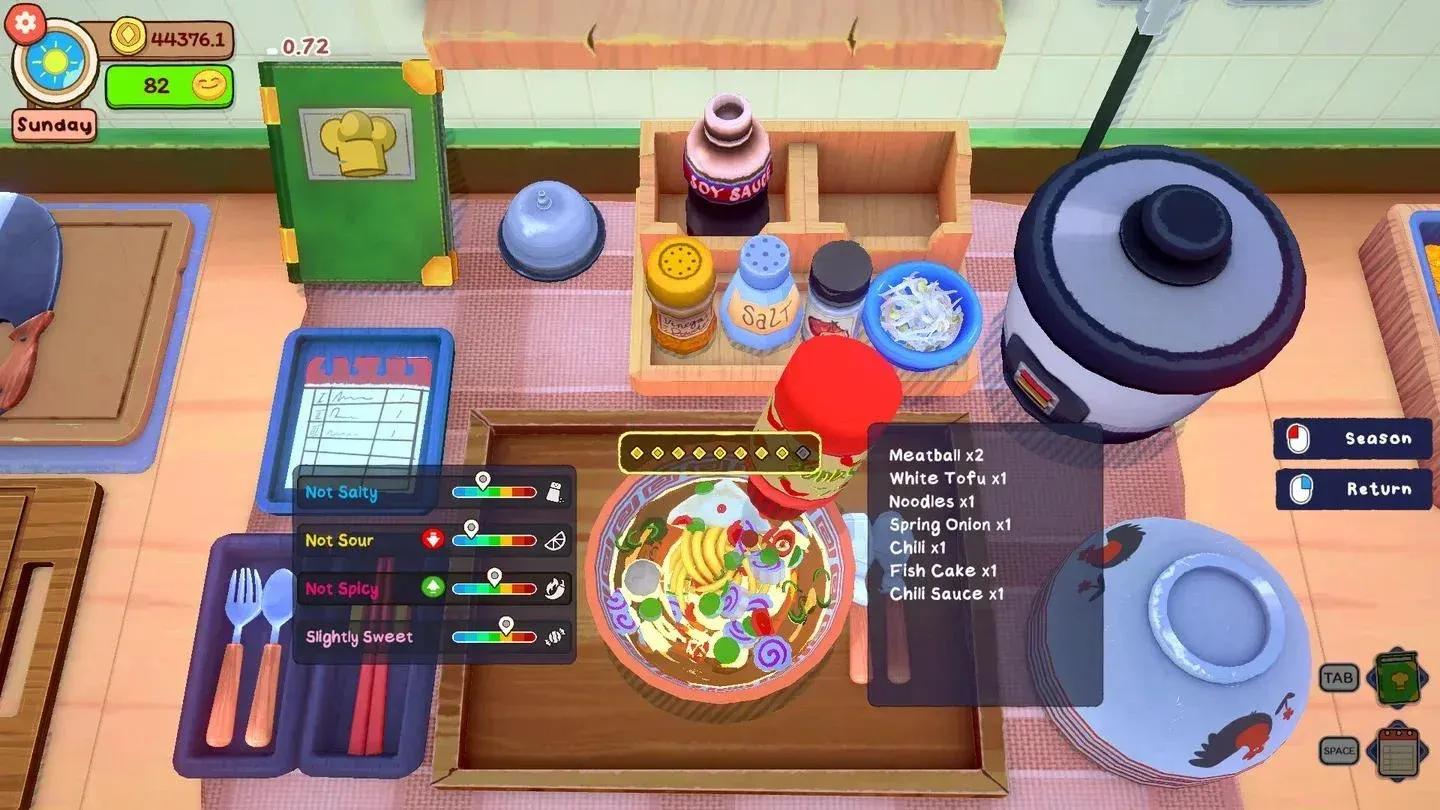
Every in-game day follows a fixed structure. The restaurant opens in the morning, customers arrive with orders, and the shift ends when the last customer leaves. After closing, you have a window to visit Ume's shop next door for ingredients, tools, bowls, and decorations. The shop inventory refreshes every Friday, so planning purchases around that weekly reset matters.
Orders break down into three components: a base of meats and noodles, add-ins like chili pepper or bok choy, and seasonings. Each ingredient shifts a dish's flavor profile across dimensions like salty, sweet, and spicy. Customers arrive with specific preferences and hard restrictions, so a customer who loves sweetness but hates salt creates a real problem when the obvious sweetener also adds salt. You have to scan your available ingredients and find a workaround.
The early days feel deliberately slow. A small pantry limits you to basic meatball soups, which means repetition while the mechanics click into place. That tedium pays off: once cooking becomes reflexive, you have the mental bandwidth to handle increasingly demanding customer requests without burning through the patience timer.
Bowls also create an early strategic decision. Spending money on bowls reduces washing downtime, but spending it on ingredients expands the menu and adds order variety. That trade-off between efficiency and expansion echoes across most purchasing choices in the game.
Ume Shop weekly restock screen
How do Meatball Brawls work?
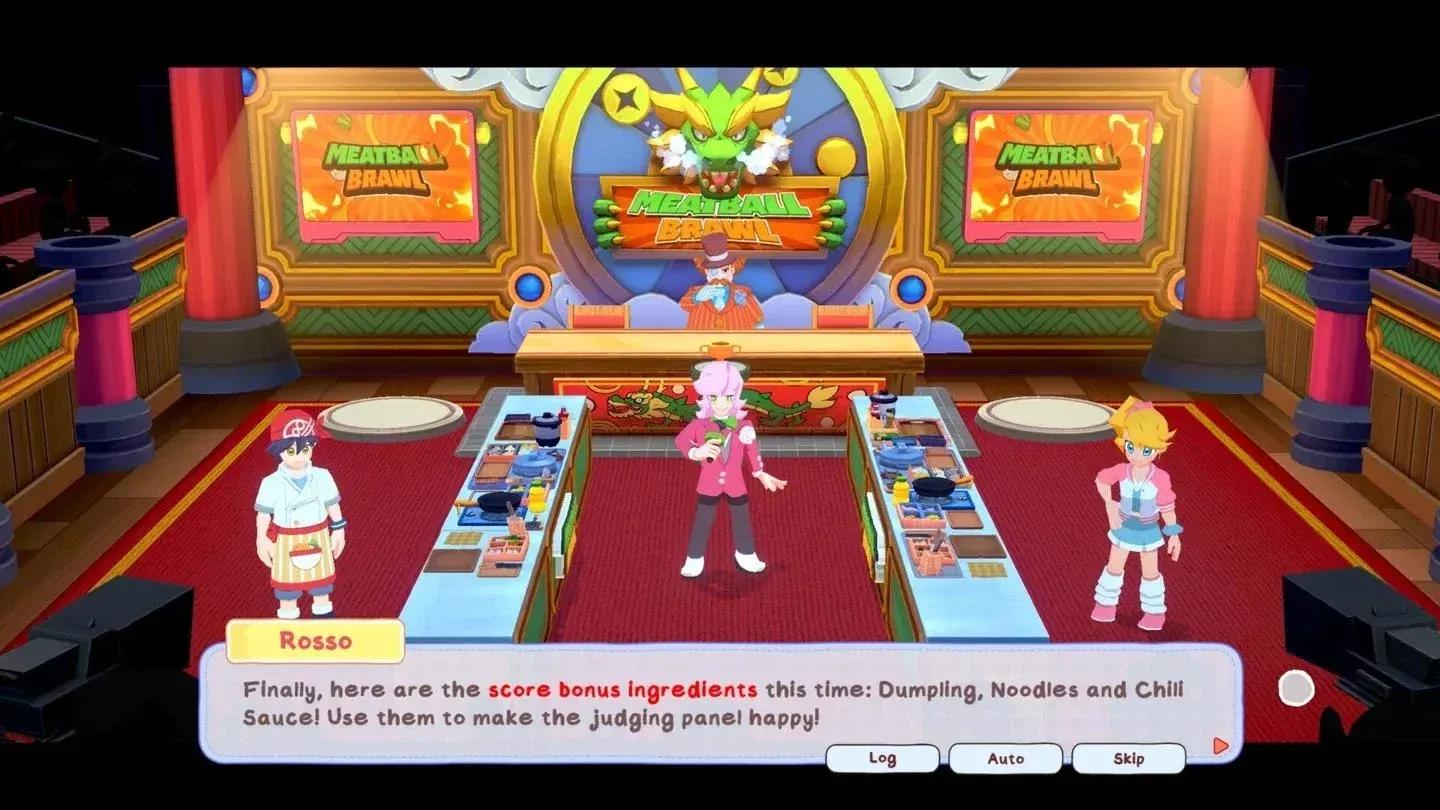
Meatball Brawls are the competition system that sits at the center of KuloNiku's progression. They occur on Mondays and Thursdays, pitting you against a rival chef in a three-round cook-off. Each round gives you a limited pool of action points. Boiling meatballs costs one point. Adding noodles costs one. Seasoning costs one. There is no room for waste.
A panel of judges evaluates each dish based on personal taste preferences, recipe requirements, and use of designated bonus ingredients. Audience reactions contribute additional points, but judge scores carry significantly more weight. Focusing on judge tastes and bonus ingredients is the more reliable path to winning.
As the game advances, the judge panel grows, which multiplies the competing preferences you need to reconcile within a single bowl. This is where the design gets sharp. One judge might dislike tendon meatballs, but adding them could satisfy a second judge, meet a bonus ingredient requirement, and shift the overall flavor profile enough to please the first judge anyway, all for a single action point.
Brawls also drive story progression. Winning advances the plot, introduces new rivals, and raises Bakosu's standing on the town leaderboard. The full roster of Brawl opponents includes Mami, Stella, Shuga, Dan, Noka, Elio, Runa, Lado, and Mr. Crois, with Stella appearing as a recurring rival across multiple encounters.
Meatball Brawl opponent order and achievements
| Opponent | Achievement Name | Notes |
|---|---|---|
| Mami | No Service | First Brawl opponent |
| Stella | A Star is Gone | Recurring rival; three separate encounters |
| Shuga | Beat Drop | Mid-game opponent |
| Dan | Fission Mailed | Unlocks Dan as a partner option |
| Noka | Herbicider | Later progression |
| Elio | Not My Tempo | Later progression |
| Runa | Total Eclipse | Late-game opponent |
| Lado | Recession | Late-game opponent |
| Mr. Crois | Left No Crumbs | Hidden achievement |
How do you manage the weekly calendar effectively?
The schedule creates persistent resource tension. Meatball Brawls and character hangouts both occupy Mondays and Thursdays. Choosing to socialize or compete on any other day causes the game to skip forward to the next available slot. The restaurant generates passive income during skipped days, but at a reduced rate compared to days you work directly.
Friendships unlock concrete rewards: new ingredients, recipes, and cooking tools. Building them requires time away from the restaurant. Skipping work days to hang out creates a cash shortfall that limits your ability to buy the items those friendships unlock.
Saturdays introduce weekly festivals with specific cooking constraints. A festival might require every order to include a featured ingredient or use a particular cooking method like frying. Participation is optional, but engaging forces you to rethink habitual approaches and pushes the cooking system into less familiar territory.
The rhythm that works: buy ingredients on Friday, compete on Monday, socialize on Thursday, and work the remaining days. It takes a few lean stretches to find that cadence, but once it clicks, the week feels natural rather than chaotic.
What are all 50 steam achievements and how do you unlock them?
KuloNiku: Bowl Up! has 50 Steam achievements. Six players have completed all 50 as of April 2026, with a median completion time of 13 hours and 45 minutes and a fastest recorded completion of 9 hours and 16 minutes.
The achievements split across five main categories: restaurant progression, Meatball Brawl victories, friendship milestones, shop purchases, and story completion.
Restaurant and shop achievements:
- Welcome to Bakuso - Serve your first customer
- Renowned Restaurant - Increase Bakuso's reputation level
- Local Legend - Reach max reputation for Bakuso
- The Very Best - Get Bakuso to the top of the leaderboard
- Climbing the Ranks - Increase Bakuso's rank at the leaderboard
- And... Cut! - Unlock the Cutting Table
- Fry High - Unlock the Frying Table
- Thrill of the Grill - Unlock the Skewer Table
- Hydration Station - Unlock the Drink Table
- Fully Equipped - Purchase all tool upgrades from Ume Shop
- All Decked Out - Purchase all decorations from Ume Shop
- Ingredient Master - Purchase all ingredients from Ume Shop
- Premium Purchaser - Purchase a premium ingredient from Ume Shop
- Premium Flavors - Use a premium ingredient
- New Customer - Purchase an item from Ume Shop
- Voucher Vendee - Exchange coins for a voucher at Ume Shop
- Restock Requester - Pay Ume to restock Ume Shop's inventory
Meatball Brawl achievements:
- A Winner is You - Win a Meatball Brawl
- High Scorer - Get max score from at least one judge
- No Service - Beat Mami
- A Star is Gone - Beat Stella (first time)
- Star Destroyer - Beat Stella (second time, hidden)
- Star, Crossed - Beat Stella (third time, hidden)
- Beat Drop - Beat Shuga
- Fission Mailed - Beat Dan
- Herbicider - Beat Noka
- Not My Tempo - Beat Elio
- Total Eclipse - Beat Runa
- Recession - Beat Lado
- Left No Crumbs - Beat Mr. Crois (hidden)
Partner selection achievements:
- The Supportive Partner - Pick Cassie as your Brawl partner
- The Calculating Partner - Pick Dan as your Brawl partner
- The Upbeat Partner - Pick Shuga as your Brawl partner
- The Bashful Partner - Pick Ume as your Brawl partner
- The Rocking Partner - Pick Stella as your Brawl partner (hidden)
Friendship and social achievements:
- Ume and Me - Hang out with Ume
- Cassie's Companion - Hang out with Cassie
- Supporting Shuga - Hang out with Shuga
- Dan's Confidant - Hang out with Dan
- Me Time - Hang out alone on a day off
- The Promise - Reach max friendship with Cassie
- True Rivals - Reach max friendship with Stella
- Gentle Courage - Reach max friendship with Ume
- Partners Forever - Reach max friendship with Dan
- My Muse - Reach max friendship with Shuga
Recipe and crafting achievements:
- Recipe Developer - Craft a recipe
- Culinary Innovator - Craft all recipes
Exploration and story achievements:
- Sightseeing - Visit the downtown for the first time
- Festive Fun - Complete a festival
- A Toast to You - Finish the main story
Who are the key characters and why do friendships matter?
The cast leans on recognizable archetypes but tends to push past them with individual quirks. Stella is your main rival, running a competing restaurant in town. Her confrontational personality comes partly from genuine admiration for your grandmother's legacy, and she warms up over time without fully admitting it. She appears in three separate Brawl encounters, making her the most recurring opponent in the game.
Ume runs the shop next door and has an unsettling fascination with knives. She's the shy shopkeeper archetype, but her role as the primary merchant makes her friendship rewards practically useful: reaching max friendship with Ume unlocks the Gentle Courage achievement and associated rewards.
Cassie is a childhood friend who joins as your restaurant assistant. Dan and Shuga round out the main friendship roster, each providing a unique buff when selected as a Brawl partner.
Friendships are not just narrative decoration. Maxing out a friendship track unlocks new ingredients, recipes, and tools that directly improve your cooking and Brawl performance. The trade-off is the time cost described in the calendar section above.
All character interactions are meaningful in a practical sense too: some NPCs ask you questions based on earlier conversations, so skipping through dialogue has consequences beyond missing story context.
What are the game's weaknesses?
No guide should oversell a game. KuloNiku: Bowl Up! has real limitations worth knowing before you commit.
The recipe crafting system never reaches the depth of the cooking or Brawl mechanics. Early unlocks require little more than repeated button presses, and later recipes add only minor steps. This is the weakest mechanical link in an otherwise carefully assembled design.
Dialogue repetition becomes noticeable after extended play. NPC conversations cycle through the same lines, which gradually erodes the sense of community the game builds through its other systems. Returning customers also never develop recognizable preferences or ordering habits, which feels like a missed opportunity in a game built around small-town relationships.
The day-skipping mechanic, while strategically interesting, can disrupt pacing in the early game. Losing several days of full income for a single hangout creates situations where progress stalls, particularly when cash reserves are thin.
Some NPC personalities lean heavily on visual-novel archetypes without always pushing far enough past them to feel fully distinct. This is a personal preference issue rather than a fundamental flaw, and the NPCs one player finds stereotypical could easily be another player's favorites.
Is Cozy Mode worth using?
Cozy Mode removes all timers and patience meters, eliminating time pressure from cooking and customer satisfaction entirely. It sits in the settings menu rather than functioning as a separate difficulty track, so you can toggle it freely without restarting or losing progress.
The practical effect is significant. With Cozy Mode on, the game shifts from a mildly demanding simulation into something closer to a meditative loop where the only goal is getting the flavor right. The Meatball Brawl action-point system remains intact, so the strategic depth of competitions does not disappear. You are only removing the time pressure from the daily service loop.
For players who want to focus on friendship progression, achievement hunting, or simply exploring the cooking system without a patience timer running down, Cozy Mode is a genuine option rather than a compromise. For players who find the time pressure adds satisfying tension to the daily routine, the default mode works well.
For more cozy sim recommendations and cooking game guides, browse the latest guides at GAMES.GG to find similar titles worth your time.