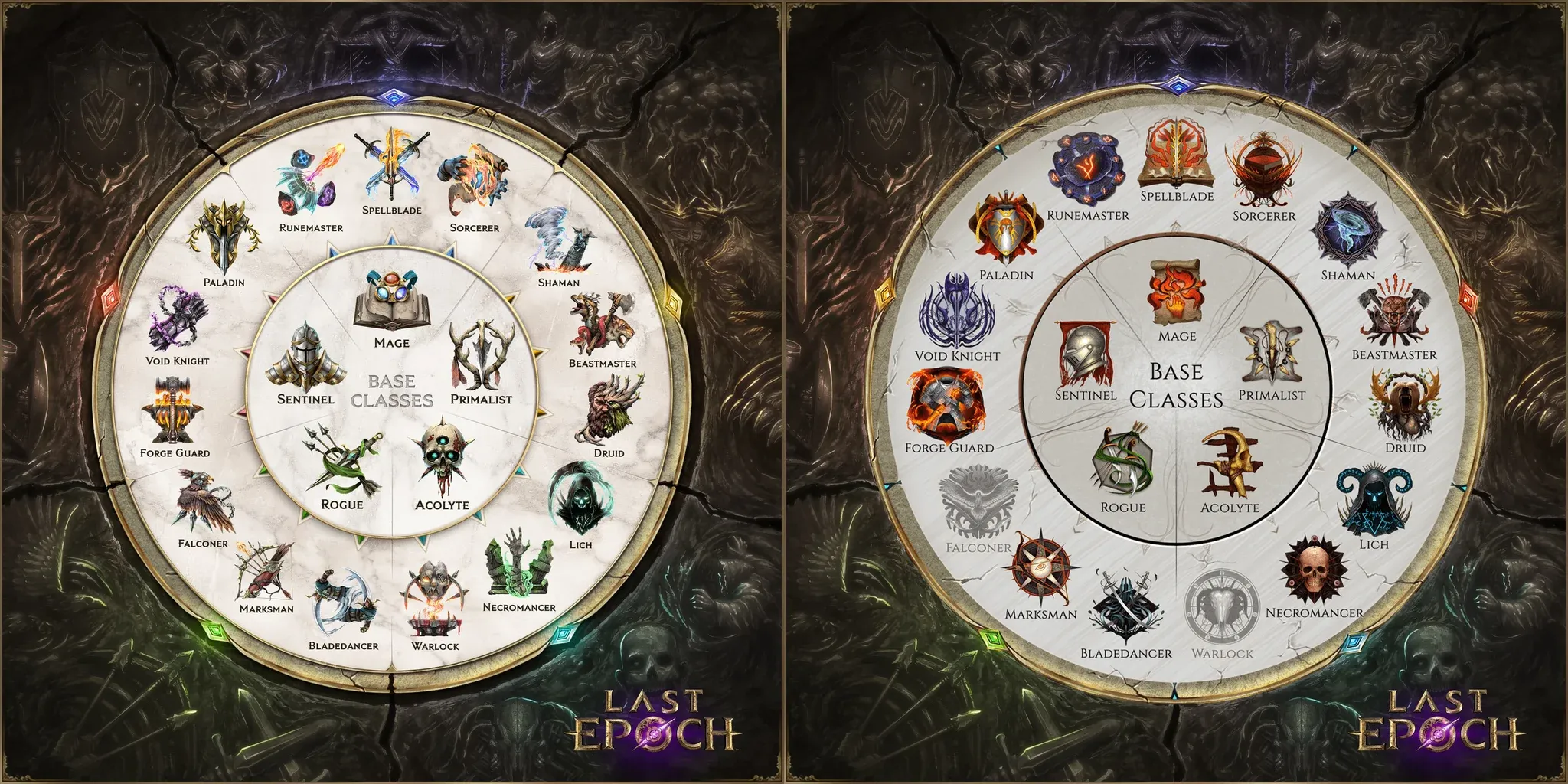


Picking the wrong mastery in Last Epoch is the kind of mistake you only make once. Unlike most ARPGs where you can freely respec your character, your mastery choice is permanent for that character. Get it right and you have a focused, powerful build. Get it wrong and you are starting over. This guide covers exactly how to unlock your mastery, what each subclass actually does, and which ones are worth your time in the current meta.
What is a mastery in Last Epoch?
Every character in Last Epoch starts as one of five base classes: Sentinel, Acolyte, Mage, Primalist, or Rogue. Each base class has three masteries (subclasses) that specialize your character into a distinct playstyle. Think of it like an ascendancy in Path of Exile or a subclass in Diablo 4, but with more mechanical depth.
Your mastery gives you access to exclusive skills that no other subclass can use. For example, choosing Lich under the Acolyte unlocks Reaper Form, while Necromancer gets Summon Wraith, Dread Shade, and Assemble Abomination. These exclusive skills are often the backbone of entire builds, so the mastery you pick defines your character's identity far more than your gear does at early levels.
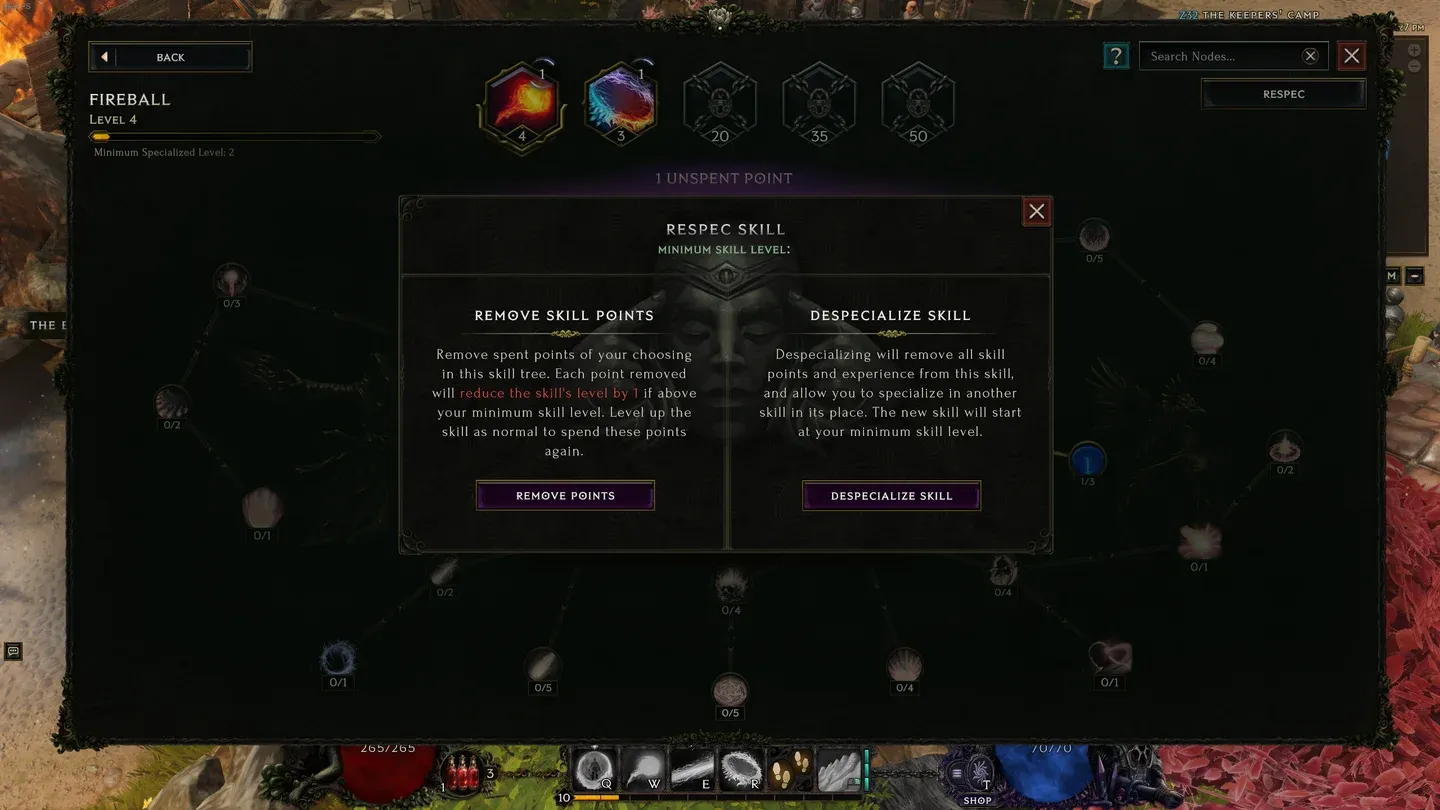
Mastery selection at End of Time
How to unlock your mastery in Last Epoch
Unlocking your mastery requires two things:
- Spend 20 points in your base class passive tree.
- Complete the mastery quest, which only becomes available in Chapter 4.
Once both conditions are met, you speak with Elder Gaspar at the End of Time. He presents your three mastery options and asks you to commit. Take your time here. Read each option carefully, check what exclusive skills each mastery unlocks, and consider the playstyle you want for the rest of the game.
As noted in the Last Epoch Mastery Guide - How to Unlock & Change, the moment you confirm your choice with Elder Gaspar, it is locked in permanently for that character.
If you want to respec your skills (not your mastery), press S to open the Skills menu, select a skill, and click the RESPEC button in the upper right corner of that skill's tree. Skill respecs are flexible. Mastery respecs are not.

Speak to Elder Gaspar in Chapter 4
All five base classes and their masteries
Here is every base class and its three subclasses, with a quick summary of what each one actually plays like.
Sentinel
The Sentinel is your melee tank archetype, built around heavy armor, shields, and close-range combat. Damage types span Void, Fire, and Physical depending on the mastery you choose.
- Forge Guard: Physical damage specialist that applies Bleeds and leans into defense. Supports both two-handed weapon builds and sword-and-board. Exclusive skills include Forge Strike, Smelter's Wrath, and Ring of Shields.
- Paladin: A hybrid DPS and healer that deals Fire damage and scales Adaptive Spell Damage when using a shield. Exclusive skills are Judgement and Holy Aura.
- Void Knight: Melee-focused Void damage dealer with a unique mechanic called Echoes, which temporarily duplicates a skill after use. Exclusive skills include Erasing Strike and Anomaly.
Acolyte
The Acolyte works with dark magic, minions, and debuffs. Damage types are Necrotic, Poison, and Physical.
- Lich: Trades health for damage through life tapping, with mastery bonuses that reward playing at low HP. Exclusive skills are Reaper Form and Death Seal.
- Necromancer: Summons and commands large armies of minions, including unique singular entities. Exclusive skills are Summon Wraith, Dread Shade, and Assemble Abomination.
- Warlock: A curse-focused subclass that corrupts and weakens enemies with forbidden magic.
Mage
The Mage controls Fire, Lightning, and Cold. All three masteries are caster-oriented, though Spellblade blends melee into the mix.
- Sorcerer: Pure AoE spell damage at range, scaling with Critical Strike. Exclusive skills are Meteor, Black Hole, and Arcane Ascendance.
- Runemaster: Uses runic magic to augment spells and defenses, with a strategic, battlefield-control playstyle.
- Spellblade: Melee-caster hybrid where melee attacks trigger additional spells. Exclusive skills include Shatter Strike, Surge, and Firebrand.
Primalist
The Primalist channels raw nature magic through beast companions, shapeshifting, and elemental totems.
- Druid: Transforms into animal forms including Werebear, Spriggan, and Swarmblade (Werebear and Spriggan are Druid-exclusive). Exclusive skill is Entangling Roots.
- Beastmaster: Commands persistent companions that require revival when killed, unlike Necromancer minions. Exclusive skills are Summon Raptor, Summon Sabertooth, and Summon Frenzy Totem.
- Shaman: Totem-based spellcaster that deploys stationary allies to deal damage. Exclusive skills are Avalanche and Summon Storm Totem.
Rogue
The Rogue specializes in precision, speed, and stealth. Masteries cover ranged, melee, and trap-based playstyles.
- Bladedancer: Fast melee assassin with daggers and smoke bombs, relying on Dodge and Glancing Blow for survivability. Exclusive skills are Dancing Strikes and Lethal Mirage.
- Marksman: Ranged bow specialist with strong single-target and AoE options. Exclusive skills include Hail of Arrows and Detonating Arrow.
- Falconer: Trap-based tactician with a loyal falcon companion.
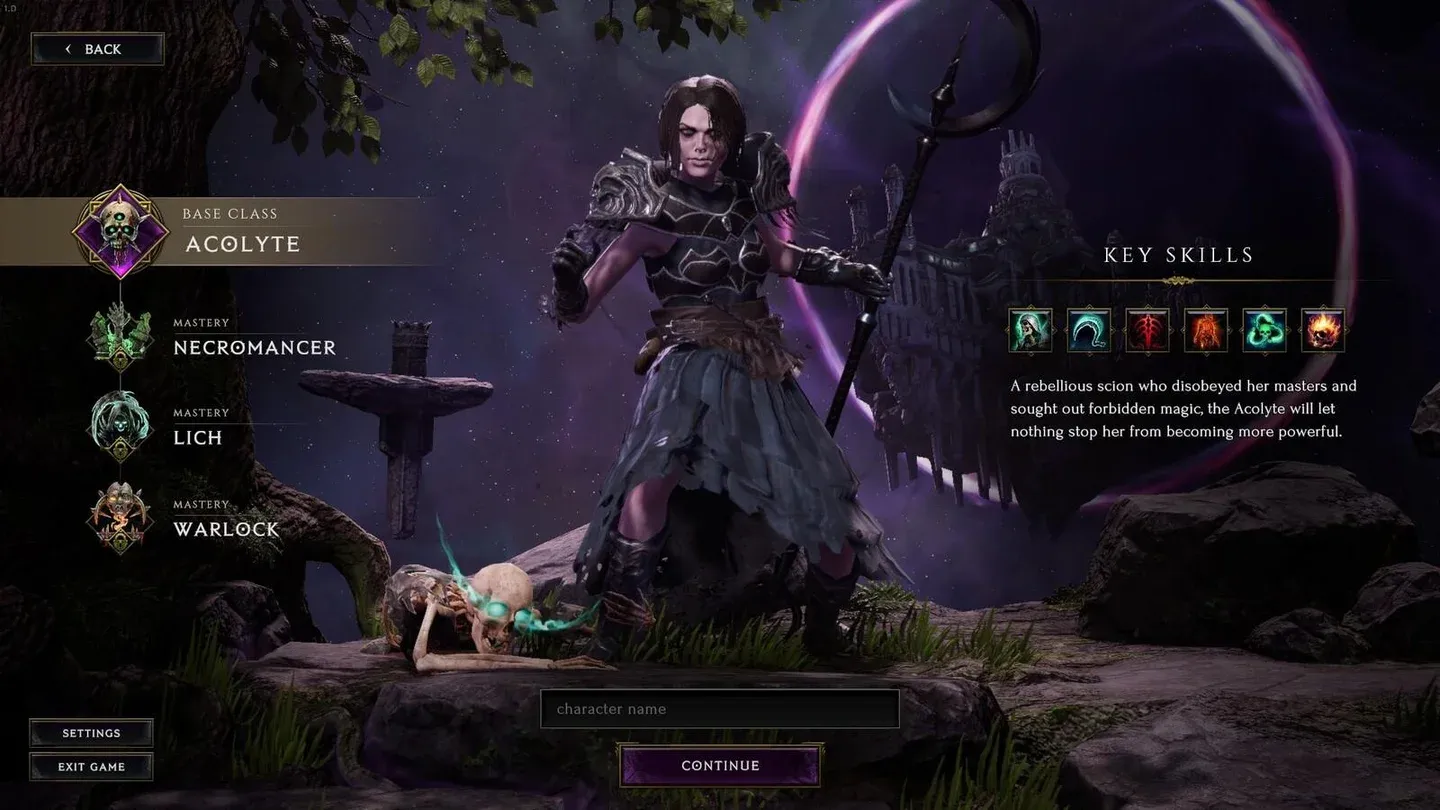
Acolyte mastery passive tree
Mastery tier list: what is the best mastery right now?
Based on current performance across story and endgame content, here is how the masteries stack up. Keep in mind that balance patches can shift these rankings, so treat this as a snapshot of the current meta rather than a permanent verdict.
The S-tier masteries dominate because they bring strong damage output, reliable survivability mechanics, and flexible build options. Necromancer in particular stands out for letting your minion army absorb damage while you deal it, making it forgiving for players still learning the endgame. Sorcerer clears content fast thanks to stacking AoE spells, which makes farming feel efficient from the moment you unlock the mastery.
Druid earns its S-tier spot through shapeshifting flexibility. Cycling between Werebear for tanking and Spriggan for healing mid-combat gives it a level of adaptability that most masteries cannot match.
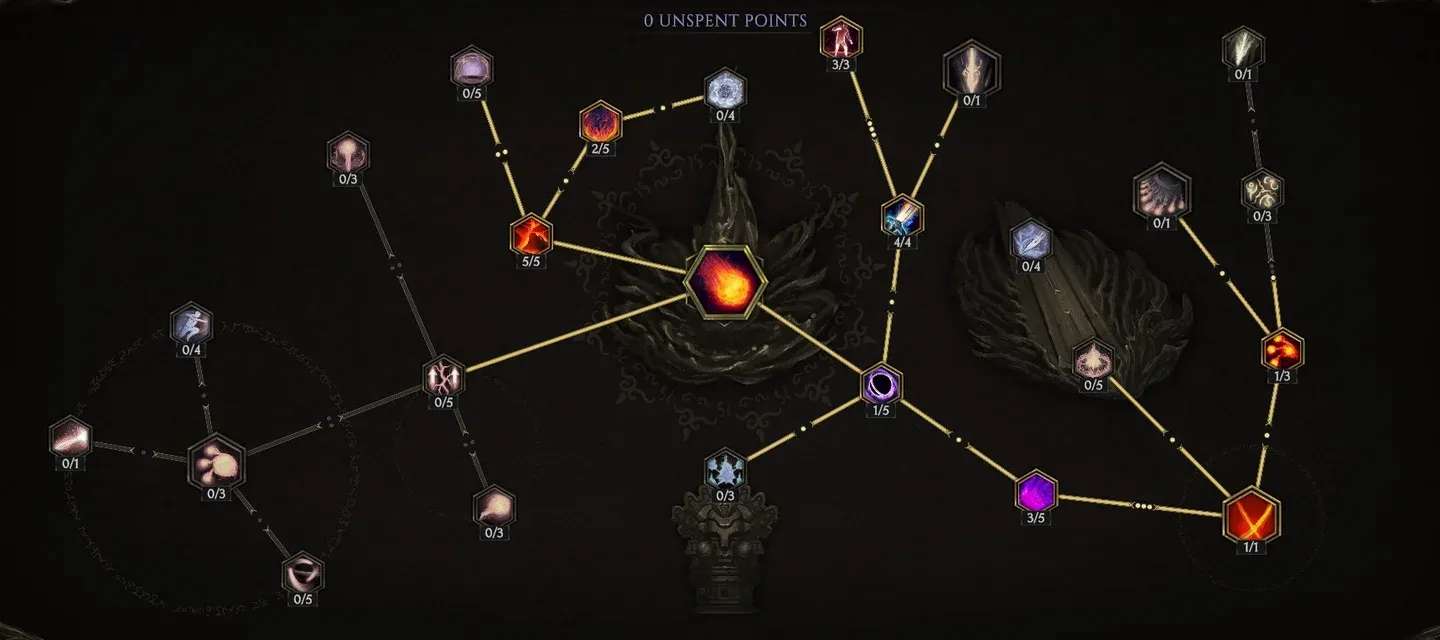
Sorcerer Meteor skill tree
What is the best mastery for new players?
Three masteries consistently work well for players new to Last Epoch:
- Sorcerer: Straightforward AoE damage from range. You point at enemies, they die. The kit is readable and the damage is reliable.
- Paladin: Durable hybrid that heals itself, making it forgiving when you are still learning enemy patterns.
- Void Knight: Simple melee loop with the Echo mechanic adding free extra damage without requiring much setup.
Masteries like Druid and Runemaster are strong, but their mechanics ask more of you. Druid requires managing form transitions in combat, and Runemaster's strategic depth takes time to understand. Start with one of the three above if this is your first character.
Can you change your mastery in Last Epoch?
No. Once you commit to a mastery with Elder Gaspar, it is permanent for that character. You can respec your passive points within the mastery tree and swap out your active skills freely, but the mastery itself cannot be changed. The only option is to start a new character.
This is why the Last Epoch community on the official forums sees the same question asked constantly. As one thread on the Last Epoch Forums notes, many players reach level 20 without realizing the mastery quest is gated behind Chapter 4 progress, not just passive points spent.
Quick reference: mastery unlock checklist
- Spend 20 points in the base class passive tree
- Reach Chapter 4 and trigger the mastery quest
- Speak with Elder Gaspar at the End of Time
- Confirm your mastery choice (this cannot be undone)
- Allocate points into your mastery passive tree as you level
- Use S to access skill respecs at any time after unlocking
For a deeper look at builds, tier lists across all game modes, and more class-specific strategies, browse more guides at GAMES.GG to keep your character sharp as the meta evolves.