Search games, articles, guides...CtrlK
Sign InGet Started
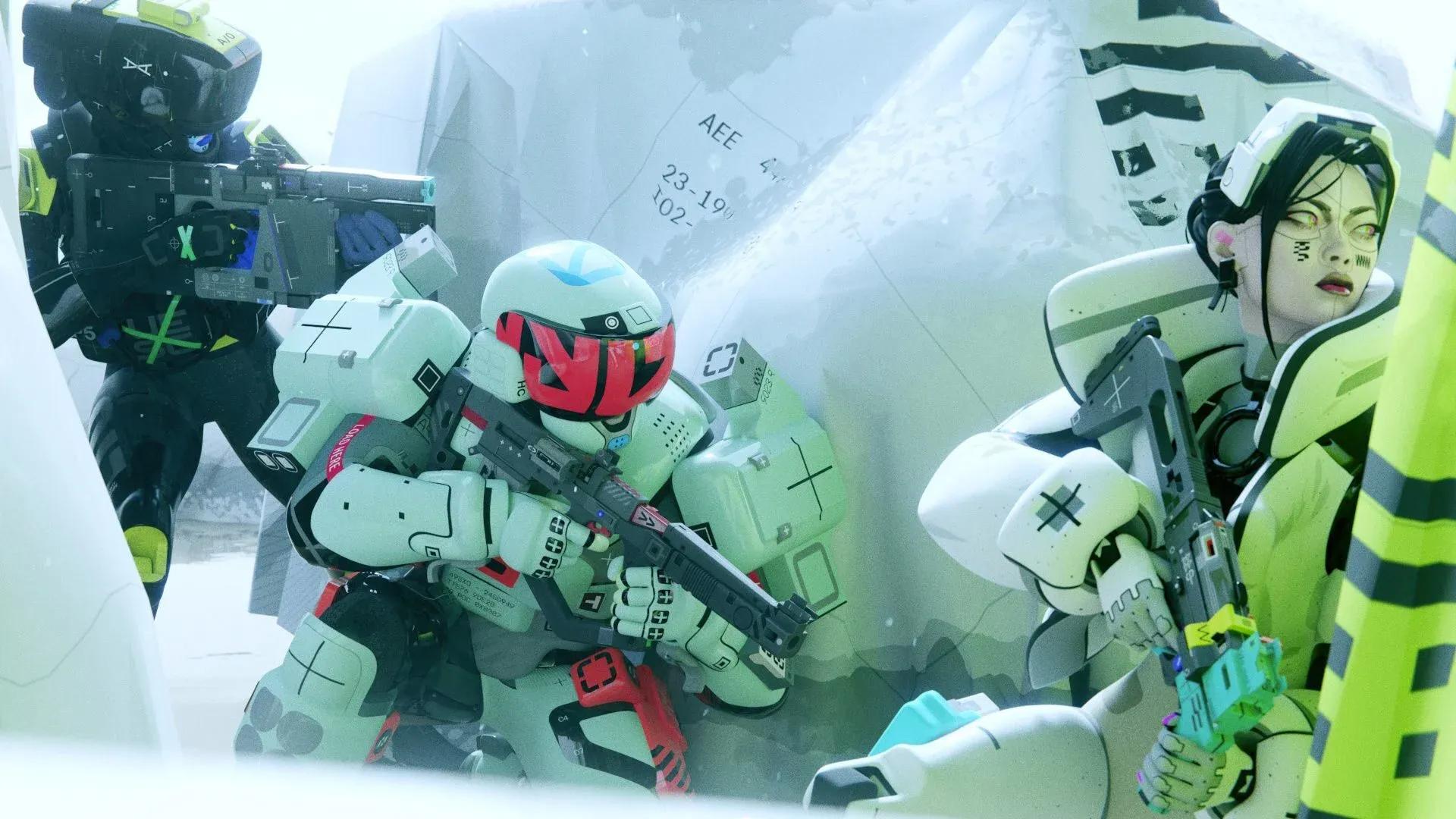
Rank every Marathon Runner Shell for squad play. Discover which classes dominate team comps and which need the right setup to shine.

Written by Larc
Content Writer
See more GAMES.GG guides on Google
Add us as a preferred source and our guides show up first in your results.
Marathon Sponsored Survival Guide: How to Run Solo PvE
Stop getting farmed in Sponsored Survival. Here's how to lock ROOKs out of your lobby and survive Night Marsh solo.
Marathon Sentinel Guide: Master Area Denial in Season 2
Learn every Sentinel ability, the best Season 2 loadout, and how to lock down zones so enemies walk into your traps.
Marathon Sentinel Shell Guide: Abilities and Builds for Season 2
Master the Sentinel Runner Shell in Marathon Season 2 with the best builds, loadouts, and area denial strategies.
If you're dropping into Marathon with a squad and wondering which Runner Shell actually pulls its weight in a coordinated team, you're in the right place. This tier list breaks down every shell from the perspective of 3-man squad play, covering what each one brings to the table, where it falls short, and which teammates make it shine. Whether you're coordinating on voice comms or running with randoms, knowing your shell's role is the difference between a clean extraction and a wipe.
Before diving into rankings, it's worth understanding what a Runner Shell actually is. Rather than locking you into a fixed class identity, each shell is a biosynthetic frame that serves as your build's foundation. You then layer Cores, Implants, weapons, and mods on top to shape how that shell performs in practice.
Every shell comes with three built-in tools:
Cores are shell-specific modifiers that alter or amplify how your abilities function. You can slot two cores per shell, but you can't run duplicates in the same loadout. They come in five tiers: Standard, Enhanced, Deluxe, Superior, and Prestige. Because cores are tied to a single shell, they allow for deep specialization within one archetype.
Implants, on the other hand, are universal upgrades any shell can equip. They provide stat bonuses plus a random perk, and top-tier implants add a fixed bonus perk on top. The combination of the right cores and implants is what separates a functional build from an optimized one.
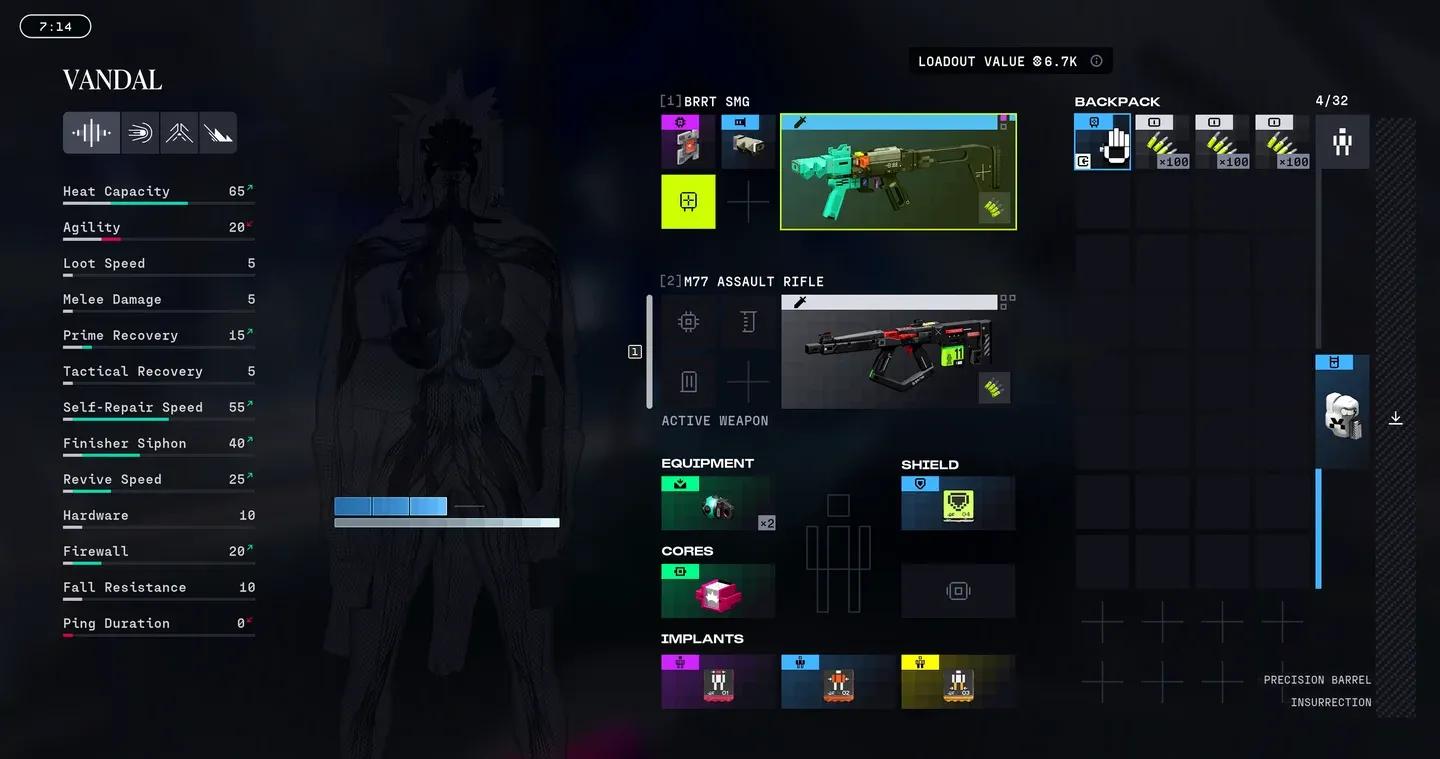
Runner Shell cores and implants
Here's how every shell stacks up specifically in squad-focused play. These rankings assume you have access to voice comms and are building toward coordinated team compositions.
| Tier | Runner Shell | Squad Role |
|---|---|---|
| S | Triage | Healer, reviver, team sustain |
| S | Recon | Intel, information control |
| A | Assassin | Flanker, vision denial |
| A | Destroyer | Frontline anchor, tank |
| A | Thief | Loot specialist, secondary scout |
| B | Vandal | Aggressive disruptor, solo carry |
Triage is the only Runner in Marathon that can actively reverse bad situations through healing and remote revives. In a game where every death carries real economic consequences, having a shell that can flip a losing fight into a recovery is genuinely invaluable.
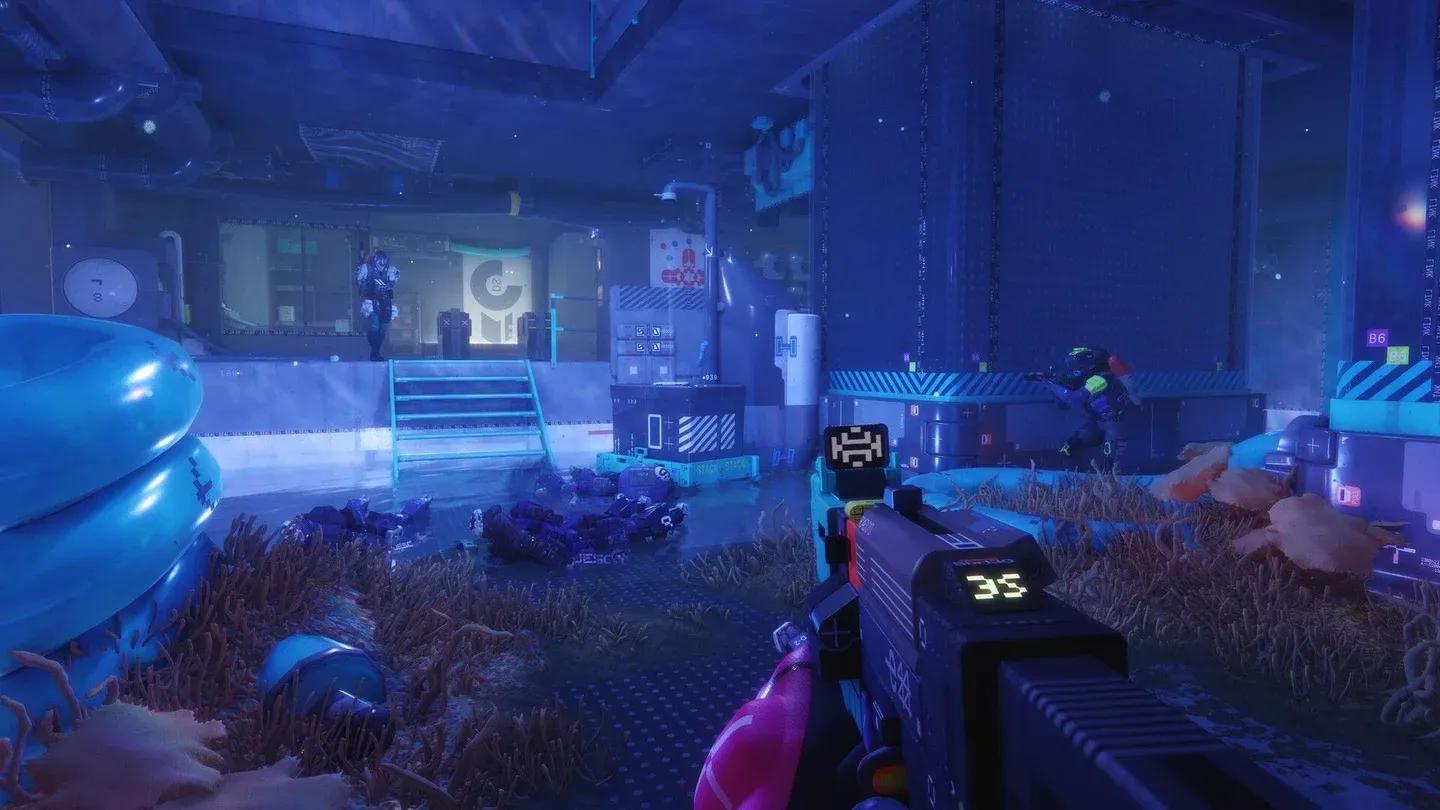
Triage is a must in Marathon Squads
Here's a breakdown of Triage's full kit:
| Type | Ability | What It Does |
|---|---|---|
| Prime | Capacitive Gauntlets | Charges and fires electric tendrils to zap enemies or revive downed teammates at range |
| Tactical | Med Drone | Sends a drone to hover over you or an ally, continuously regenerating health and shields |
| Trait 1 | Battery Overcharge | Overcharges weapons to EMP targets when you break their shields |
| Trait 2 | Shareware | Allies with a Med Drone attached receive copies of any consumables or heals you use |
What makes Triage genuinely S-tier is how Capacitive Gauntlets lets you deliver revives at range without exposing yourself to the same fire that downed your teammate. Pair that with Shareware duplicating your consumables across the squad and you're essentially tripling your healing economy.
Triages confirmed cores push this even further. No Good Deed (Superior) gives you a burst of healing whenever your Med Drone successfully attaches to a crewmate, and Samaritan (Prestige) cuts your next Med Drone cooldown every time Shareware triggers. Stack these and your uptime becomes relentless.
The one real weakness is mobility. Triage lacks the movement tools of shells like Vandal or Thief, so it needs teammates who can protect it and create space. Playing Triage as a lone wolf actively wastes the shell's entire value proposition.
Best synergies: Destroyer (pushes forward while Triage sustains from behind) and Recon (feeds intel on when teammates are in danger and when repositioning is safe).
Recon wins fights by preventing bad situations before they happen. Its entire kit is built around information control, and in an extraction shooter where uncertainty kills more players than bullets, that's an enormous advantage.
| Type | Ability | What It Does |
|---|---|---|
| Prime | Echo Pulse | Releases sonar pulses that reveal players, AI enemies, and even invisible targets nearby |
| Tactical | Tracker Drone | Deploys a drone that hunts enemies and explodes on proximity, applying overheat pressure that locks down movement abilities |
| Trait 1 | Interrogation | Alerts you when an enemy pings you; finishing a downed Runner pings their entire crew's location |
| Trait 2 | Stalker Protocol | Enemies leave glowing holographic footprint trails after you break their shields |
Echo Pulse is the standout ability here. It reveals nearby hostiles including invisible targets, which means Recon is the direct counter to Assassin. If the enemy team is running an Assassin and you have a Recon, that invisibility advantage evaporates entirely.
Stalker Protocol adds another layer of pressure: break an enemy's shields and you can track exactly where they flee. Combined with Tracker Drone forcing overheat (which locks down movement abilities), you can strip a Runner of both their escape route and their ability to use it.
The critical caveat is that Recon only works if you communicate. Gathering intel and sitting on it is just as damaging as having no intel at all. This shell demands a caller who actively feeds positions to their squad.
Best synergies: Destroyer (for clean, covered entries on the positions Recon identifies) and Assassin (to weaponize your intel with precision ambushes).
Assassin is arguably the most misunderstood shell in Marathon. Most players gravitate toward it expecting a straightforward advantage from invisibility, then get frustrated when it underperforms. The truth is that Assassin is a high-ceiling shell with a very specific playstyle requirement.
| Type | Ability | What It Does |
|---|---|---|
| Prime | Smoke Screen | Deploys a smoke disc that sends a line of smoke fields forward, blocking vision and disrupting enemy optics |
| Tactical | Active Camo | Activates temporary invisibility for roughly 12 seconds; breaks on shooting, taking damage, or using a consumable |
| Trait 1 | Shadow Dive | Drop from height to slam a smoke disc on impact, deploying a field instantly and negating fall damage |
| Trait 2 | Shroud | Auto-cloaks when entering smoke and stays invisible for a few seconds after leaving it |
The ideal Assassin loop is: drop smoke first, reposition under Active Camo, take a guaranteed shot, then vanish before the enemy can trade back. A disciplined Assassin controls when fights happen and when they end, generating panic and confusion rather than brute-forcing gunfights.
The problem is that if enemies have a Recon running Echo Pulse or weapons with thermal sights, the invisibility advantage disappears entirely. Without the ability to dictate the terms of engagement, Assassin lacks the raw offensive power to win direct fights and gets pushed into a purely reactive, escape-focused role.
If you know the enemy squad has no Recon and no thermal optics, Assassin jumps to S-tier. In any other situation, treat it as a strong but conditional A-tier pick.
Best synergies: Recon (for intel on enemy positions before committing to a flank) and Thief (to capitalize on the chaos and confusion you generate).
Destroyer is Marathon's closest equivalent to a frontline tank, and it's the shell that makes aggressive coordinated pushes possible. Its value isn't in personal kill counts but in how much space and safety it creates for teammates.
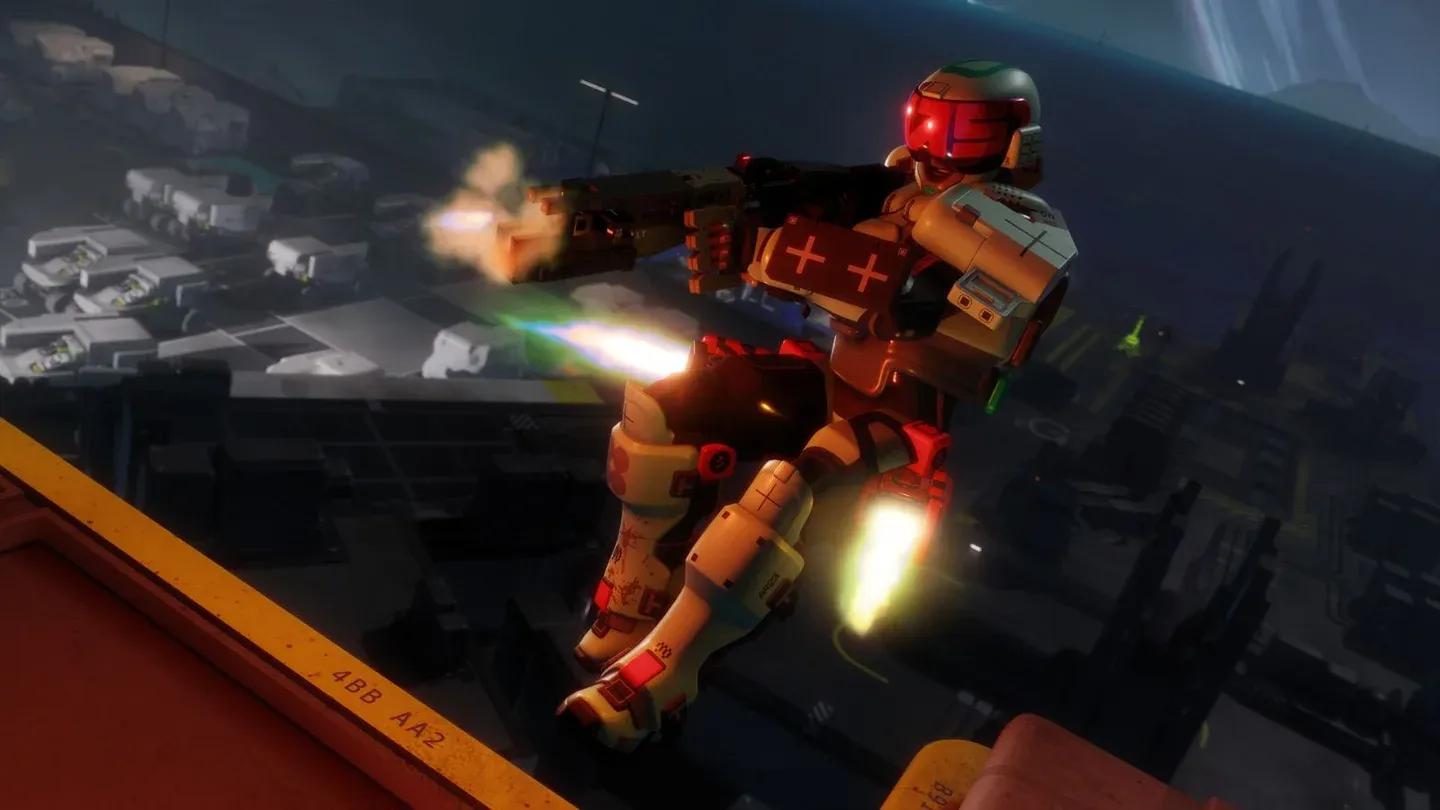
Destroyer Riot Barricade shield
| Type | Ability | What It Does |
|---|---|---|
| Prime | Search and Destroy | Fires homing shoulder missiles at enemies you've dealt sustained damage to |
| Tactical | Riot Barricade | Deploys a forward-facing energy shield that blocks incoming damage and lets you take contested ground |
| Trait 1 | Thruster | Dash in any direction at the cost of heat generation |
| Trait 2 | Tactical Sprint | Move faster with increased heat gain |
Riot Barricade is what earns Destroyer its place in nearly every competitive squad composition. Using it to cross dangerous sightlines, shield revives, or hold a contested point while teammates reposition is exactly the kind of team-enabling play that wins raids. Search and Destroy then punishes anyone who tries to rush you while you hold ground.
The biggest trap is playing Destroyer for personal impact rather than team enablement. It needs discipline, not ego. Without out-of-combat utility like healing or intel gathering, it's best paired with Triage and Recon to fill those gaps.
Best synergies: Triage (to sustain your pushes) and Recon (to feed you information on when and where to advance safely).
Thief is quietly one of the strongest shells for teams that prioritize the economy layer of Marathon over raw combat performance. Its kit functions as both a loot vacuum and a makeshift reconnaissance tool.
| Type | Ability | What It Does |
|---|---|---|
| Prime | Pickpocket Drone | Remote-controlled origami butterfly drone with a whip that knocks loot from enemies and collects dropped items; can also ping nearby enemies |
| Tactical | Grapple Device | Fires a forearm dart that unfolds into a self-propelled propeller, pulling you forward from anywhere including open air |
| Trait 1 | X-Ray Visor | Reveals loot containers through walls with rarity highlighted; also marks enemies within your direct line of sight |
| Trait 2 | The Finer Things | Grapple recharge rate, weapon handling, and base stats increase as your backpack fills with loot |
Thief's confirmed cores are worth knowing before you commit to this shell. Greed is Good (Enhanced) boosts sprint speed and slide distance when your backpack is full. Hidden Run (Deluxe) lets a melee strike immediately after grappling hack an enemy and knock random loot from their pack. Case the Joint (Superior) extends X-Ray Visor's wall-penetration range, and Partner in Crime (Prestige) turns your idle drone into a passive pinger for nearby hostiles.
The classic Thief mistake is spending too long piloting the drone while stationary in a contested zone. Fly it only when your squad has your flanks covered, scan loot routes quickly, and grapple out early rather than overstaying for one extra item.
Best synergies: Vandal (to generate distractions that let you loot safely) and Assassin (for clean exits and suppressed enemy vision during your runs).
Vandal has the highest individual carry potential on the roster, but it's also the shell that punishes poor heat management most severely. Its entire design revolves around chaining mobility tools to break enemy formations and force panic, which works brilliantly when executed well and catastrophically when it doesn't.
| Type | Ability | What It Does |
|---|---|---|
| Prime | Amplify | Temporarily boosts movement speed, weapon handling, and heat efficiency for chaining movement without overheating |
| Tactical | Disruptor | Fires a chargeable energy blast with knockback; can be aimed downward to launch yourself airborne |
| Trait 1 | Microjets | Grants a double jump at the cost of additional heat |
| Trait 2 | Power Slide | Extends slide distance and speed at the cost of heat generation |
Vandal's kit is almost entirely offensive with very little team utility baked in. A skilled Vandal player uses Amplify to chain movement and force enemies to chase and separate, then hits them with Disruptor to blast them out of cover or knock a runner into a terrible position. Bungie has confirmed mobility-focused cores for Vandal including jump enhancements and movement chaining that significantly raise the ceiling once acquired.
The reason Vandal sits at B-tier for squads specifically is that when a Vandal's shot isn't landing, the shell offers almost nothing to the team. There's no healing, no intel, no shielding. It's a shell that amplifies individual skill rather than team coordination, which makes it a riskier pick in organized squad play compared to the S and A-tier options.
Best synergies: Destroyer (to anchor fights while Vandal disrupts) and Thief (to pair chaotic movement with efficient looting in the aftermath).
Rook sits outside the standard tier list entirely because it's not a conventional Runner Shell. It's a stripped-down scavenger frame designed for players who want to join in-progress matches with zero risk and zero loadout. Rook drops into raids already underway as a solo player, bringing nothing in and losing nothing if eliminated.
| Type | Ability | What It Does |
|---|---|---|
| Prime | Recuperation | Activates emergency repair, slowly regenerating your health |
| Tactical | Signal Mask | Makes UESC AI forces treat you as non-hostile, letting you move through AI-heavy zones undetected |
Rook's Signal Mask lets you slip through AI-controlled zones while geared Runners fight around you, which makes it genuinely useful for learning maps, practicing loot routes, or recovering items from a rough previous run. The critical caveat: other players can still see and kill you. Treat every match as Rook with the assumption that you're a target.
Based on everything above, the strongest all-around squad composition pairs Triage + Recon + Destroyer. Triage keeps everyone alive, Recon feeds the team constant positional intel, and Destroyer uses that intel to create space and pressure enemies directly. This trio covers healing, information, and frontline aggression without any major gaps.
For a more aggressive composition, Recon + Assassin + Destroyer works well when your team is comfortable calling shots and executing coordinated flanks. Recon spots the target, Assassin hits from an unexpected angle, and Destroyer cleans up or holds the exit.
If your squad prioritizes economic efficiency and extraction over combat, Triage + Thief + Vandal is a strong alternative. Vandal creates chaos, Thief vacuums loot in the aftermath, and Triage keeps everyone healthy enough to make it to extraction.