



Mostafa Salem
Head of Gaming Research
Marathon is an unforgiving extraction experience
Here's the thing about Marathon: it doesn't care if you're having fun in the first hour. Maybe not even the first five.
Bungie's new extraction shooter, out now on PS5, Xbox Series X/S, and PC, is built around the idea that suffering is the price of admission, and the payoff for pushing through is some of the most genuinely tense first-person combat available in any game right now.
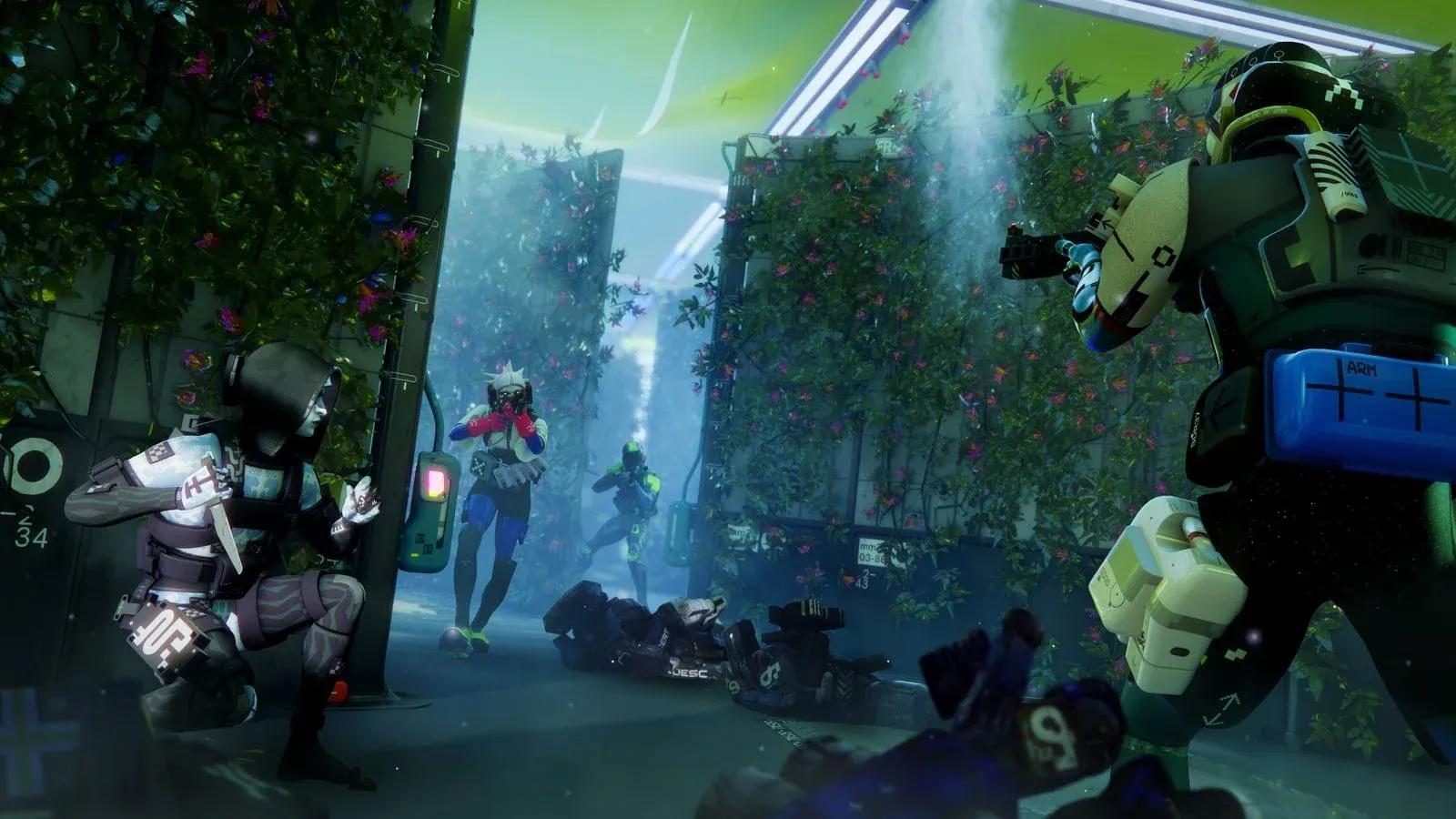
This is a revival of Bungie's original 1990s Marathon trilogy, but only in name and setting. Where those games were single-player level-based shooters, this new version is a full PvPvE extraction shooter set on Tau Ceti IV, an abandoned extrasolar colony crawling with hostile AI and other players who want everything you've worked for.
You drop in, scavenge gear, complete objectives, and try to extract before someone else takes you out and walks off with your loot. If you fail to reach the extraction point, you lose everything you brought in. No exceptions. For a deeper look at builds and survival strategies, you can browse Marathon guides here.
Gameplay: punishing but rewarding
The gameplay loop in Marathon is straightforward to describe and genuinely hard to master.
You select a Runner Shell, each with unique stats and passive abilities, load your kit with weapons and gear, then drop into one of the game's maps. The current roster includes Perimeter (the more forgiving entry point), and the recently unlocked Cryo Archive, a raid-like fourth map that required the community to collectively eliminate 500 million robots to access. That kind of community event tells you a lot about what Bungie is going for here.
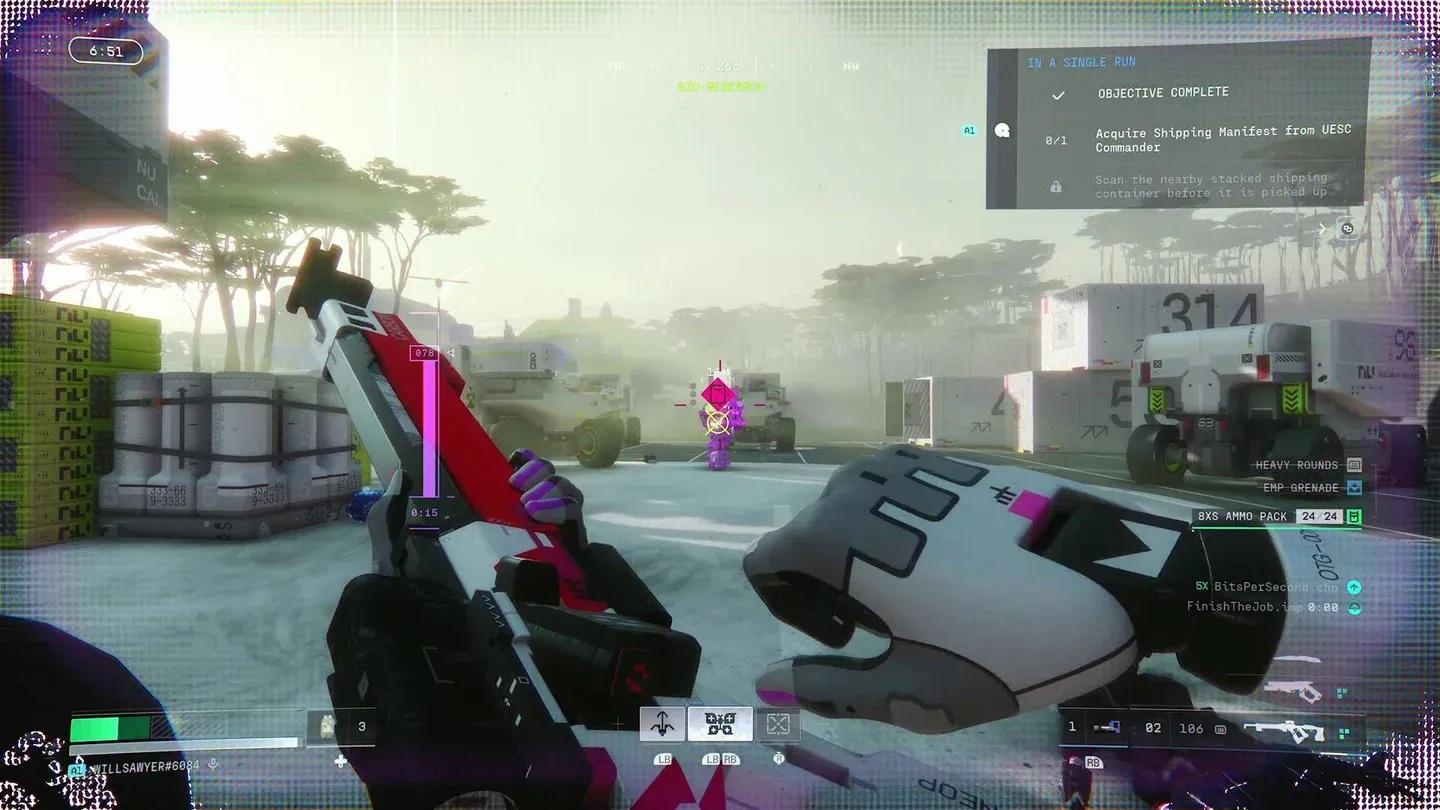
The movement system is what separates Marathon from the competition. Bungie's decade-plus of Destiny raid design is visible in how the maps are constructed: vertical layers, flanking routes, choke points that punish predictable play. The Vandal Runner's movement buffs in particular reward players who think in three dimensions rather than just holding angles. Slide-cancelling into a room, knifing someone who's reloading, and slipping out through a broken window before their teammate can respond, these are the moments that make the game feel like nothing else.
Loadouts matter more than in most shooters. Weapon modifications add real variance to how guns perform, and choosing between survivability mods and damage output on your Shell is a genuine decision, not a cosmetic one. The Contract system ties objectives to your run, and the fact that completing a teammate's Contract also grants you experience is a smart design choice that actively incentivizes cooperative play without forcing it.
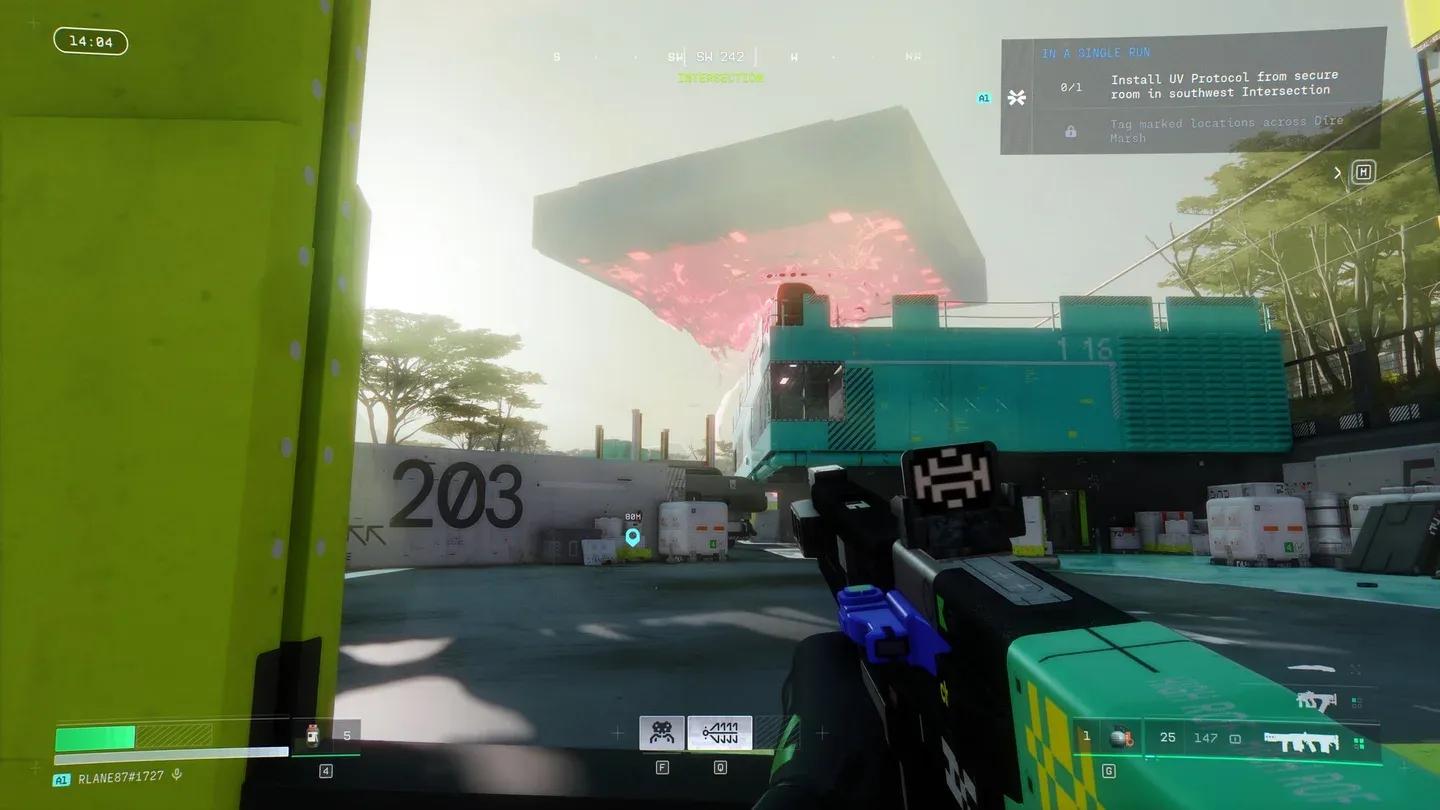
Solo play is a significantly harder experience than squad play. The maps and encounter density are clearly designed with teams in mind. If you plan to play primarily solo, expect a much steeper wall before the game starts feeling manageable.
The AI enemies scattered across maps deserve a mention because they're not filler. Even at mid-level gear, the UESC bots can end a run fast if you're not paying attention. They're aggressive, they flank, and they draw attention from other player teams, which creates emergent chaos that no scripted encounter could replicate.
Graphics and audio: Bungie's real flex
Visually, Marathon commits hard to its aesthetic. Guns and architecture are covered in barcodes and high-contrast color blocking, giving the world a 3D-printed, deliberately inorganic look that makes it immediately recognizable. It's not photorealistic, but it doesn't try to be. The art direction is confident and consistent, which counts for a lot in a game you'll be staring at for dozens of hours.
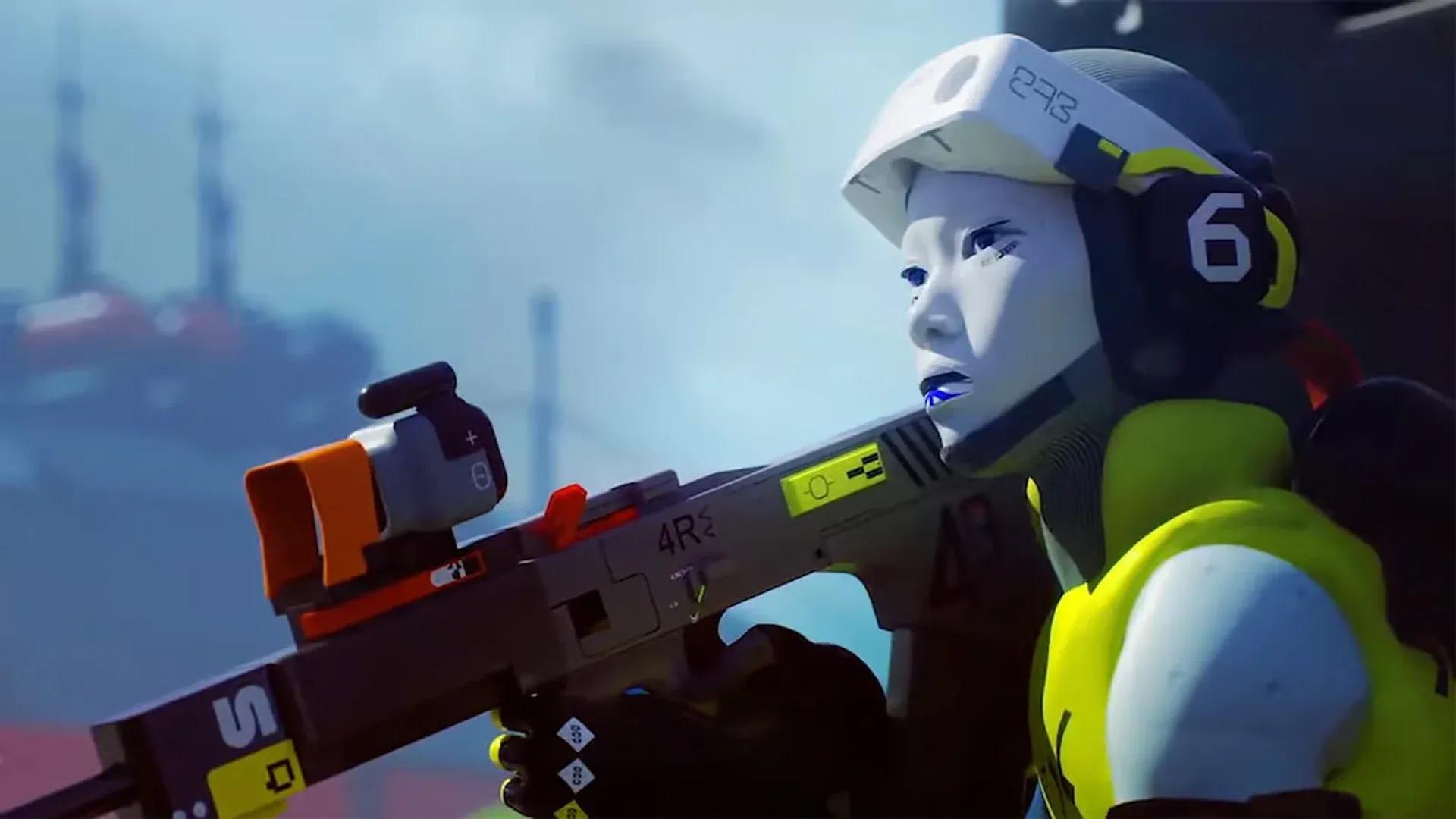
The audio design is where Bungie genuinely excels. Weapon feedback in this game is exceptional; each gun has a distinct acoustic signature that communicates power, accuracy, and recoil in a way that pure visual feedback can't match. Footsteps are readable enough to give you information without being so loud that they break immersion. The ambient sound on each map does real work in building tension during a quiet run, the kind where you haven't seen another team yet, and you're not sure if that's good news or bad.
Use headphones if you can (duh). The directional audio is detailed enough that you can often identify where a nearby team is moving before you see them, which can be the difference between setting up an ambush and walking into one.
Story: a little lore, but only for the curious
The narrative in Marathon is there if you want it, and easy to ignore if you don't. You're a Runner, a digitized consciousness inside a synthetic Shell, investigating what happened to the colony on Tau Ceti IV. Factions like NuCaloric, CyberAcme, and the remnants of ONI each have their own agendas, delivered through in-game terminals, environmental storytelling, and audio logs scattered across the maps.
For players who loved the lore density of the original Marathon trilogy, this approach will feel familiar. For everyone else, the story is just an ambient flavor rather than a driving motivation. Bungie hasn't built a campaign here, and the fragmented delivery means the narrative rarely builds momentum. That's a deliberate trade-off for the extraction format, but it's still a trade-off.
Verdict
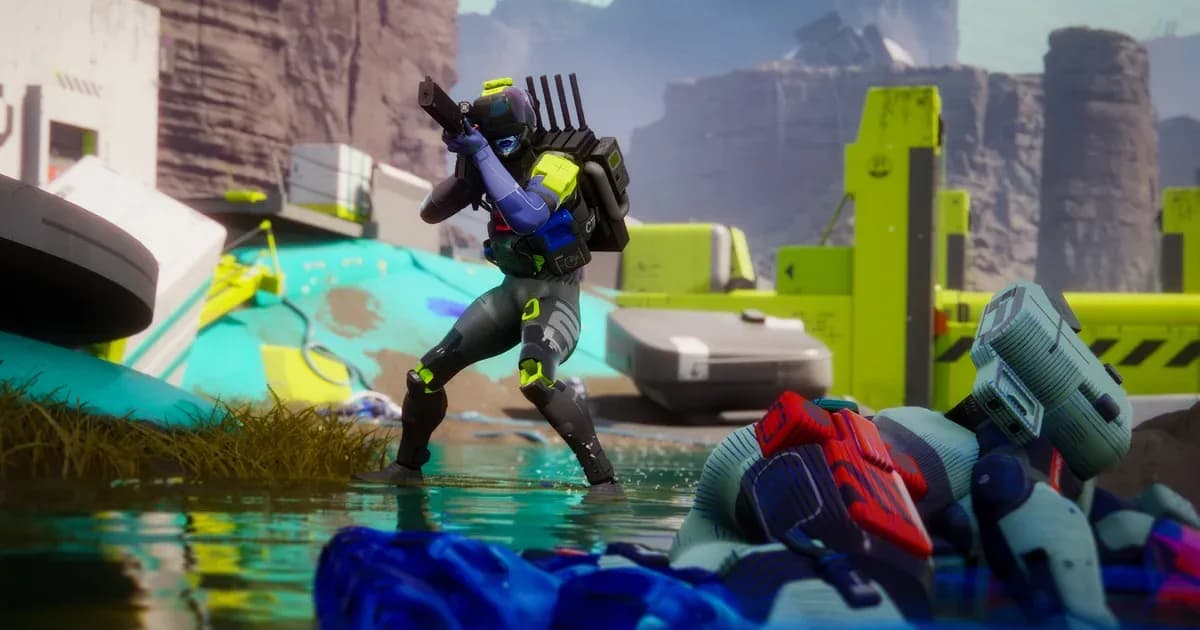
Marathon is a game that earns its reputation the hard way. The first few hours are genuinely rough, and the genre itself demands a tolerance for losing progress that not every player has. But Bungie has built something with real mechanical depth, a strong identity, and an audio-visual presentation that punches above its weight.
If you've played Escape from Tarkov and found it too opaque, or Hunt: Showdown and wanted faster movement and better gunfeel, Marathon sits in an interesting middle ground. It's more accessible than Tarkov without sacrificing the stakes that make extraction shooters meaningful. As for the Arc Raiders comparisons online, what is very clear from the first 5-10 hours in both games is how Marathon is designed to be more challenging and competitive - pushing you to constantly engage in PVP battles, whereas ARC Raiders feels like a much more accessible, yet intense, PVE team-based experience
The real question is whether Bungie can sustain the live-service side of this. The Cryo Archive unlock event showed they're thinking about long-term community engagement, and the foundation here is strong enough to build on.
For now, though, what's on the table is already worth your time, provided you're the type of player who can find the fun in losing.
Marathon Review
8.5/10
Marathon is the kind of game that earns your respect the hard way. Bungie took a genre that already has well-established kings and built something with a distinct identity: sharp movement, punishing stakes, and gunplay that feels better than it has any right to in an extraction context. The Cryo Archive map in particular shows what this game's ceiling looks like, and it's high. That said, this is not a game for casual dips. If you're the type of player who gets frustrated losing progress, Marathon will test your patience repeatedly before it rewards you. Most players who commit to it will find something worth staying for. Marathon is a strong debut for a new live-service IP, with enough mechanical depth and moment-to-moment tension to justify the investment, provided you go in knowing exactly what you're signing up for.
8.5
Pros
Gunplay feels sharp and satisfying
Audio design is exceptional, from weapon feedback to environmental tension
Deep character customization with meaningful loadout decisions
Maps reward knowledge and movement in ways that keep runs feeling fresh
Raid-like challenges extends the endgame significantly
Cons
Very PVP focused for the genre, can be punishing for new players
Solo play feels like a completely different, usually unfair game
Steep learning curve will push away new / casual players
Narrative delivery is fragmented and easy to miss entirely