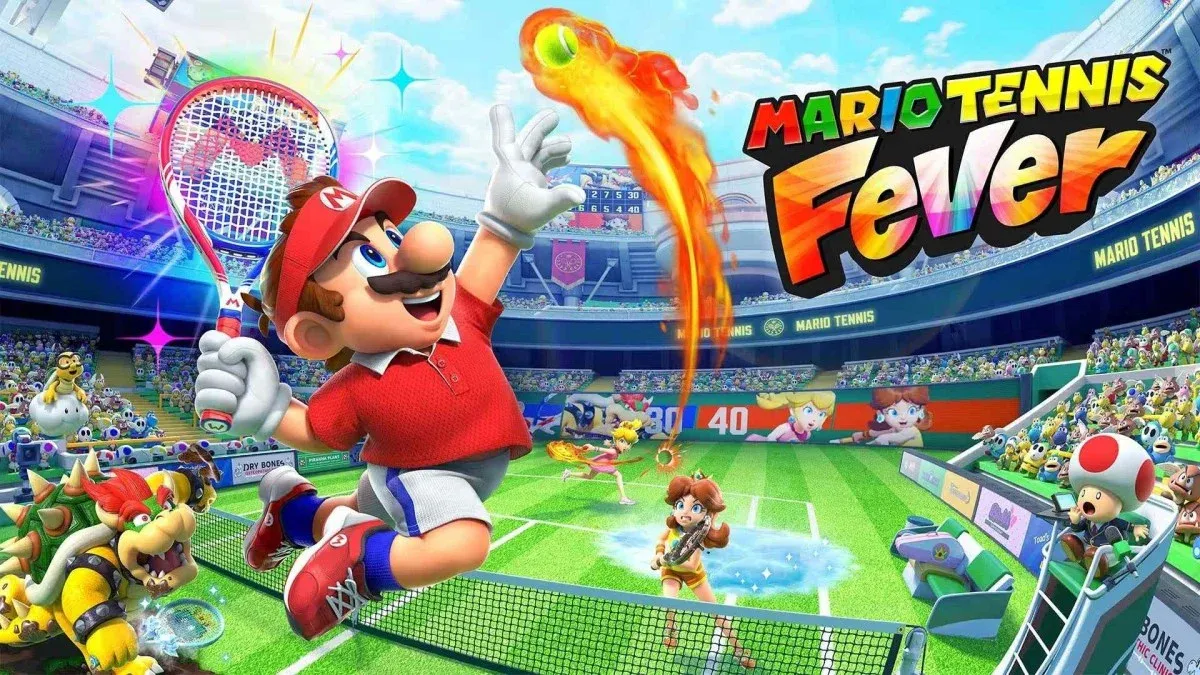


Mario Tennis Fever lands on the Nintendo Switch 2 as one of the most feature-packed entries Camelot has ever delivered, blending arcade chaos with genuine tennis strategy. With 38 playable characters, 30 Fever Rackets, 14 courts, and a stacked list of modes, there is a lot to absorb before your first ranked match. This guide breaks down every core system, ranks the best characters by attribute, and gives you the pro strategies you need to stop losing rallies and start winning tournaments.
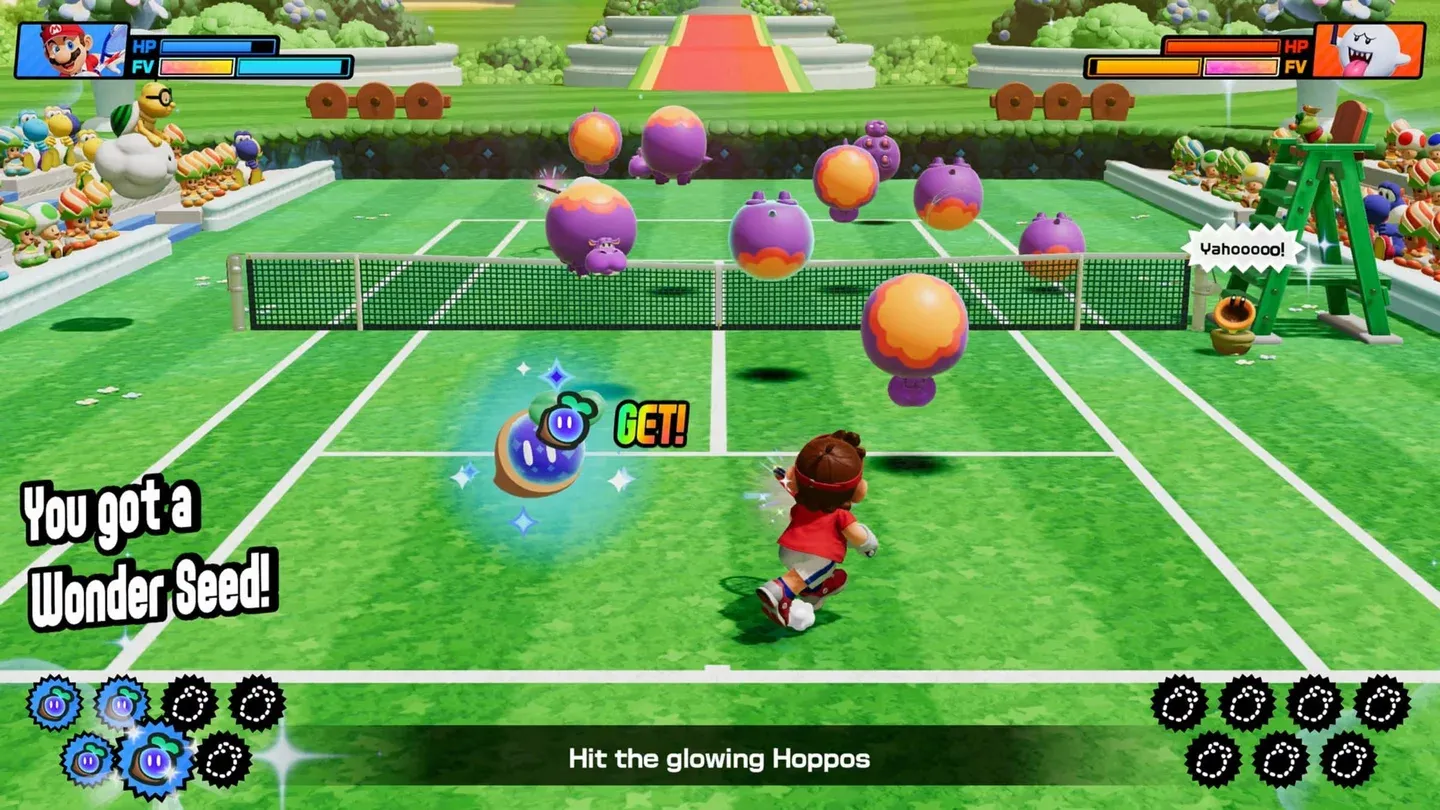
Mario Tennis Fever: Shot Types and Ranked Tips
How Do Fever Rackets Work?
The defining addition to Mario Tennis Fever is the Fever Racket system, and understanding it separates casual players from court dominators. When you enter a match, you select a Fever Racket from a pool of 30 options. Each racket carries a unique special effect, ranging from banana peel scatter to elemental fire and ice hazards, to a Pokey summon that disrupts the opponent's side of the court.
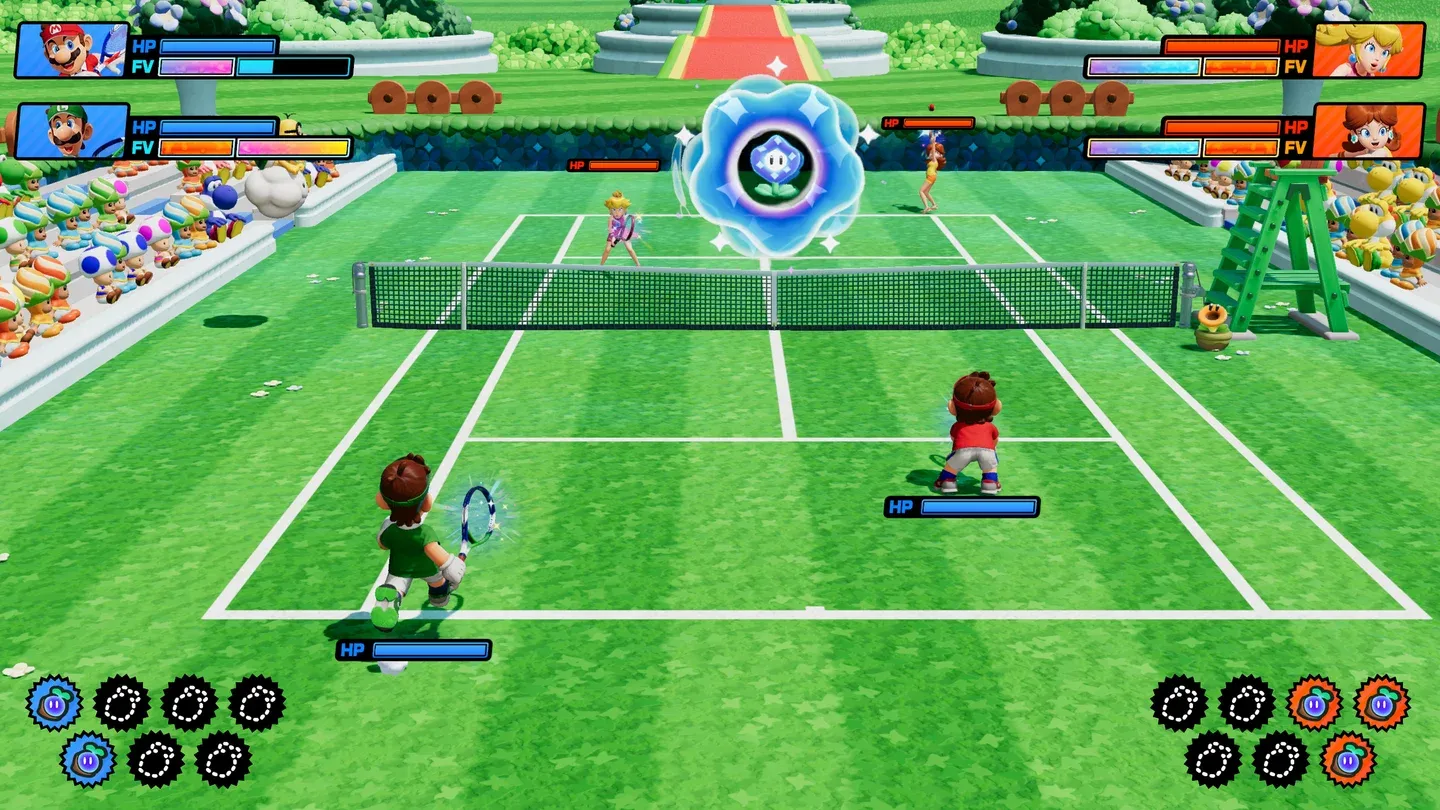
During a rally, your FV Gauge fills naturally as play continues. Once it reaches full charge, pressing X unleashes a Fever Shot. Here is the crucial detail most players miss: the Fever Shot only activates its special effect if the ball lands on the opponent's side of the court. Keep the ball in the air long enough and the effect window expires, giving your opponent a chance to neutralize your power entirely. On the flip side, if your opponent hits a Fever Shot back to your side before it bounces, you eat the punishment yourself.
This risk-reward loop is what makes Fever feel more strategic than previous entries in the series. Rather than interrupting the flow of a match with elaborate animations, the system layers on top of normal tennis mechanics without breaking momentum.
Charging Your FV Gauge Faster
Perfect returns, timed at the center of the ball's arc, add bonus gauge charge with each successful hit. Chain five perfect returns in a row and your gauge shifts from yellow into red mode, which amplifies your next Fever Shot's effect. Timing your swing at peak gauge rather than rushing the activation is the difference between a powerful Fever Shot and a wasted opportunity.
If you prefer a pure tennis experience without special effects, most modes allow you to opt out of Fever Rackets entirely. Both approaches are valid, and the option to strip them out is a welcome design choice.
What Are All the Shot Types in Mario Tennis Fever?
Before worrying about Fever Rackets, you need a solid command of the five core shot types. Each one has a specific tactical purpose, and mixing them intelligently is the foundation of winning tennis.
Most shot types can also be turned into a super charge shot by holding the button, or a power shot by double-tapping it. Once you internalize these variations, the game stops feeling like button-mashing and starts feeling like a chess match played at rally speed.
Mario Tennis Fever: Shot Types and Ranked Tips
Mario Tennis Fever Controls: Motion vs. Buttons
The game supports both traditional button controls and full Joy-Con motion controls via Swing Mode. Here is a quick breakdown of each approach:
Motion controls add immersion and can help with shot precision in S-rank trials, but competitive online play heavily favors button controls for consistency and reaction speed. Swing Mode shines in local multiplayer with friends and family but functions more as a side experience than a serious competitive option. If you find motion controls drifting, calibrate your Joy-Cons before sessions, especially in docked mode where tracking can be less forgiving.
Character Attribute Classes
Every character belongs to one of five attribute classes that define their playstyle. Choosing a class that matches how you naturally play will accelerate your improvement significantly.
Power Focused on ending rallies with hard-hitting smashes that opponents cannot return. The risk is that not every situation calls for a smash, and overcommitting leads to unforced errors. Best picks: Donkey Kong, Petey Piranha, Wario
Speed These characters cover the court faster than any other class, making them exceptional at returning shots that would be unreachable for Power or Control types. Their weakness is that their shots are more predictable. Best picks: Koopa Troopa, Goomba, Yoshi
Control Precision over power. Control characters place shots into gaps with surgical accuracy, exploiting opponent positioning rather than overpowering them. Best picks: Koopa Paratroopa, Peach, Shy Guy
Spin The trickiest class to master and the most rewarding once you do. Spin character shots change direction at the last moment, causing opponents to misread and miss returns entirely. Best picks: Bowser Jr., Boo, Blooper
All-Round Balanced across all stats with no glaring weaknesses. Ideal for learning the game before committing to a specialist class. Mario and Rosalina are the go-to picks here for players still developing their style. Best picks: Mario, Rosalina, Daisy
Online Ranked Mode
The mode with the longest legs. Ranked matches are split into Fever and non-Fever variants for both singles and doubles. Matchmaking uses an Elo-based system with seasonal rank resets. During review periods, matches were quick to find and lag-free, which is an encouraging sign for the long-term online health of the game.
Mario Tennis Fever: Shot Types and Ranked Tips
How Do You Climb Ranked in Mario Tennis Fever?
Winning in ranked doubles requires more than raw shot skill. Positioning and communication with your partner determine most outcomes at higher Elo brackets.
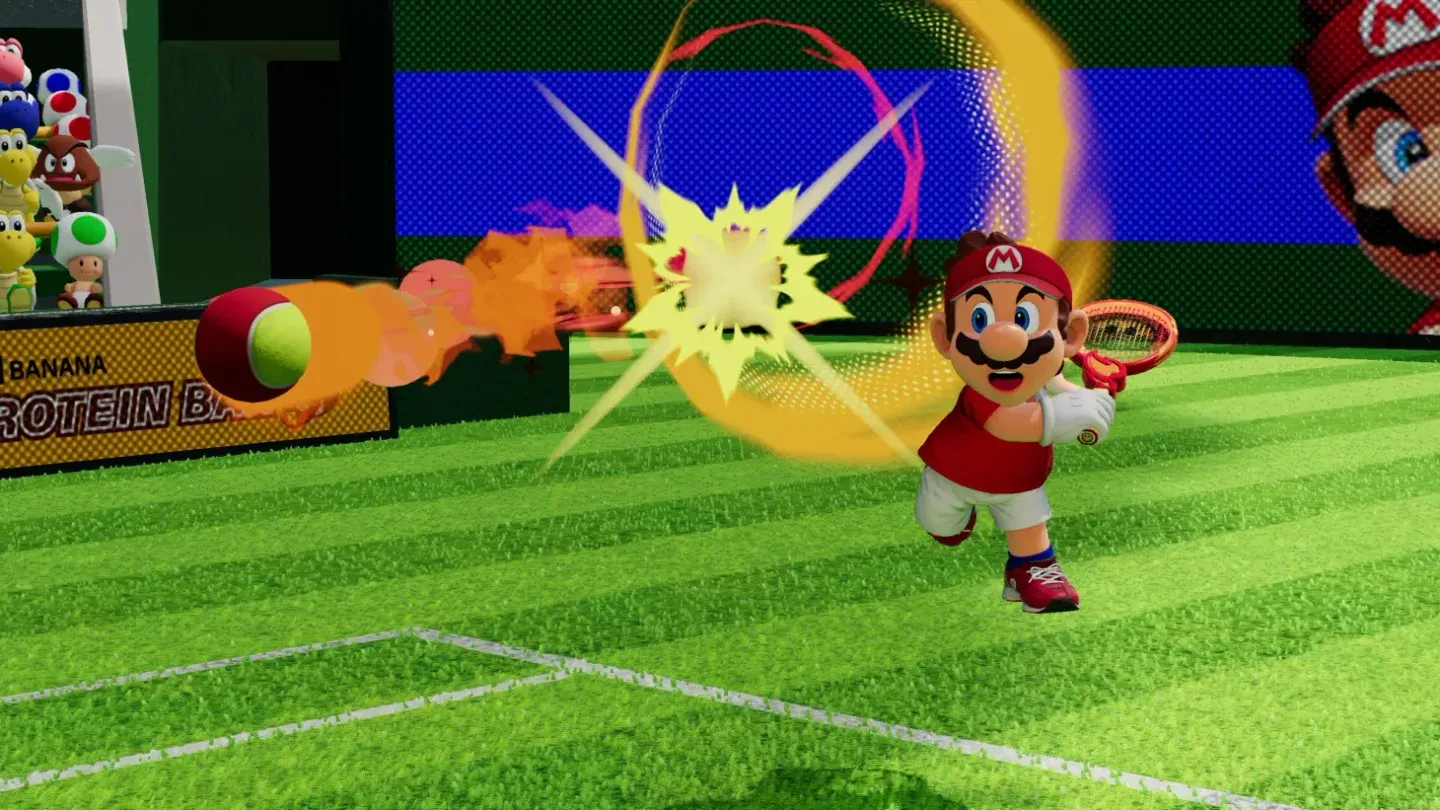
- Positioning in doubles: Keep one player at the baseline and one at the net. The net player intercepts short shots and applies pressure; the baseline player handles deep returns and sets up Fever Shots.
- Fever timing over raw power: A well-timed Fever Shot from mid-gauge is less effective than a fully charged red-mode shot. Wait for the gauge to peak before activating.
- Avoid Fever whiffs: Missing a Fever Shot and having it parried back to your side is one of the most punishing outcomes in the game. Only activate when you have a clear angle to land it on the opponent's court.
- Main two or three characters: Spreading attention across the full roster slows your improvement. Pick one primary and one backup from complementary attribute classes.
- Daily online sessions for XP: Consistent online play generates experience faster than grinding offline trials. Batch offline trials in groups of ten to maximize efficiency when you do run them.
- Counter class matchups: Speed characters counter Power matchups by covering the court and returning smashes. Control characters exploit Speed characters whose shots are predictable. Spin characters are the wildcard that disrupts everyone.
Key Takeaways Before You Step on Court
The fastest path to improvement in Mario Tennis Fever is mastering the FV Gauge timing, committing to a character class that suits your instincts, and spending time in Trial Towers before touching ranked play. The Fever Racket system rewards patience and reading your opponent far more than it rewards button-mashing, and the online mode has the depth to keep you engaged well past the initial unlock grind. Adventure Mode is worth pushing through for roster unlocks, but set your expectations accordingly. The real game starts the moment you step into ranked doubles.
Get more guides, tips, and everything else Mario Tennis Fever, here.