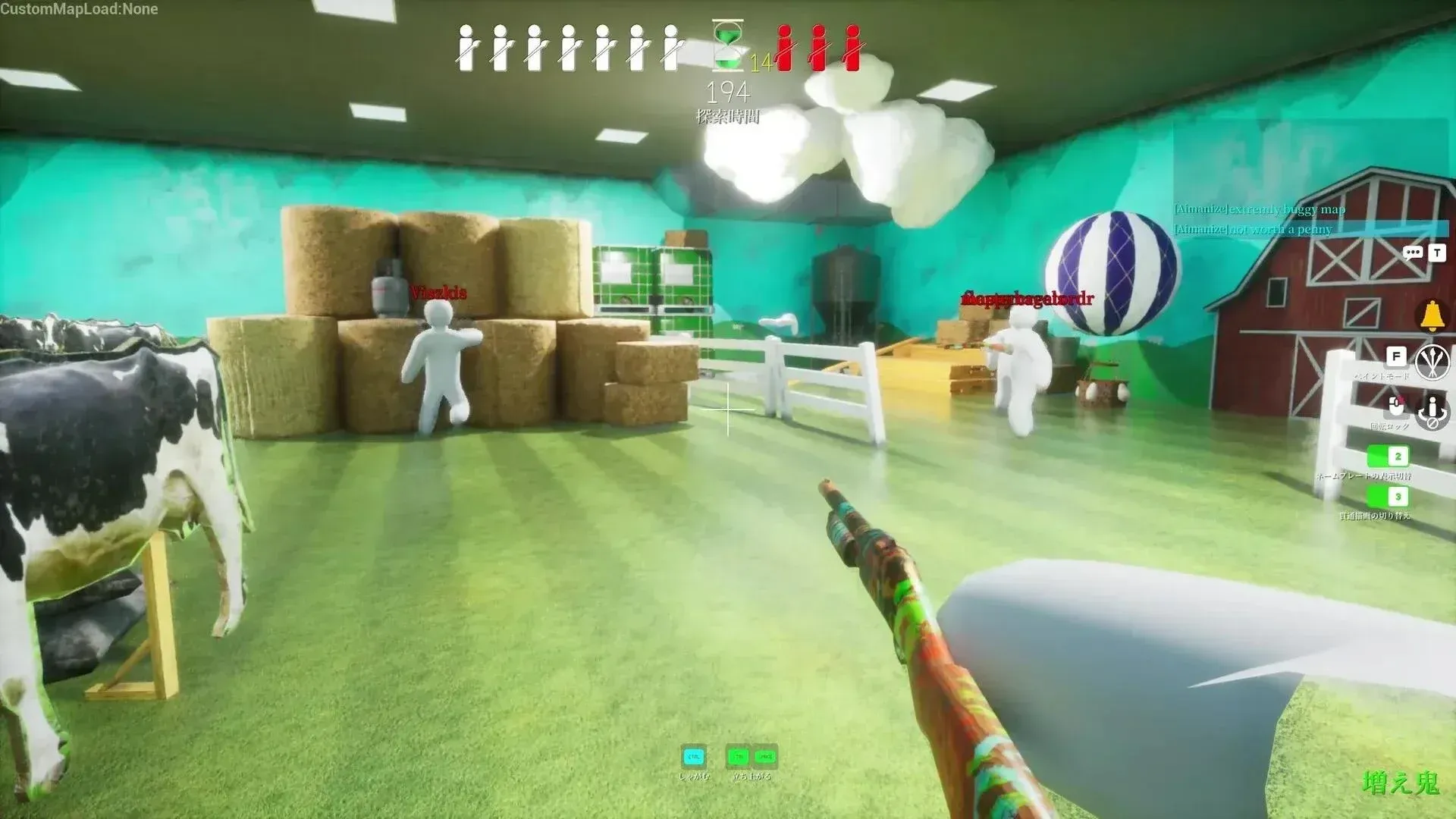


MECCHA CHAMELEON is a Steam hide-and-seek party game with a twist: Hiders start as blank white figures and must paint themselves to match the environment, then strike a pose and freeze before Seekers come looking. There are no preset prop disguises here. Every round is a short art project under pressure, and the players who understand that win far more often than those who just smash colors on and hope for the best.
What actually happens in a match?
A round moves through three phases: lobby, prep, and hunt. During prep, Hiders move freely, sample surfaces, paint their bodies, and lock in a pose. Seekers wait. Once the hunt starts, Seekers search while Hiders stay frozen and rely entirely on their disguise. Hiders win if at least one survives to the end; Seekers win by finding everyone.
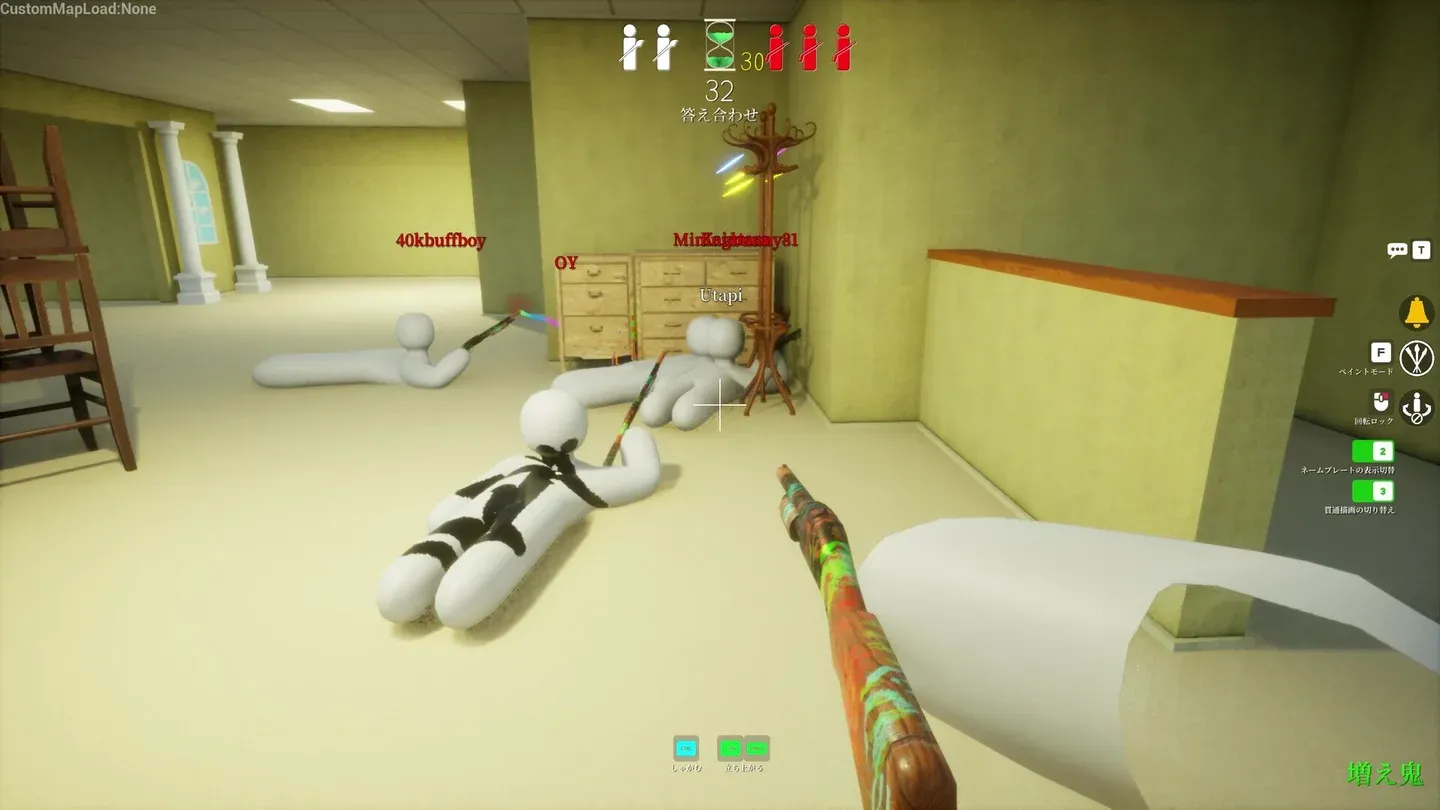
Prep phase timer and HUD
Host settings can adjust timers, so exact second counts vary by lobby. Focus on the order of events rather than memorizing specific durations.
How to play as a Hider
Your goal is not to create perfect art. Your goal is to look like something that belongs in the room. Seekers are not judging your painting skills; they are scanning for anything that looks out of place.
Pick your spot before you open paint mode
This is the single most common mistake new players make. Opening paint mode before choosing a final surface means your colors may not match once you move. Choose the wall, crate, shelf, or prop you want to mimic first, walk to it, then start sampling.
Simple surfaces work best early on. A clean wall section, a large crate side, or a shadow edge is far easier to replicate than a detailed poster or patterned tile. Once you have a few matches of experience with the paint system, you can try harder spots like Mansion paintings, Sewer graffiti walls, or the cow standees in Indoor Country.
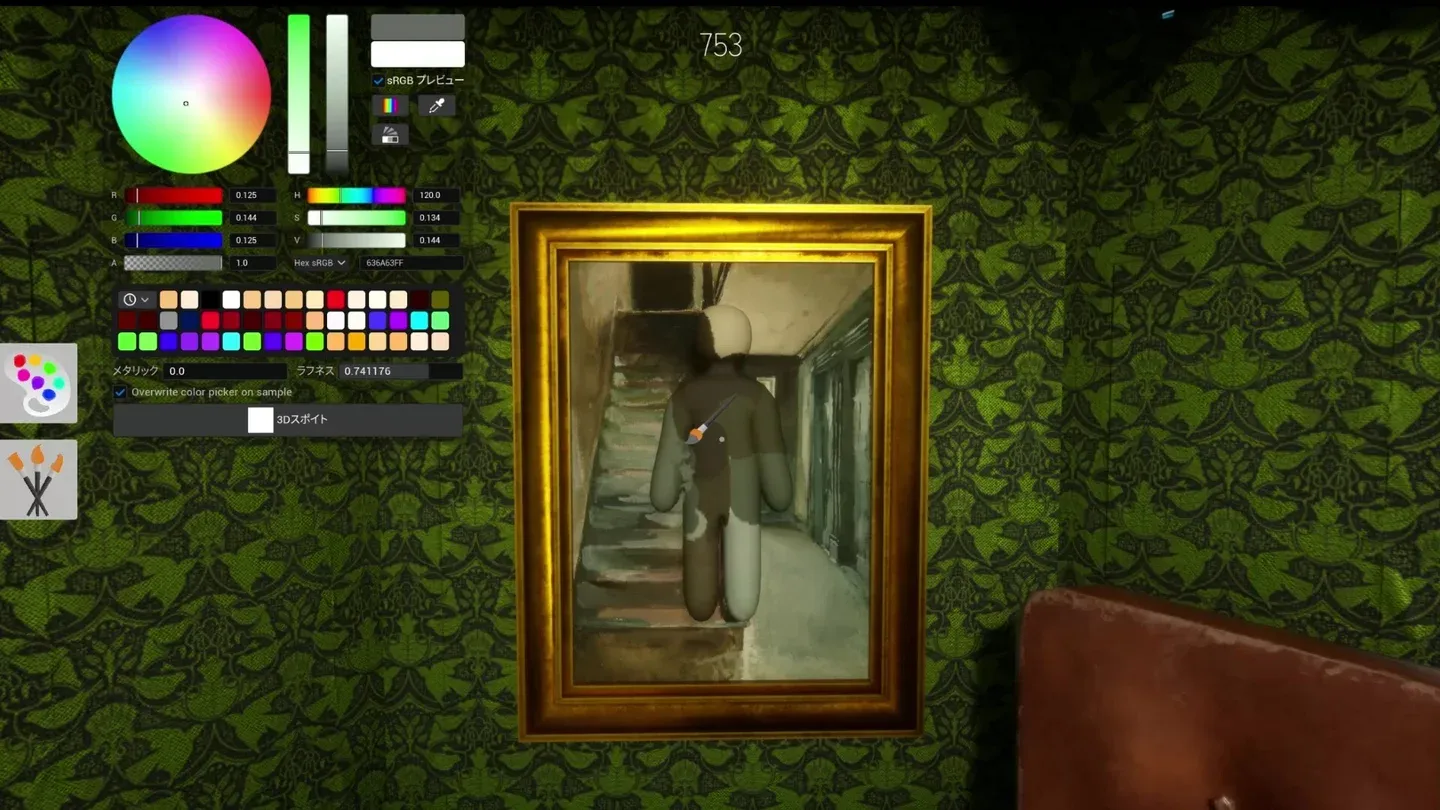
Eyedropper sampling in paint mode
Match lighting, not just color
A flat color that matches the wall's average hue will still look fake on a 3D body. Real surfaces shift from light to shadow. Identify where the main light source is in the room, brighten the side of your body facing it, and darken the opposite side. One extra shadow tone makes a bigger difference than spending extra time on fine texture details.
The paint system also includes metallic and roughness settings. Many beginners skip these entirely and end up with an unnatural sheen that catches the eye even when the color is accurate.
Break your silhouette with a pose
Color hides your paint job. Pose hides your human outline. You need both. A standing body pressed against a flat wall is still readable as a player because the silhouette gives it away. Choose a pose that fits the geometry: compact poses for low furniture, flatter outlines for wall hiding, horizontal silhouettes for floor or ceiling spots.
Before the hunt starts, rotate the camera around your character and check for bright white patches, gaps between limbs, and misaligned edges. What looks fine from first-person view can be completely obvious from the angle a Seeker approaches.
How to play as a Seeker
Patch notes sometimes use the term Hunter while the store and community tend to say Seeker. They refer to the same role.
The worst Seeker habit is scanning too fast. Small mismatches, a shadow facing the wrong direction, a brush pattern that does not continue into the background, a prop-shaped silhouette where that prop has no reason to be, are easy to miss at speed and obvious at a deliberate pace.
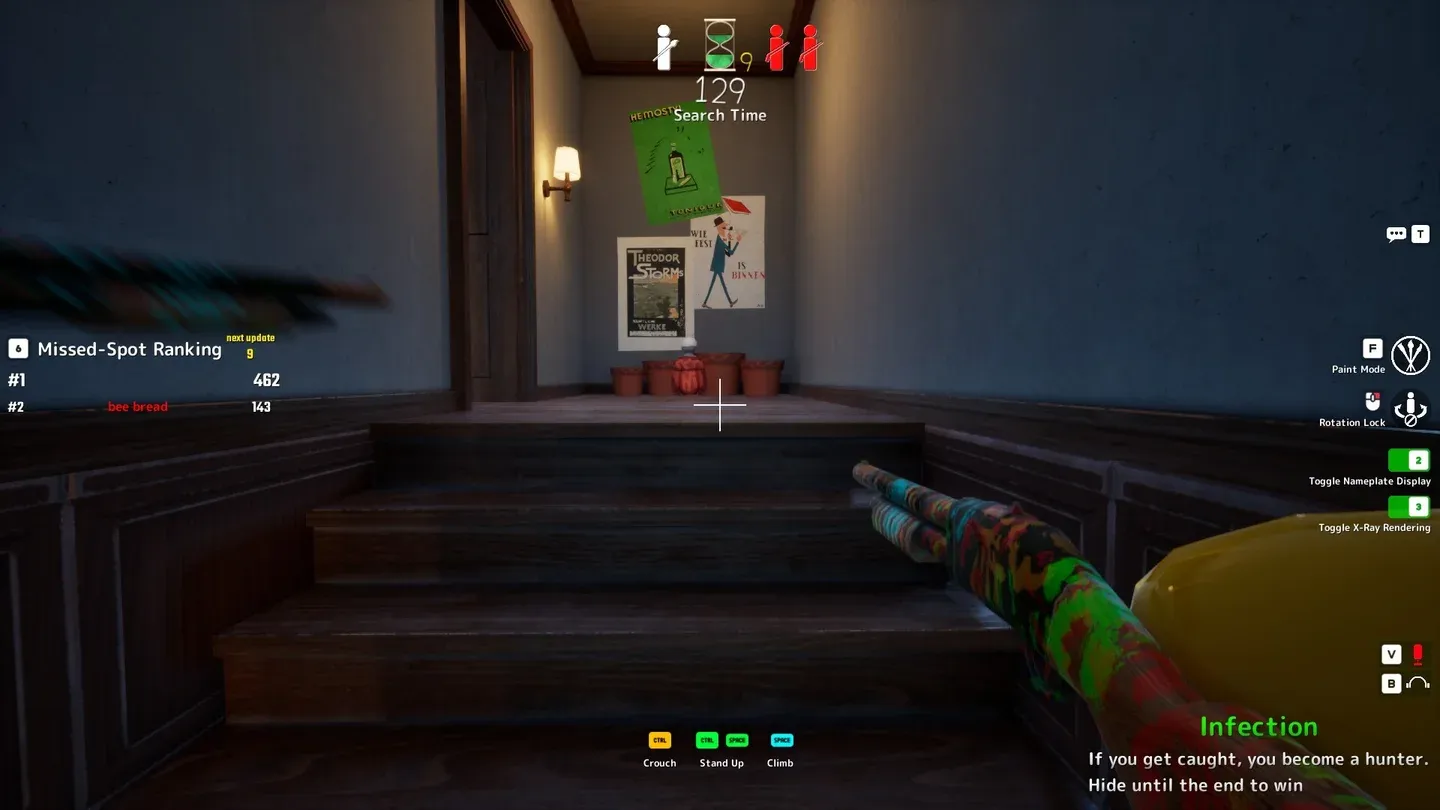
Pose selection menu options
Clear rooms in zones, not at random
Divide every room into sections and work through them methodically: corners and wall edges first, then large props, then elevated spots, then floor-level objects. This prevents you from circling back to areas you already checked and missing the spots that are genuinely hard to see.
What to look for instead of color
Strong Seekers hunt for visual errors, not incorrect colors. The best Hiders will have the color close enough that a color-focused scan misses them. Look for:
- Outlines that do not match the object they are supposedly part of
- Shadows that face the wrong direction relative to the room's light source
- Reflections or sheen that do not match nearby surfaces
- A prop or shape in a location where that object would not naturally sit
- Edges that look too clean or too painted compared to the actual background
Public matches vs. private lobbies
Public matches are the fastest way to get reps in. Expect a wide range of skill levels and some very creative hiding spots you would not think to try yourself. Private lobbies are better for playing with friends, walking new players through mechanics, or testing a specific map without pressure.
The game supports 2 to 10 players. For friend groups, the most important pre-session habit is confirming everyone is on the same version before the first lobby. One outdated client can break matchmaking entirely.
Custom and Workshop maps exist but are worth skipping until you understand how the official maps handle lighting and surface logic. The fundamentals you learn on the base maps transfer everywhere.
Where to go from here
This guide covers the foundation. Once you have a few matches under your belt, the MECCHA CHAMELEON guides collection goes deeper on specific maps, the full paint system, advanced pose choices, and Seeker room-clearing methods. If you are new to casual games on Steam and want more party titles with a similar social deduction feel, that genre page is worth browsing.
The fastest way to improve is to watch how better players hide or search at the end of each round before the next one starts. Every match teaches you something the guides cannot fully replicate.