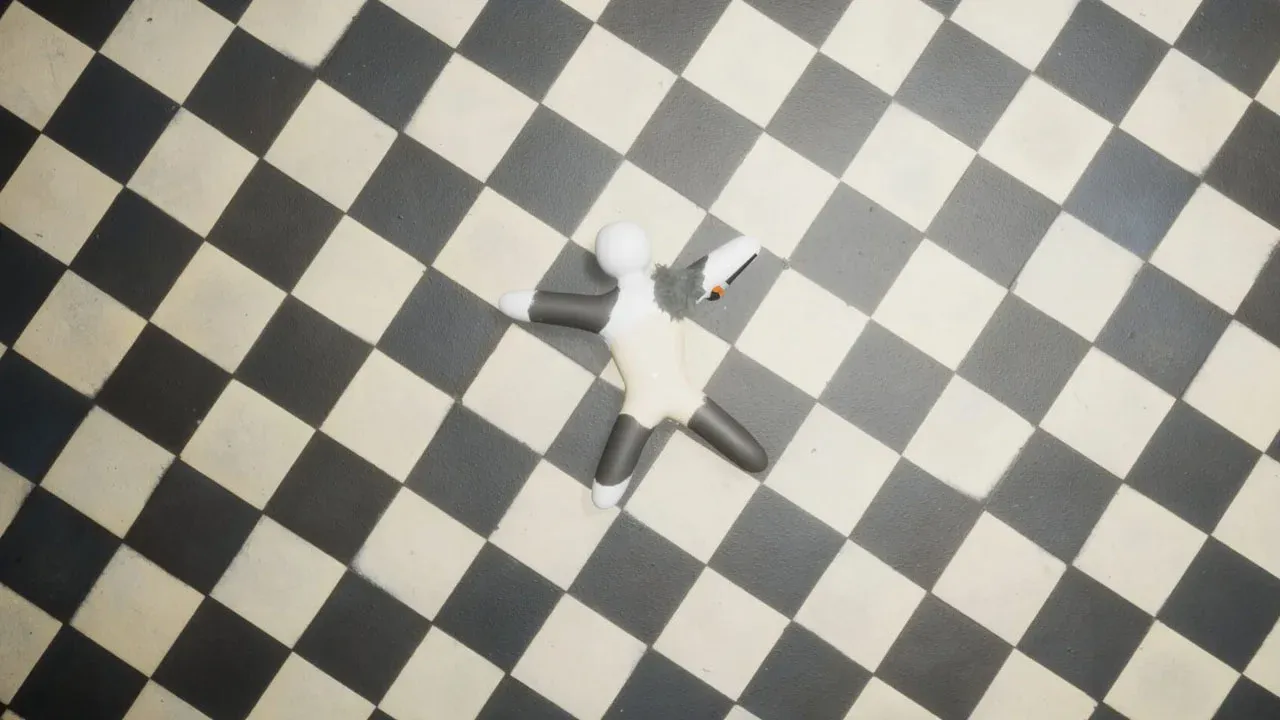


MECCHA CHAMELEON is a hide-and-seek game where your survival depends on more than just finding a dark corner. Painting yourself to match the environment, reading lighting conditions, and locking into the right pose before seekers arrive separates players who get found in ten seconds from those who last the entire round. This guide breaks down the most effective hiding patterns and pose techniques so you stop getting spotted and start making seekers second-guess what they're looking at.
How does hiding actually work in Meccha Chameleon?
Before the seeker phase begins, you get a limited prep window to explore the map, paint your character, and lock into a pose. Every second counts. Press F to open the paint tool, then use the HSV sliders to dial in your shade adjustments quickly rather than guessing. The goal is not just to pick a color that looks close, but to replicate the exact texture, lighting, and pattern of the surface you're hiding against.
One thing most players miss early on: what looks convincing in first-person often falls apart the moment a seeker approaches from a different angle. Before the prep phase ends, rotate your camera fully around your character. Check for gaps between limbs, bright patches that stand out, and any inconsistencies in your paint job. A quick 360 review before you lock in your pose can be the difference between surviving and getting tagged immediately.
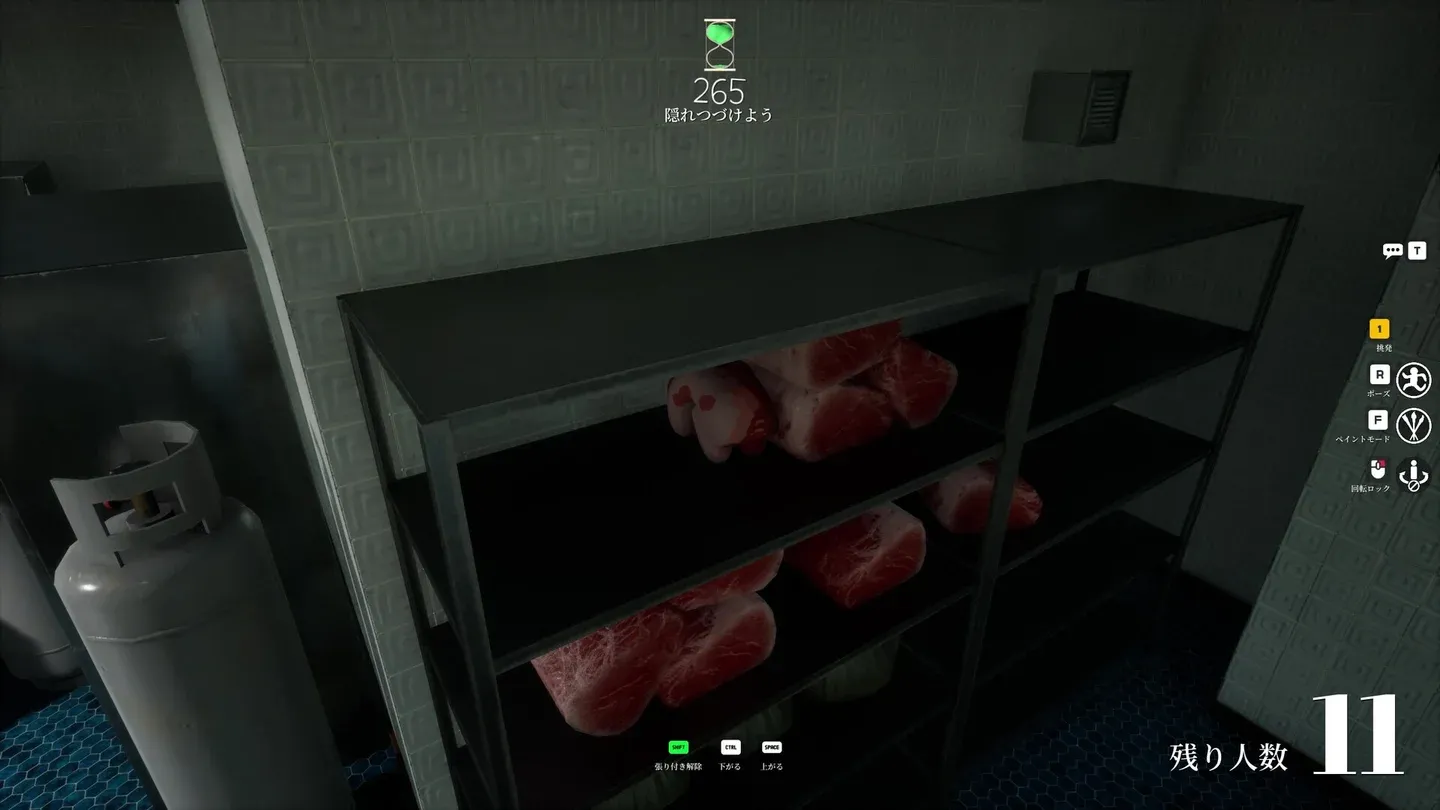
HSV paint tool in prep phase
What are the best hiding patterns to use?
The most effective hiders don't just match a single flat color. They replicate the full texture of whatever surface they're blending into. Here's what that looks like in practice:
- Use the Eyedropper tool to sample colors directly from the surface you're hiding against, factoring in any nearby light sources.
- Match lighting by applying brighter tones on lit sides and darker tones on shadowed sides to give your character actual depth rather than a flat painted look.
- Replicate surface sheen by incorporating metallic or rough texture patterns where the environment calls for it.
- Copy full patterns rather than just base colors. Checkered floors, tile grids, wallpaper designs, and wood grain all need their density and alignment matched to your character's position.
- Add color transitions and gradients along edges and corners where surfaces naturally shift tone.
Map awareness plays a big role here too. Cluttered areas with lots of objects are forgiving of minor paint imperfections because the visual noise helps mask small mismatches. Open, flat areas are far less forgiving since seekers have a clear sightline and perfect color matching becomes much harder to achieve.
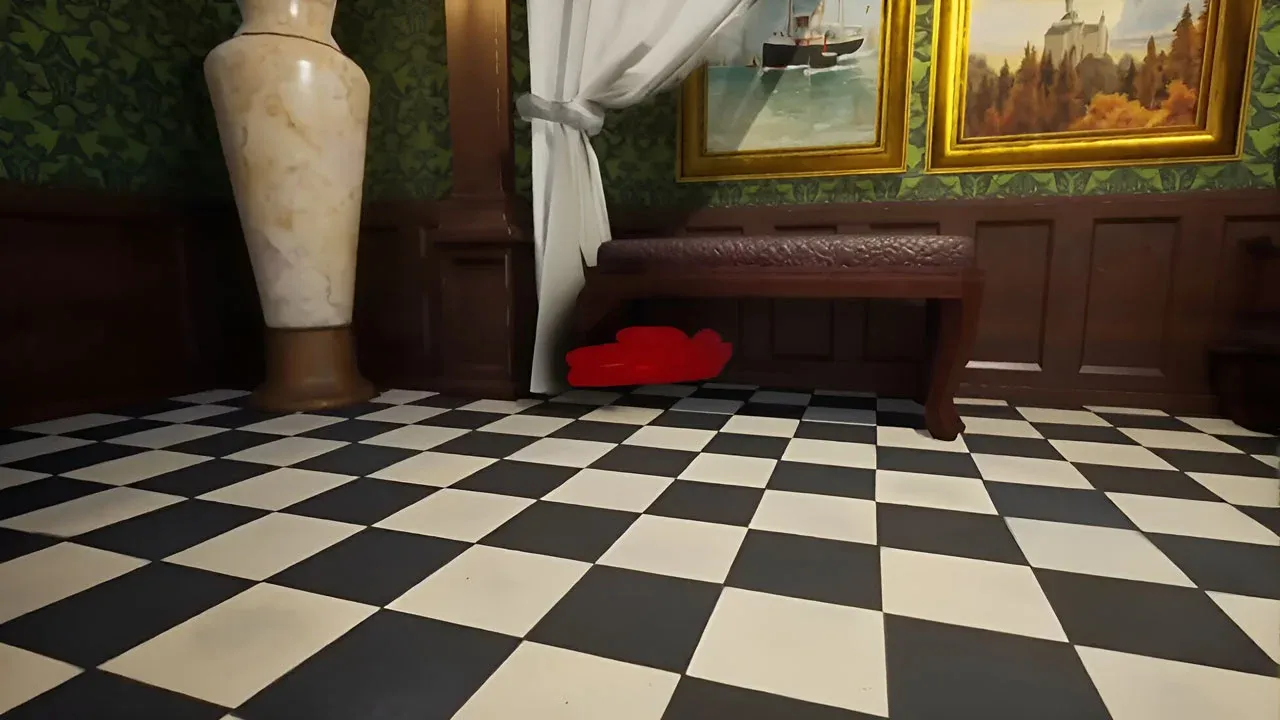
Eyedropper tool for color sampling
Which poses give you the best chance of survival?
Seekers spot human silhouettes faster than they catch color mismatches. That's the core insight driving smart pose selection. Your shape matters as much as your paint job, so choosing the right pose for your hiding spot is non-negotiable.
Hold R to cycle through available poses and find the one that best breaks your silhouette for the specific location you've chosen.
Objects like books, vases, posters, bottles, pillars, fruit bowls, and statues all offer far better hiding potential than a flat wall. Positioning yourself near or against a recognizable object gives seekers a false visual anchor, making them less likely to register your character as a player.
How do you stay hidden once seekers are active?
Getting into position is only half the challenge. Staying hidden once seekers are moving is where discipline matters.
Lock your pose completely. No fidgeting, no adjusting your camera angle, no small movements. Stillness is your best defense once the seeker phase begins.
If you need to reposition, plan your escape route during the prep phase rather than improvising under pressure. Quiet routes away from open sightlines are worth identifying before seekers arrive. That said, avoid moving unless you're certain a seeker has already spotted you, since unnecessary movement almost always draws attention.
For players who enjoy casual games with competitive depth underneath, this is exactly the kind of game that rewards patience and observation over reflexes.
For more strategies and map-specific advice, the full MECCHA CHAMELEON strategy guides collection covers hiding spots, seeker techniques, and everything else you need to consistently outlast the competition.