
Keeping your hunger bar full in Minecraft is not optional. Without food, your health stops regenerating, and surviving any serious adventure becomes nearly impossible. The good news is that the community has developed some incredibly efficient food farms over the years, ranging from beginner-friendly wheat plots to fully automated systems that practically run themselves. Whether you are just starting out or looking to scale up your food supply, there is a setup here for every stage of your world.
Why Do You Need a Dedicated Food Farm?
Survival in Minecraft depends on a steady food supply. Your hunger bar drains constantly during sprinting, jumping, and fighting, and once it hits zero, your health begins to drop. Relying on random drops from mobs or scattered crops is not a long-term strategy. Building a dedicated food farm gives you a reliable, renewable source of nutrition so you can focus on exploring, building, and progressing without interruption.
What Are the Best Food Farms to Build?
1. Simple Wheat Farm (Best for Beginners)
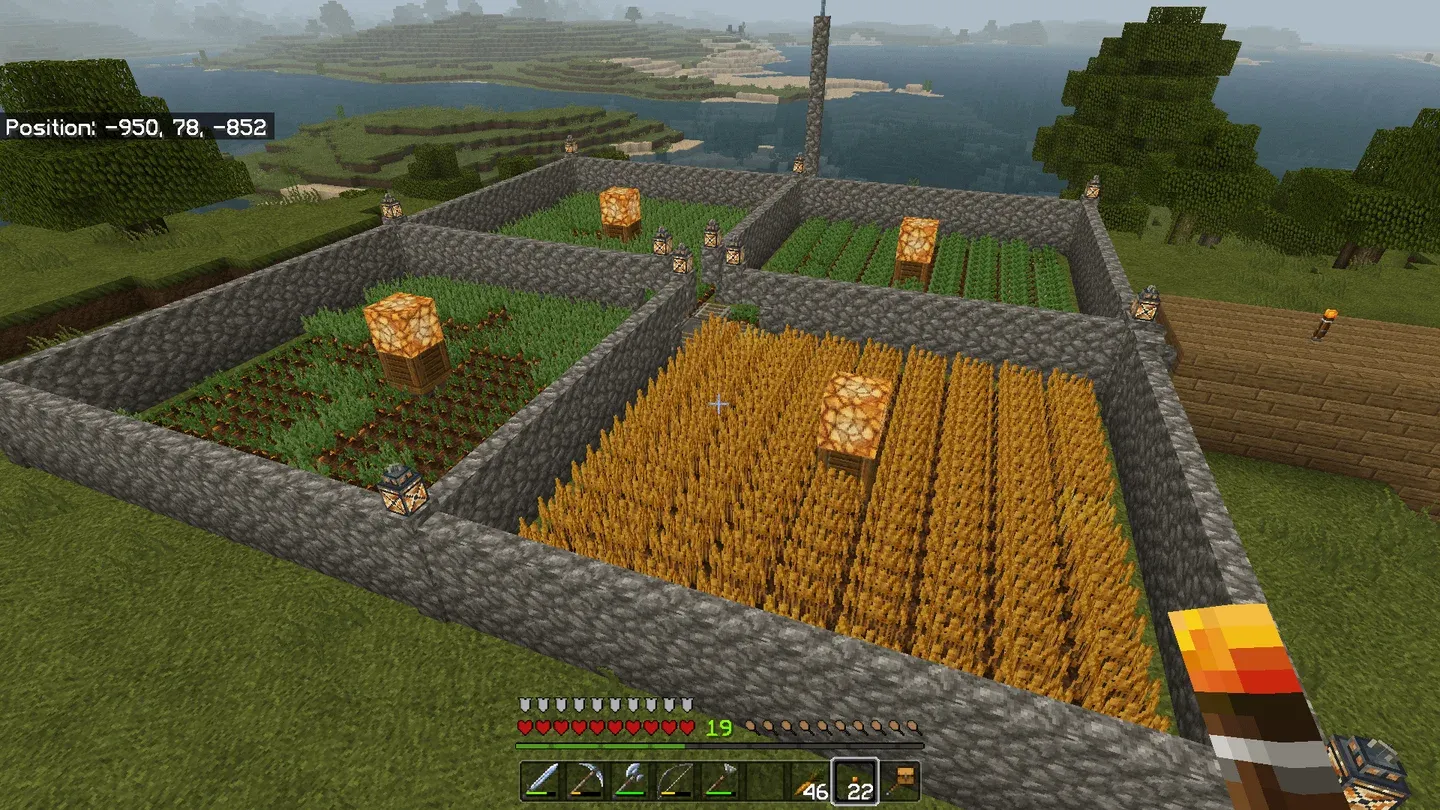
If you are brand new to Minecraft or just started a fresh world, a wheat farm is the first food production setup worth building. The process is straightforward:
- Break tall grass on grass blocks to collect wheat seeds
- Use a hoe to till the ground into farmland
- Plant seeds on the tilled soil
- Place a water source nearby to hydrate the farmland and accelerate growth
Once your wheat is ready to harvest, you can craft it directly into bread, one of the most accessible and filling early-game food items. Three wheat per loaf means even a small 9x9 farm generates a solid supply quickly.
2. Cow Crusher Farm (Maximum Meat Output)
The cow crusher is one of the more unusual farms in Minecraft, but it is surprisingly effective. It exploits the maximum entity cramming mechanic, which causes mobs to take suffocation damage when too many of them occupy the same block space simultaneously.
Here is how it works:
- Build a small enclosed pen and funnel cows into a single block space
- Continuously breed cows using wheat until the cramming limit is exceeded
- The excess cows die automatically from suffocation damage
- Place a hopper directly below the cramming point to collect dropped raw beef automatically
The raw beef collects in a storage chest connected to the hopper, ready to be cooked in a furnace. It is a high-output setup once you have a stable cow population to work with.
3. Automatic Crop Farm with Villager Farmers
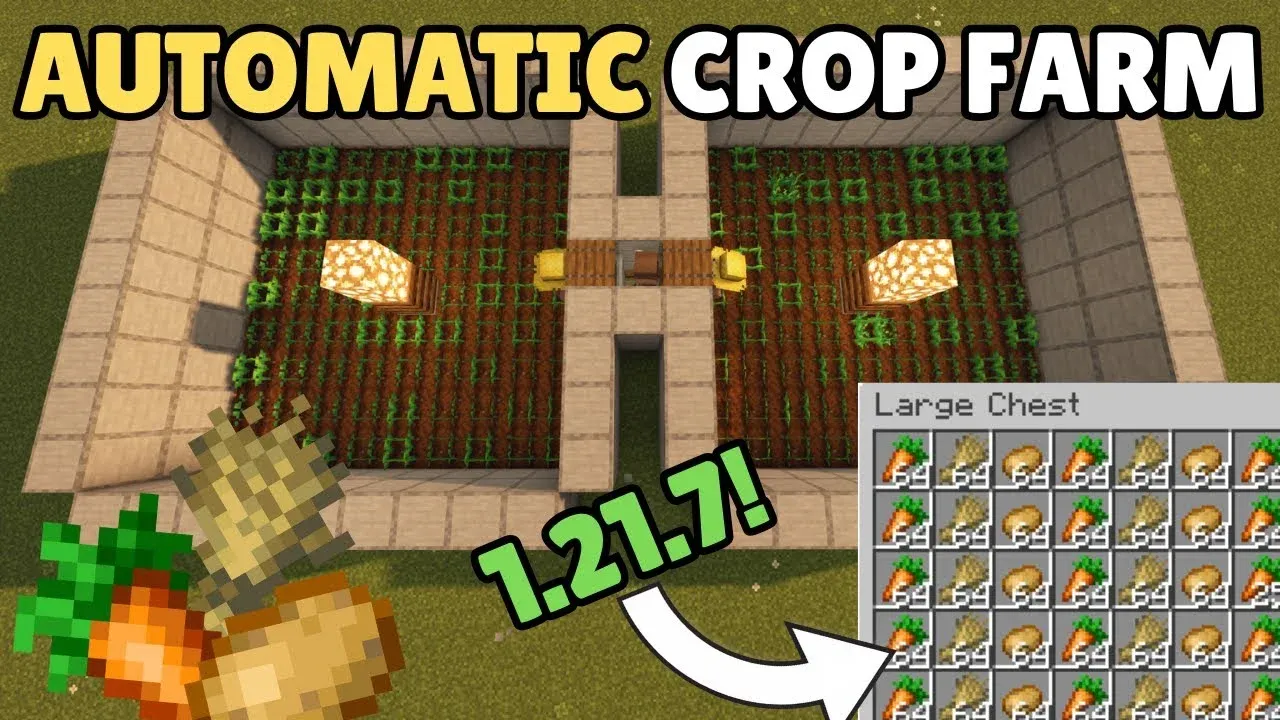
Once you have established yourself in your world and need both food and emeralds, an automatic villager-based crop farm is one of the most efficient builds available. This farm divides into four separate sections, each assigned to a specific crop and a dedicated farmer villager.
The setup works like this:
- Each farmer villager tends their assigned crop section, planting and harvesting automatically
- Harvested crops are tossed toward a central collection point
- A second villager at the center intercepts the crops, but a hopper system underneath captures them before the villager can pick them up
- Crops flow directly into a chest storage system
What makes this farm particularly useful is the dual purpose it serves. You get a constant supply of crops for food, and you can sell surplus crops back to the farmer villagers themselves to earn emeralds. For more detailed techniques on setting up crop automation, the Minecraft Wiki's crop farming tutorials cover villager mechanics and hopper placement in depth.
4. Hoglin Farm (Advanced Nether Setup)
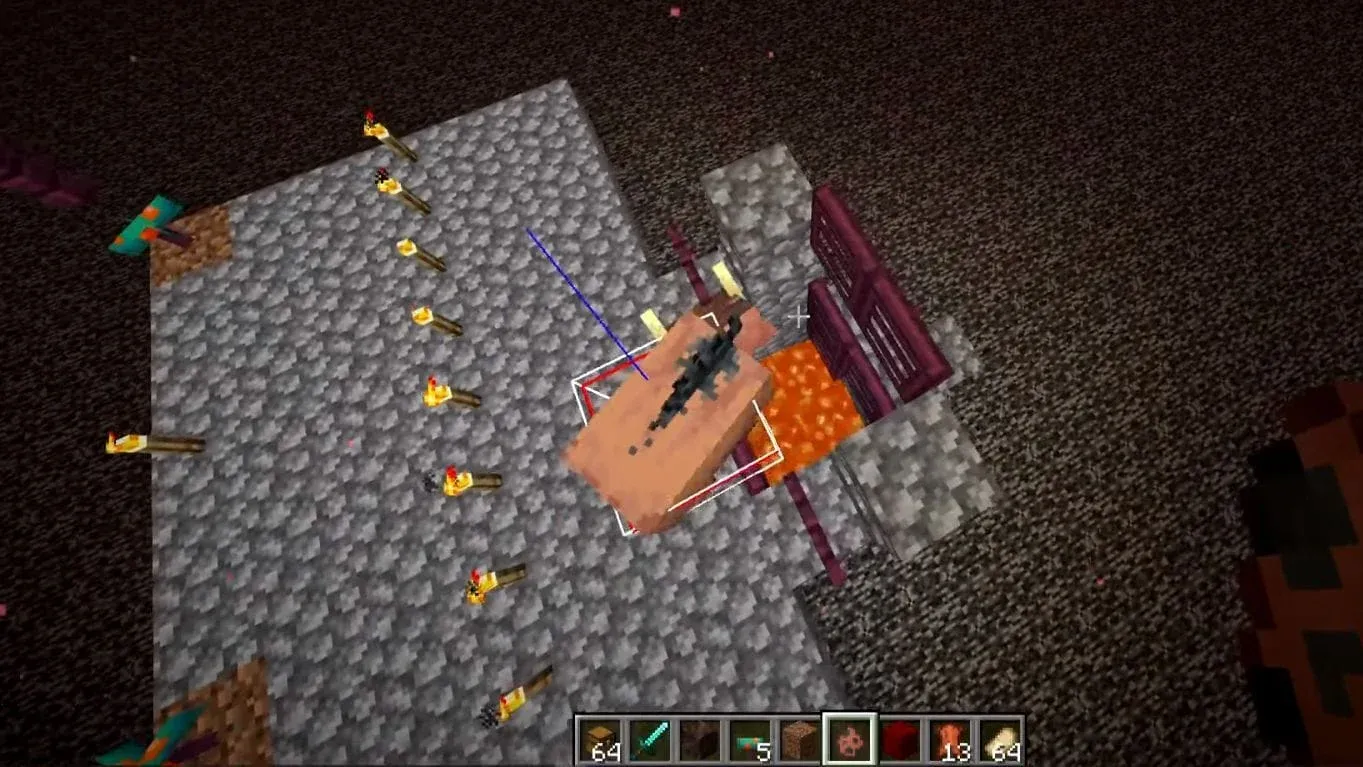
For players who have progressed into the Nether, the hoglin farm is one of the most efficient food production systems in the game. It is an advanced build with a unique twist: the hoglins cook themselves during the kill process, meaning you collect cooked porkchops without needing any furnaces or fuel.
Here is what the build requires:
- Access to the Nether roof (above Y=128 in the Nether dimension)
- A spawning platform where hoglins naturally generate
- Warped fungus placed strategically to frighten hoglins and drive them toward a lava pit
- The lava kills the hoglins, and the fire damage cooks the porkchops before they drop
Hoglins are frightened by warped fungus, which makes them easy to herd without needing complex redstone contraptions. The result is a fully passive stream of cooked food that requires almost no maintenance once built.
How Do You Choose the Right Farm for Your World?
The best farm depends entirely on where you are in your progression. Here is a quick breakdown to help you decide:
- Early game: Start with a wheat farm. It is fast to build, requires minimal resources, and gives you a reliable bread supply within minutes.
- Mid game: Add a cow crusher for protein. Pair it with your wheat farm since wheat is the breeding material for cows.
- Established world: Build the villager crop farm once you have access to farmer villagers and a decent hopper supply. The emerald income makes it worth the extra setup time.
- Late game: The hoglin farm is your endgame food solution. Cooked porkchops restore 8 hunger points each, and the farm runs passively with no fuel cost.
Stacking these farms as you progress means you will never face a food shortage at any stage of the game.
Final Thoughts
Building a reliable food supply is one of the smartest investments you can make in any Minecraft world. Starting simple with wheat and scaling up to automated villager farms and nether hoglin setups gives you a food production pipeline that matches your progression naturally. Each farm in this guide builds on the last, so you are never starting from scratch. For more strategies and builds across all types of Minecraft gameplay, browse more guides on GAMES.GG and keep your sessions productive.