Search games, articles, guides...CtrlK
Sign InGet Started
Find every chest type in Minecraft shipwrecks, learn what loot spawns where, and grab buried treasure maps fast.

Written by Hub
Head of Business Dev
See more GAMES.GG guides on Google
Add us as a preferred source and our guides show up first in your results.
Minecraft Abandoned Camps Guide: All Locations and Loot
Find every Abandoned Camp in Minecraft's Wilderness Bound update, loot all three chest types, and follow the map chain to your next camp.
Minecraft Wilderness Bound Update: Everything New in 26.3
Dappled Forest, Abandoned Camps, Straw Beds, and more. Here's everything added in Minecraft's Wilderness Bound update.
Minecraft Explorer Maps Guide: All Types and Where to Find Them
Every Explorer Map in Minecraft, how to get each one, and which structures they lead to in the Wilderness Bound update.
Minecraft's oceans hide some of the best early-to-mid game loot in the entire world, and shipwrecks are the most accessible way to grab it. These sunken wooden vessels can hold up to three distinct chests packed with supplies, maps and rare materials but only if you know exactly where to look and what to expect. Whether you're gearing up for your first ocean monument raid or hunting buried treasure, shipwrecks are worth every second of underwater exploration.
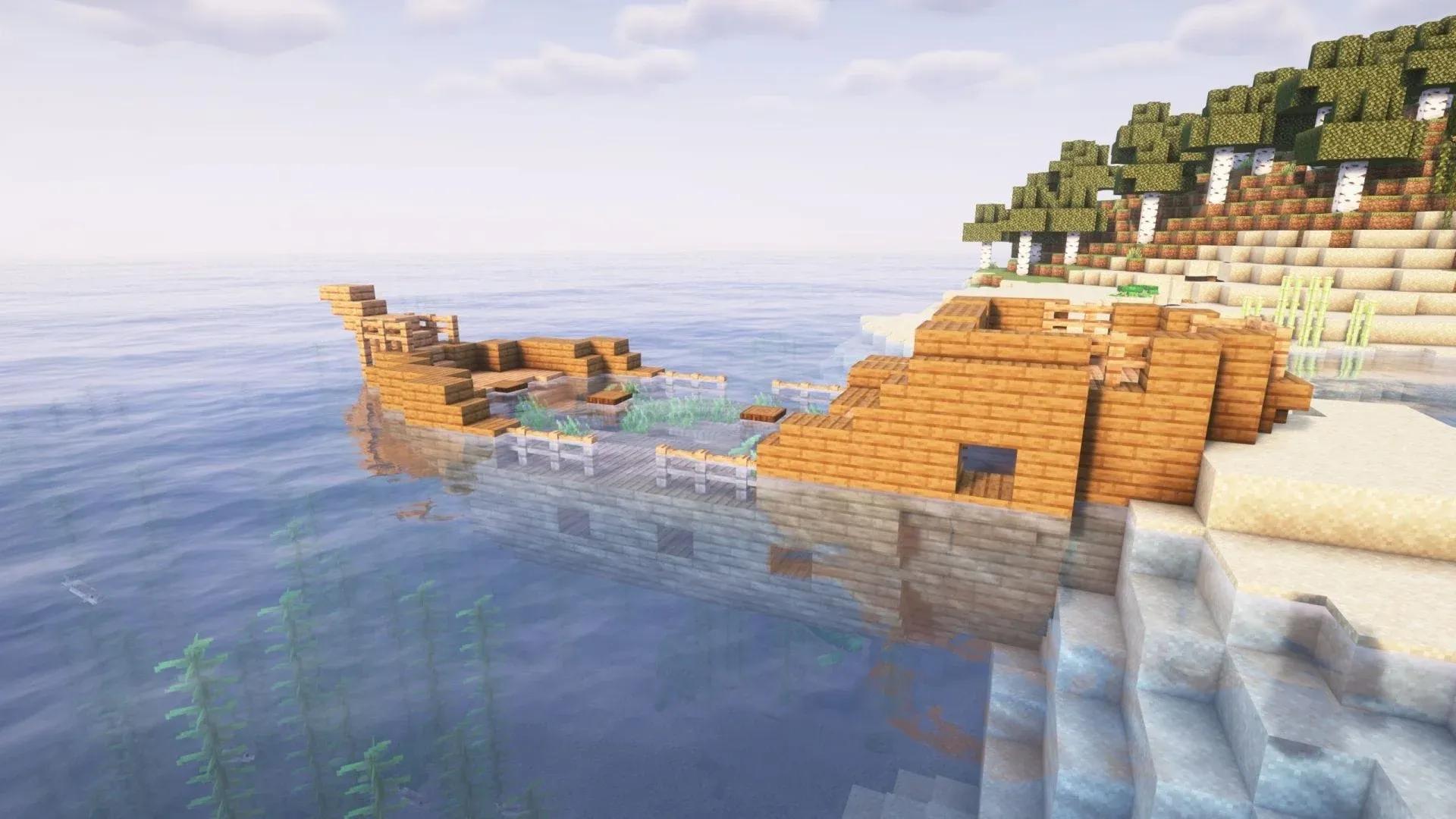
A shipwreck is a naturally generated underwater structure that appears in ocean biomes and occasionally on beaches. These wrecks can contain up to three loot chests depending on how much of the ship's structure is still intact. Fully preserved wrecks include all three chest types, while heavily damaged ships may only have one or two sections remaining. You can verify exact generation details on the Minecraft Wiki.
Shipwrecks generate in multiple orientations, right-side up, upside down, or tilted on their side and can appear at varying ocean depths. Spotting one is often a matter of scanning the ocean floor for wooden planks and logs jutting out of the sand.
This is the question most players ask first, and the answer depends entirely on the ship's condition. A complete shipwreck holds three chests, each in a different section of the vessel:
| Chest Type | Location on Ship | Key Loot |
|---|---|---|
| Supply Chest | Bow (front) | Food, paper, TNT, gravel, wheat |
| Treasure Chest | Stern (rear cabin) | Iron/gold/emerald nuggets, iron ingots, lapis lazuli |
| Map Chest | Lower deck | Buried treasure map, compass, empty map, books |
Each chest type has its own dedicated loot table, so you won't find a buried treasure map in the supply chest by accident. Understanding which section of the ship you're in saves you a lot of time when you're running low on air.
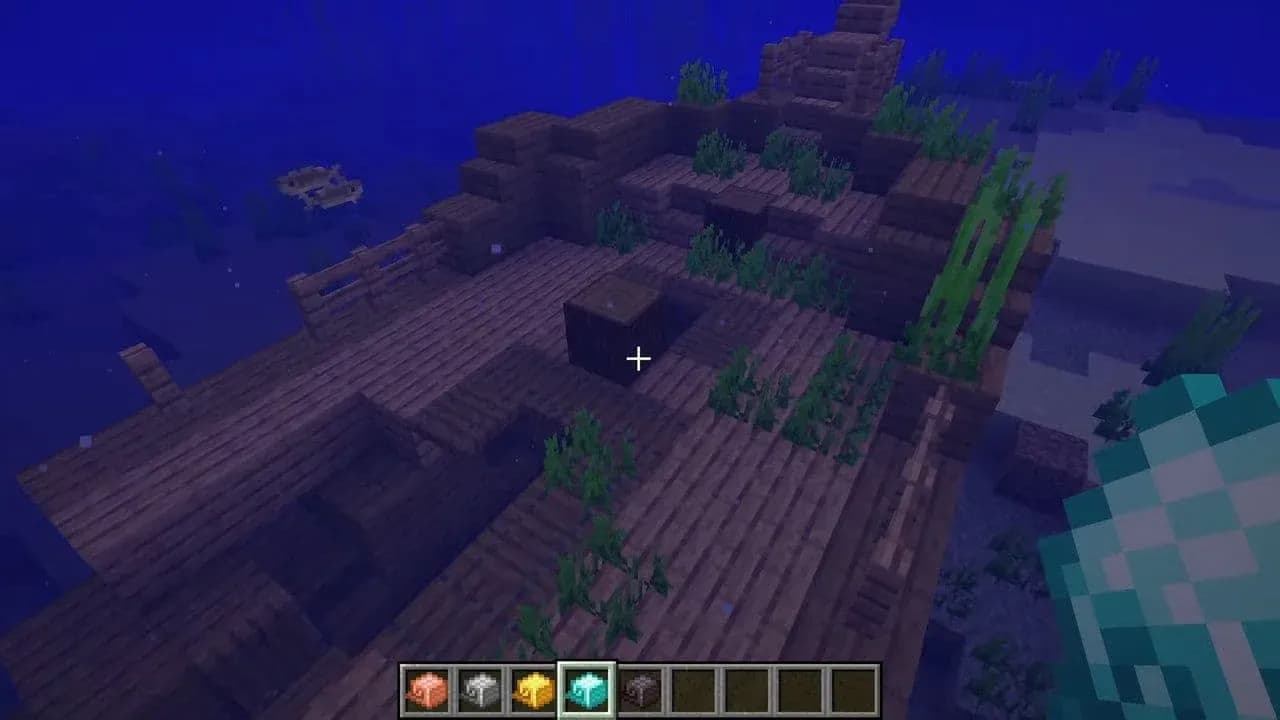
Supply chest in the ship's bow
The supply chest sits in the bow of the ship and is typically the easiest to reach. It focuses on consumables and basic materials:
The treasure chest is found in the stern section and contains the most valuable raw materials:
This chest is worth prioritizing if you're in the early game and need metal resources before you've established a proper mine.
The map chest lives in the lower section of the ship and is the most exciting find for many players:
The buried treasure map points you toward a hidden chest buried on a nearby beach or underwater. That chest contains a Heart of the Sea, the key ingredient for crafting a Conduit, one of the most powerful utility items in the game for underwater survival.
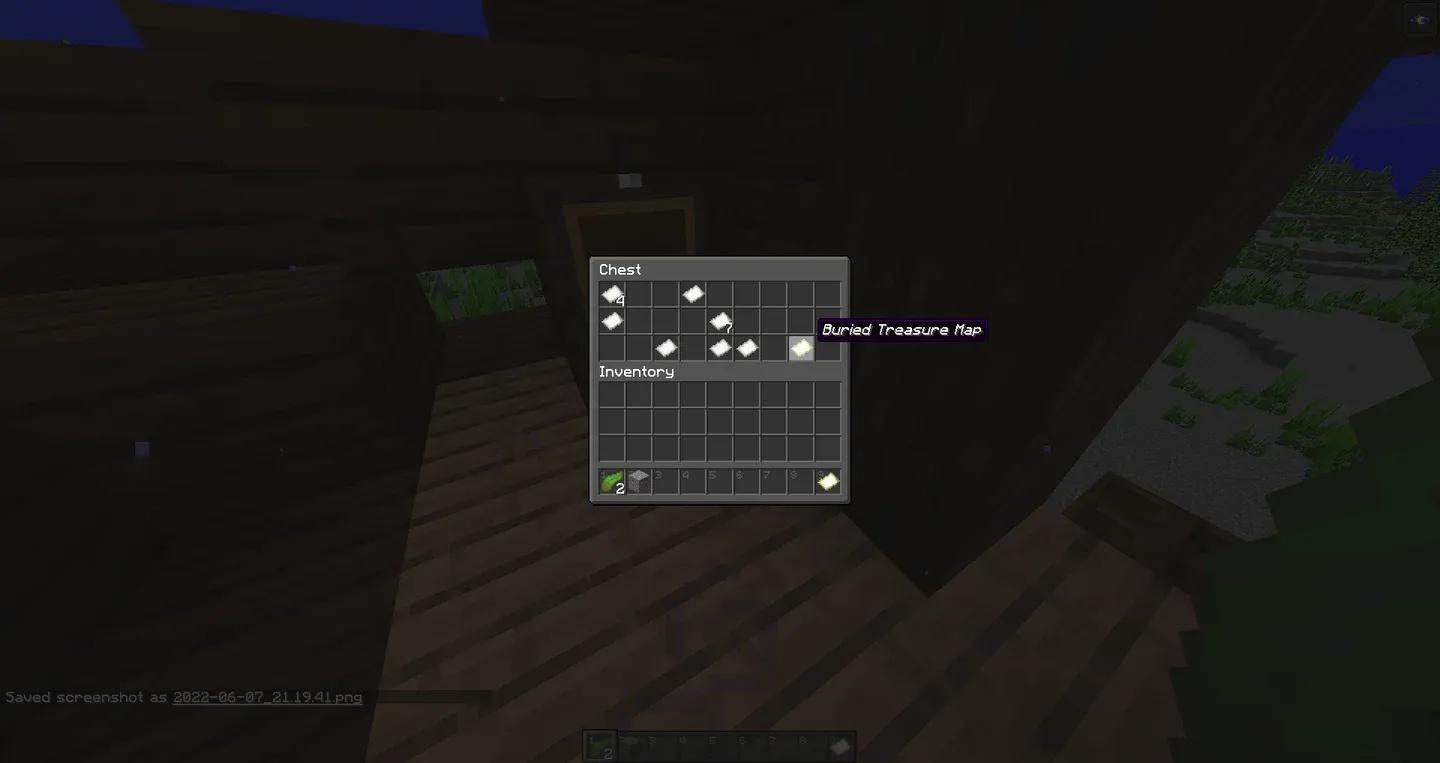
Map chest with treasure map
Locating shipwrecks doesn't have to be a random swim. Here are the most reliable methods:
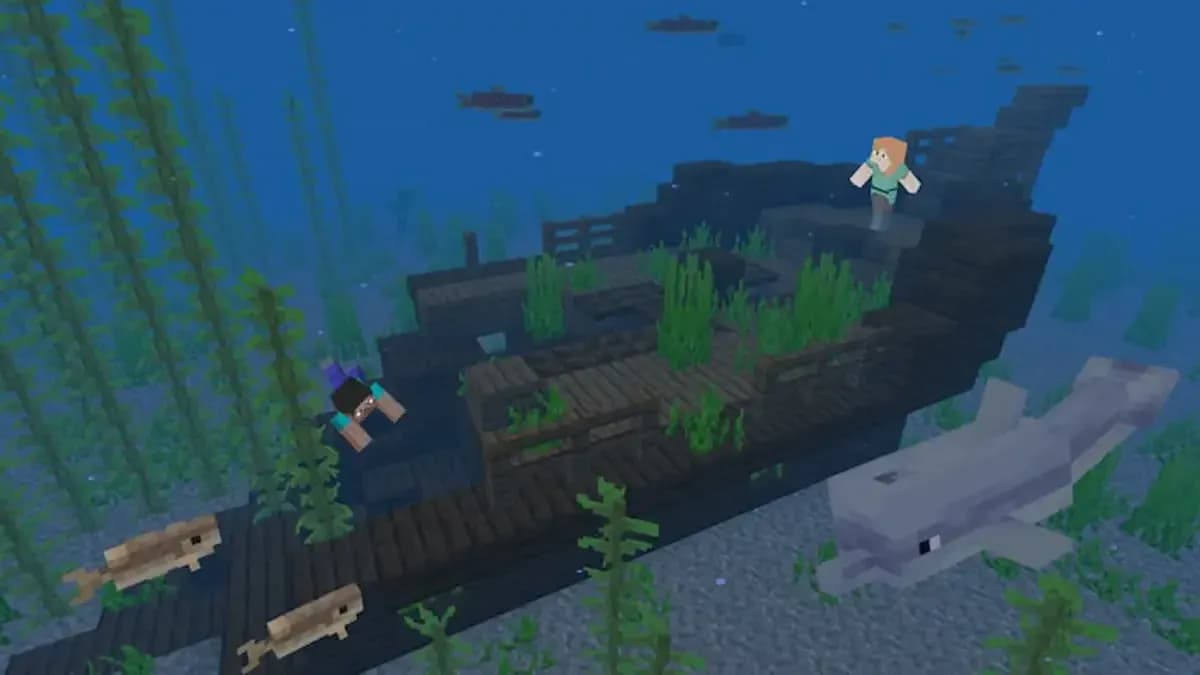
Depth Strider speeds up shipwreck looting
Going into the ocean unprepared is a fast way to drown. These enchantments make exploring and looting shipwrecks dramatically safer:
| Enchantment | Item | Benefit |
|---|---|---|
| Respiration III | Helmet | Extends underwater breathing by 45 seconds |
| Aqua Affinity | Helmet | Removes the underwater mining speed penalty |
| Depth Strider III | Boots | Increases underwater movement speed significantly |
| Feather Falling IV | Boots | Protects against fall damage when returning to surface |
Combining Respiration III and Aqua Affinity on the same helmet is the most impactful upgrade you can make before your first serious ocean dive. If you haven't enchanted your gear yet, even a plain iron helmet with Respiration I makes a noticeable difference.
If you're planning an extended looting session across multiple shipwrecks in the same ocean, building a Conduit is worth the effort. The Conduit grants Conduit Power within a radius of up to 96 blocks, which provides:
You need a Heart of the Sea (found in buried treasure) plus 8 Nautilus Shells to craft one. Nautilus Shells drop from Drowned mobs or can be purchased from Wandering Traders. It's a mid-game investment, but once you have a Conduit set up, ocean exploration becomes a completely different experience.
Drowned mobs are the main threat inside and around shipwrecks. These zombie variants spawn in ocean biomes and can throw Tridents, which deal significant ranged damage. A few things to keep in mind:
For more strategies on surviving ocean encounters and other Minecraft adventures, you can browse more guides on GAMES.GG to keep building your skills across every biome.