


Mongil: Star Dive drops you into Belana, a European-inspired fantasy world split across three continents, and expects you to figure out a lot on your own. The tag-team combat, Monsterling taming, and four distinct character roles all interact in ways that aren't immediately obvious. This guide breaks down everything you need to know to stop fumbling through early encounters and start playing with actual intent.
What should you do first in Mongil: Star Dive?
The single most important thing you can do at the start is push the Main Story Quest forward. The main story directly gates new maps and features, so grinding side content before unlocking those systems is a waste of time. Your journal has a "Go" button in the bottom right corner that fast-travels you straight to your current quest target. Use it constantly. Manually running between objectives early on adds nothing except time.
While you're moving through story missions, pick up every material you pass. Belana's world is full of collectible resources, and they feed directly into crafting and cooking later. You won't regret having too many materials. You will regret ignoring them for three hours and then hitting a crafting wall.
Also check Manon's Guidebook and any active event pages regularly. These reward materials and resources as you hit natural milestones, and they expire if you don't claim them.
How does combat work in Mongil: Star Dive?
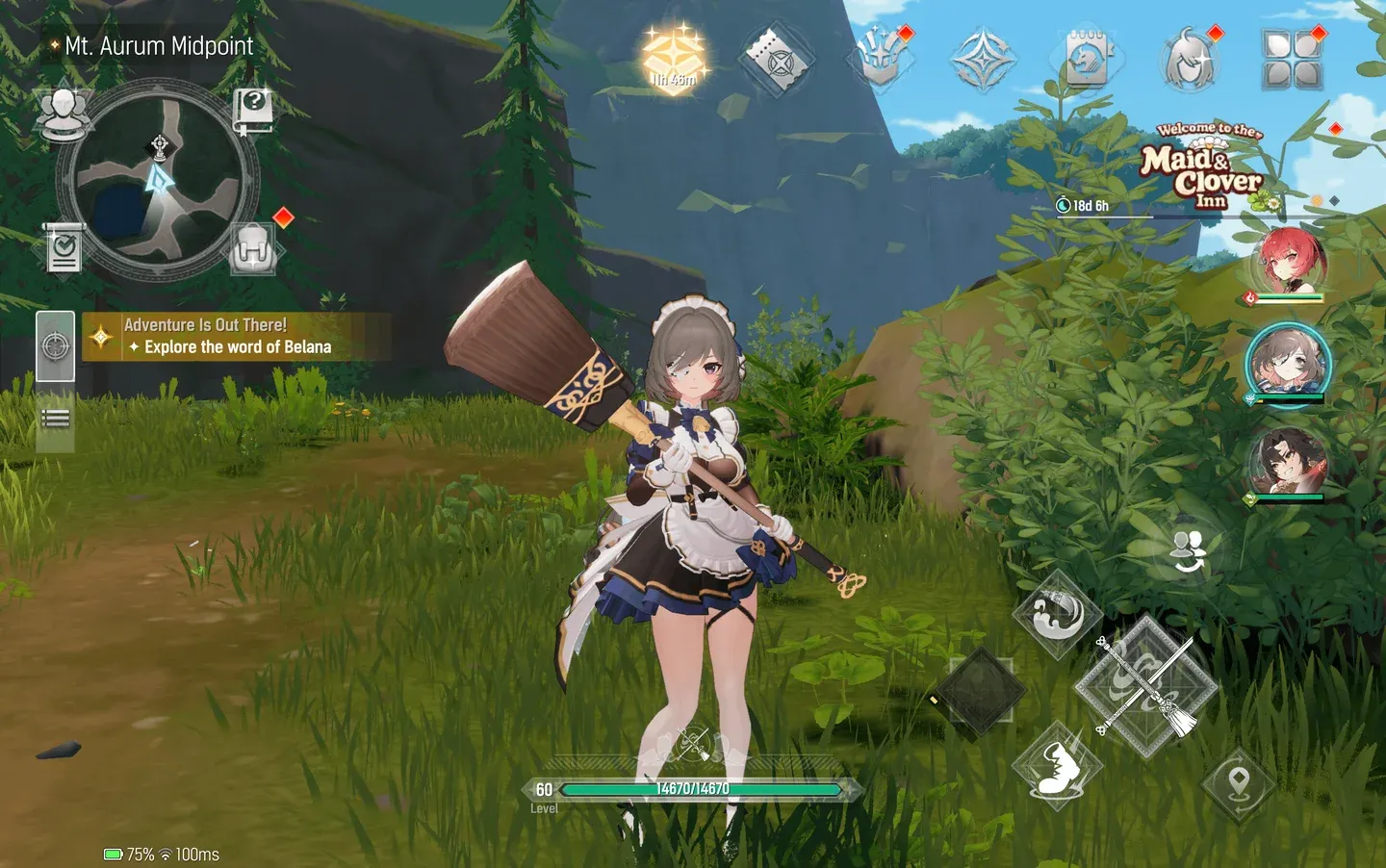
Combat in Mongil: Star Dive is built around a 3-person party that you switch between in real time. The key mechanic connecting your party members is Tag Skills, which trigger when you swap characters at the right moment. Getting comfortable with swapping isn't optional; the whole system is designed around it.
Every enemy has an elemental weakness. Matching your character's element to that weakness deals significantly more damage, so checking enemy affinities before a fight saves a lot of frustration. The five elements in the game are Ice, Fire, Wind, Lightning, and Earth, and characters are locked to one element each.
Boss fights add another layer through the Stagger Gauge. Dealing damage to a boss fills the gauge, and once it's full, you trigger a Stagger using Nyanners' Skill. A staggered boss is temporarily disabled, and that's your window to activate a Burst for maximum damage output. Missing this window on tough bosses is the difference between a clean fight and a long one.

Stagger Gauge fills with damage
What are the 4 character roles and how do they differ?
Building a party without understanding the four roles leads to lopsided teams that struggle against specific encounter types. Here's how each role functions:
No single role carries every situation. A party stacked with Fighters deals great damage but staggering bosses takes longer without a Destroyer. Running pure Support is obviously a problem. The game rewards mixing roles based on what you're actually fighting.
You should avoid getting too comfortable with one fixed party. Different combat encounters favor different compositions, so rotating characters and testing new setups is part of the design, not a sign that your current team is failing.
How do Monsterlings work?
Monsterlings are capturable creatures scattered across Belana, and Nyanners is the mechanic used to tame them. Once captured, Monsterlings can be combined to create stronger versions. This isn't just a collection system; certain Monsterlings have Link Chains that let them appear directly in battle when equipped.
Link Chains are worth prioritizing. A Monsterling with a Link Chain brings its own attacks and effects into your fights, which expands what your party can do beyond just your three active characters. These effects vary between Monsterlings, so experimenting with different combinations changes your playstyle in meaningful ways.
For a deeper look at which Monsterlings are worth building toward, browse more guides covering the full roster and Link Chain rankings.
Nyanners captures wild Monsterlings
Where does the story take place?
Belana launches with three continents. Centralia is where the game begins and where you'll spend most of your early hours. The Far East is a separate landmass across the sea that opens up as you progress. The Deadlands rounds out the map as an uninhabitable region. Each continent has its own monster species, flora, and fauna, which means new Monsterlings and new elemental matchups as you expand your reach.
Exploring thoroughly matters for material gathering, chest hunting, and finding Monsterlings with strong Link Chains. The world is designed to reward players who push into new areas rather than staying in comfortable zones.
Quick reference: early priorities
Here's the order of operations that makes the first few hours efficient:
- Push the Main Story Quest to unlock maps and features
- Use the "Go" button in your journal for fast travel
- Collect every material you pass during exploration
- Claim Manon's Guidebook and event rewards regularly
- Build a party with mixed roles, not just maximum damage
- Target elemental weaknesses in every fight
- Use Nyanners to capture Monsterlings and find ones with Link Chains
- Fill the Stagger Gauge on bosses before activating Burst
Mongil: Star Dive has more systems than it initially reveals, and the early hours are really about building habits that pay off later. Prioritize story progress, keep your party composition flexible, and treat Monsterling taming as a core mechanic rather than an optional side activity. The stagger-and-burst loop on bosses is the game's highest-damage window, and learning to set it up consistently separates players who clear content cleanly from those who grind the same boss for an hour.