
How to level up characters fast in Mongil: Star Dive
Pushing your characters to full strength in Mongil: Star Dive means juggling six different progression systems at once. Skip even one and you'll slam into story bosses that suddenly feel impossible. This guide walks through every method, prioritized in the order that actually clears content instead of wasting resources on dead-end upgrades.
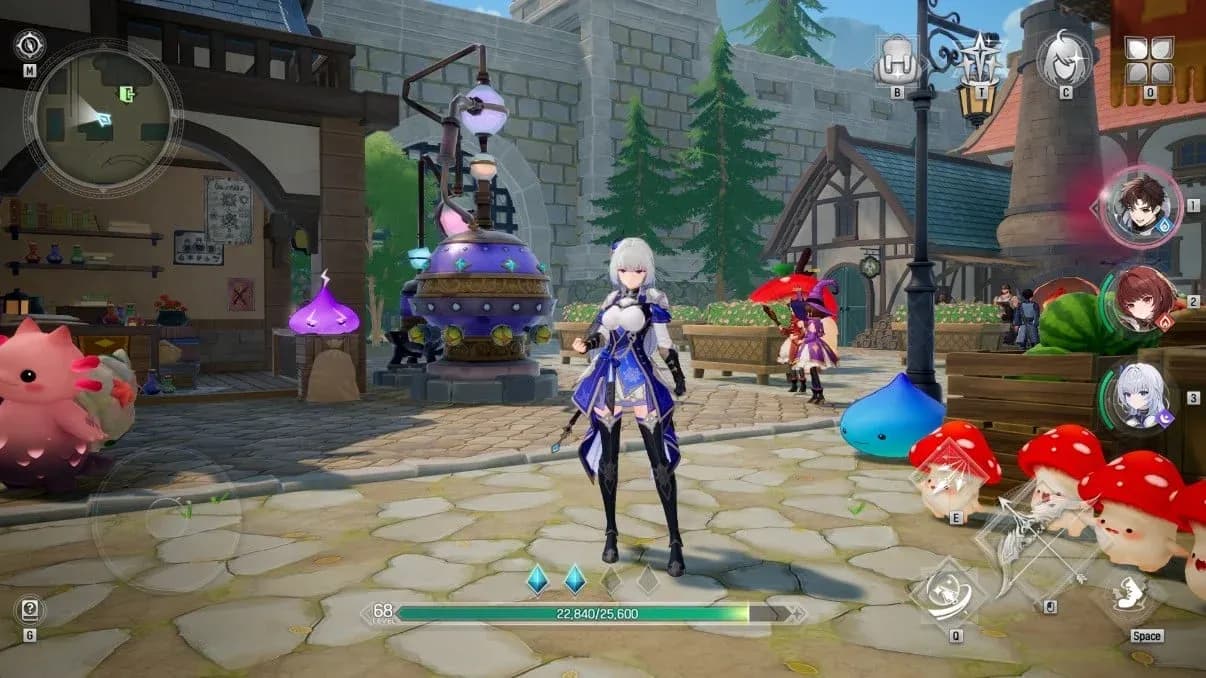
level up with EXP Books


What are Experience Books and how do they work?
Experience Books are the main tool for raising character levels. Each book delivers a flat EXP amount, and the difference between tiers is massive. The five tiers scale like this:
| Experience Tier | EXP Given |
|---|---|
| Basic | 500 |
| Uncommon | 2,000 |
| Rare | 10,000 |
| Hero | 50,000 |
| Legendary | 250,000 |
One Legendary book equals 500 Basic books. Don't blow high-tier materials on bench characters. Save your best books for the 3 characters carrying you through the story.
How to farm Experience Books efficiently
The dedicated farm for Experience Books is Experience Training, located in the EXP Path. Difficulty ranges from level 1 to 6, and each tier unlocks after you clear a specific story quest. Higher difficulties drop better books, so climbing the difficulty ladder pays off immediately.
| Difficulty | Enemy Level | Unlock Requirement |
|---|---|---|
| 1 | Lv. 10 | Unlock EXP Path |
| 2 | Lv. 20 | Complete New Hope Quest |
| 3 | Lv. 30 | Complete To the Battlefield Quest |
| 4 | Lv. 40 | Complete Hungry Minotaur Quest |
| 5 | Lv. 50 | Complete The Lively Assassin, Rin Quest |
| 6 | Lv. 60 | Complete Manwol's Trial Quest |
Going from Difficulty 1 to Difficulty 3 moves you from Basic books to Rare drops, a 20x EXP jump per clear. Getting to Difficulty 3 should be a priority for anyone starting out.
Why does my character stop leveling? Understanding level caps
Mongil: Star Dive locks your characters behind hard level caps. You can't just feed them books until they hit max level. Two systems control how high they can go.
Adventure Level caps in early Episode 1
Early in Episode 1, your Adventure Level sets a ceiling on character levels. The caps start tight:
| Adventure Level | Character Level Cap |
|---|---|
| 1 | Max Level 5 |
| 2 | Max Level 10 |
| 3 | Max Level 15 |
| 4 | Max Level 20 |
Burning Experience Books before raising your Adventure Level is a waste. Push the story to lift these caps first.
How does Breakthrough work?
Once you clear the Adventure Level gates, Breakthrough becomes the cap system. Each Breakthrough costs specific materials based on a character's Role, plus Gold that increases with each tier. The material requirements break down like this:
| Limit Increase | Materials Needed | Gold Required |
|---|---|---|
| Lv. 20 → 30 | Basic Material x120 | 30,000 |
| Lv. 30 → 40 | Standard Material x8 | 60,000 |
| Lv. 40 → 50 | Greater Material x6 | 120,000 |
| Lv. 50 → 60 | Superior Material x4 | 250,000 |
Materials come from the Breakthrough Path. The Gold costs add up fast, so keep farming Gold while you grind materials.
What else makes characters stronger beyond leveling?
Raw level is the baseline, but five other systems each add real power. Ignoring them is how you end up underleveled for your actual progression point.
Enhance skills for better damage multipliers
Skill enhancement happens in the Skills tab of the Characters screen. Upgrading skill levels increases damage and other effects directly. The cost is Gold plus elemental materials that change by character type. These materials drop from Paths or through crafting, so your Path farming feeds this system too.
Use Seed of Destiny for Awakening
Awakening is the premium character growth layer. Using a Seed of Destiny unlocks hidden passives and pushes stats and skills further via the Awakening tab in the Characters screen. The problem: Seeds of Destiny only drop when you pull a duplicate of the same character from the gacha. This makes Awakening a long-term goal, not something you can rush.
Equip gear and Artifacts for stat boosts
Artifacts work as weapons with fixed stat bonuses and effects. Equipment pieces are armor that can roll random substats, and wearing a full armor set adds bonus stats and effects on top of the individual piece bonuses. Both can be enhanced using Gold and enhancement materials from Paths, so the same farming loop feeds gear progression.
Attach and Link Chain Monsterlings
Monsterlings are monsters you capture by defeating them in the field, then having Nyanners consume them. Once attached to a character, they provide stat bonuses and special effects. Monsterlings can be enhanced using Gold and other Monsterlings as upgrade materials.
The Link Chain system goes deeper: chain multiple Monsterlings together and they can show up directly in battle when equipped, adding attacks and effects that expand your options beyond your character's base kit. Leveling Nyanners by feeding it monsters also increases its capture capability, letting you grab higher-level Monsterlings over time.
What should you prioritize first?
With six progression systems fighting for the same resources, order matters. Here's the priority list:
- Level up your core 3 characters using EXP Books from the EXP Path.
- Breakthrough as soon as any character hits a level cap.
- Enhance skills once your levels stabilize, to push damage output.
- Equip Artifacts and gear, aiming for full set bonuses.
- Attach and enhance Monsterlings, using Link Chain for battle presence.
- Awakening as a long-term investment when duplicate pulls happen.
For more strategies across all game systems, browse more guides on GAMES.GG to keep your progression on track.