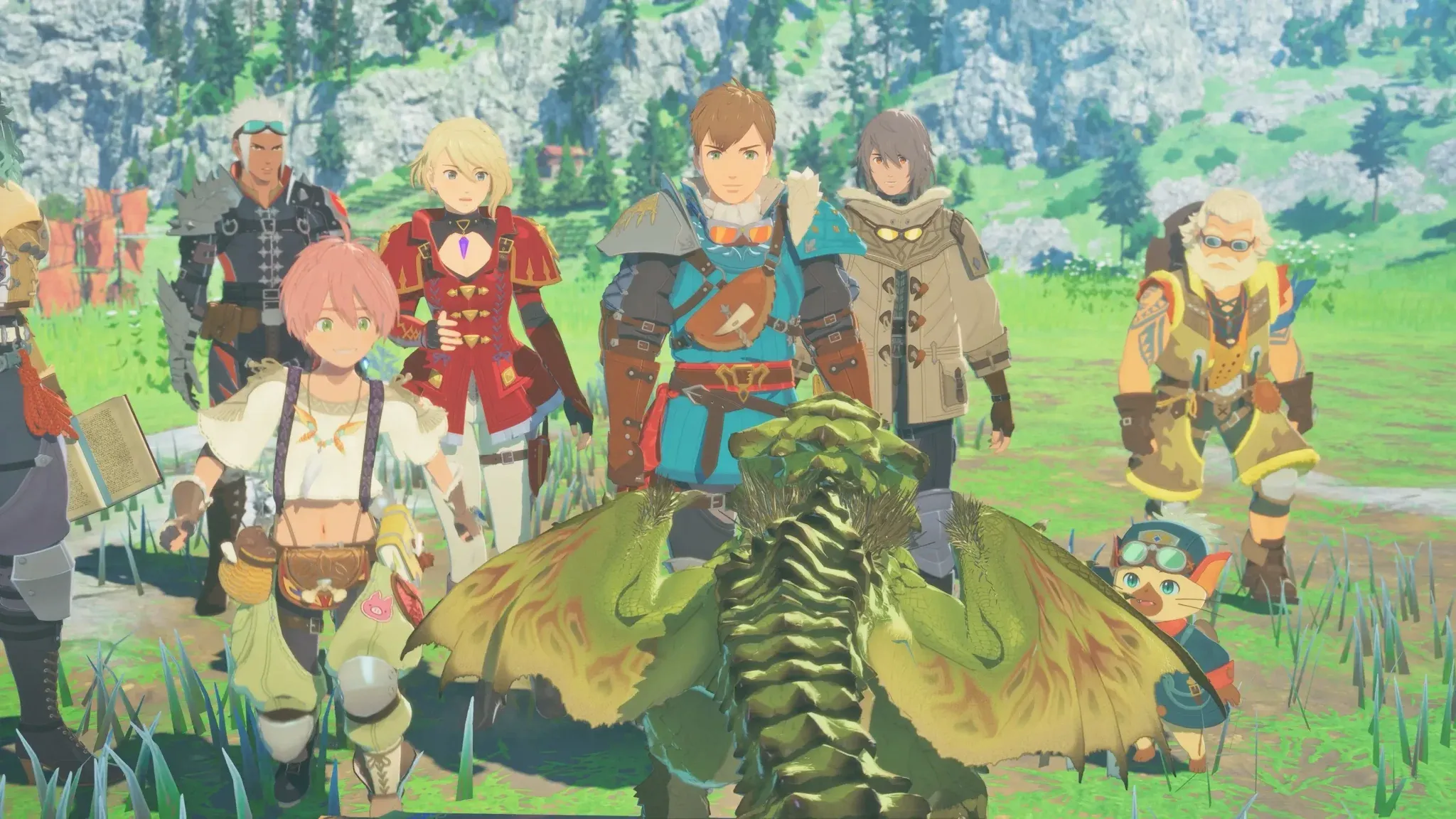


Mutation is one of the most rewarding mechanics in Monster Hunter Stories 3: Twisted Reflection. Rather than leaving players to guess at random outcomes, the game openly displays every mutation requirement inside the Monsterpedia, turning the whole process into a deliberate ecosystem-building puzzle. Whether you want a fearsome Deviant for its rare gene pool or a Subspecies to round out your breeding strategy, knowing exactly what triggers each transformation puts you firmly in control.
What Is Monstie Mutation in Monster Hunter Stories 3?
In Monster Hunter Stories 3: Twisted Reflection, mutation is directly tied to the Habitat Restoration system. Players hatch monsters, introduce them to specific regions, and raise the Ecosystem Rank of each habitat over time. When the right combination of species coexist at the correct rank, a mutation triggers and a new Endangered Species egg becomes available.
The Monsterpedia tracks each monster's mutation potential and lists the precise conditions required, so nothing is left to chance. This transparency rewards players who think carefully about habitat composition rather than simply hatching as many eggs as possible.
What Is the Difference Between Subspecies and Deviant Mutations?
Subspecies mutations require only that a base monster reaches a specific Ecosystem Rank (usually A or B). They offer unique appearances and open up new genes for breeding.
Deviant mutations demand both an S-rank ecosystem and a carefully curated habitat population. They represent the most powerful variants in the game and are essential for late-game gene collection and Environment Skills.
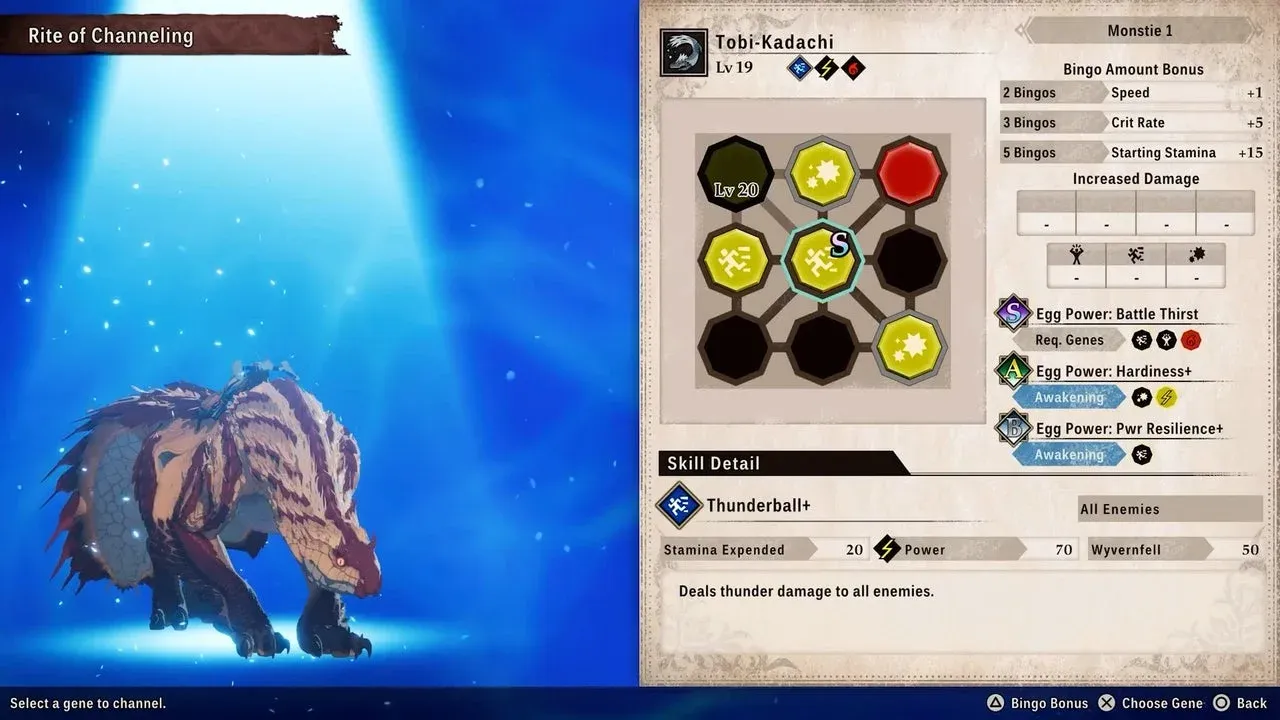
Monsterpedia mutation tracker
All Monstie Mutation Requirements by Region
Mutations are spread across all four regions of the game: Azuria, Canalta Timbaland, Tarkuan, and Serathis. Below is a full breakdown of every variant and exactly how to unlock it.
Azuria Mutations
Pink Rathian (Subspecies)
- Base Monster: Rathian
- Ecosystem Rank Required: B
- Defeat the Yian Garuga and free the Rathian from its Invasive predator to unlock this mutation path.
Dreadqueen Rathian (Deviant)
- Base Monster: Rathian or Pink Rathian
- Ecosystem Rank Required: S
- The habitat must also contain 3 or more poisonous monsters. The Sunpetal Plains region already includes Gypceros, making it a practical starting point since both Rathian and Pink Rathian can share the same region.
Ivory Lagiacrus (Subspecies)
- Base Monster: Lagiacrus
- Ecosystem Rank Required: A (any region)
Boltreaver Astalos (Deviant)
- Base Monster: Astalos
- Ecosystem Rank Required: S
- The habitat must contain 3 or more thunder elemental monsters. Only monsters with a base thunder element qualify for this requirement, so plan your habitat composition carefully.
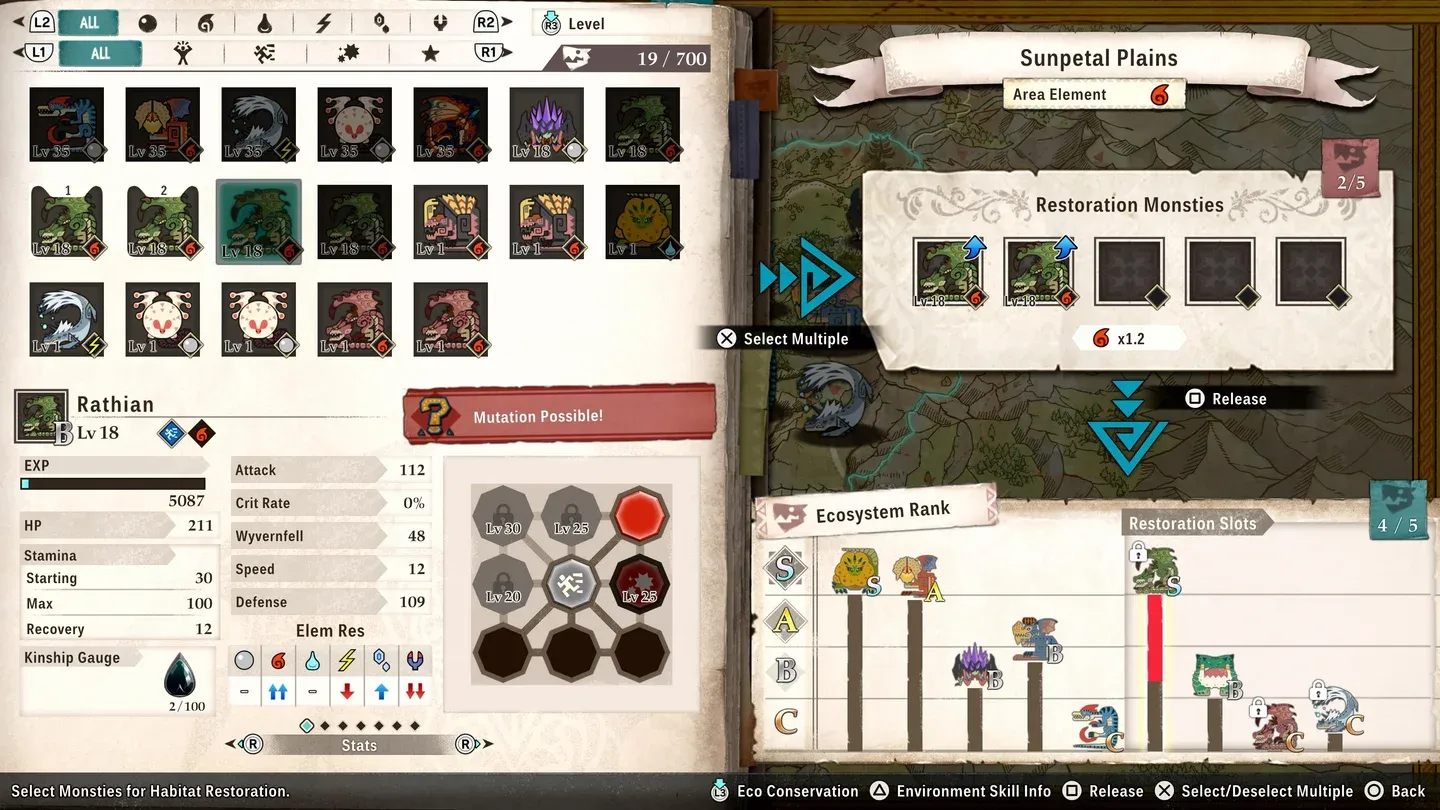
Azuria habitat ecosystem view
Canalta Timbaland Mutations
Green Nargacuga (Subspecies)
- Base Monster: Nargacuga
- Ecosystem Rank Required: A
Silverwind Nargacuga (Deviant)
- Base Monster: Nargacuga or Green Nargacuga
- Ecosystem Rank Required: S
- The habitat must contain 2 or more wind-controlling monsters. Qualifying examples include Legiana, Great Izuchi, and Paolumu.
Soulseer Mizutsune (Deviant)
- Base Monster: Mizutsune
- Ecosystem Rank Required: S
- The habitat must contain 1 or more endangered monsters with enchanting purple fur that are bitter rivals of Mizutsune. Zinogre qualifies for this requirement.
Deadeye Yian Garuga (Deviant)
- Base Monster: Yian Garuga
- Ecosystem Rank Required: S
- The habitat must contain 3 or more monsters whose Ecosystem Rank equals or exceeds the Yian Garuga's own rank. This creates a competitive pressure condition that triggers the Deviant form.
Tarkuan Mutations
For Grimclaw Tigrex, the Colossal Dragon's Remains area is the most efficient location since it already contains two native Power-type monsters, reducing the number of introductions you need to make.
For Hellblade Glavenus, qualifying razor-appendage monsters include Shogun Ceanataur, Seregios, Great Izuchi, and Magnamalo.
For Bloodbath Diablos, the location requirement is fixed. The mutation only triggers inside its native habitat within Tarkuan's Bountiful Dunes, so this variant cannot be cultivated anywhere else.
Serathis Mutations
Sand Barioth (Subspecies)
- Base Monster: Barioth
- Ecosystem Rank Required: A
Azure Rathalos (Subspecies)
- Base Monster: Rathalos
- Ecosystem Rank Required: A
Dreadking Rathalos (Deviant)
- Base Monster: Rathalos or Azure Rathalos
- Ecosystem Rank Required: S
- The habitat must contain 4 or more Flying Wyverns. Placing creatures like Barioth, Sand Barioth, or Nargacuga alongside Rathalos is a reliable way to meet this threshold.
How to Plan Your Mutation Strategy Efficiently
Which Mutations Should You Prioritize?
Focusing on Subspecies mutations first makes sense early on because they only require reaching Ecosystem Rank A or B. These lower-barrier mutations expand your gene pool quickly and often serve as prerequisites for the more demanding Deviant forms (for example, Pink Rathian feeds into Dreadqueen Rathian, and Green Nargacuga feeds into Silverwind Nargacuga).
Once you have a solid foundation of Subspecies established, shift your attention toward building the multi-monster habitat conditions that Deviants demand.
What Role Do Invasive Species Play?
Unlocking Endangered Species eggs (which are required for most mutations) means repelling Invasive Monsters from their territories first. This is a prerequisite step that happens before habitat cultivation even begins, so clearing Invasive threats early keeps your mutation pipeline moving.
Habitat Composition Tips
- Stack multi-use monsters. Creatures like Great Izuchi count toward both the wind-controller condition (Silverwind Nargacuga) and the razor-appendage condition (Hellblade Glavenus), making them efficient habitat additions.
- Use rival pairings deliberately. The Zinogre/Mizutsune rivalry is a two-way street: placing Zinogre unlocks Soulseer Mizutsune, and placing Mizutsune unlocks Thunderlord Zinogre.
- Do not ignore native habitats. Bloodbath Diablos is a reminder that some mutations are location-locked, so always check whether a Deviant has a regional restriction before investing in a habitat build.