
The Baseball Cards minigame in MOUSE: P.I. For Hire is not just a side distraction. It connects directly to Prize Tokens, the Spike-D's Token Prize D-Spenser, and ultimately the X1 D-Mousifier, the final bonus weapon in the game. There are 41 total Baseball Cards to collect at launch, and how you manage them across the run determines whether you hit 100% completion cleanly or spend the endgame scrambling for cards you can no longer recover.
Where do you play Baseball Cards?
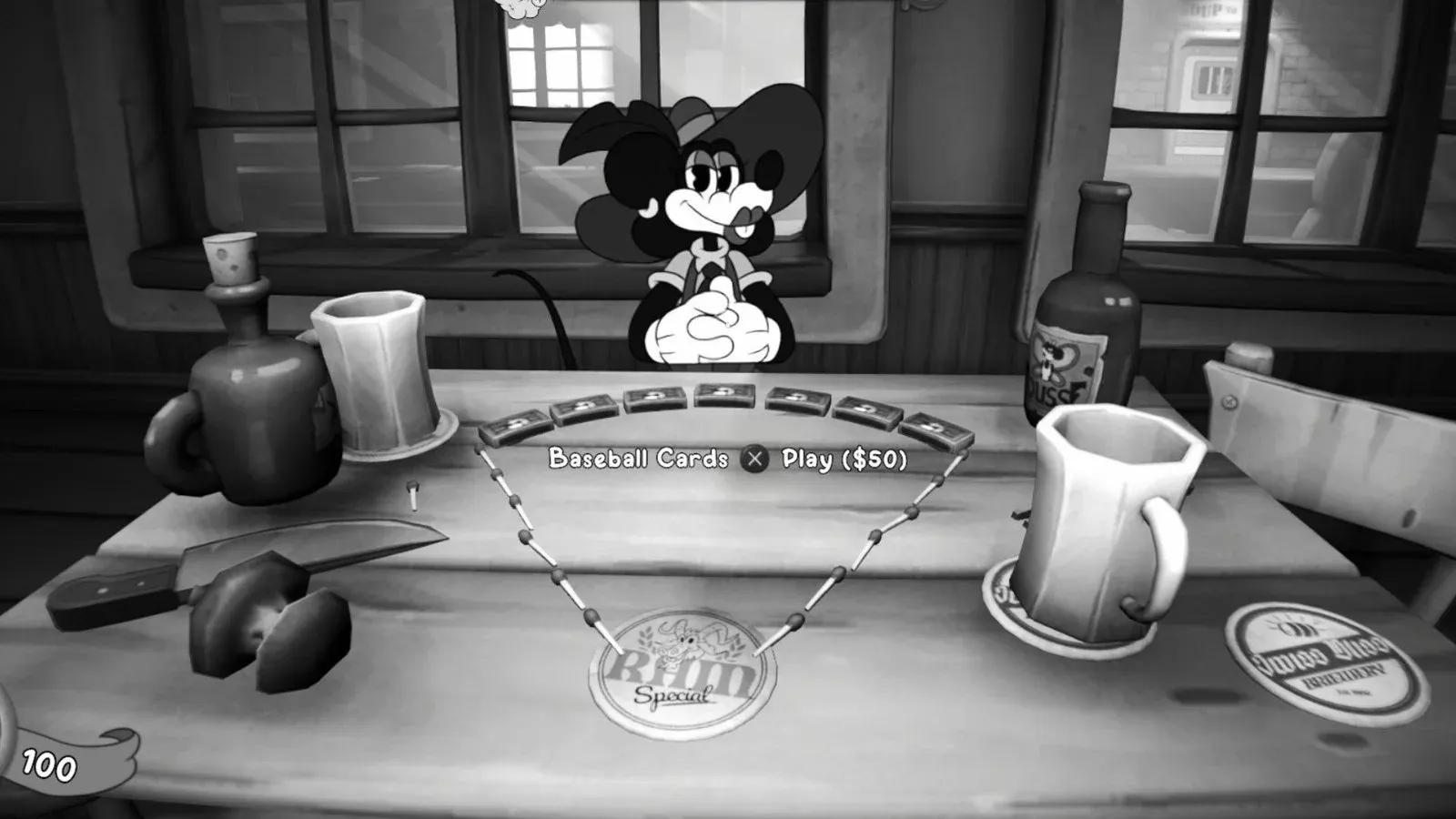
The minigame is available at Little & Big Bar in the main Mouseburg hub, where a character sits at a dedicated table ready to play. The same opponent appears at every Roadhouse bar throughout the game, so you can keep grinding matches even when you're deep into a mission zone away from the hub.
The first game costs 50 Coins to enter. Each time you win, the price to play again goes up, so budget accordingly. 1,500 Coins is the minimum for a perfect-run grind to 20 tokens, but that assumes you never lose. Treat that number as a floor, not a target.

How does the Baseball Cards match work?
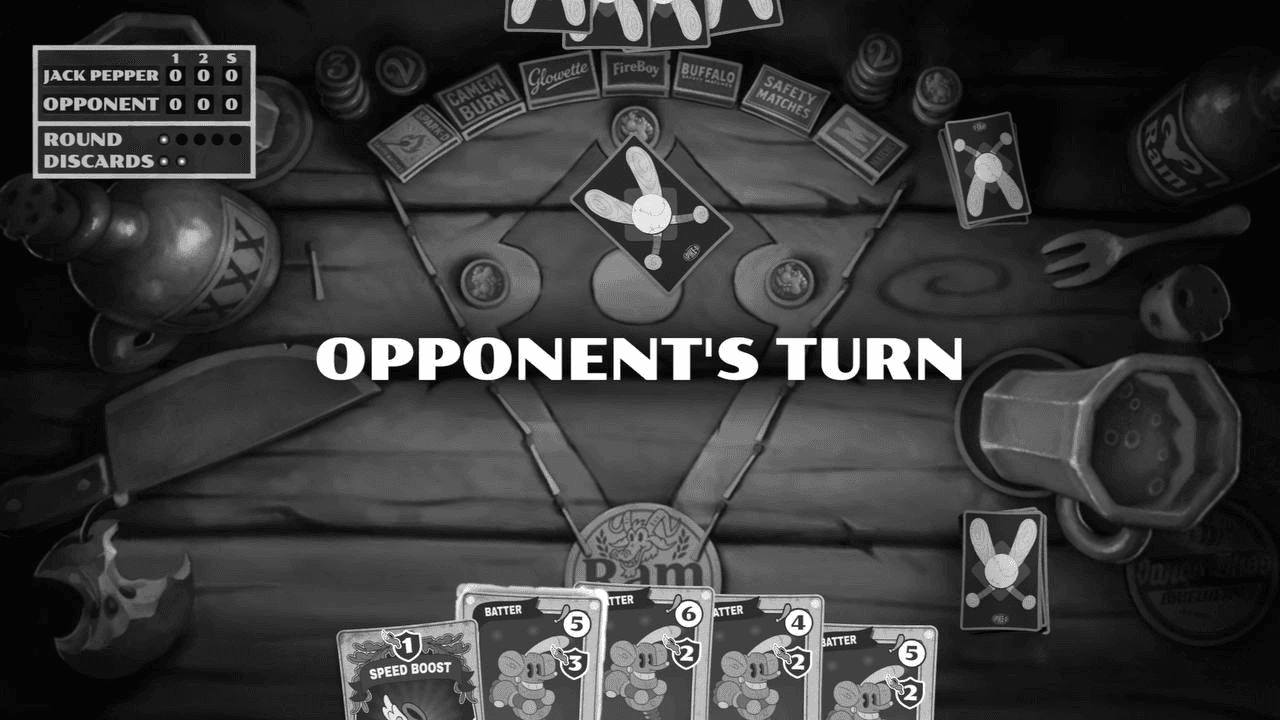
Forget standard baseball rules. The game runs one condensed inning split into two halves: 5 batting turns for you, then 5 pitching turns for you. Each side gets exactly 5 turns regardless of outs. Rack up 5 outs in a row and the opponent still gets all 5 of their turns. This trips up a lot of players who expect the three-out structure from real baseball.
You play from a hand of 5 cards. Each turn lets you play one player card and one Tactics card simultaneously. After the turn resolves, your hand refills to 5 automatically.
If the opening hand is weak, you can discard and redraw up to 2 times while batting, then up to 2 more times while pitching. Use this aggressively. Holding a bad hand out of stubbornness is one of the most common ways to drop a match you should have won.
What stats actually matter when batting?
Two separate checks happen on every batting turn:
- Your batter's swing power vs. the pitcher's pitch focus. Swing power higher = hit. Swing power lower = out. Swing power higher by 3 or more = home run, scoring the batter and all current base runners.
- Your batter's speed vs. the pitcher's fielding. This decides how many bases the runner advances on a regular hit.
Speed is not a secondary stat. A fast runner already on base keeps advancing on subsequent turns as long as their speed rating stays above the pitcher's fielding rating, even if the batters behind them are getting out. A batter with a speed rating of 4 (or buffed to 4 with a Tactics card) can round all four bases and score immediately on a hit if the pitcher has zero fielding.
On the flip side, a slow runner sitting on first can block a faster batter behind them from advancing. Base traffic management is a real consideration.
What changes when you switch to pitching?
Once you flip to pitcher, the math reverses. Now you want pitch focus higher than the opponent's swing power to retire their batters. Your fielding stat becomes the key number for stopping their runners from advancing.
Fielding matters most when the opponent already has runners on base. A high fielding number prevents those runners from continuing to round bases on subsequent turns. If their bases are empty, pitch focus is the only number that really matters for that specific turn.
How do Tactics Cards work?
Tactics Cards modify the stats on your player cards for that turn. Cheaper ones from the Ammo Shop typically add 2 points to a stat; more expensive ones add 3. That gap is significant when the difference between a hit and an out is one or two points.
The key discipline is not burning them automatically. Save Tactics Cards for turns where the margin matters: securing a hit you'd otherwise lose, pushing a swing power lead to home run range (3+ above pitch focus), or stopping a runner from advancing when fielding is the deciding factor.
Once your deck grows large enough, the game introduces a Banning Phase before matches. You'll be asked to remove cards over the deck limit. Cut your lowest-rated player cards first. Tactics Cards are almost always worth keeping regardless of tier.
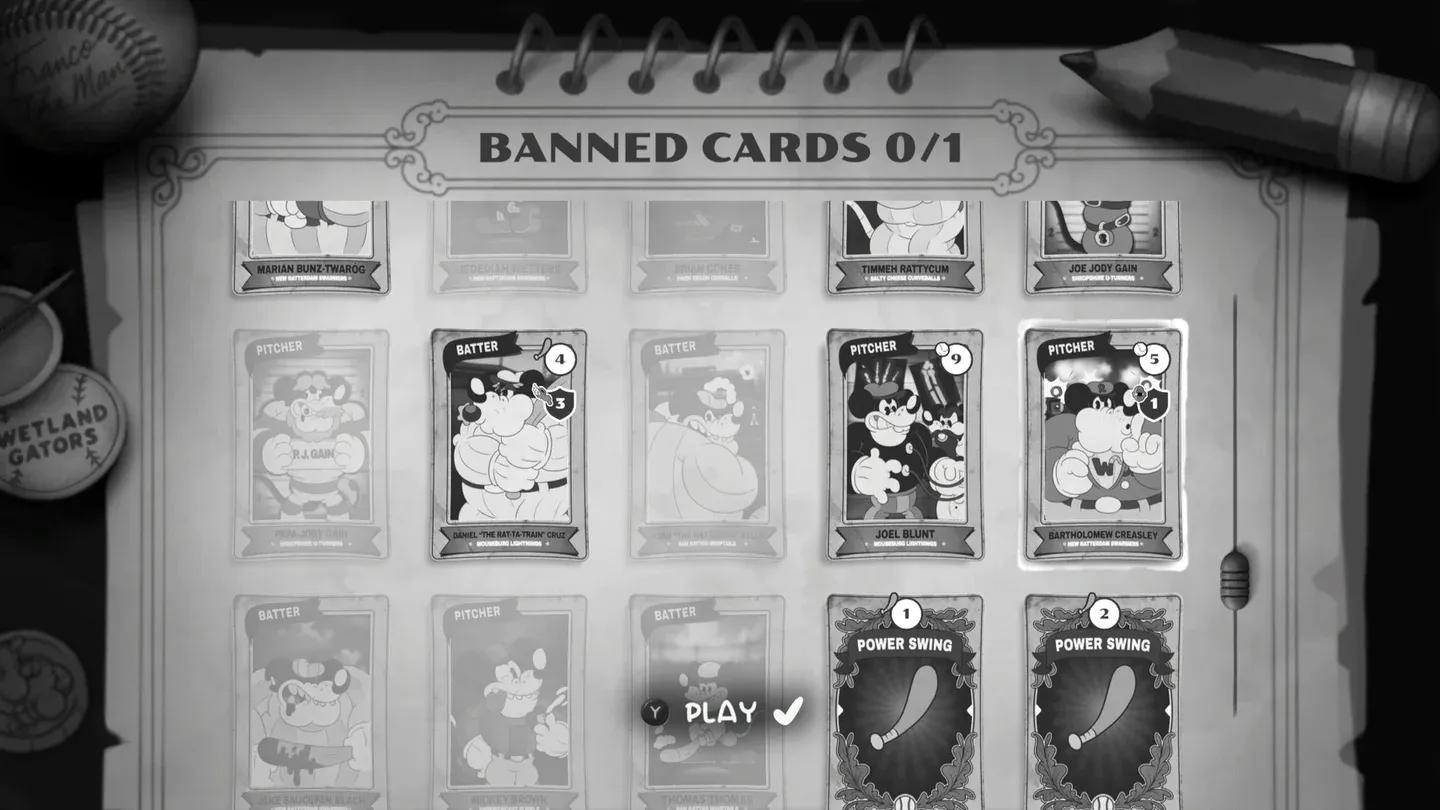
Banning Phase deck trim
Where do you get more Baseball Cards?
There are four distinct ways to acquire cards, and they carry very different risk levels for 100% completion:
| Method | Examples | Recoverable if missed? |
|---|---|---|
| Story pickups | Cards in side rooms, secret paths | Often yes, via shop |
| Soup to Nuts store (base stock) | 4 cards at 500 Coins, 4 at 1,000 Coins | Yes, always available |
| Shop recovery (missed missions) | Most standard mission cards | Yes, shop buy-back |
| Side Job rewards | Jeremiah Curd, Jacob "Cheesehead" McQueen | No, missable permanently |
The Soup to Nuts store in the hub sells 8 cards total: 4 at 500 Coins and 4 at 1,000 Coins. These are standard shop inventory, not buy-back items. The Ammo Shop near the bar and Roadhouse Ammo Shops also carry player cards and Tactics Cards, with Roadhouse shops often stocking different player cards than the hub.
The dangerous bucket is Side Job reward cards. Completing the Side Job "Oh Yes... They Float" gives the Jeremiah Curd Baseball Card, and "Friends in Deep Places" gives the Jacob "Cheesehead" McQueen Baseball Card. These do not appear in any shop later. Miss the Side Job, miss the card permanently.
How do Prize Tokens and the Prize D-Spenser work?
Every match you win awards 1 Prize Token. Losses give nothing, and the entry fee is not refunded regardless of outcome. There is no known cap on tokens, so overfarming is not a concern.
Wins are not the only way to get tokens. Some of John Brown's Side Jobs also award a Prize Token on completion. There is also a known interaction in Wallop Bay: speak through the window behind the frog group and listen through the full dialogue to receive 66 Coins and 1 Prize Token.
Matches run roughly 3 to 4 minutes each, which makes the grind to 20 tokens far more manageable than it sounds. At minimum that's 20 wins, but factoring in Side Job tokens and the Wallop Bay pickup, the pure match grind is shorter.
Once you have 20 Prize Tokens, head to the Spike-D's Token Prize D-Spenser in Little & Big Bar. The reward is the X1 D-Mousifier, the final gun in the game and strong enough to justify the grind.
What's the best order for 100% completion?
Treat the Baseball Cards system as part of your active run, not postgame cleanup. The recommended order:
- Pick up story cards as you encounter them during missions
- Buy affordable shop cards from the Soup to Nuts store and Ammo Shops when you have the Coins
- Complete Side Jobs that reward cards before the hub lockout
- Use shop recovery for any standard mission cards you missed
- Build your deck to a point where you're winning matches consistently
- Grind wins and tokens before starting Jack Squat
- Claim the X1 D-Mousifier from the Prize D-Spenser while Little & Big Bar is still accessible
The mistake is not missing a single pickup. It's assuming every card source stays available indefinitely. Standard mission cards are forgiving. Side Job reward cards are not.
For more guides covering collectibles, missables, and 100% routing across games, browse more guides at GAMES.GG.